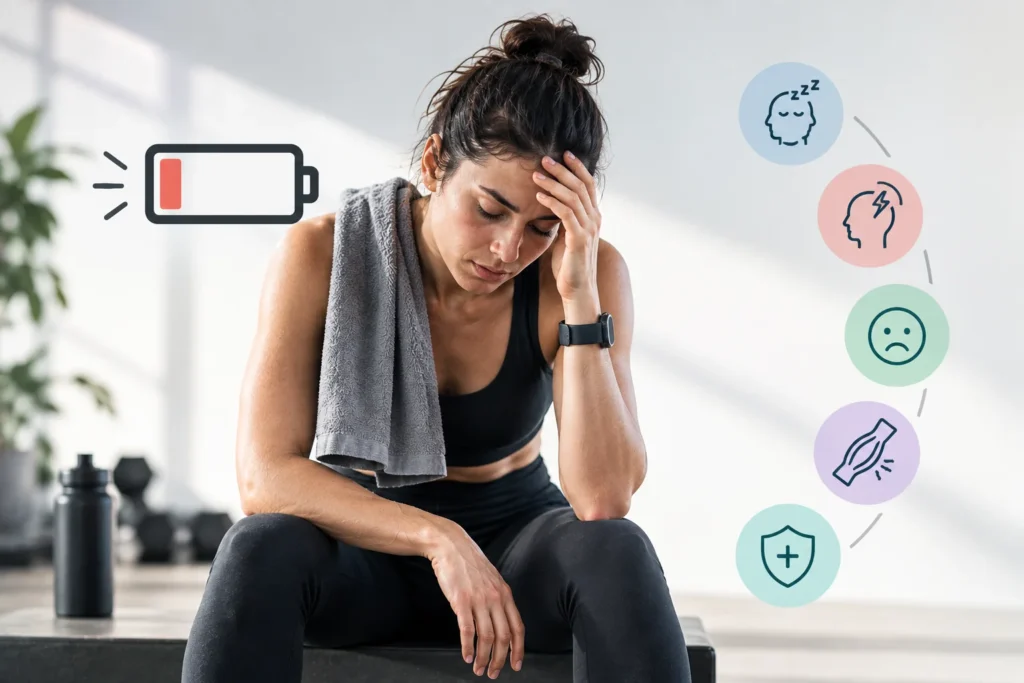
Electrolytes are essential minerals that help regulate fluid balance, nerve signaling, muscle function, and several other physiological processes. If you have ever wondered what electrolytes are, why athletes use electrolyte drinks, or whether you actually need them after a workout, the answer depends largely on exercise duration, intensity, sweating, environmental conditions, and individual needs.
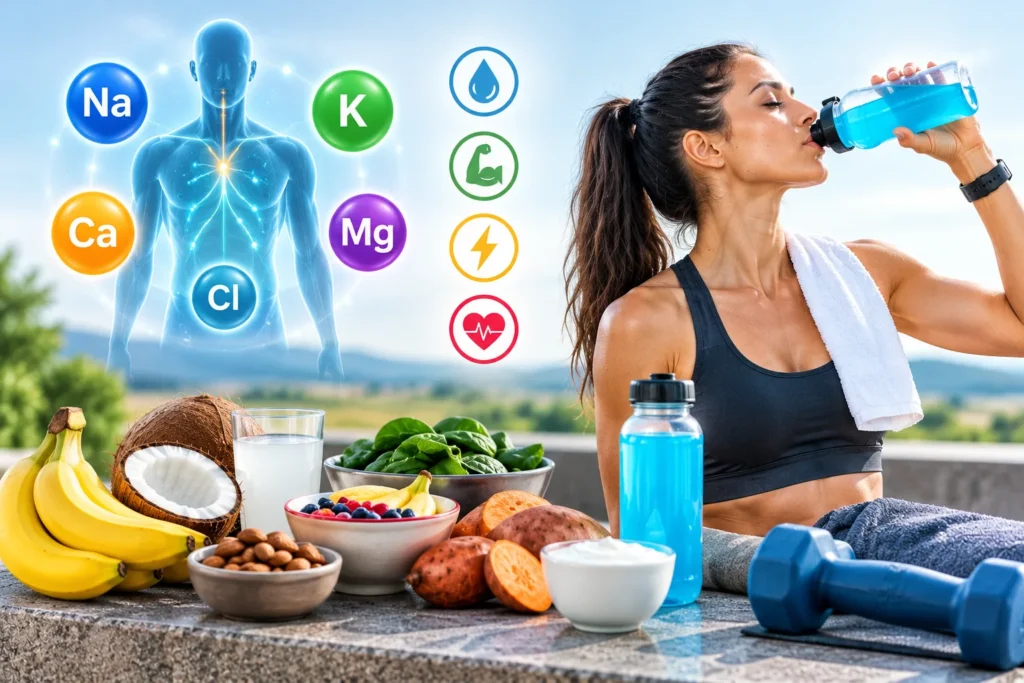
The most important electrolytes include sodium, potassium, calcium, magnesium, chloride, phosphate, and bicarbonate. During exercise, especially when sweating heavily, the body loses both water and electrolytes. However, not every workout requires deliberate electrolyte replacement. For most people performing shorter workouts in normal conditions, a balanced diet and ordinary fluid intake are generally sufficient. Longer or more intense sessions, particularly in hot environments, can create greater fluid and sodium losses that deserve more attention.
This guide explains what electrolytes are, how they affect exercise performance, how to recognize possible electrolyte-related problems, when electrolyte replacement may be useful after exercise, and which natural foods can provide these minerals.
What Are Electrolytes and Why Are They Important for the Body?
Electrolytes are minerals that carry an electrical charge when dissolved in body fluids. They are found in the blood, cells, and other body fluids and play important roles in maintaining fluid balance, supporting nerve communication, and allowing muscles to contract normally.
Sodium and potassium are particularly important because they help regulate fluid and blood volume and contribute to normal nerve and muscle function. Electrolytes come naturally from food and beverages, meaning that most people can obtain the minerals they need through a balanced diet.
For physically active people, electrolytes become especially relevant because sweating causes the loss of water and electrolytes. The amount lost varies considerably from one person to another, which is why there is no single electrolyte strategy that works equally well for everyone.
Which minerals are considered electrolytes?
Several minerals function as electrolytes in the human body:
- Sodium: Helps regulate fluid balance, blood volume, and nerve and muscle function.
- Potassium: Supports nerve signaling, muscle function, and fluid balance.
- Calcium: Plays an important role in muscle contraction and nerve signaling.
- Magnesium: Supports muscle and nerve function and participates in numerous metabolic processes.
- Chloride: Works with sodium to help regulate fluid and electrolyte balance.
- Phosphate: Contributes to energy metabolism and cellular function.
- Bicarbonate: Helps maintain acid-base balance.
These minerals work together rather than functioning independently. A balanced diet usually provides a combination of electrolytes through foods such as fruits, vegetables, dairy products, legumes, nuts, seeds, and other minimally processed foods.
Why are electrolytes important during exercise?
Exercise increases physiological demands on the body. As body temperature rises, sweating helps remove heat, but sweat contains both water and electrolytes.
Sodium is particularly relevant because it is one of the main electrolytes lost through sweat. The amount of sodium lost can vary substantially depending on the individual, exercise duration, environmental temperature, and acclimatization.
Electrolytes also support normal muscle and nerve activity. Maintaining appropriate fluid and electrolyte balance therefore contributes to normal physical function during exercise.
However, replacing electrolytes should not automatically mean consuming an electrolyte drink after every workout. Individual needs depend on the circumstances surrounding the exercise.

What Role Do Sodium and Potassium Play in Exercise Performance?
Sodium and potassium are two of the most frequently discussed electrolytes in sports nutrition. Both are essential for normal physiological function, but they have different distributions and roles in the body.
Sodium is the primary extracellular cation and is closely associated with fluid balance outside cells. Potassium is the major intracellular cation and is important for cellular function and nerve and muscle activity.
The CDC notes that sodium and potassium help the body maintain fluid and blood volume and are necessary for normal nerve and muscle function.
How does sodium support physical performance?
Sodium contributes to fluid regulation and normal nerve and muscle function. During prolonged exercise, especially in hot conditions, athletes can lose significant amounts of sodium through sweat.
Replacing some sodium alongside fluids may be useful when sweat losses are substantial. NATA recommends that hydration strategies consider factors such as sweat rate, environment, acclimatization, body size, exercise duration, intensity, and individual tolerance.
This means sodium requirements should not be determined simply by choosing a fixed amount for every athlete.
The goal is to replace appropriate losses without consuming excessive fluids or sodium.
How does potassium contribute to exercise function?
Potassium plays an important role in normal muscle and nerve function and contributes to fluid balance.
Unlike sodium, relatively large amounts of potassium are available in many common foods. Fruits, vegetables, potatoes, sweet potatoes, dairy products, and legumes can contribute meaningful amounts of potassium to the diet.
For most recreational exercisers, obtaining potassium from a varied diet is more important than routinely taking potassium supplements.
Potassium supplementation should not be treated as a universal recovery strategy because excessive intake can also create health risks, particularly in people with certain medical conditions or those taking specific medications.
Do sodium and potassium prevent muscle cramps?
Muscle cramps are often associated with electrolyte discussions, but cramps are more complicated than simply having too little sodium or potassium.
Exercise-associated muscle cramps can involve factors such as fatigue, neuromuscular control, exercise intensity, and individual susceptibility. Electrolyte losses may contribute in some situations, particularly during prolonged exercise and heavy sweating, but not every muscle cramp indicates an electrolyte deficiency.
Therefore, athletes should consider overall training load, hydration, nutrition, recovery, and environmental conditions rather than assuming that an electrolyte supplement is always the solution.

What Are the Signs of Electrolyte Imbalance?
Electrolyte disturbances can produce different symptoms depending on which electrolyte is affected and how significant the imbalance is. Some symptoms can also overlap with dehydration, heat-related illness, fatigue, or other conditions.
Possible symptoms may include weakness, fatigue, headache, nausea, dizziness, muscle-related symptoms, confusion, or changes in normal physical function. These symptoms should not automatically be interpreted as proof of an electrolyte deficiency.
The NATA position statement emphasizes that symptoms of inadequate hydration and excessive hydration can overlap and that exercise-associated hyponatremia can be a serious medical condition.
What are common signs that may indicate an electrolyte problem?
Potential warning signs can include:
- Unusual weakness or fatigue
- Headache
- Nausea or vomiting
- Dizziness
- Muscle weakness or abnormal muscle symptoms
- Confusion or changes in mental status
- Significant changes in physical performance
- Persistent symptoms after exercise
These signs are nonspecific, meaning they can have many possible causes.
For example, fatigue after a hard workout may simply reflect normal exertion. Similarly, thirst and headache can occur with dehydration but do not independently confirm an electrolyte imbalance.
If symptoms are severe, persistent, or accompanied by confusion, fainting, repeated vomiting, seizures, severe weakness, or other concerning signs, medical evaluation is important.
Can drinking too much water cause an electrolyte problem?
Yes. More fluid is not always better.
Excessive fluid consumption during prolonged exercise can contribute to exercise-associated hyponatremia, a condition involving abnormally low blood sodium concentration. NATA warns that excessive drinking can create health risks and emphasizes individualized hydration strategies.
This is especially relevant during long-duration endurance events, where some athletes may consume large amounts of fluid despite not losing an equivalent amount through sweat.
The goal is therefore not to maximize fluid intake. Instead, hydration should be appropriate for the individual’s sweat losses, exercise duration, environment, and physiological needs.
Is electrolyte deficiency the same as dehydration?
No.
Dehydration refers to the loss of body water, while an electrolyte imbalance refers to an abnormal concentration or amount of one or more electrolytes.
The two can occur together, particularly during prolonged sweating, but they are not identical conditions.
A person can lose substantial water through sweating while also losing sodium and other electrolytes. Conversely, excessive consumption of low-electrolyte fluids during prolonged activity can contribute to low blood sodium.
Understanding this distinction helps prevent the common mistake of assuming that every hydration problem can be solved simply by drinking more water or taking an electrolyte supplement.

When Do You Need Electrolytes After Exercise?
Not everyone needs an electrolyte drink after exercise. For many people completing a short or moderate workout in normal environmental conditions, regular meals and ordinary fluid intake are sufficient.
The American College of Sports Medicine notes that most people who exercise for less than roughly 60–90 minutes per day in normal weather conditions are unlikely to become significantly depleted of electrolytes.
Electrolyte replacement becomes more relevant when exercise is prolonged, intense, performed in hot conditions, or associated with substantial sweating.
Do you need electrolytes after a short workout?
Usually, not necessarily.
If you complete a relatively short workout and sweat moderately, you can generally replace fluids through normal drinking and obtain electrolytes through your regular meals.
For example, after a typical resistance-training session, a balanced meal containing carbohydrates, protein, sodium, potassium, and other nutrients can support recovery without requiring a specialized electrolyte product.
The exact needs vary, but there is little reason to assume that every gym session automatically creates a need for an electrolyte supplement.
When are electrolytes more useful after exercise?
Electrolyte replacement may become more useful when several factors increase fluid and electrolyte losses.
These include:
- Long-duration endurance exercise
- Heavy sweating
- Exercise in hot or humid conditions
- Multiple training sessions close together
- Long-distance running or cycling
- Extended outdoor activities
- Training lasting several hours
- Situations where rapid rehydration is necessary
NATA recommends individualized hydration plans that account for exercise duration, intensity, environmental conditions, body size, sweat rate, and other individual factors.
Do endurance athletes need more electrolytes?
Endurance athletes generally have greater reason to pay attention to electrolyte replacement because they may exercise for much longer periods and lose more fluid and sodium through prolonged sweating.
Marathon runners, long-distance cyclists, triathletes, and other endurance athletes exercising for extended periods—especially in hot conditions—may need more deliberate hydration and electrolyte strategies.
However, even endurance athletes should avoid assuming that more electrolytes are always better.
An effective strategy should consider individual sweat rate, sodium losses, fluid intake, exercise duration, and environmental conditions.
“Individualized hydration plans” are emphasized by the National Athletic Trainers’ Association when addressing fluid replacement for physically active people.
What Are the Best Natural Sources of Electrolytes?
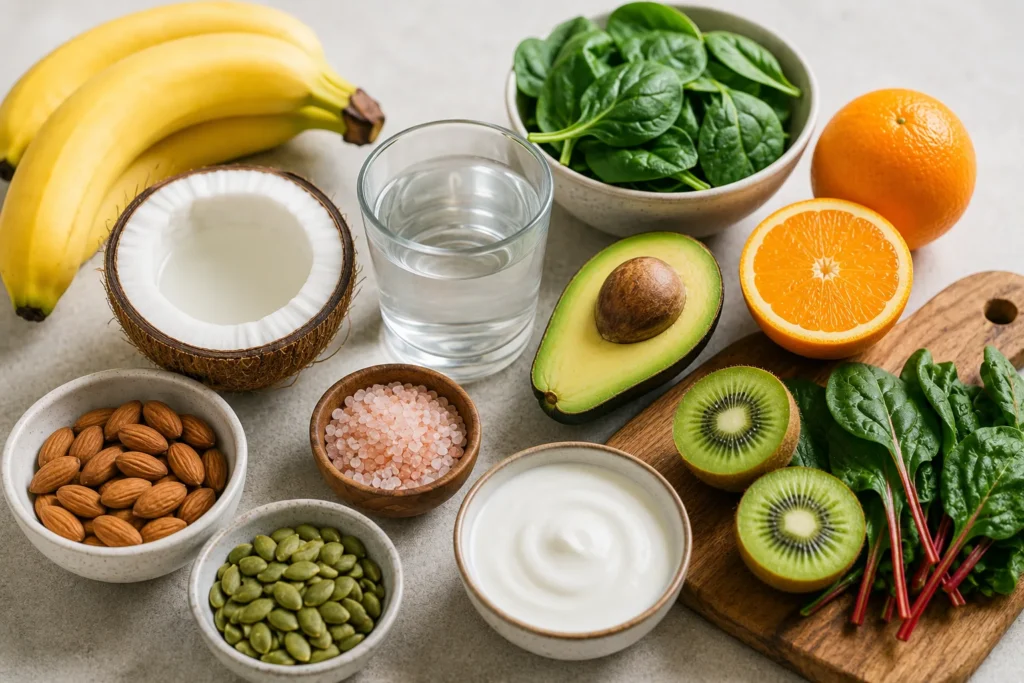
Electrolytes do not only come from sports drinks or supplements. A wide range of everyday foods can provide sodium, potassium, calcium, magnesium, and other minerals.
For many people, a balanced diet is the simplest way to maintain adequate electrolyte intake.
Which foods are naturally high in potassium?
Potassium is widely available in plant and animal foods.
Useful sources include:
- Bananas
- Oranges
- Melons
- Potatoes
- Sweet potatoes
- Spinach
- Broccoli
- Beans and legumes
- Dairy products
The CDC identifies fruits, vegetables, seafood, and dairy products as important dietary sources of potassium.
Rather than relying on one food, consuming a varied diet provides a broader range of essential nutrients alongside potassium.
What foods provide sodium?
Sodium is naturally present in many foods, but a large proportion of dietary sodium can also come from processed and restaurant foods.
Sources include:
- Salt
- Soups
- Bread
- Cheese
- Canned foods
- Processed meats
- Sauces and condiments
- Packaged foods
Because excessive sodium intake can contribute to high blood pressure, increasing sodium simply because you exercise is not appropriate for everyone. The CDC recommends limiting excessive sodium intake as part of a healthy eating pattern.
Athletes with high sweat losses may have different needs during prolonged activity, but sodium intake should still be individualized.
Can food replace an electrolyte drink after exercise?
Often, yes.
For many normal workouts, a regular meal combined with water can replace the fluids and electrolytes lost during exercise.
A meal containing a source of protein, carbohydrate, sodium, potassium, and other micronutrients can support both hydration and recovery.
For example, a meal containing potatoes or rice, vegetables, a protein source, and an appropriate amount of sodium can provide several nutrients needed after training.
ACSM also notes that many recreational exercisers do not need to worry about electrolyte replacement after every workout, particularly when exercise is shorter and environmental conditions are normal.
How Should You Replace Electrolytes After Exercise?
A practical post-exercise hydration strategy should begin by considering how much fluid you actually lost rather than automatically choosing a highly concentrated electrolyte product.
- Step 1: Consider the duration of your workout
A 30–45 minute workout generally creates different hydration demands from a three-hour endurance session.
The longer you exercise, the greater the potential for cumulative fluid and electrolyte losses. - Step 2: Consider how much you sweat
Sweat rate varies significantly between individuals.
If you regularly finish workouts with heavily soaked clothing or substantial changes in body weight, you may have higher fluid losses than someone who sweats lightly.
For athletes who need precise hydration planning, measuring body weight before and after representative sessions can help estimate sweat losses. NATA specifically recommends considering sweat rate when developing individualized hydration strategies. - Step 3: Consider the environment
Heat and humidity can increase sweating and therefore influence fluid and electrolyte requirements.
Training outdoors in hot weather may create very different needs from exercising in a cool, climate-controlled gym.
Heat acclimatization can also affect sweat rate and electrolyte losses, so hydration plans may need to change as environmental conditions change. - Step 4: Replace fluids and electrolytes appropriately
After a demanding workout, consume fluids according to your losses and thirst, while also replacing appropriate electrolytes through food or beverages.
For most people, normal meals and fluids are sufficient.
For prolonged or very sweaty sessions, an electrolyte-containing beverage or food may be useful, particularly when rapid recovery is required. - Step 5: Avoid excessive drinking
Do not assume that drinking as much water as possible will speed up recovery.
Excessive fluid intake during or after prolonged exercise can contribute to dangerously low blood sodium levels. Hydration should therefore aim for an appropriate balance rather than maximum fluid consumption.
Practical Summary
Understanding what electrolytes are is important for anyone interested in fitness, sports performance, and recovery. Electrolytes such as sodium, potassium, calcium, and magnesium support fluid balance, nerve signaling, and normal muscle function.
However, not every workout requires an electrolyte supplement. For most people completing shorter workouts under normal conditions, a balanced diet and normal fluid intake are usually enough.
The need for deliberate electrolyte replacement increases when exercise is prolonged, intense, performed in hot conditions, or associated with heavy sweating. Endurance athletes deserve particular attention because long-duration exercise can create substantial fluid and sodium losses.
Natural foods such as fruits, vegetables, potatoes, dairy products, legumes, nuts, and appropriately salted meals can provide many of the electrolytes required by the body. Supplements and electrolyte drinks can be useful in specific circumstances, but they should not automatically replace a balanced diet.
The most effective approach is individualized: consider exercise duration, sweat rate, environmental conditions, training intensity, and recovery demands rather than following a one-size-fits-all electrolyte strategy.
FAQ
Electrolytes are electrically charged minerals found in body fluids. Important examples include sodium, potassium, calcium, magnesium, and chloride. They help regulate fluid balance and support normal nerve and muscle function.
No. Most people do not need a dedicated electrolyte product after every workout. Shorter workouts performed in normal conditions can usually be supported through ordinary fluids and a balanced diet.
Possible symptoms include weakness, fatigue, headache, nausea, dizziness, and muscle-related symptoms. However, these symptoms are not specific to electrolyte deficiency and can have other causes.
Both minerals support fluid balance, nerve signaling, and normal muscle function. Sodium is especially important when considering sweat losses during prolonged exercise, while potassium is widely available through a balanced diet.
Fruits, vegetables, potatoes, sweet potatoes, dairy products, legumes, nuts, seeds, and appropriately salted foods can provide important electrolytes.
They may have greater electrolyte-replacement needs because prolonged exercise and heavy sweating can increase fluid and sodium losses. Individual sweat rate, exercise duration, environmental conditions, and fluid intake should be considered.
Yes. Excessive fluid consumption during prolonged exercise can contribute to exercise-associated hyponatremia, a potentially serious condition involving low blood sodium.