
Post-workout recovery depends on more than simply drinking a large amount of water. After exercise, the body may need to replace fluids and electrolytes, restore carbohydrate stores, and provide protein and other nutrients that support muscle repair. The best drinks for recovery therefore depend on the type, duration, and intensity of the workout, how much you sweat, and whether you need to train again soon.

For athletes, bodybuilders, and fitness enthusiasts, choosing the right post-workout drink can complement an effective nutrition and recovery strategy. At 5dfitness, understanding the purpose of each recovery drink can help you choose a practical option rather than relying on marketing claims or a single “perfect” beverage.
Listen
What Are the Best Drinks for Recovery After Exercise?
There is no single recovery drink that is ideal for every athlete. Water may be enough after a short or moderate workout, while longer or more demanding sessions may create greater fluid, electrolyte, and carbohydrate needs. Protein-containing drinks can also be useful when the post-workout meal is delayed or when increasing daily protein intake is a priority. The most useful approach is to match the drink to the physiological demands created by the workout. Recovery should be viewed as a combination of hydration, nutrition, sleep, and appropriate training rather than something that depends entirely on one beverage.
Is Water Enough for Post-Workout Recovery?
For many ordinary workouts, water is an effective and practical recovery drink. If exercise was relatively short, the athlete did not sweat heavily, and a normal meal will follow soon, there may be little reason to use a specialized sports beverage. Water replaces fluid without adding unnecessary calories or sugar, making it particularly useful for people whose main goal is general fitness or weight management.
The situation changes when exercise is prolonged, performed in hot conditions, or associated with substantial sweating. In those circumstances, replacing only water may not fully address the fluid and electrolyte losses created by exercise. The American College of Sports Medicine recommends individualized fluid-replacement strategies because sweating rates and electrolyte losses vary considerably between individuals.
Can Milk Support Muscle Recovery After Exercise?
Milk can be a useful post-workout beverage because it naturally provides protein and carbohydrate along with fluids and several micronutrients. Its protein content includes both whey and casein proteins, which can contribute amino acids needed for muscle protein synthesis.
For people performing resistance training, consuming protein around exercise can support the physiological processes involved in muscle adaptation. Research has found that protein intake after exercise increases myofibrillar protein synthesis, while broader evidence indicates that adequate protein intake can support gains in lean mass and strength during resistance training.
Milk is not mandatory for recovery, however. People who avoid dairy can use alternatives such as soy-based beverages or appropriately formulated plant-protein drinks, while ensuring that their overall diet supplies enough high-quality protein.
Are Protein Shakes Useful After Training?
Protein shakes can be convenient when a normal meal is not immediately available or when an athlete has difficulty meeting daily protein requirements through food alone. Whey, milk-based, soy, and other protein sources can provide amino acids that support muscle protein synthesis after exercise.
Evidence is strongest when protein supplementation is considered as part of an overall adequate nutrition and training program rather than as a magical recovery product. A systematic review and meta-analysis found that peri-exercise protein consumption may help preserve maximal strength following resistance exercise, although it did not consistently reduce muscle soreness.
The practical advantage of a shake is therefore convenience. It can help an athlete consume protein without requiring a full meal immediately after training. However, a protein shake is not automatically better than a balanced meal containing an equivalent amount of protein.
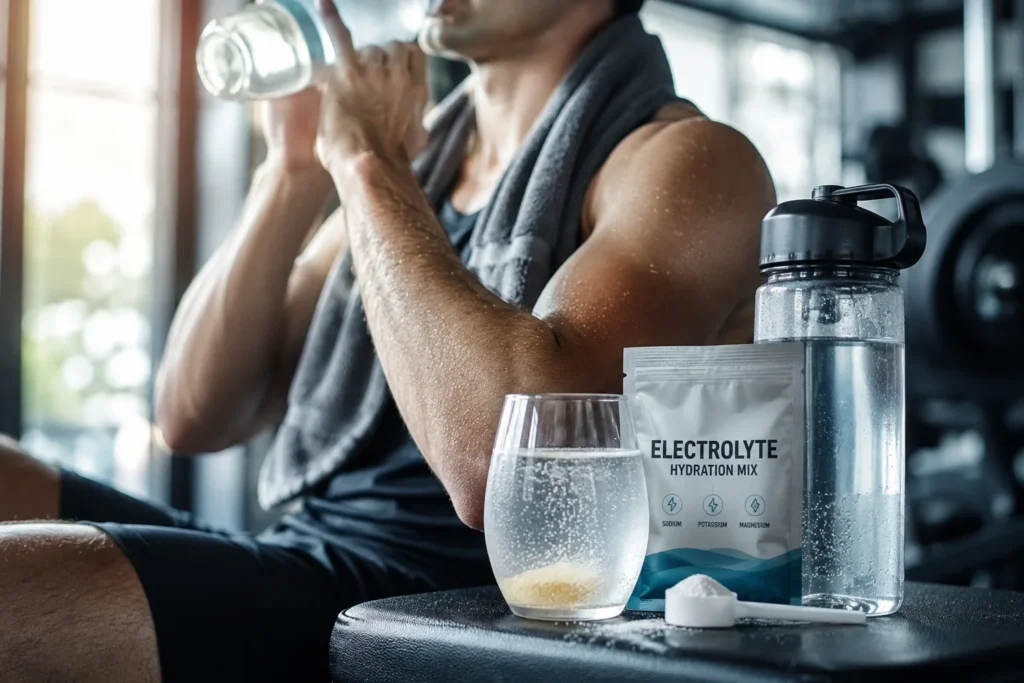
How Do Hydration and Electrolytes Affect Post-Workout Recovery?
Hydration is one of the most important components of recovery, especially after exercise that causes substantial sweating. Sweat contains water and electrolytes, including sodium, so recovery may involve replacing both. However, the amount required varies significantly according to the environment, exercise duration, intensity, clothing, individual sweat rate, and the athlete’s usual diet. The objective should be appropriate rehydration rather than simply drinking as much as possible.
When Are Electrolyte Drinks Helpful After Exercise?
Electrolyte drinks are particularly useful when an exercise session causes substantial sweat loss or when rapid rehydration is required. Sodium is especially important because it is a major electrolyte lost in sweat and can help support fluid retention during rehydration.
The American College of Sports Medicine emphasizes that post-exercise fluid replacement should take into account the magnitude of fluid and electrolyte deficits and how quickly recovery is needed. Individual sweat rates can differ considerably, so a beverage that is useful for one athlete may be unnecessary for another.
For a typical gym session, plain water and normal meals may provide sufficient fluid and electrolytes. For long endurance sessions, hot-weather training, or heavy sweaters, an electrolyte-containing drink may be more appropriate.
Can Water Replace Electrolytes After Every Workout?
Not necessarily. Water is effective for replacing fluid, but it does not provide meaningful amounts of sodium or other electrolytes. If an athlete has experienced only modest sweating, dietary meals can often replace electrolyte losses without requiring a specialized sports drink.
When sweat losses are large, however, sodium-containing fluids can help maintain fluid balance during rehydration. Research on post-exercise rehydration indicates that sodium can improve the retention of ingested fluid compared with large amounts of plain water.
The opposite extreme should also be avoided. Drinking excessive amounts of water after prolonged exercise can contribute to dangerously low blood sodium levels. Therefore, the goal is not maximum fluid intake; it is appropriate fluid replacement based on individual losses.
How Can You Tell Whether You Need More Aggressive Rehydration?
The need for aggressive rehydration depends mainly on how much fluid was lost and how quickly the athlete must recover. Someone who finishes a 45-minute indoor resistance session with little sweating has very different needs from an endurance athlete who trains for several hours in hot weather.
One practical approach is to monitor body weight before and after selected training sessions to estimate sweat loss. The National Athletic Trainers’ Association recommends individualized fluid-replacement practices that promote sufficient—but not excessive—hydration.
Other useful indicators include thirst, urine concentration, exercise environment, clothing, and the duration and intensity of the session. Athletes who repeatedly experience very large fluid losses may benefit from a more individualized hydration strategy developed with a qualified sports professional.

Which Drinks Can Support Recovery After Strength Training?
Strength training creates a different nutritional priority from long-duration endurance exercise. Muscle repair and adaptation require adequate protein and overall energy intake, while carbohydrates can also be useful for replenishing glycogen, particularly when training volume is high or another demanding session is scheduled soon. A post-workout drink can therefore be useful when it complements the athlete’s total daily nutrition.
Are Protein Shakes Effective After Strength Training?
Protein shakes can be an efficient way to provide high-quality protein after resistance exercise. The importance of the shake itself, however, should not be separated from total daily protein intake.
Research involving resistance training consistently supports the role of adequate protein in increasing lean mass and strength. A large meta-analysis of randomized controlled trials found that protein supplementation increased gains in fat-free mass and strength during prolonged resistance training.
A more recent systematic review also found that peri-exercise protein consumption may help maintain strength during recovery from resistance exercise, although effects on muscle soreness were not consistently demonstrated.
Therefore, a protein shake is best viewed as a convenient nutritional tool rather than a requirement after every workout.
How Do Protein and Carbohydrates Work Together After Training?
Protein and carbohydrates serve different but complementary purposes. Protein provides amino acids needed for muscle protein synthesis, while carbohydrates help restore muscle glycogen, which can become important when training sessions are long, intense, or closely spaced.
A systematic review and meta-analysis examining short-term post-exercise recovery found that carbohydrate intake is particularly relevant when rapid glycogen restoration is required between demanding exercise sessions.
For someone who performs one moderate workout per day, there may be no need for a specialized carbohydrate recovery drink. A normal meal containing protein and carbohydrate may be entirely sufficient. The need becomes more relevant for endurance athletes, high-volume trainees, or people with multiple training sessions in a day.
Is Chocolate Milk a Good Recovery Drink?
Chocolate milk has attracted attention as a recovery beverage because it combines fluid, carbohydrate, protein, and electrolytes. In principle, this combination can make it useful after demanding exercise, particularly when both carbohydrate replacement and protein intake are relevant.
However, chocolate milk should not be treated as universally superior to other recovery options. It contains added sugar and may not fit every person’s calorie, dietary, or tolerance needs. An athlete who already consumes sufficient carbohydrate and protein through a meal may gain little additional benefit from drinking it.
The best choice depends on the total diet, the training session, and individual preferences. A simple meal containing milk or another protein source plus carbohydrate can often provide similar nutritional components.
“The goal of drinking during exercise is to prevent excessive … dehydration.”
American College of Sports Medicine
What Homemade Drinks Can Help Support Muscle Recovery?
Homemade recovery drinks can be practical alternatives to commercial sports beverages. Their main advantage is that the ingredients and portion sizes can be controlled. A homemade drink can combine protein, carbohydrate, fluids, and selected electrolytes according to the athlete’s needs. However, “natural” does not automatically mean more effective. The nutritional composition still matters, particularly when recovery requirements are high.
Can a Banana and Milk Shake Support Recovery?
A banana and milk shake can provide a combination of carbohydrate, protein, fluid, and calories. Bananas provide carbohydrate and potassium, while milk provides protein and fluid. This makes the combination a convenient option after many strength or fitness sessions.
The exact nutritional value depends on portion size and the rest of the ingredients. Someone with high protein requirements may need additional Greek yogurt, milk powder, or protein powder, while someone primarily focused on hydration may not need such a calorie-dense drink.
The main advantage is practicality. A simple homemade shake can function as part of a broader recovery meal rather than being marketed as a special “muscle-repair formula.”
How Can You Make a Simple Homemade Recovery Shake?
A basic recovery shake can be built around four components:
- A fluid base: milk, soy beverage, or another suitable liquid.
- A protein source: Greek yogurt, milk, soy protein, whey, or another protein-rich ingredient.
- A carbohydrate source: banana, oats, berries, or another carbohydrate-rich food.
- Optional additions: fruit, cinnamon, or other ingredients based on taste and nutritional needs.
The quantities should depend on the individual’s energy and protein requirements. Someone trying to gain muscle may need a more calorie-dense shake, while someone managing calorie intake may prefer a smaller portion.
The purpose is not to create the most complicated drink possible. A useful recovery beverage should be easy to digest, practical, and compatible with the person’s overall diet.
What Ingredients Should a Homemade Recovery Drink Include?
There is no universal ingredient list. The right combination depends on the goal of the workout and the recovery demands that follow.
For hydration-focused recovery, fluids are the priority. For muscle recovery, protein becomes more important. For rapid glycogen restoration, carbohydrates become more relevant. If substantial sweat loss has occurred, sodium and other electrolytes may need greater consideration.
This is why homemade drinks can be useful: their composition can be adjusted. For example, an athlete recovering from a long endurance session may need more carbohydrate and electrolytes, while someone finishing a short strength session may prioritize protein and simply drink water alongside a normal meal.

When Is the Best Time to Drink for Post-Workout Recovery?
Timing matters, but it should not be exaggerated. Recovery begins as soon as exercise ends, yet the body does not suddenly stop responding to nutrients after a short “anabolic window.” What matters most is the overall nutrition strategy across the day and the time available before the next demanding training session. A post-workout drink can be especially useful when it helps an athlete meet hydration or nutrition needs conveniently.
Should You Drink Immediately After Exercise?
Drinking immediately after exercise is not mandatory for everyone. If the workout was moderate, hydration status is normal, and a balanced meal is planned soon, there may be little urgency.
The situation is different when an athlete has lost a significant amount of fluid, has another training session within several hours, or needs to restore carbohydrate stores quickly. In these situations, beginning recovery soon after exercise can be beneficial.
Research on post-exercise recovery shows that the urgency of rehydration depends on the magnitude of fluid loss and the time available before the next exercise session.
When Should You Take a Protein-Based Recovery Drink?
A protein-containing drink can be consumed after training when it fits the athlete’s daily nutrition plan. It can be particularly convenient when the next complete meal is several hours away.
Evidence indicates that protein ingestion around exercise can stimulate muscle protein synthesis, while longer-term resistance-training research supports adequate protein intake as part of a strategy for improving lean mass and strength.
However, the idea that protein must be consumed within a very narrow post-workout window is overly simplistic. Total daily protein intake, meal distribution, training quality, energy intake, and recovery all matter.
Does Recovery Drink Timing Matter for Every Athlete?
No. Timing becomes more important as recovery demands increase.
For someone exercising recreationally once per day, a balanced diet and adequate hydration may be more important than precisely timing a recovery drink. For an endurance athlete completing multiple sessions in one day, or a competitive athlete with limited recovery time, the timing and composition of fluids, carbohydrates, and protein can become much more important.
The best recovery strategy is therefore individualized. Consider the workout duration, sweat loss, next training session, dietary needs, and personal tolerance before choosing both the beverage and its timing.
Practical Conclusion
The best drinks for recovery are not necessarily the most expensive supplements or the most heavily marketed sports beverages. Water can be enough after many workouts, while electrolyte drinks may be useful after substantial sweating. Protein shakes and milk-based drinks can provide convenient protein, and carbohydrate-containing beverages may be valuable when rapid glycogen restoration is required.
The most effective choice depends on the training session and the athlete’s overall diet. Recovery is not determined by a single drink; hydration, protein, carbohydrates, sleep, rest, and appropriate training all contribute to the process.
At 5dfitness, the practical approach is to match the drink to the actual recovery requirement instead of assuming that every workout requires a specialized product.
CTA: Explore more evidence-based fitness and sports nutrition guides from 5dfitness to build a recovery strategy that fits your training goals.
FAQ
There is no universal best drink. Water is often sufficient after moderate exercise, while protein-containing or electrolyte drinks may be more useful after demanding sessions.
For many strength-training sessions, yes. If the workout does not cause substantial sweating and a balanced meal follows soon, water can be sufficient.
Yes, a protein shake can be a convenient way to provide protein after training, especially when a complete meal is not immediately available.
No. They are more useful when exercise causes substantial sweating, lasts a long time, occurs in hot conditions, or when rapid rehydration is required.
Milk can be useful because it provides fluid, protein, carbohydrate, and several micronutrients. Whether it is the best option depends on individual dietary needs and tolerance.
A homemade shake containing milk or soy beverage, a protein source, and carbohydrate-rich ingredients such as banana or oats can be a practical option.
It depends on the workout and the next training session. Immediate consumption is more important when rapid hydration or nutrient replacement is required; otherwise, a balanced meal soon after training may be sufficient.