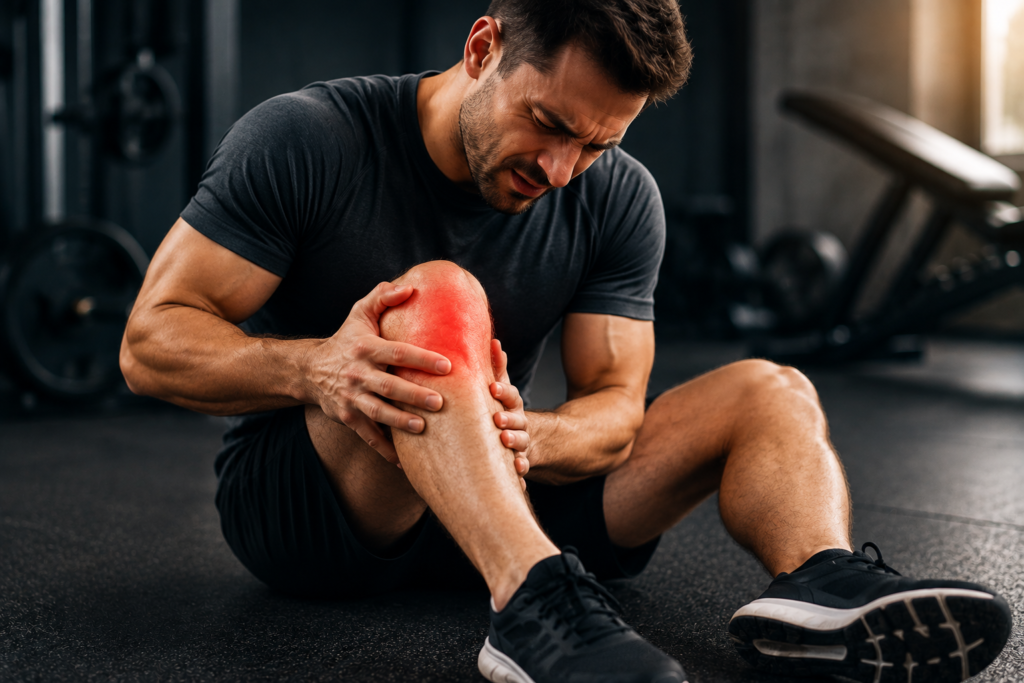
Muscle soreness after exercise is common, especially after a new, intense, or unfamiliar workout. Reduce Muscle Soreness does not mean eliminating every sign of post-workout discomfort immediately; instead, the goal is to support recovery, maintain normal movement, and reduce unnecessary discomfort while the muscles adapt. Delayed-onset muscle soreness (DOMS) typically develops 12–24 hours after exercise and can become most noticeable between 24 and 72 hours.

For athletes and fitness enthusiasts, understanding which recovery strategies have meaningful evidence can be more useful than relying on popular but unsupported recovery hacks.
Listen
What Causes Muscle Soreness After Exercise?
Muscle soreness usually appears when the body experiences a training stimulus that is greater than what it is accustomed to. New exercises, increased training volume, high-intensity sessions, and movements involving eccentric muscle contractions can all contribute to DOMS.
The discomfort is different from pain that begins suddenly during exercise, which may indicate an acute injury. DOMS generally develops gradually rather than appearing at the exact moment of training. Understanding this difference is important because normal soreness can often be managed with appropriate recovery, while unusual or severe pain may require a different approach.
Why Does Delayed-Onset Muscle Soreness Happen?
Delayed-onset muscle soreness, or DOMS, is the stiffness, tenderness, and discomfort that develops after unfamiliar or demanding physical activity. It commonly becomes noticeable during the first day after training and may peak within the following two days. Exercises that place muscles under tension while they lengthen, such as the lowering phase of a squat or lunge, can be particularly likely to produce soreness.
DOMS is associated with the body’s response to novel physical stress and subsequent repair processes. Importantly, the soreness itself is not proof that a workout was successful. A productive training session can occur without severe soreness, and deliberately chasing extreme soreness is not a reliable measure of progress.
Why Can a New or Intense Workout Cause More Soreness?
A sudden increase in training intensity, volume, duration, or exercise difficulty can create more soreness because the muscles have not yet adapted to that workload. This is why someone may experience significant soreness after returning to the gym following a long break, even if the workout does not seem unusually difficult. Repeated exposure to a similar exercise can also lead to adaptation, meaning the same stimulus may cause less soreness over time.
A smarter approach is therefore gradual progression rather than repeatedly performing maximal-effort sessions. Consistent training allows the body to adapt while reducing the likelihood of excessive soreness that interferes with daily activities or subsequent workouts.
“soreness is not vital for an adequate recovery routine.”
— American College of Sports Medicine (ACSM)
How Can You Reduce Muscle Soreness After Exercise?
The most practical approach to reduce muscle soreness is to combine sensible recovery habits rather than searching for one instant solution. Light movement, adequate sleep, appropriate nutrition, and sufficient recovery time form the foundation. Some additional strategies, including massage and cold-water immersion, have evidence suggesting they can reduce perceived DOMS, although their effects vary between individuals and situations. A 2018 systematic review and meta-analysis covering 99 studies found beneficial effects from several recovery techniques, with massage showing particularly strong effects for DOMS and perceived fatigue.
Can Active Recovery Help Reduce Muscle Soreness?
Active recovery involves low-intensity movement rather than another demanding workout. Walking, easy cycling, gentle mobility work, or another comfortable activity can help you remain mobile while sore. The purpose is not to push the affected muscles to exhaustion but to keep activity at an intensity that does not significantly increase pain or fatigue. Research on post-exercise recovery techniques has reported beneficial effects from active recovery for DOMS, although the evidence varies according to the protocol and outcome measured. A practical rule is to reduce intensity substantially on sore days and stop if movement causes sharp, worsening, or unusual pain.
Does Massage Help Relieve Sore Muscles?
Massage is one of the recovery strategies with relatively strong evidence for reducing perceived muscle soreness. A systematic review and meta-analysis found that massage significantly reduced soreness at 24, 48, and 72 hours after strenuous exercise and also showed improvements in some measures of muscle performance.
Massage should nevertheless be viewed as a recovery tool rather than a replacement for appropriate training progression, sleep, nutrition, or rest. Athletes can use gentle massage when it feels comfortable, but excessive pressure on severely painful tissue is unnecessary. The objective should be improved comfort and recovery rather than trying to “break up” muscle damage.
Does Cold-Water Immersion Reduce Muscle Soreness?
Cold-water immersion can provide short-term relief from post-exercise soreness. Recent meta-analytic evidence indicates that cold-water immersion can reduce DOMS compared with control conditions, particularly during the first 24–48 hours. However, cold therapy should not be presented as a universal requirement for recovery.
Its benefits appear to be more closely related to perceived soreness and certain recovery markers than to a guaranteed restoration of strength or performance. Athletes should also consider the context of their training rather than automatically using cold exposure after every strength session.
Does Stretching Actually Reduce Muscle Soreness?
Stretching may feel comfortable after exercise, but it should not be promoted as a proven method for substantially reducing DOMS. A Cochrane review found that stretching before or after exercise produced little or no clinically important reduction in muscle soreness.
A separate systematic review and meta-analysis also found no significant effect of post-exercise stretching on DOMS at 24, 48, or 72 hours. Stretching can still have a place in a fitness routine for mobility or personal comfort, but athletes should not depend on it as the primary strategy for recovering from significant muscle soreness.
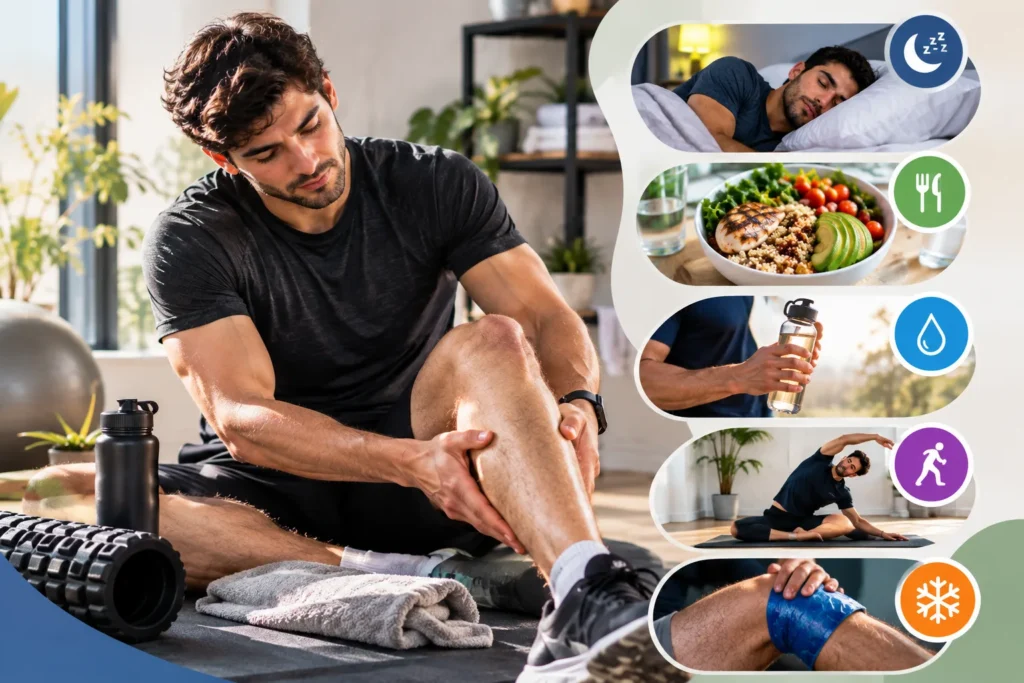
How Should You Recover From Muscle Soreness?
Recovery is more than choosing a single technique immediately after training. The body needs adequate time, energy, sleep, and appropriate physical activity to adapt to exercise. A recovery plan should therefore focus on the fundamentals first and then use additional techniques according to individual needs.
ACSM emphasizes that recovery allows the body to rebuild after exercise stress and notes that soreness commonly occurs after new or more intense exercise. For most recreational athletes, consistent habits are more important than expensive recovery equipment.
How Much Rest Do Sore Muscles Need?
There is no universal number of hours that every muscle group needs to recover. The appropriate recovery period depends on training intensity, exercise selection, fitness level, sleep, nutrition, and the severity of soreness. Mild soreness does not necessarily mean you must stop all physical activity.
You can often train another muscle group or perform light activity if movement is comfortable. However, severe soreness that limits normal movement is a reason to reduce training intensity and allow additional recovery. The goal is to return to productive training without repeatedly placing excessive stress on tissue that has not adequately recovered.
How Can Sleep Support Muscle Recovery?
Sleep is a fundamental component of exercise recovery because physical adaptation does not occur only inside the gym. During recovery, the body regulates processes related to tissue repair, energy restoration, and overall physiological function. For this reason, consistently inadequate sleep can make demanding training more difficult to tolerate.
Rather than searching for a specialized recovery product, athletes should first establish a regular sleep schedule and create an environment that supports sufficient, uninterrupted sleep. When combined with appropriate nutrition and sensible training progression, adequate sleep provides a foundation for recovering from exercise and managing post-workout soreness.
What Should You Eat After Exercise for Muscle Recovery?
Post-workout nutrition should provide sufficient energy and nutrients to support the demands of training. Protein is particularly important for muscle protein synthesis and adaptation, while carbohydrates can help replenish glycogen after demanding exercise. However, it is important not to promise that a particular food or supplement will immediately eliminate DOMS.
Recovery nutrition should be considered as part of the overall training program rather than a quick treatment for soreness. Adequate daily protein, balanced meals, sufficient fluids, and appropriate total energy intake are more meaningful than relying on one “recovery food” or supplement.

How Can You Prevent Excessive Muscle Soreness After Exercise?
Preventing excessive soreness starts before the recovery period. The most effective strategy is usually sensible training progression rather than trying to eliminate soreness after it appears. Rapidly increasing training volume, intensity, or exercise difficulty can produce a workload that exceeds current capacity.
Instead, athletes should introduce new movements progressively, allow adequate recovery, and monitor how their body responds. ACSM notes that regular physical activity is preferable to sporadic, very intense workouts and emphasizes recovery as part of an effective exercise program.
Can Gradually Increasing Training Load Reduce Muscle Soreness?
Gradual progression gives muscles time to adapt to increasing workloads. If you suddenly double your training volume or introduce several unfamiliar exercises in one session, substantial soreness becomes more likely. A better strategy is to increase workload progressively while monitoring performance and recovery.
This does not mean avoiding challenging training; rather, it means controlling the size of each training step. Beginners can start with manageable sets and repetitions, while experienced athletes can manipulate volume, intensity, exercise selection, and recovery periods. Over time, repeated exposure to similar training stimuli can improve tolerance and reduce the amount of soreness produced by the same type of workout.
Does a Proper Warm-Up Prevent Muscle Soreness?
A warm-up prepares the body for physical activity by gradually increasing movement and exercise intensity. It can help athletes transition from rest to training and may improve readiness for the specific movements they are about to perform. However, warm-up should not be marketed as a guaranteed method for preventing DOMS.
Muscle soreness is influenced by many factors, including unfamiliar exercise and eccentric loading. The more important principle is to combine an appropriate warm-up with sensible training progression and correct exercise technique. A five- to ten-minute gradual warm-up followed by movement-specific preparation can be a practical approach before many workouts.

When Is Muscle Soreness Normal and When Should You Worry?
Most ordinary DOMS gradually improves as the body recovers. However, not every type of post-exercise pain should automatically be classified as normal soreness. Pain that begins suddenly during exercise, severe swelling, significant weakness, unusual discoloration, or pain that continues to worsen deserves greater attention.
This distinction is especially important for athletes who may be tempted to train through every form of discomfort. Normal soreness should generally become more manageable over time, while symptoms that are severe, unusual, or associated with injury signs should not be ignored.
How Can You Tell Normal DOMS From an Exercise Injury?
DOMS typically develops gradually after exercise and affects the muscles that were heavily or unusually involved in the workout. It often produces generalized tenderness, stiffness, and discomfort rather than a sudden, sharply localized pain. In contrast, an injury may involve immediate pain during a movement, substantial swelling, joint instability, bruising, or persistent sharp pain. The location and character of the pain are therefore important.
If pain feels significantly different from your usual post-workout soreness, limits normal movement, or continues to worsen instead of improving, it is safer to stop demanding exercise and seek professional assessment.
When Should You Seek Medical Attention for Muscle Pain?
Severe or unusual muscle pain should not simply be treated as ordinary DOMS. Seek medical evaluation when pain is extreme, persistent, associated with major swelling or weakness, or accompanied by other concerning symptoms. Very dark urine after unusually strenuous exercise, especially when combined with severe muscle pain or weakness, requires urgent medical attention because it can be associated with rhabdomyolysis.
Athletes should also seek professional advice when pain follows an obvious traumatic event or prevents normal use of the affected body part. Recovery strategies are appropriate for ordinary soreness, not for symptoms that may indicate significant injury or another medical problem.
Recovery Methods and Their Practical Value
| Recovery Method | Potential Benefit | Evidence-Based Takeaway |
|---|---|---|
| Active recovery | May reduce perceived soreness | Useful when kept low intensity |
| Massage | Reduces DOMS and perceived fatigue | One of the better-supported options |
| Cold-water immersion | Can reduce short-term DOMS | Useful in selected situations |
| Stretching | May improve comfort/mobility | Not proven to meaningfully reduce DOMS |
| Sleep | Supports overall recovery | Fundamental recovery habit |
| Nutrition | Supports adaptation and energy restoration | Focus on overall diet rather than one supplement |
| Gradual progression | Helps manage training stress | Key strategy for preventing excessive soreness |
A large systematic review found positive effects for several recovery interventions, particularly massage, while evidence varies considerably between methods and outcomes.
Conclusion
Learning how to Reduce Muscle Soreness is less about finding one magic recovery technique and more about managing training stress intelligently. Gradual progression, sufficient sleep, appropriate nutrition, light movement, and adequate recovery should form the foundation of your approach. Massage and cold-water immersion may provide additional short-term relief, while stretching should not be presented as a proven solution for DOMS.
For athletes and fitness enthusiasts, the key lesson is simple: train progressively, recover consistently, and do not use soreness as the primary measure of training success. At 5dfitness, the goal is to turn evidence-based fitness information into practical strategies you can apply to your training.
Start with smarter recovery today: adjust your training load, prioritize sleep, support your body with proper nutrition, and give your muscles enough time to adapt.
FAQ
Not always. DOMS is a normal response to unfamiliar or demanding exercise, and recovery methods generally aim to reduce discomfort rather than guarantee its complete elimination.
Gentle movement, adequate recovery, sleep, and appropriate nutrition provide the foundation. Massage and cold-water immersion may also reduce perceived soreness in some situations.
Evidence does not show a clinically important reduction in DOMS from stretching before or after exercise.
Mild soreness does not necessarily prevent exercise, but severe soreness should lead to reduced intensity or additional recovery. Avoid training through sharp or unusual pain.
Yes. Research suggests massage can reduce perceived DOMS, particularly during the first 24–72 hours after strenuous exercise.
DOMS generally begins within 12–24 hours, often peaks between 24 and 72 hours, and then gradually improves.
No. Soreness is not a reliable measure of workout quality or muscle growth. You can make progress without experiencing significant DOMS.