
Overtraining symptoms can develop gradually, making it difficult for athletes and fitness enthusiasts to recognize when training stress is exceeding their ability to recover. For 5dfitness readers, understanding these early warning signs can help protect performance, guide training adjustments, and reduce the risk of prolonged fatigue.
While occasional tiredness is a normal part of exercise, persistent exhaustion, declining performance, disrupted sleep, and changes in motivation deserve attention. This guide explains how to recognize possible overtraining, distinguish it from normal fatigue, monitor recovery, and take practical steps before performance is significantly affected.
Listen
What Are the Early Symptoms of Overtraining?
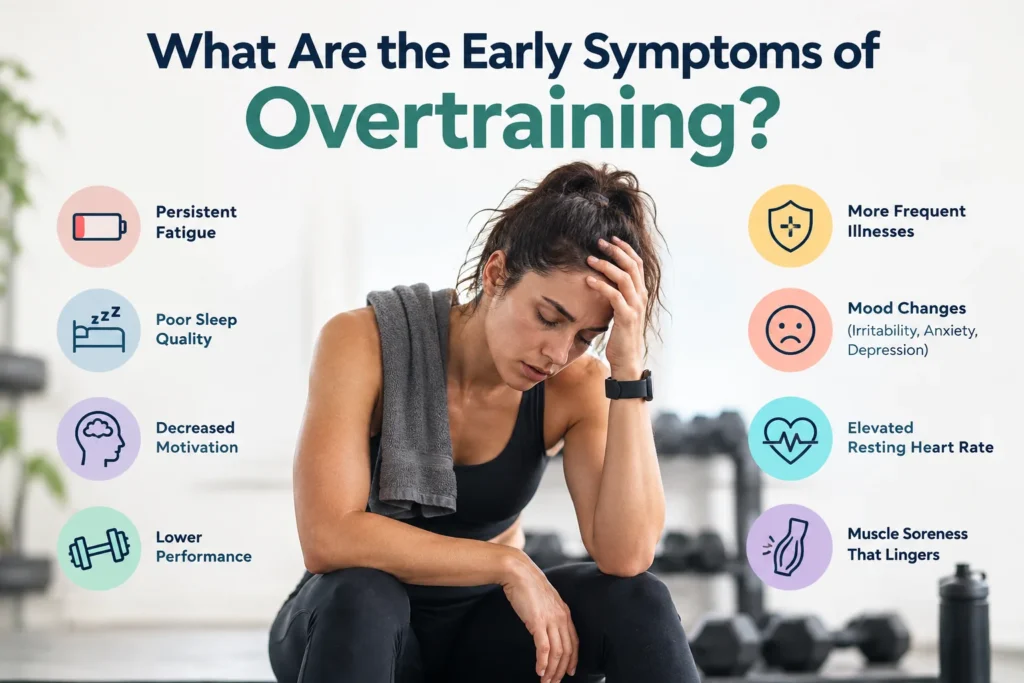
Overtraining rarely presents as one unmistakable symptom. Instead, athletes may notice a combination of physical, psychological, and performance-related changes that persist despite their usual recovery routine. These signs can also result from inadequate sleep, insufficient nutrition, illness, or other stressors, so they should be viewed as warning signals rather than a self-diagnosis. Recognizing changes from your personal baseline is particularly useful: a workout that suddenly feels unusually difficult, persistent tiredness, or a sustained drop in motivation may indicate that your current training demands need reassessment.
What Physical Symptoms Can Signal Overtraining?
Common warning signs include persistent fatigue, unusually prolonged muscle soreness, heavy-feeling limbs, and difficulty completing workouts that were previously manageable. Some athletes also report more frequent minor illnesses or recurring aches, although these symptoms are not specific to overtraining. A key distinction is persistence: ordinary post-exercise tiredness generally improves with adequate recovery, while a concerning pattern may continue across multiple sessions or interfere with everyday activities.
Pay attention to changes rather than isolated experiences. For example, one difficult workout after a poor night’s sleep is not enough to conclude that you are overtraining. However, repeated difficulty recovering, especially alongside declining performance or disrupted sleep, is a reason to review training load, nutrition, and rest. If symptoms are severe, unusual, or persistent, seek advice from a qualified healthcare professional rather than trying to push through them.
How Can Overtraining Affect Mood, Motivation, and Sleep?
Training stress can affect more than muscles. Some athletes experiencing inadequate recovery notice irritability, reduced motivation, low mood, difficulty concentrating, or changes in sleep quality. They may feel unusually reluctant to begin a familiar workout or find that training no longer feels rewarding. These changes can overlap with work, family, and other life stressors, so context matters.
Sleep deserves particular attention. Difficulty falling asleep, restless nights, or waking without feeling refreshed can make recovery harder and may coincide with declining exercise performance. Keep track of these patterns instead of relying on a single night or a temporary change in mood. If low mood, persistent sleep disruption, or other psychological symptoms continue or significantly affect daily life, consider speaking with a healthcare professional.
How Can You Recognize a Decline in Athletic Performance?
A sustained drop in performance can be one of the most useful practical warning signs. You might lift less weight than usual, struggle to maintain your normal running pace, complete fewer repetitions, or perceive a familiar workout as much harder. Performance can fluctuate naturally, so compare several sessions under reasonably similar conditions rather than reacting to one poor result.
For strength athletes, monitor working weights, repetitions, and perceived effort. Endurance athletes can track pace, distance, heart rate, and how difficult a session feels. If performance continues to decline despite normal effort and adequate recovery, reassess your training plan. Persistent underperformance combined with fatigue or mood and sleep changes deserves more attention than any single metric alone.

How Is Overtraining Different From Normal Fatigue and Overreaching?
Not every period of tiredness means an athlete is overtrained. Training intentionally creates fatigue, and a well-designed program allows recovery so the body can adapt. The important distinction is how long symptoms last, whether performance rebounds, and whether fatigue is disproportionate to the training performed. Coaches and athletes often use the term overreaching for a shorter-term decline in performance caused by accumulated training stress. Overtraining syndrome is a more serious, prolonged condition and should not be diagnosed from a checklist alone. Understanding these differences helps prevent both unnecessary alarm and the habit of ignoring persistent warning signs.
How Long Does Normal Post-Workout Fatigue Usually Last?
Normal fatigue often follows a demanding workout, especially after unfamiliar exercises, high training volume, or intense intervals. Muscle soreness may peak later and gradually improve over the following days, depending on the session and the individual. During this period, performance may temporarily feel lower, but it should generally trend back toward the person’s usual level as recovery progresses.
There is no universal number of hours that separates normal fatigue from a problem. The type of workout, training history, sleep, nutrition, and overall stress all influence recovery. Instead of using a rigid deadline, look for a pattern: are symptoms improving, are everyday activities manageable, and is performance returning? If fatigue is worsening, repeatedly recurring, or accompanied by unusual symptoms, reduce the training demand and consider professional advice.
What Is the Difference Between Functional and Nonfunctional Overreaching?
Functional overreaching is a planned or incidental short-term reduction in performance following a demanding training period. With sufficient recovery, athletes may return to baseline and sometimes achieve improved performance as part of adaptation. It is not automatically harmful, but it requires thoughtful programming and recovery.
Nonfunctional overreaching involves a more prolonged performance decline and may be accompanied by disturbances in mood, sleep, or general well-being. Recovery can take substantially longer and the expected performance benefit may not occur. Overtraining syndrome is generally understood as a more persistent maladaptation involving prolonged underperformance, but its boundaries can be difficult to establish and other causes must be considered. These terms should not be treated as interchangeable labels for ordinary soreness or a single bad workout.
When Can Persistent Underperformance Suggest a More Serious Problem?
Concern rises when performance remains below normal over multiple sessions and the decline occurs alongside other changes, such as persistent exhaustion, disturbed sleep, reduced motivation, or difficulty recovering. A training log can help reveal whether the pattern is sustained and whether it coincides with a sudden increase in training load, reduced food intake, illness, or life stress.
However, persistent underperformance does not automatically mean overtraining syndrome. Iron deficiency, infections, low energy availability, sleep disorders, and other medical or psychological factors can produce similar symptoms. A qualified clinician or sports-medicine professional can help assess these possibilities. Seek prompt medical care for severe or alarming symptoms—such as chest pain, fainting, or unusual shortness of breath—rather than attributing them to training fatigue.
What Causes Overtraining and Inadequate Recovery?
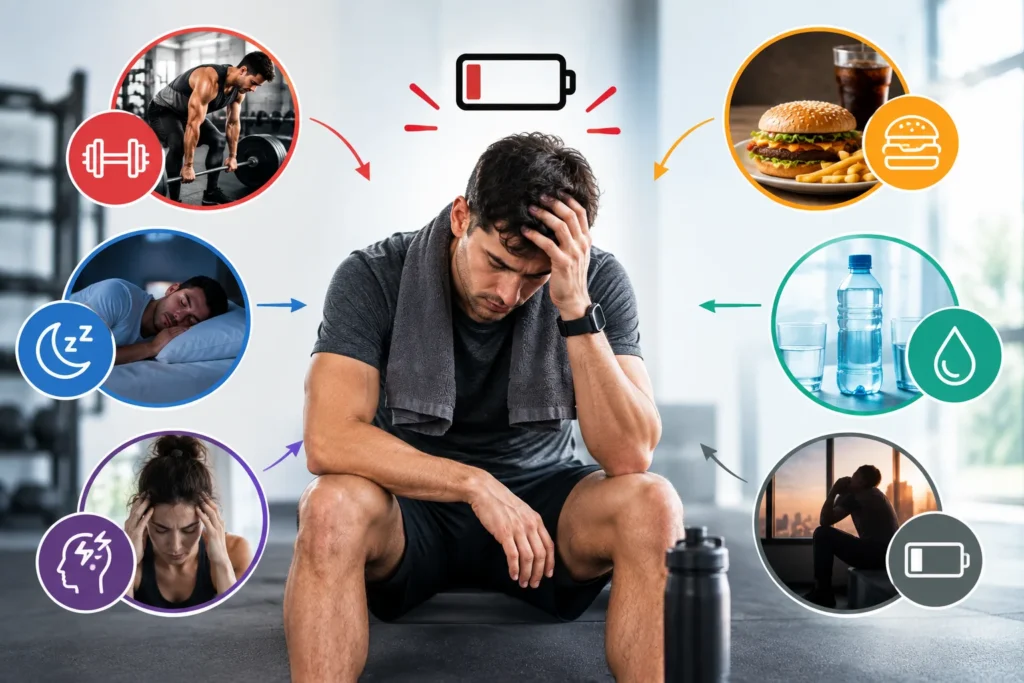
Overtraining-related problems can emerge when the overall stress placed on the body repeatedly exceeds the recovery available. Training load is only one part of that equation: sleep, nutrition, hydration, illness, psychological stress, and travel can all affect how well an athlete adapts. The same training plan may be manageable for one person but excessive for another, or become difficult to tolerate during a stressful period. The practical goal is not to avoid hard training; it is to balance training demands with enough recovery and to adjust when the athlete’s response changes.
How Can Excessive Training Load Increase the Risk?
A rapid increase in training volume, intensity, frequency, or competition demands can leave too little time to recover. Risk may also rise when several demanding sessions are scheduled close together without accounting for the athlete’s training history or current condition. More training is not always more productive: if fatigue accumulates faster than adaptation, the athlete may stop progressing or begin to lose performance.
Manage load by considering the whole week rather than a single workout. Record session duration and perceived effort, note unusually demanding sessions, and monitor performance trends. Progress training gradually when possible, and avoid making large simultaneous increases in volume and intensity. If a planned session feels unusually difficult or performance has been declining, modifying the session can be more useful than forcing the original plan.
How Do Poor Sleep and Nutrition Affect Recovery?
Sleep supports physical and cognitive recovery, while adequate energy and nutrient intake help meet the demands of training. Repeatedly sleeping too little or eating insufficiently for the workload can make sessions feel harder and interfere with recovery. Athletes who train frequently may underestimate how much food they need, particularly when they are also trying to lose weight.
A practical approach is to maintain a consistent sleep routine and eat enough to support training, including regular meals with carbohydrate, protein, and a varied range of nutrient-rich foods. Hydration should reflect exercise duration, environmental conditions, and individual sweat losses. Supplements cannot compensate for a persistently inadequate recovery routine. If unexplained fatigue continues, especially alongside unintended weight loss, recurrent illness, or changes in normal bodily function, seek advice from a qualified healthcare professional or sports dietitian.
How Can Life Stress Contribute to Training Maladaptation?
The body responds to more than exercise. Work pressure, emotional strain, travel, disrupted routines, and family responsibilities can reduce sleep or make recovery habits harder to maintain. When these stressors occur alongside demanding training, the combined burden may affect mood, motivation, and performance.
This does not mean everyday stress inevitably causes overtraining syndrome. Rather, it is a reason to adjust training to the person’s current circumstances. During a particularly demanding week, an athlete may benefit from fewer hard sessions, more flexible scheduling, or a temporary reduction in volume. Briefly tracking stress and perceived recovery alongside training can reveal patterns that workout data alone may miss. The aim is to support consistent training over time, not to maintain peak intensity regardless of circumstances.
How Can You Monitor Overtraining Symptoms Before Performance Declines?
Early monitoring works best when it combines several simple indicators rather than relying on a single number or wearable device. Athletes can record training performance, perceived effort, sleep, mood, soreness, and general recovery in a brief daily log. The purpose is to identify meaningful changes from an individual baseline, not to diagnose a medical condition. A consistent record can also help coaches distinguish an isolated difficult session from a longer pattern of under-recovery. Monitoring should remain practical: a few repeatable measures that are reviewed regularly are more useful than a complicated system that is rarely maintained.
Which Changes in Training Performance Should You Track?
Choose measures that reflect your sport and training goals. Strength athletes might record working weight, repetitions, and perceived effort; runners could monitor pace, distance, and how demanding a familiar route feels. Team-sport athletes may track training availability, session effort, and whether normal drills feel unusually difficult.
| What to track | What to notice |
|---|---|
| Performance | Repeated decline in familiar workouts |
| Perceived effort | Normal sessions feel unusually demanding |
| Fatigue and soreness | Symptoms persist or worsen between sessions |
| Sleep and mood | Ongoing changes from usual patterns |
| Training load | Sudden increases or repeated hard sessions |
Use trends rather than isolated readings. A poor result may reflect weather, stress, illness, or ordinary variation. If several indicators change together and remain abnormal, review the training plan and recovery habits.
How Can You Use Sleep, Mood, and Perceived Recovery Logs?
A short daily check-in can make recovery easier to assess. Each morning, note sleep quality, energy, mood, muscle soreness, and readiness to train. A simple rating scale—such as 1 to 5—can help you compare how you feel across days, provided you use the same scale consistently.
Pair these subjective notes with training data. For example, if a workout feels much harder than usual while sleep quality and motivation have also declined for several days, that combination is more informative than any one measure alone. Keep the process brief and honest; the goal is to recognize patterns, not to achieve a perfect score. Share persistent changes with your coach or healthcare professional when appropriate.
Can Heart Rate Variability Help You Monitor Recovery?
Heart rate variability (HRV) describes variation in the time between consecutive heartbeats. Some athletes use resting HRV trends as one part of their recovery monitoring, often through a wearable device. However, HRV varies between people and can be influenced by sleep, stress, illness, alcohol, measurement conditions, and other factors.
An unusually high or low reading does not independently confirm overtraining. If you use HRV, measure it consistently and interpret the trend alongside how you feel and perform. Avoid changing your entire training plan based on one reading or an app’s readiness score. HRV is best treated as supporting information—not a diagnosis or a substitute for professional assessment when symptoms persist.

What Should You Do If You Notice Signs of Overtraining?
If several warning signs are developing, respond early rather than trying to overcome them by adding more training. Review recent changes in volume and intensity, sleep, nutrition, hydration, and non-training stress. Depending on the pattern and severity, you may need to reduce demanding sessions, take additional rest, or seek professional assessment. There is no single recovery schedule suitable for everyone, and suspected overtraining syndrome should not be managed solely through an online checklist. The goal is to restore health and consistent performance through a measured, individualized approach.
When Should You Reduce Training Volume or Intensity?
Consider reducing training stress when performance is repeatedly declining, normal sessions feel unusually difficult, or fatigue and soreness are not resolving as expected. Options may include temporarily reducing volume, replacing intense sessions with easy activity, adding rest days, or pausing training if symptoms are significant. The appropriate adjustment depends on the athlete’s condition and sport.
Avoid treating a deload as a fixed prescription that must be completed regardless of symptoms. If you improve, return progressively rather than immediately resuming your previous workload. If symptoms persist, worsen, or interfere with daily life, consult a healthcare professional. Athletes with severe or concerning symptoms should stop strenuous exercise and seek medical assessment.
How Can You Support Recovery Through Sleep and Nutrition?
Start with consistent fundamentals. Allow enough time for sleep, maintain regular meals, and ensure energy intake matches the demands of training. Include protein-containing foods throughout the day and sufficient carbohydrate to support demanding exercise. Drink fluids regularly and adjust hydration to conditions and individual needs.
Recovery also includes managing the schedule around training. Avoid stacking hard sessions when you are already struggling to recover, and make room for lower-stress days when needed. These measures can support normal recovery, but they are not a guaranteed treatment for overtraining syndrome. If persistent fatigue is linked to inadequate nutrition, an eating disorder, illness, or another medical issue, professional guidance is important.
When Should You Consult a Healthcare Professional?
Seek assessment when performance decline and fatigue persist despite reducing training stress, or when symptoms are severe, recurrent, or unexplained. A clinician can evaluate other possible causes—including illness, nutritional deficiencies, low energy availability, sleep problems, and mental-health concerns—before attributing symptoms to overtraining.
Do not wait for a particular number of weeks if symptoms are alarming or affect everyday functioning. Chest pain, fainting, severe weakness, or unusual breathlessness warrant prompt medical attention. Coaches can help adjust training, but they should not diagnose medical conditions. For athletes, coordinated support from a healthcare professional, coach, and sports dietitian may help address both training demands and recovery needs.
How-To: What Should You Do When You Notice Possible Overtraining Symptoms?
A practical early-response checklist
- Review your recent trainingCompare the past few weeks with your normal workload. Look for abrupt increases, repeated intense sessions, or reduced rest.
- Check for symptom patternsNote fatigue, performance, sleep, soreness, mood, and motivation. Consider whether several changes are happening together.
- Adjust training stressIf symptoms are persistent, reduce demanding work or rest as appropriate. Do not force high intensity through significant fatigue.
- Support recovery basicsPrioritize sleep, sufficient food, hydration, and manageable scheduling. Address life stress where possible.
- Reassess and seek help if neededTrack whether symptoms improve. If they persist, worsen, or are severe, consult a qualified healthcare professional.
Conclusion
Recognizing overtraining symptoms early means looking for persistent patterns—not reacting to one difficult workout. Ongoing fatigue, declining performance, disrupted sleep, and changes in mood or motivation can signal that training demands and recovery are out of balance, but they can also have other causes. Track your personal baseline, adjust training when warning signs accumulate, and seek qualified support when symptoms persist or become severe.
For athletes and fitness enthusiasts, sustainable progress depends on training and recovery working together. Use the guidance in this article to review your habits, monitor changes, and make informed adjustments. Explore more evidence-informed training and recovery guidance on 5dfitness to support your long-term performance.
FAQ
Common warning signs include persistent fatigue, declining performance, prolonged soreness, changes in sleep, irritability, and reduced motivation. These symptoms are not specific enough to diagnose overtraining on their own.
Look at the duration and combination of symptoms. A single tired day is common; repeated performance decline alongside ongoing fatigue, sleep, or mood changes deserves closer attention.
Yes, excessive accumulated training stress with inadequate recovery can be associated with reduced performance. However, strength or endurance decline can also have other causes, including illness, insufficient nutrition, or poor sleep.
There is no universal recovery timeline. Ordinary fatigue may resolve relatively quickly, while prolonged maladaptation can take much longer. Persistent symptoms should be assessed rather than managed using a fixed online timetable.
Not every warning sign requires complete rest, but persistent or significant symptoms are a reason to reduce training stress and reassess. Stop strenuous exercise and seek medical advice if symptoms are severe or concerning.
Poor sleep and life stress can add to the overall recovery burden and affect training performance. They should be considered alongside training load, nutrition, and health.