Choosing where to train sounds simple until real life enters the decision. At home, the commute disappears and a 30-minute session can begin immediately. In a gym, equipment, coaching, and a dedicated environment may make progression easier. Home vs Gym Training in Oman is therefore a decision about which setting helps you perform the right work consistently.
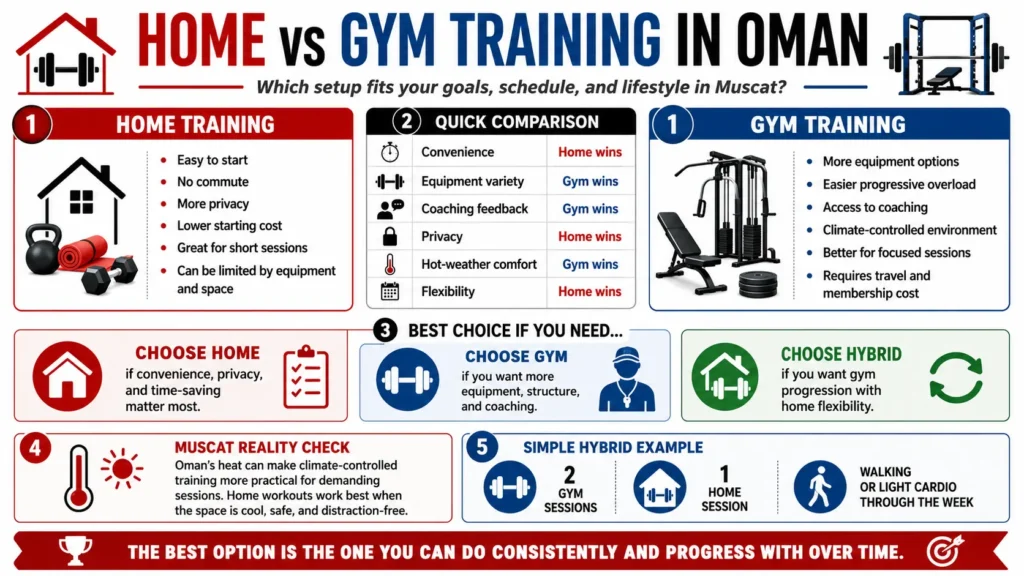
The direct answer is that both home and gym workouts can improve fitness. The better choice depends on your goal, available equipment, need for feedback, budget, schedule, and ability to stay consistent. A person can waste a premium membership through irregular attendance, while another can outgrow a home setup because the resistance is no longer challenging enough.
Listen
The Location Matters Less Than the Training System
Results come from the training dose you can repeat: appropriate exercise selection, enough weekly work, progressive challenge, recovery, and adherence. The 2026 American College of Sports Medicine position stand found that resistance training improves strength, muscle size, power, endurance, balance, and physical function. It also reported that equipment type and exercise complexity did not consistently determine outcomes for the average healthy adult.
“The best resistance training program is the one you’ll actually stick with.”
Stuart M. Phillips, PhD, FACSM, Professor of Kinesiology — American College of Sports Medicine
This is the central principle for gym vs home workout decisions. Home training can remove friction. Gym training can improve focus, exercise choice, and accountability. Neither compensates for random programming.
Research comparing delivery formats does not produce one universal winner. In adults with chronic health conditions who had already completed supervised training, gym-based exercise and supported home exercise produced similar long-term outcomes and adherence. An earlier trial in sedentary women found that beginning in a supervised centre improved retention. These populations are specific, but the practical lesson is broader: support, programming, and follow-up can matter as much as location.
Beginners should first understand movement patterns and progression. A structured beginner gym workout in Oman can clarify how squats or leg presses, hinges, pushes, pulls, carries, and cardio fit into a balanced week.
Home vs Gym Training in Oman: Side-by-Side Comparison
The table compares practical differences rather than assuming one format is universally superior.
| Factor | Home Training | Gym Training | Better Choice When |
|---|---|---|---|
| Convenience | No commute; easy to start | Requires travel and preparation | Home if time friction causes missed sessions |
| Equipment | Limited by space and budget | Machines, cables, free weights, and cardio tools | Gym when broader loading options matter |
| Coaching | Usually remote or occasional | In-person feedback may be available | Gym when technique guidance is important |
| Progression | Effective with bodyweight, bands, and selected weights | Easier to increase load in small steps | Gym for long-term strength or hypertrophy goals |
| Privacy | High | Shared environment | Home if privacy improves participation |
| Focus | Can be interrupted | Dedicated training setting | Gym if home distractions reduce quality |
| Cost | Lower entry cost; equipment can accumulate | Membership and possible coaching fees | Depends on usage and equipment needs |
| Climate | Comfort depends on the home space | Usually climate-controlled | Gym during demanding hot-weather sessions |
The key question is whether the setup supports measurable progression and realistic attendance. A home plan using the same light resistance indefinitely will stall. A gym plan that changes exercises every session can also stall. The guide to common gym mistakes explains why novelty, exhaustion, and heavier weights are not substitutes for a repeatable program.
When Home Training Is the Smarter Option
Home training works especially well when the main barrier is starting. It removes the commute and makes shorter sessions practical before work, during a lunch break, or after family responsibilities.

A useful home setup may include:
- Adjustable dumbbells or selected fixed weights
- Resistance bands with secure anchor points
- A stable bench or step
- A mat and clear floor space
- A written program and training log
Bodyweight squats, split squats, push-ups, rows with suitable equipment, hip hinges, loaded carries, and conditioning intervals can create a productive foundation. The limitation appears when an exercise cannot be made sufficiently challenging without compromising technique or adding excessive repetitions.
“Technique is the most important thing.”
Jimmy Russomano, MS, CSCS, Strength and Conditioning Specialist — Hospital for Special Surgery
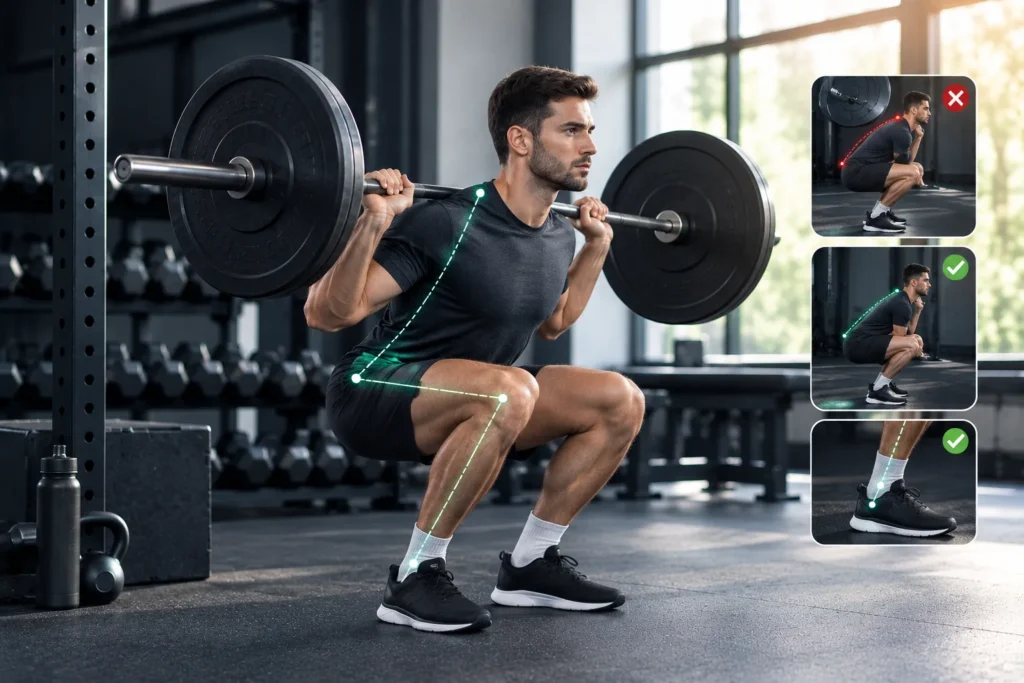
Technique still matters without a barbell. Filming selected sets, using remote coaching, and choosing stable variations can improve feedback when training alone. Review injury-risk management principles if discomfort, poor setup, or unsuitable progressions keep appearing.
Where a Gym Creates a Clear Advantage
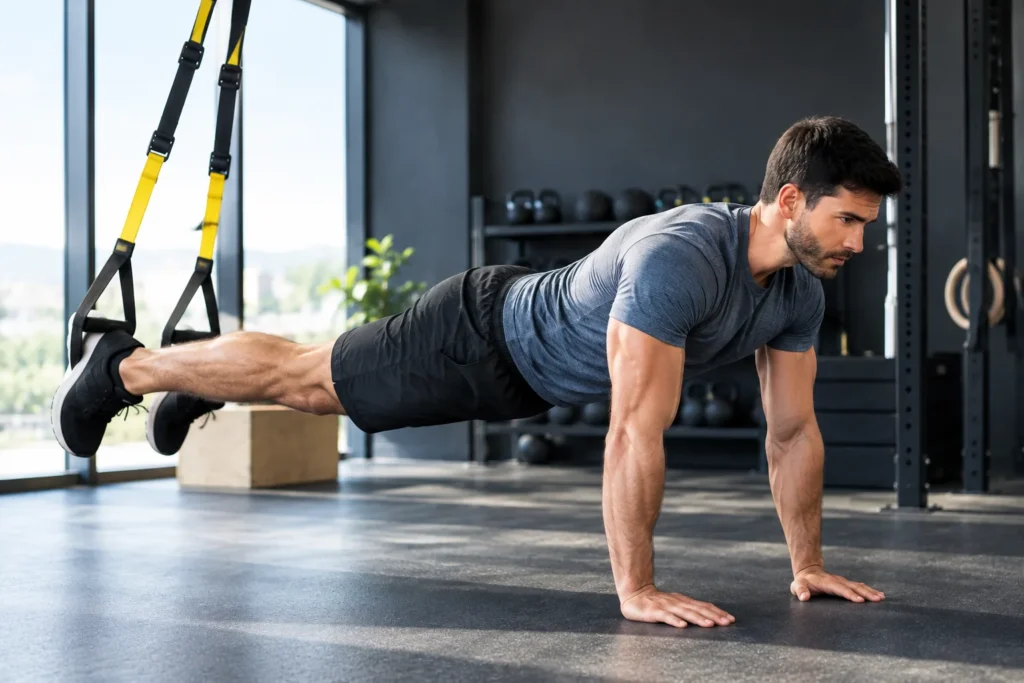
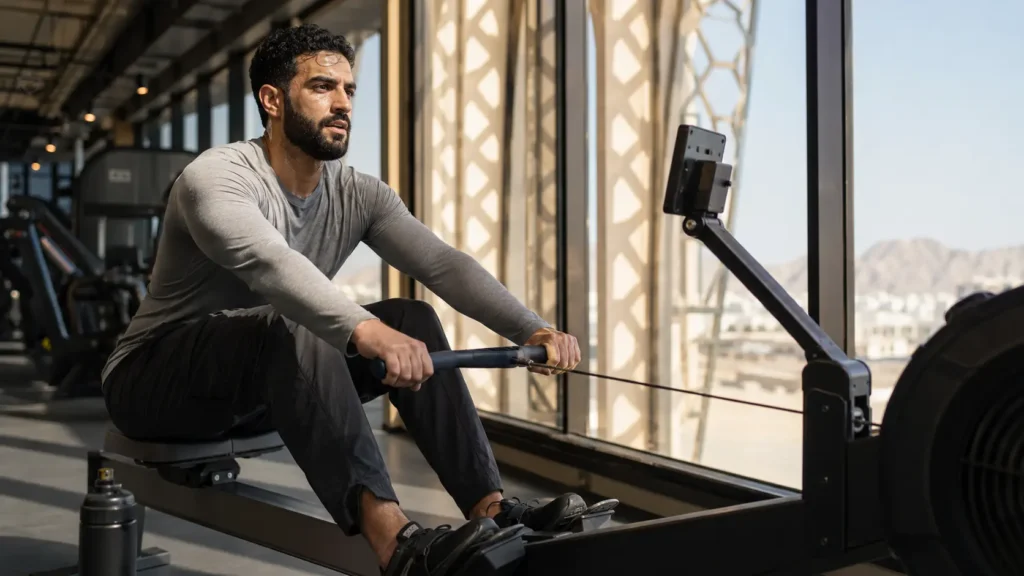
A gym becomes valuable when the goal demands more loading options, the home environment is distracting, or technical feedback would improve the plan. Machines provide stability, cables allow varied resistance angles, and free weights make progressive overload easier to quantify. Cardio equipment also gives indoor options when outdoor conditions are uncomfortable.
Equipment Expands the Program
For muscle gain or strength, a gym often delays the point at which equipment becomes the limiting factor. A structured strength training plan can use small load increases, different repetition ranges, and exercises selected around anatomy and training history. The advantage is not that gym exercises are automatically superior; the facility gives the program more tools.
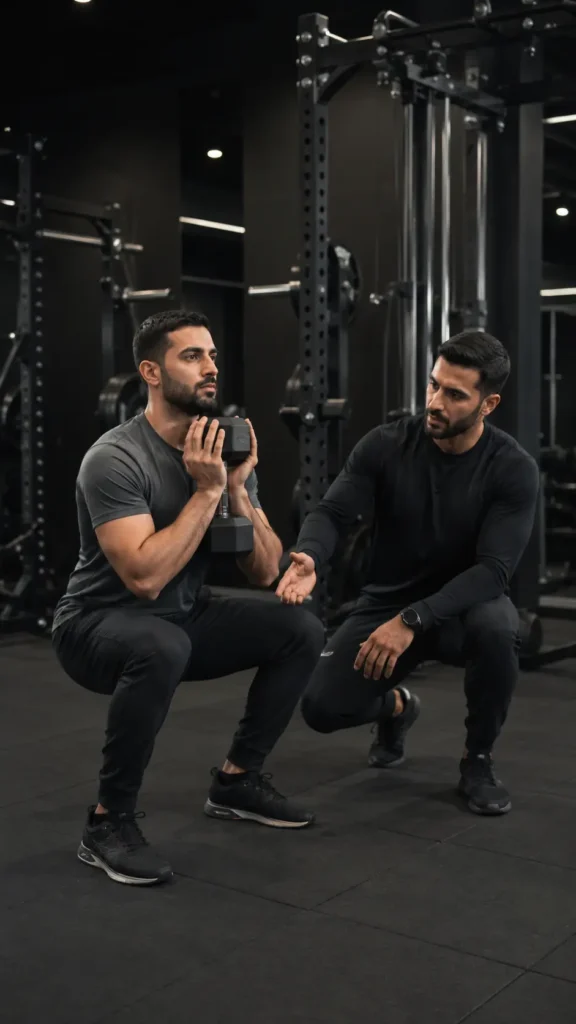
A coach may notice shortened range, unstable repetitions, or unnecessary fatigue before the trainee recognizes it. Fixed appointments can also help people who repeatedly restart or cannot judge appropriate effort.
More Equipment Does Not Mean Unlimited Volume
A larger exercise menu can tempt people to do more work than they can recover from. Planned rest days and practical post-workout recovery habits matter whether the session uses a resistance band or a fully equipped strength floor.
Muscat Changes the Calculation
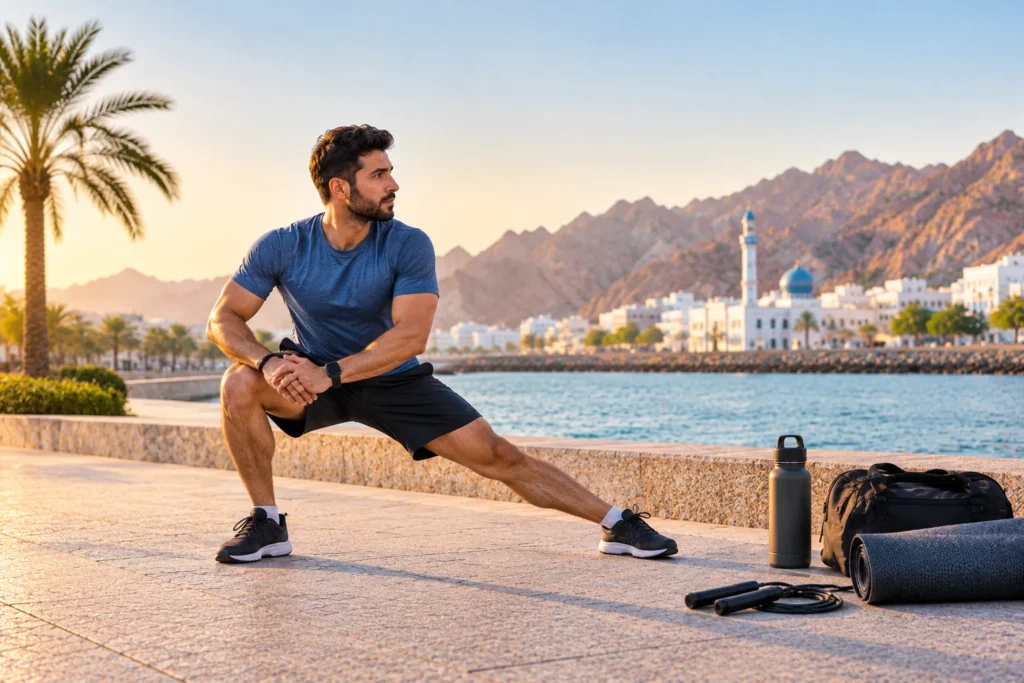
Oman’s climate makes the home-versus-gym decision practical. Outdoor home-style training on a balcony, rooftop, garden, or promenade may become difficult during hotter periods. The CDC advises moving exercise to cooler times, reducing midday exposure, pacing activity, and stopping if faintness or weakness develops.
A climate-controlled gym provides a predictable environment for demanding strength sessions, intervals, or longer cardio. Home training can offer the same benefit when the room is adequately cooled, ventilated, and safe. Hydration still matters because commuting, outdoor work, and earlier heat exposure can affect readiness.
Space matters too. Jumping, loaded carries, overhead movements, and band anchors require clearance and stable surfaces. Neighbours, flooring, children, pets, and shared rooms can change what is realistic. Do not force a fashionable workout into a space that cannot support it safely.
A Hybrid Plan Often Solves the Real Problem
Many people do not need to choose one format permanently. A hybrid structure can place equipment-dependent work in the gym and low-friction sessions at home:
- Two gym sessions for progressive full-body resistance training
- One home session for mobility, core work, light conditioning, or technique practice
- Walking or easy aerobic work around the weekly schedule
This model protects consistency when work becomes busy. A purposeful stretching routine can fit at home, while heavier squats, presses, rows, and hinges remain in the gym.
“But if you can make physical activity habitual, being active becomes a lot easier.”
David Conroy, Kinesiology Researcher — Penn State University
Habit design matters more than loyalty to one location. Use fixed training windows, prepare clothing in advance, and define a minimum session for difficult days. The fitness psychology guide explains why a reliable return rule usually works better than waiting for motivation.
Choose the Environment That Fixes Your Bottleneck
For Home vs Gym Training in Oman, start with the problem that currently limits progress. Choose home training when convenience, privacy, or schedule flexibility is the main barrier and you can create enough resistance. Choose gym training when you need broader equipment, heavier loading, fewer distractions, or direct coaching. Choose a hybrid plan when your week needs both structure and flexibility.
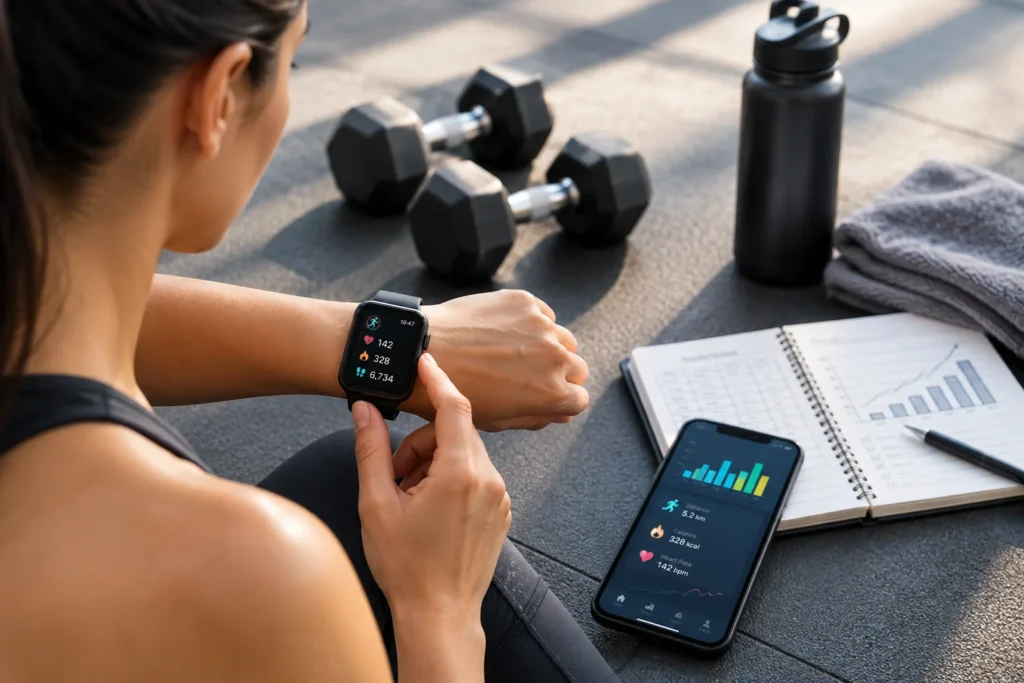
Test the decision for four to six weeks. Track attendance, exercises, sets, repetitions, load, movement quality, and recovery. If the plan is not working, identify whether the problem is the environment, the program, or execution before buying equipment or changing routines again.
The best answer to Home vs Gym Training in Oman is the setup that produces consistent, progressive, well-recovered training. If you want help matching the environment and program to your goal, schedule, and current ability, contact 5D Fitness to discuss structured coaching or a premium gym experience in Muscat.
FAQ
Both can work. Beginners often benefit from gym coaching, while home training suits those needing privacy, convenience, and a simple routine.
Yes, if exercises become progressively harder through added load, repetitions, range, tempo, or more demanding variations.
Not automatically. Weight loss depends mainly on energy balance, activity, resistance training, recovery, and adherence rather than workout location.
Many adults progress with two to four structured sessions weekly, depending on goals, experience, recovery, and other activities.
A mat, resistance bands, and adjustable dumbbells cover many needs. Add equipment only when your program requires it.
Yes. Use the gym for equipment-dependent strength work and home sessions for mobility, core work, or short conditioning.
Climate-controlled training is often more practical for demanding sessions. Outdoor activity should move to cooler times with appropriate hydration.
It can support programming and accountability, but in-person coaching offers immediate technique feedback and easier exercise adjustments.
Choose a gym when equipment limits progress, home distractions reduce quality, or coaching and scheduled sessions improve consistency.
Stop for faintness, severe weakness, chest pain, sudden sharp pain, neurological symptoms, or concerning symptoms that persist.