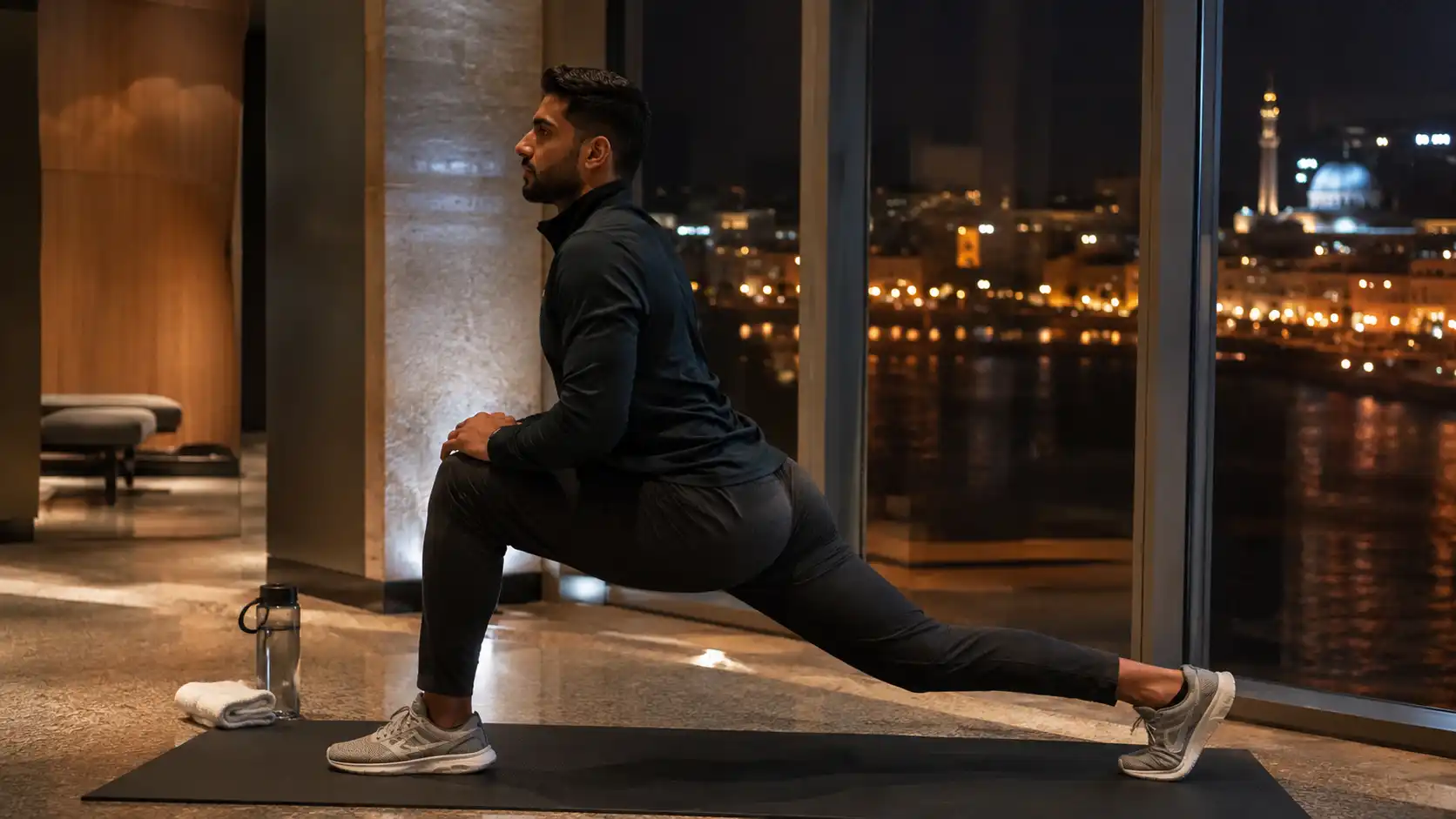
You finish a long day at a desk, drive through Muscat traffic, step into the gym, and your hips feel locked. The instinct is familiar: pull the heel toward the glute, touch the toes for a few seconds, circle the shoulders, and call it stretching. Then the first squat still feels stiff.
Searches for Stretching Routine in Oman often begin with that frustration: What should I stretch, when should I stretch, and how long should I hold it? The useful answer is not one universal list of ten stretches. Your routine should change depending on whether you are preparing to lift, improving range of motion, or returning from hours of sitting.
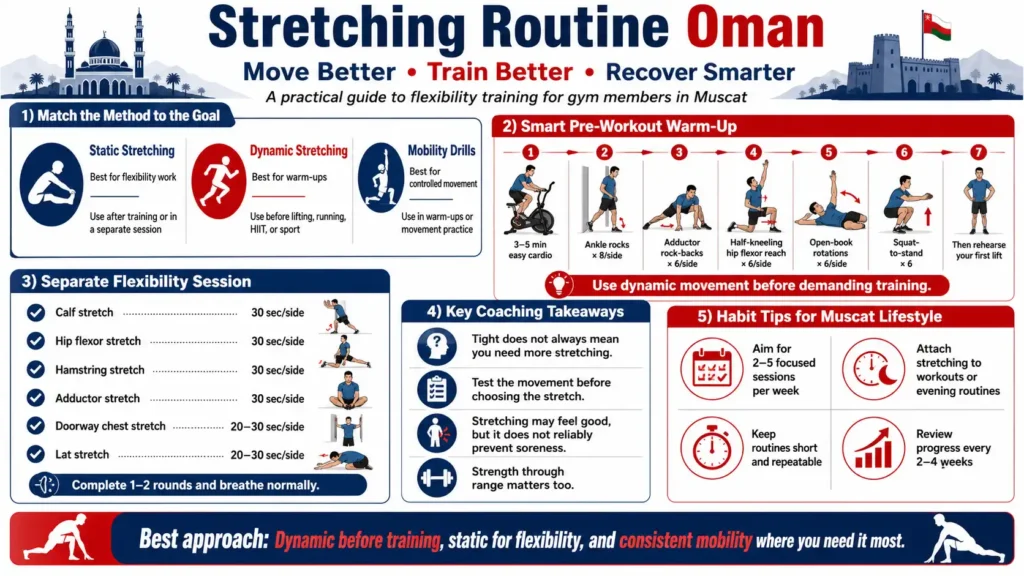
Stretching can improve flexibility and create more movement options. It is not a magic recovery button or a substitute for strength through controlled range. Use the right method for the right job.
Listen
Stretching Is Not One Thing: Match the Method to the Goal
A productive plan starts by separating flexibility work from warm-up work. Static stretching, dynamic stretching, and mobility drills can all be useful, but they solve different programming problems.
Static stretching holds a muscle-tendon unit in a lengthened position. Dynamic stretching repeatedly moves joints through controlled range. Mobility work is broader and often combines range with active control, coordination, or strength.
That distinction matters. Someone may pull a knee high toward the chest while lying down but struggle to control hip flexion in a deep squat. The first task shows passive range; the second exposes whether that range is usable in a loaded movement.
| Method | Main purpose | Good timing | Practical example |
|---|---|---|---|
| Static stretching | Develop or access passive range | Separate flexibility work or after training | 30-second calf stretch |
| Dynamic stretching | Prepare movement through repeated range | Before lifting, running, HIIT, or sport | Walking lunge with reach |
| Mobility drill | Improve controlled joint movement | Warm-up or separate movement work | Ankle rock with heel down |
| Exercise-specific ramp-up | Prepare the exact training pattern | Before working sets | Bodyweight squat to empty-bar squat |
A randomized study of adults with limited hamstring flexibility found 30-second static holds effective for improving hamstring range of motion over six weeks. That does not create a perfect 30-second rule for every muscle or population, but it shows why deliberate flexibility training differs from bouncing through a random stretch.
“The change in flexibility appeared to be dependent on the duration and frequency of stretching.”
William D. Bandy, PhD, PT, SCS, ATC, et al. — Physical Therapy
Decide what you are trying to change. For gym preparation, movement should become progressively more active and specific. For flexibility training, use repeatable positions and enough consistent exposure to measure whether range improves.
The Warm-Up Question: Static or Dynamic Before Training?
Before a demanding workout, dynamic preparation usually makes more sense than making long passive holds the entire warm-up. You want to raise temperature, move the joints you will use, rehearse key patterns, and gradually approach training intensity. That is especially relevant before sprinting, jumping, heavy squats, HIIT, padel, or squash.
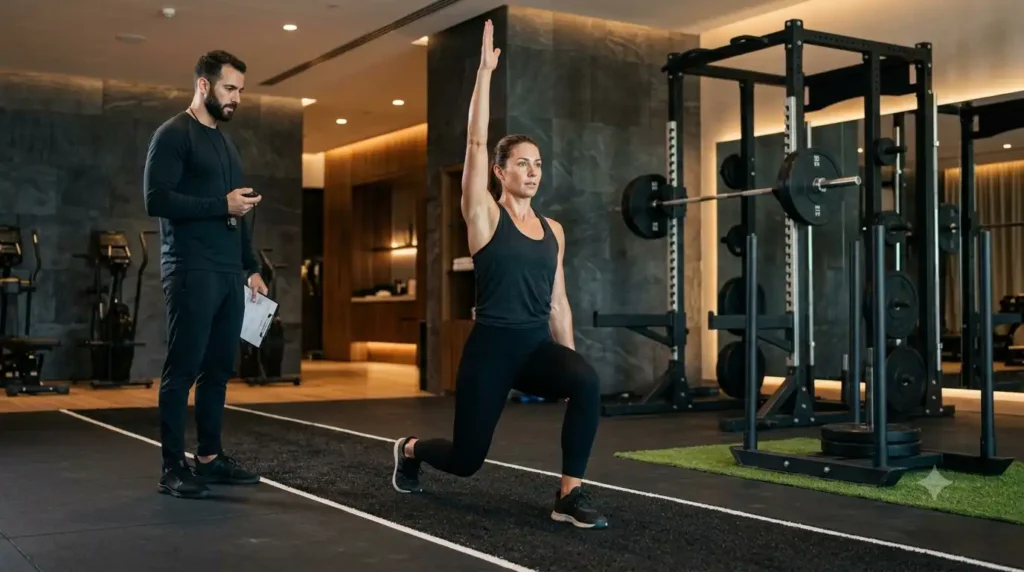
The blanket advice “never static stretch before training” is still too crude. The effect depends on stretch duration, the activity that follows, and whether a full warm-up continues afterward.
Use Movement to Build Readiness
Imagine a leg session built around squats and Romanian deadlifts. Five minutes on a treadmill may raise body temperature, but it does not specifically rehearse ankle dorsiflexion, hip motion, trunk position, or the squat pattern.
A more specific sequence could include ankle rocks, adductor rock-backs, a controlled lunge with reach, squat-to-stand repetitions, bodyweight squats, and progressively heavier warm-up sets. This fits naturally beside a structured strength training program because every drill has a reason.
Dynamic does not mean frantic. Coaches often see people turn leg swings into uncontrolled kicking or rush walking lunges until balance disappears. A warm-up should improve movement quality as intensity rises.
Think About Sequencing Before Explosive Work
In a randomized crossover trial involving elite Gaelic footballers, static stretching immediately before performance reduced sprint speed and jump outcomes. Dynamic stretching after the static work improved performance relative to static stretching alone.
“Static stretching reduced sprint speed by 1.1% over 40 m and 1.0% over 20 m.”
Martin Loughran et al., research authors — Physical Therapy in Sport
Do not overgeneralize an elite field-sport study to every member. The useful coaching implication is sequencing: if maximal force, speed, or reactivity matters, do not make prolonged passive stretching your final preparation.
Before a high-intensity interval session or heavy strength workout, finish with active drills and exercise-specific practice. If a short static stretch helps you access a restricted position, follow it with controlled movement and rehearse the task.
A Practical Stretching Routine Oman Gym Members Can Use
The best routine is not the longest one. It is the shortest sequence that addresses your movement needs and fits the session. A practical Stretching Routine Oman gym members can use should have two versions: pre-training movement preparation and separate flexibility work.
Eight-Minute Pre-Training Movement Sequence
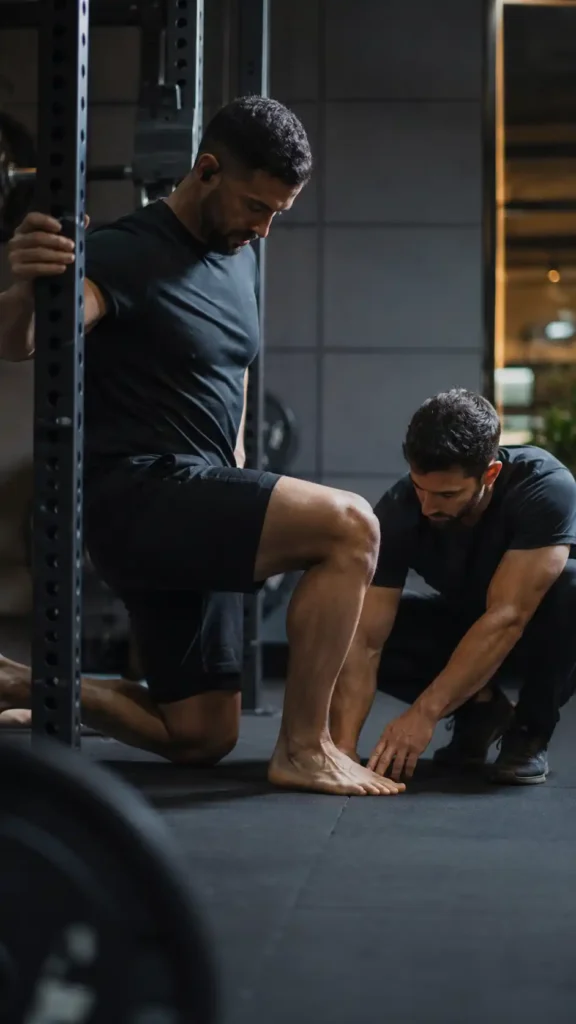
Start with three to five minutes of easy walking, cycling, or rowing. Then use a short movement sequence:
- Ankle rocks, 8 per side: Keep the heel down and guide the knee forward without collapsing the arch.
- Adductor rock-backs, 6 per side: Extend one leg sideways from a hands-and-knees position and sit the hips back slowly.
- Half-kneeling hip flexor reach, 6 per side: Lightly tuck the pelvis, squeeze the rear glute, and reach overhead.
- Open-book rotations, 6 per side: Rotate through the upper back without forcing the lower back.
- Squat-to-stand, 6 reps: Use a comfortable depth and pause where control starts to disappear.
- Movement-specific rehearsal: Perform easy versions of the first exercise in your workout.
This can work before a full-body workout, but it should not stay identical forever. Upper-body training may need more shoulder preparation; runners may emphasize calves and ankles.
Beginners should avoid copying an advanced athlete’s 25-minute mobility circuit. A simple routine paired with a sensible beginner gym structure is easier to repeat and evaluate.
Ten-Minute Flexibility Routine for a Separate Session
Use this after training or at another time when range of motion is the goal. Hold each position at a strong but tolerable stretch; do not force numbness, sharp pain, or joint pinching.
- Calf stretch against a wall — 30 seconds per side
- Half-kneeling hip flexor stretch — 30 seconds per side
- Hamstring stretch with a neutral spine — 30 seconds per side
- Adductor stretch — 30 seconds per side
- Doorway chest stretch — 20–30 seconds per side
- Lat stretch using a stable support — 20–30 seconds per side
Complete one or two rounds. Breathe normally and avoid turning flexibility training into a pain-tolerance contest.
Someone following a push-pull-legs split may prioritize different areas across the week. A coach may remove unnecessary drills and spend more time on the joint that actually limits the target movement.
Tight Does Not Always Mean You Need More Stretching
Feeling tight is information, not a diagnosis. A muscle can feel stiff after unfamiliar training, prolonged sitting, fatigue, or repeated positions. Stretching may feel good without addressing the main reason a movement is limited.
A common gym mistake is assuming every shallow squat means “tight hamstrings.” The actual restriction may involve ankle range, squat stance, trunk control, or the ability to produce force near the bottom position.
Test the Movement Before Choosing the Stretch
Use a simple process:
- Identify the exercise or daily movement that feels restricted.
- Observe where control changes: heel lift, knee collapse, trunk shift, or loss of balance.
- Try one targeted mobility drill.
- Re-test the original movement immediately.
- Keep the drill if it improves the pattern or supports a longer-term flexibility goal.
This test-retest approach stops mobility work from becoming superstition. It also fits with smarter muscle recovery habits: improve readiness and training quality rather than collecting recovery rituals.
Stretching Is Not a Cure for Post-Workout Soreness
Stretching may be relaxing and can change how stiff you feel, but it should not be sold as a reliable way to erase delayed-onset muscle soreness.
In a controlled study of 62 healthy volunteers, researchers found no difference in peak soreness among step-test groups using static stretching, warm-up, both, or neither.
“We concluded that static stretching and/or warm-up does not prevent DOMS resulting from exhaustive exercise.”
David M. High, Edward T. Howley and B. Don Franks, research authors — Research Quarterly for Exercise and Sport
For ordinary training fatigue, manage sleep, hydration, food intake, training load, and rest. The guide to recognizing excessive training fatigue is more relevant than adding 20 minutes of stretching when performance keeps declining.
Severe soreness, sharp pain, significant swelling, or symptoms that do not improve should not be treated as normal stiffness. Seek assessment from a qualified healthcare professional.
Flexibility Training Works Better When It Becomes Trainable
Random stretching creates random feedback. Flexibility training improves when you treat it like a small training block: choose relevant positions, standardize technique, repeat the work consistently, and track whether the target range changes.
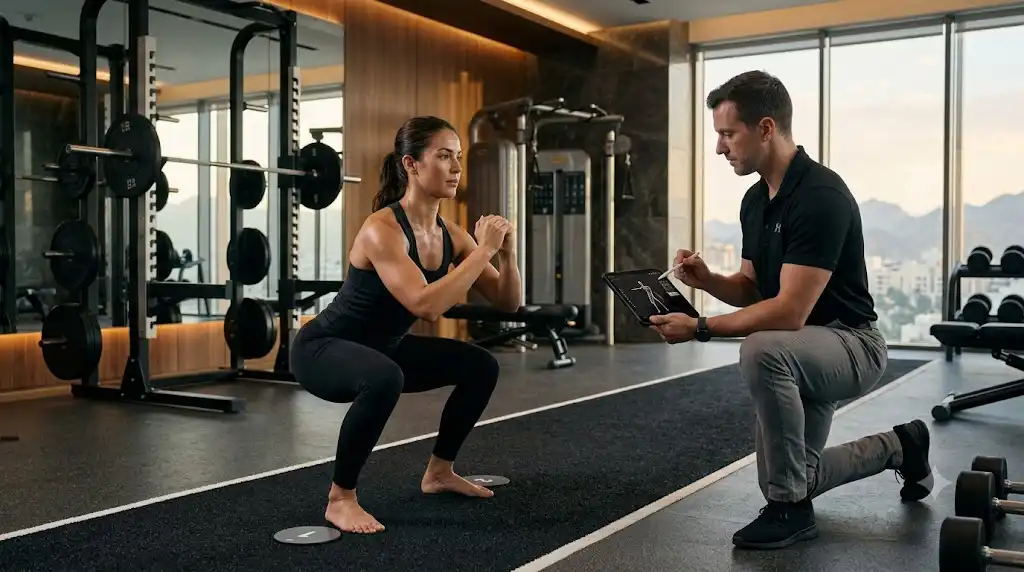
For most gym members, the useful target is enough range to perform chosen exercises with control and without compensating around a joint.
Measure a Movement That Matters
Choose a test linked to your goal. For ankle mobility, use a knee-to-wall test with the heel down. For shoulder flexion, assess an overhead reach without aggressively extending the lower back. For squat depth, film a controlled bodyweight squat from the side and front.
Re-test under similar conditions every two to four weeks. Daily testing creates noise because fatigue, temperature, and recent activity can change how range feels.
A randomized crossover study of team-sport athletes compared short static stretches, dynamic stretches, and no stretching inside a comprehensive preparation routine. Test performance did not differ between conditions.
“There were no effects of stretch condition on test performances.”
Anthony J. Blazevich et al., research authors — Medicine & Science in Sports & Exercise
That does not contradict the Gaelic football study. The protocols and warm-up context differed. The lesson is that stretching effects depend on dose and what happens next; a comprehensive preparation routine changes the context.
Strength Through Range Matters Too
Passive range is only one quality. You also need to control positions and produce force through the movement required by your sport or exercise.
A calf stretch may increase available ankle range, while a controlled split squat can help you use and strengthen that range. A passive adductor stretch and a lateral lunge solve different problems. Hanging passively and pressing overhead with sound technique are not interchangeable.
This is why flexibility work often belongs beside progressive resistance training. Structured coaching can help decide whether you need more passive range, better motor control, more strength at end range, or a different exercise selection.
The same priority rule applies to recovery. If your sleep schedule is undermining training recovery, a longer stretch routine will not compensate. Solve the largest constraint first.
Muscat Lifestyle Changes How You Build the Habit
A stretching plan in Muscat has to survive real life: air-conditioned offices, car travel, hot outdoor conditions, late training sessions, and schedules that may change during Ramadan. The best time to stretch is therefore partly a programming question and partly an adherence question.
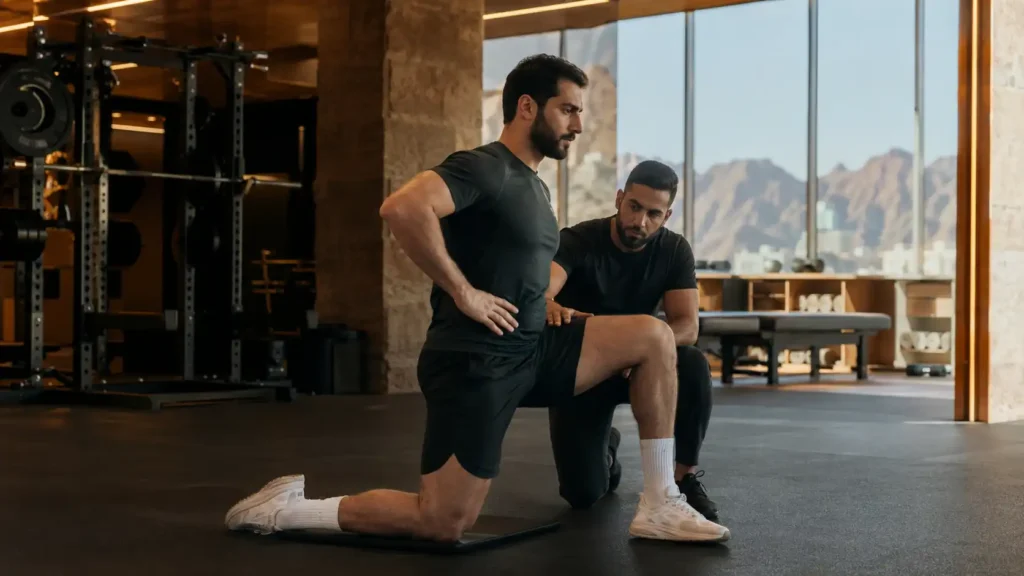
A 6:00 a.m. trainee may benefit from a longer gradual warm-up. An evening trainee who spent nine hours sitting may need targeted hip and thoracic movement. Racquet-sport players should prepare for accelerations and direction changes, not rely on two passive hamstring stretches.
Heat also changes perception. Walking from a hot car park may make you feel warm, but it does not specifically prepare you for heavy lifting or fast movement. General temperature and movement-specific readiness are not the same thing.
Use Habit Anchors Instead of Motivation
Attach flexibility training to something you already do:
- Two mobility drills immediately after easy cardio.
- Five minutes of static work after two selected weekly sessions.
- A short evening routine after changing out of work clothes.
- A 15-minute flexibility block on a lower-intensity recovery day.
Avoid starting with seven days per week without a clear reason. A complicated online routine may last four enthusiastic days, then disappear when work gets busy. Three repeatable sessions create better feedback than a routine you abandon.
At 5D Fitness, professional coaching can make the process more precise by linking mobility work to your squat, hinge, press, running mechanics, or sport demands instead of treating every “tight” feeling the same.
Build a Routine You Can Repeat, Not a Ritual You Dread
The most useful Stretching Routine Oman gym members can build is goal-specific. Use dynamic movement and progressive rehearsal before demanding training. Use static stretching deliberately when flexibility or passive range is the target. Re-test the movement you care about and keep drills that earn their place.
Do not judge a routine by discomfort. More pain does not mean more mobility, and more stretching does not automatically mean better recovery. If a joint pinches, symptoms radiate, or pain persists, seek appropriate clinical assessment.
Start with two or three movement limitations that matter to your training, perform targeted flexibility work consistently, and review the result after a few weeks. Pair it with structured programming, recovery, and strength through usable range.
For members in Muscat who are tired of guessing, 5D Fitness can connect flexibility work to a structured training plan. The objective is not to make stretching your new hobby; it is to move well enough to train with more control, confidence, and consistency.
FAQ
Two to five focused sessions weekly can be practical. Consistency, target muscle, stretch dose, and your current range all affect progress.
Use dynamic movement before demanding training. Static stretching often fits better after training or in a separate flexibility session.
Around 20–30 seconds is a practical starting point for many adults. Your goal, age, tissue, and training history can change the prescription.
Not reliably. Stretching may feel relaxing, but sleep, nutrition, hydration, and sensible training progression matter more for recovery.
No. Flexibility describes available range; mobility usually includes active control of that range during movement.
Yes, if the work is tolerable and appropriately dosed. Daily stretching is not mandatory for every goal.
Hip flexor, calf, chest, and thoracic mobility work may help, but choose drills based on the movement that actually feels restricted.
No. Strong tension can be acceptable, but sharp pain, pinching, numbness, or radiating symptoms are reasons to stop.
It can when limited range is the constraint. Ankle mobility, stance, trunk control, and strength may also affect depth.
Ask when the same restriction repeatedly changes technique, limits exercise selection, or remains despite consistent targeted flexibility work.