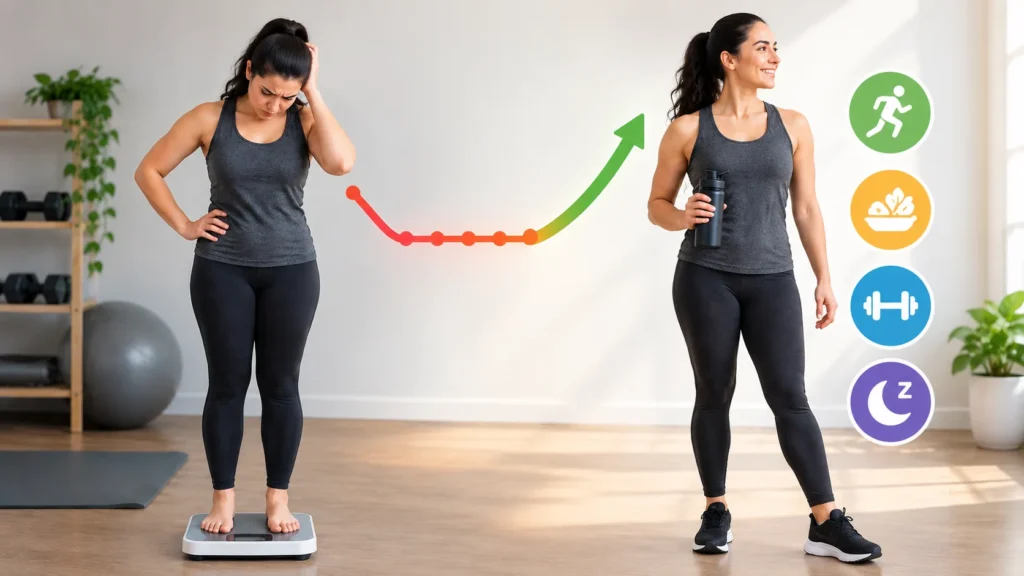
Lean body mass is a widely used fitness term that helps explain what your body is made of beyond stored fat. During fat loss, understanding lean body mass can help you look beyond the number on the scale and focus on improving body composition, maintaining strength, and supporting athletic performance. For athletes, bodybuilders, and fitness enthusiasts, the goal is not simply to lose weight but to lose excess fat while preserving valuable lean tissue. This guide explains what lean body mass means, why it matters, how to measure it, and which evidence-based strategies can help protect it during a fat-loss phase.
1. What Is Lean Body Mass and What Does It Include?
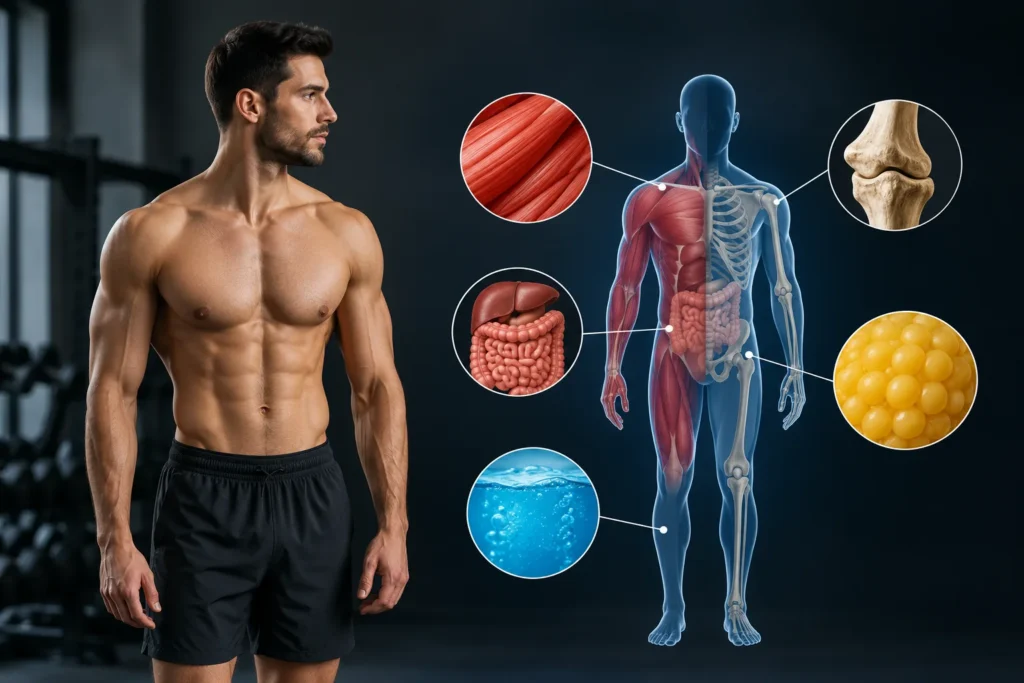
Lean body mass generally refers to the body’s non-fat components, including skeletal muscle, bones, organs, and body water. However, scientific terminology is more nuanced: fat-free mass is the more precise term for everything in the body excluding fat, while lean soft tissue is a different measurement category. Because fitness devices and websites sometimes use these terms inconsistently, it is important to understand what a measurement actually represents before using it to evaluate progress.
Is Lean Body Mass the Same as Muscle Mass?
No. Muscle mass is only one component of the body’s non-fat tissues. Lean body mass estimates may include water, bones, organs, and muscle, depending on the definition and measurement method. This distinction matters during fat loss because a change in estimated lean mass does not automatically mean that the same amount of muscle has been gained or lost. Water and stored glycogen can change with carbohydrate intake, hydration, and training. For a more meaningful assessment, combine body-composition measurements with strength performance, training consistency, and longer-term trends rather than relying on a single reading.
2. Why Does Lean Body Mass Matter During Fat Loss?
The quality of weight loss matters as much as the amount lost. A calorie deficit can reduce body fat, but depending on its severity, protein intake, training, and other factors, it can also reduce lean tissue. Preserving muscle is particularly important for athletes and people who want to maintain strength and physical function while becoming leaner. Tracking body composition can therefore provide useful context that body weight alone cannot. However, no single measurement fully describes health or fitness, and the ideal outcome depends on the individual’s goals, starting point, and training demands.
Can You Lose Fat Without Losing Muscle?
It is possible to reduce body fat while preserving much of your muscle, although complete prevention of lean-tissue loss cannot be guaranteed. A sustainable calorie deficit, sufficient protein, and regular resistance training improve the conditions for muscle retention. People who are already lean may need to lose weight more gradually because aggressive restriction can increase the risk of losing lean mass. Progress should be evaluated over several weeks using weight trends, waist measurements, training performance, and, where appropriate, body-composition assessments. Short-term fluctuations do not necessarily indicate a meaningful change in muscle tissue.
3. How Can You Preserve Lean Body Mass While Losing Fat?
Protecting lean tissue requires a coordinated approach to nutrition, training, and recovery. No single food, supplement, or workout guarantees muscle retention. Instead, the objective is to provide enough energy and nutrients to support training while maintaining a calorie deficit that encourages fat loss. The appropriate approach depends on body size, training experience, health status, and the amount of fat someone aims to lose. Athletes with demanding training schedules may need individualized guidance to balance performance, recovery, and body-composition goals.
Which Training and Nutrition Strategies Help Preserve Lean Mass?
Prioritize resistance training that challenges the major muscle groups, and adjust training volume when recovery becomes difficult. Consume adequate protein from suitable foods such as eggs, dairy products, fish, lean meat, soy, beans, and lentils. The International Society of Sports Nutrition states that “an overall daily protein intake in the range of 1.4–2.0 g protein/kg body weight/day” is sufficient for most exercising individuals seeking to build or maintain muscle mass. Individual needs during a calorie deficit can differ, so this range is guidance rather than a universal prescription. Sleep, rest days, and a balanced diet also help sustain training quality. Source: ISSN position stand on protein and exercise.
How Can You Build a Practical Fat-Loss Routine?
Use this simple How-to checklist to create a more consistent plan:
- Set a realistic calorie deficit: Avoid unnecessarily restrictive diets that make training and recovery difficult.
- Include resistance training: Maintain a structured program and monitor whether strength is broadly stable.
- Plan protein-rich meals: Distribute protein across meals in a way that fits your schedule and total daily needs.
- Support recovery: Prioritize sleep, hydration, and sufficient rest between demanding sessions.
- Review progress regularly: Look at several weeks of data instead of reacting to daily weight changes.
If strength declines persistently, fatigue increases, or recovery deteriorates, reassess calorie intake and training demands. A qualified sports dietitian can help personalize the plan.
4. How Can You Measure and Calculate Lean Body Mass?
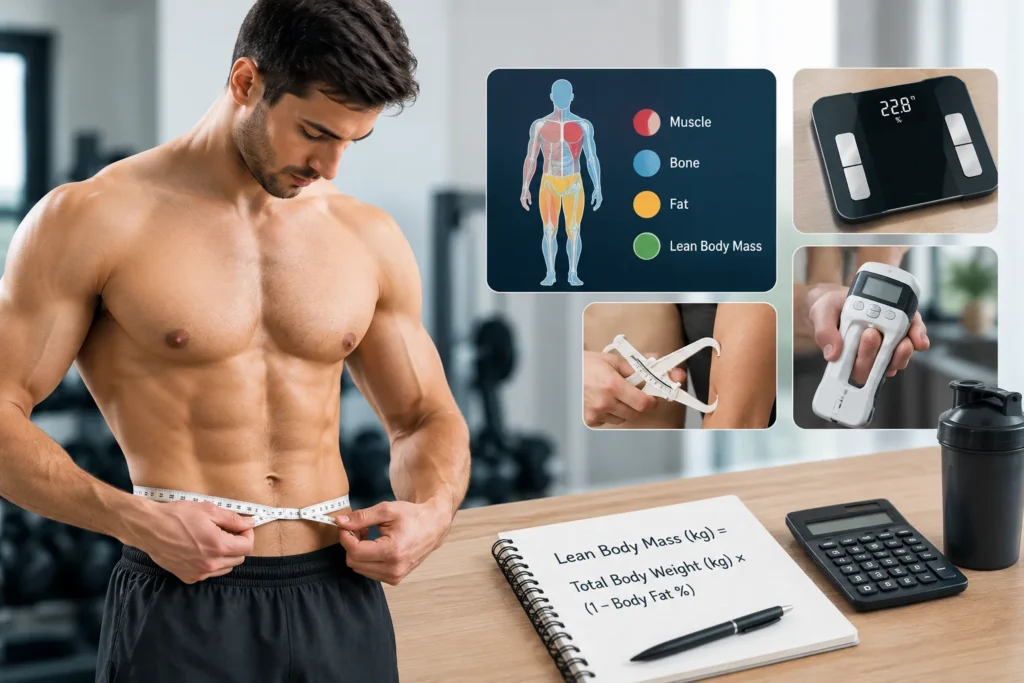
Measuring body composition can help you estimate how much of your body weight is fat and how much is non-fat tissue. Methods differ in cost, accessibility, and precision, so results should be interpreted in context. Consumer devices can be useful for tracking trends under consistent conditions, but their estimates are not interchangeable with laboratory assessments. The International Society of Sports Nutrition emphasizes that “All body composition assessment methods have strengths and limitations.” Source: ISSN position stand on diets and body composition.
Which Measurement Methods Can You Use?
Common options include bioelectrical impedance analysis (BIA), which estimates body composition using electrical properties; dual-energy X-ray absorptiometry (DXA), which estimates bone mineral content, fat mass, and lean soft tissue; and skinfold measurements, which estimate body fat using caliper readings. Each method has limitations. Hydration, recent exercise, food intake, device algorithms, and measurement technique can affect results. For tracking, use the same method under similar conditions and avoid comparing numbers from different devices as if they were directly equivalent.
How Do You Calculate an Estimated Lean Body Mass?
A simple estimate can be calculated if you know your body weight and estimated body-fat percentage:
Estimated fat-free mass = body weight × (1 − body-fat percentage as a decimal)
For example, a person weighing 80 kg with an estimated body-fat percentage of 25% would have an estimated fat-free mass of 60 kg:
80 × (1 − 0.25) = 60 kg.
This is an estimate, not a direct measurement of muscle mass. Its accuracy depends on the body-fat estimate and the definitions used by the measuring method.
5. How Can You Track Lean Body Mass Changes During Fat Loss?
A useful tracking system combines several indicators rather than relying on one body-composition number. Monitor body weight under consistent conditions, measure waist circumference periodically, and record training performance. If you use a body-composition device, follow its instructions and interpret changes over time. Changes in hydration and glycogen can temporarily affect estimated lean mass, so avoid making major adjustments based on a single result. The most useful approach is one that helps you assess trends while maintaining health, energy, and performance.
Which Indicators Should You Monitor?
| Indicator | What it helps you assess | Important limitation |
|---|---|---|
| Body-weight trend | Overall weight change | Does not distinguish fat from lean tissue |
| Waist measurement | Changes in body size | Does not directly measure body fat |
| Strength records | Training performance | Can fluctuate with fatigue and programming |
| Body-composition estimate | Approximate fat and lean-tissue trends | Depends on method and measurement conditions |
| Recovery and energy | How well the plan is tolerated | Subjective and affected by many factors |
Use these indicators together to guide decisions. If body weight decreases while strength remains broadly stable and waist measurements trend downward, progress may be consistent with your goals, but these indicators cannot prove that all muscle has been preserved.
Conclusion
Understanding lean body mass helps you evaluate fat loss more thoughtfully. Rather than focusing only on scale weight, combine sustainable nutrition, resistance training, recovery, and consistent progress tracking. Remember that lean mass estimates are not the same as direct measurements of muscle, and short-term fluctuations may reflect changes in water or glycogen. For more evidence-informed fitness guidance and practical training strategies, explore the educational resources available at 5dfitness and build a plan that supports both your physique and performance.
Frequently Asked Questions
Neither is universally more important. Body weight provides one useful measure, while body composition and performance add context. The right indicators depend on your goals.
Not necessarily. Lean body mass includes more than skeletal muscle, and estimates may also be influenced by body water and the method used.
No. Adequate protein can support muscle retention, particularly alongside resistance training, but it cannot guarantee that no lean tissue will be lost.
There is no universal schedule. Periodic assessments under consistent conditions are generally more useful than frequent measurements that encourage reactions to normal fluctuations.
A smart scale typically estimates body composition rather than measuring muscle directly. Use it to observe trends, not as an exact measure of muscle gain or loss.