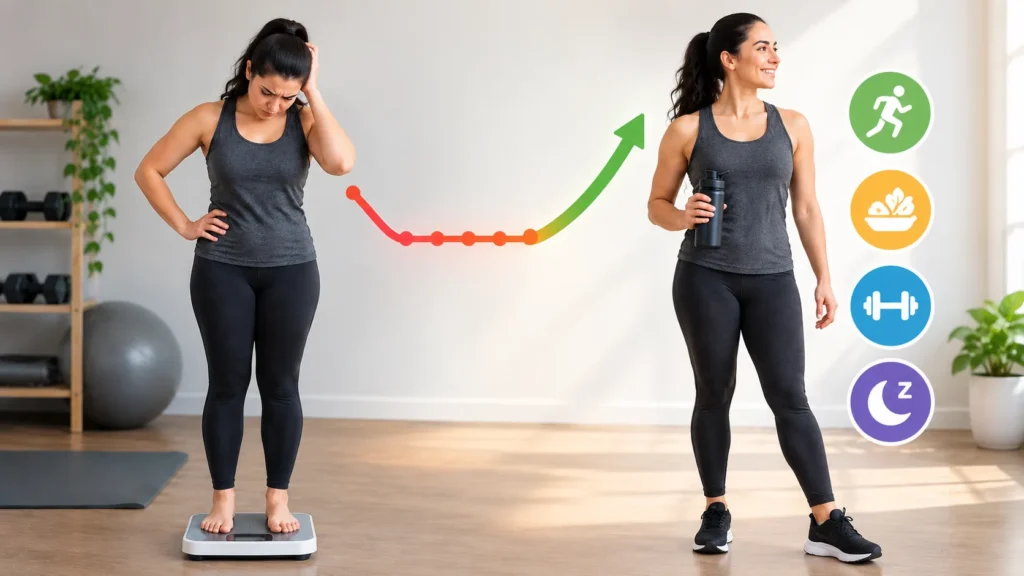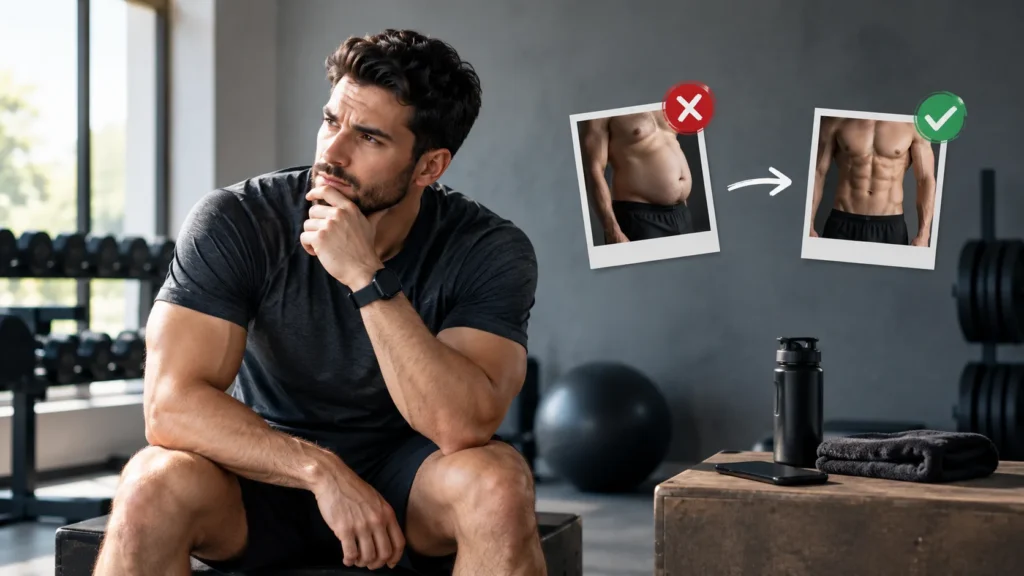
Your body transformation is about more than the number on the scale. Body transformation measurements help athletes, bodybuilders, and fitness enthusiasts track changes in body shape, body composition, and physical performance—even when body weight stays relatively stable.
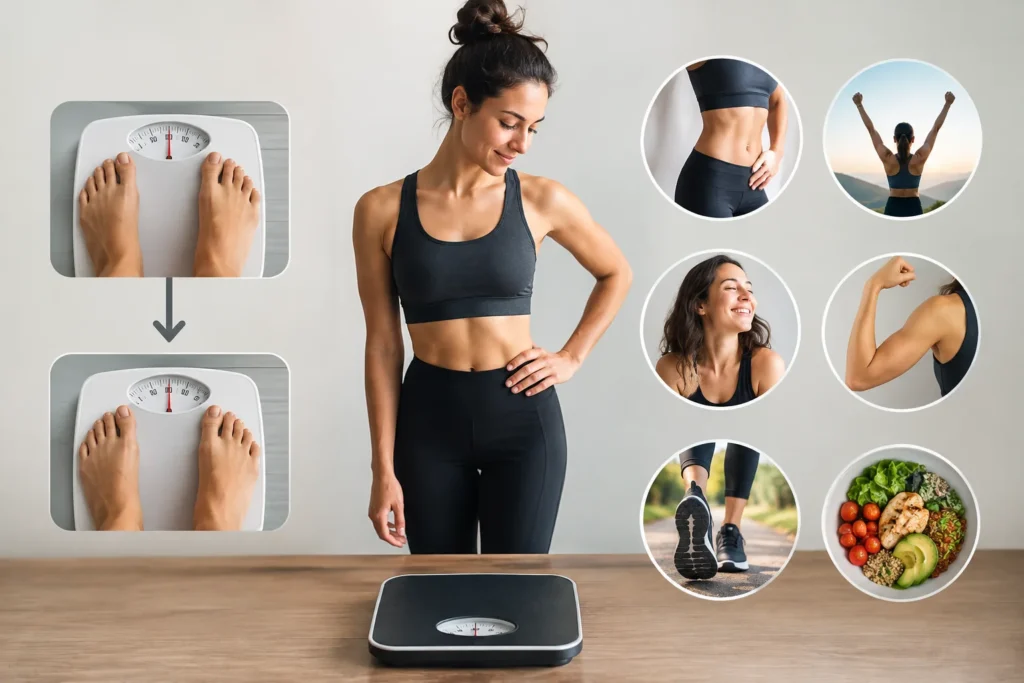
For readers of 5dfitness, this guide presents six practical ways to measure progress, explains how to collect more consistent data, and highlights the limitations of each method. Combining several indicators can provide a more complete picture of your transformation than relying on weight alone.
Listen
Why Is the Scale Not Enough to Measure Body Transformation Progress?
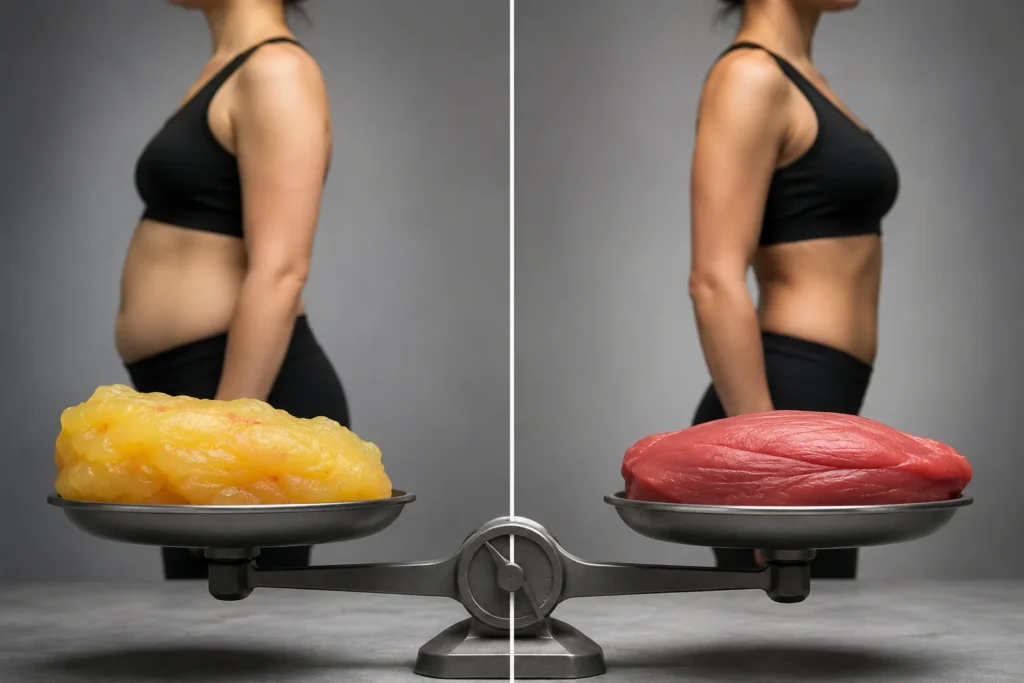
Body weight is useful, but it does not tell you exactly how much fat or muscle you have gained or lost. Weight can fluctuate with hydration, food intake, glycogen storage, and other short-term factors. Someone following a strength-training program may experience changes in body composition without seeing a dramatic shift in total weight.
That is why body transformation progress should be assessed using several complementary indicators. The goal is not to ignore the scale, but to understand what it can—and cannot—tell you about changes in your body over time.
What Does the Scale Actually Measure?
A scale measures total body weight at a particular moment. It does not directly distinguish fat mass, muscle tissue, bone, water, or the contents of your digestive system. As a result, daily changes may reflect fluid shifts rather than meaningful changes in body fat.
For more useful tracking, weigh yourself under consistent conditions—such as in the morning, after using the bathroom and before eating—if weighing is appropriate for you. Compare weekly averages or longer-term trends rather than reacting to individual readings. Athletes should also consider how training, travel, and changes in carbohydrate or sodium intake may affect short-term weight. The scale remains one useful data point, but it should not be treated as a complete measure of body transformation.
ACSM’s body-composition assessment resource emphasizes understanding measurement protocols, standardization, and the advantages and limitations of different assessment methods. In practice, this means selecting a method that fits your purpose and applying it consistently when monitoring change.
ACSM’s Body Composition Assessment .
How Can Body Composition Change Without Major Weight Changes?
Body recomposition refers to changes in the relative amounts of fat mass and fat-free mass. For example, a person may lose some fat while gaining or maintaining muscle, resulting in a smaller change in total body weight than expected. This can occur in some training contexts, although the extent and rate vary depending on training experience, nutrition, and other individual factors.
A stable scale reading therefore does not automatically mean that progress has stopped. Waist measurements, progress photos, strength trends, and body-composition assessments may provide additional context.
At the same time, these indicators have limitations and should be interpreted together. The practical lesson is simple: assess the direction of change across multiple measures, rather than deciding whether a transformation is successful based on body weight alone.
Which Body Measurements Can Help You Track Your Transformation?
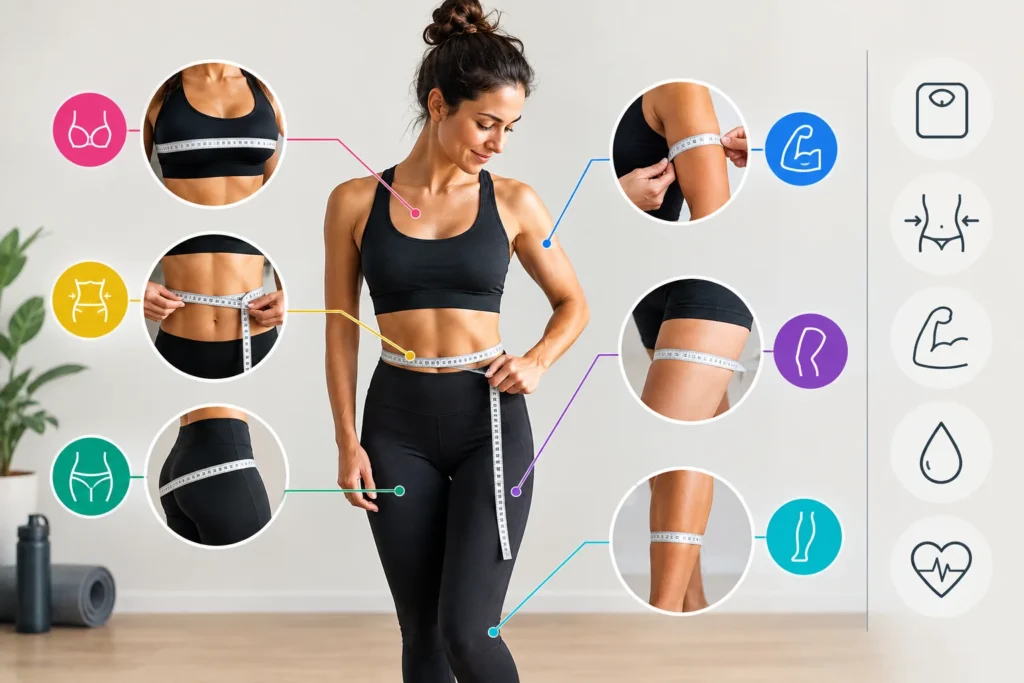
Body measurements provide a practical way to monitor changes in body shape without depending entirely on weight. Circumference measurements, especially around the waist, can help you follow changes over time when collected consistently. Other areas—such as hips, chest, arms, and thighs—may be relevant depending on your goals and training program.
Measurements do not directly reveal how much fat or muscle has changed, but they can add useful context when combined with other indicators. The most important factors are consistency, accurate technique, and reviewing trends rather than interpreting every small difference as meaningful progress.
How Should You Measure Your Waist, Hips, and Other Areas?
Use a flexible, non-stretch measuring tape and choose consistent anatomical locations. For waist measurements, follow one defined protocol each time—for example, measuring at the midpoint between the lowest rib and the top of the hip bone. Keep the tape level and snug without compressing the skin. Measure under similar conditions, ideally before a meal, and record the location used.
For hips, arms, and thighs, define the measurement point and repeat it each time. Avoid changing tape placement between sessions, as this can create apparent changes unrelated to your transformation. Take two measurements; if they differ substantially, repeat the process. Record the date and measurement conditions alongside the result. Consistency is more valuable than collecting many measurements with an inconsistent method.
How Can You Make Body Measurements More Consistent?
Standardize the conditions around each measurement. Try to measure at a similar time of day, use the same tape, maintain the same posture, and avoid measuring immediately after a large meal or an intense workout. Temporary bloating, fluid changes, and muscle pump can influence measurements, particularly around the abdomen and limbs.
Record measurements in a simple table or spreadsheet with the date, location, and result. Do not repeatedly measure throughout the day in search of changes; short-term fluctuations are not a reliable indicator of fat loss. Instead, compare results over several weeks and look for a sustained direction. If a measurement changes unexpectedly, repeat it under your normal conditions before drawing conclusions. The purpose is to reduce measurement noise so that longer-term changes are easier to interpret.
How Can Progress Photos Reveal Changes the Scale Misses?
Progress photos can help document visual changes in body shape that may not be obvious from daily weight readings. They are most useful when taken under comparable conditions and reviewed over a reasonable period. However, photos are not a direct measurement of fat mass or muscle mass.
Lighting, camera distance, posture, clothing, and posing can make the same body appear different. For this reason, progress photos should be treated as one source of information alongside measurements, weight trends, and physical performance—not as a definitive judgment of success or failure.
How Should You Take Comparable Before-and-After Photos?
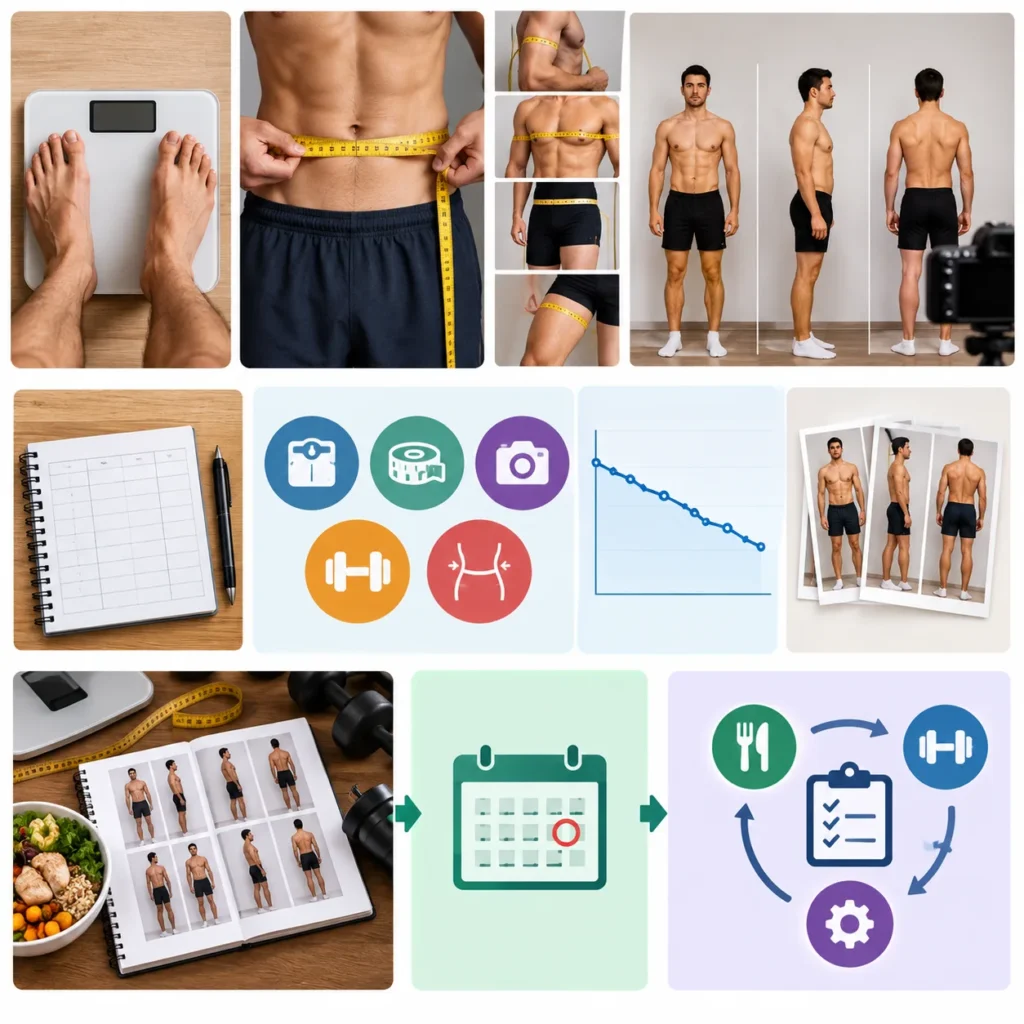
Choose a consistent location with similar lighting and a camera position that remains unchanged. Use the same distance, height, clothing style, and poses for each photo session. Front, side, and back views can provide a broader visual record than a single angle. Stand naturally and avoid deliberately flexing in one set of photos but not the other.
Take photos at consistent intervals rather than daily. Store them privately and compare images taken under similar conditions. Avoid editing, filters, or dramatic lighting changes, since these make comparisons less reliable. Remember that normal changes in hydration, digestion, and muscle fullness can influence appearance.
Photos can document visible changes, but they cannot independently determine whether those changes reflect fat loss, muscle gain, or temporary fluctuations.
How Often Should You Take Progress Photos?
For many people, taking photos every four weeks is a practical starting point. This interval can make gradual changes easier to notice without encouraging constant checking. However, there is no universally required schedule; the best frequency is one that fits your goals and does not create unnecessary stress.
Use the same routine each time and compare photos across several sessions rather than focusing on one pair. If your training or nutrition plan changes, record the date so you can interpret the images in context.
Photos may be unhelpful or emotionally uncomfortable for some people. If taking them increases anxiety, body dissatisfaction, or compulsive checking, you can skip them and use other indicators—such as performance, measurements, or how you feel during daily activities.
How Can You Track Body Composition and Fitness Performance?
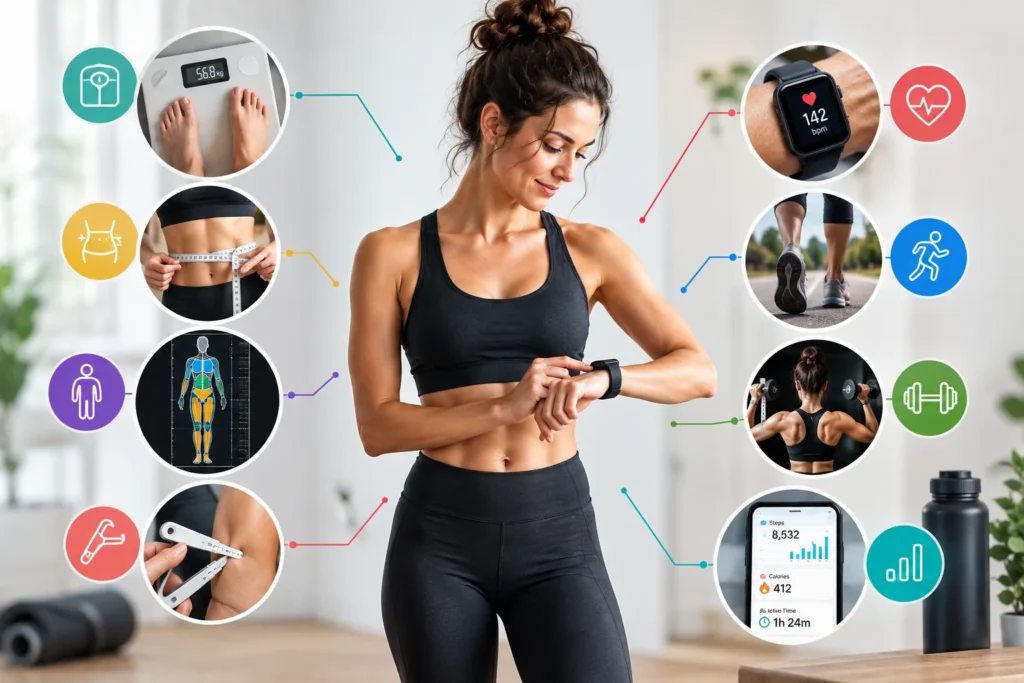
Body composition assessments and performance records can add information that appearance and scale weight cannot provide. Body-composition tools estimate components such as fat mass and fat-free mass, while training records show how your body is performing.
These measures answer different questions: a body-composition estimate is about the body’s makeup, whereas a strength or endurance test is about what you can do. Neither is a complete measure of transformation on its own. Combining them with circumference measurements and consistent photos can help you interpret progress more carefully.
Which Body Composition Methods Can You Use?
Common methods include bioelectrical impedance analysis (BIA), skinfold measurements, and dual-energy X-ray absorptiometry (DXA). They differ in cost, accessibility, technical requirements, and the body components they estimate. BIA devices are convenient, but their estimates can be affected by hydration, recent food or fluid intake, physical activity, and device-specific equations.
Skinfold measurements depend on technique and the skill of the person taking them. DXA can provide detailed estimates, but it requires specialized equipment and still has measurement limitations.
For tracking change, use the same method and—where possible—the same device and protocol each time. Avoid comparing percentages from different devices as though they were interchangeable. These methods estimate body composition; they do not provide perfectly exact measurements of every tissue.
How Can Strength and Endurance Show Fitness Progress?
Performance measures can show whether your physical capabilities are changing during a transformation. Strength-focused athletes can track repetitions, working weights, or performance on a consistent exercise. Endurance athletes might record pace, distance, or the effort required to complete a familiar session. Improvements can reflect training adaptation even when body weight changes little.
However, performance is influenced by many factors, including sleep, nutrition, programming, technique, and fatigue. A temporary decline does not necessarily mean that your transformation is going poorly, just as a strength increase does not prove that you have lost fat. Use comparable tests and consider the broader training context. Performance is most informative when tracked over time and interpreted alongside other body-transformation measurements.
Can Clothing Fit Help You Assess Body Changes?
The way familiar clothing fits can provide a practical, everyday indicator of change. For example, a pair of trousers may fit differently around the waist, or a shirt may feel different across the shoulders and chest. These observations can be meaningful because they connect body changes with daily experience rather than relying only on numbers.
Still, clothing fit is subjective. Fabric stretch, garment cut, washing, posture, and changes in muscle size can all affect how clothing feels. Choose one or two familiar items and use them as a supplementary reference, not as a precise measurement. Avoid repeatedly trying on clothes to check for tiny changes. Clothing fit is best interpreted alongside more consistent indicators such as tape measurements, performance records, and longer-term weight trends.
How Can You Build a Reliable Body Transformation Tracking Routine?
A useful tracking routine should be simple enough to maintain and consistent enough to reveal trends. Collecting too much data can make it harder to identify what matters, while checking too frequently may encourage overinterpretation of normal fluctuations.
Choose a small set of measures that match your goals, decide how often to collect them, and review the results at planned intervals. Your routine should support informed decisions about training and recovery—not create pressure to achieve a particular number every day.
How Often Should You Measure and Review Your Progress?
A practical schedule could include body weight several mornings per week if weighing is suitable for you, circumference measurements every two to four weeks, and progress photos about once a month. Performance can be recorded during normal training sessions. These are suggested routines, not medical or universal requirements; frequency should reflect your goals, preferences, and relationship with tracking.
Keep measurement conditions as consistent as possible and avoid reacting to small short-term changes. Review the overall direction after several weeks, considering whether different indicators tell a similar story. If tracking causes distress or obsessive behavior, reduce its frequency or choose less appearance-focused measures. A useful system should make progress easier to understand, not make daily life revolve around measurement.
How Can You Combine Different Progress Indicators?
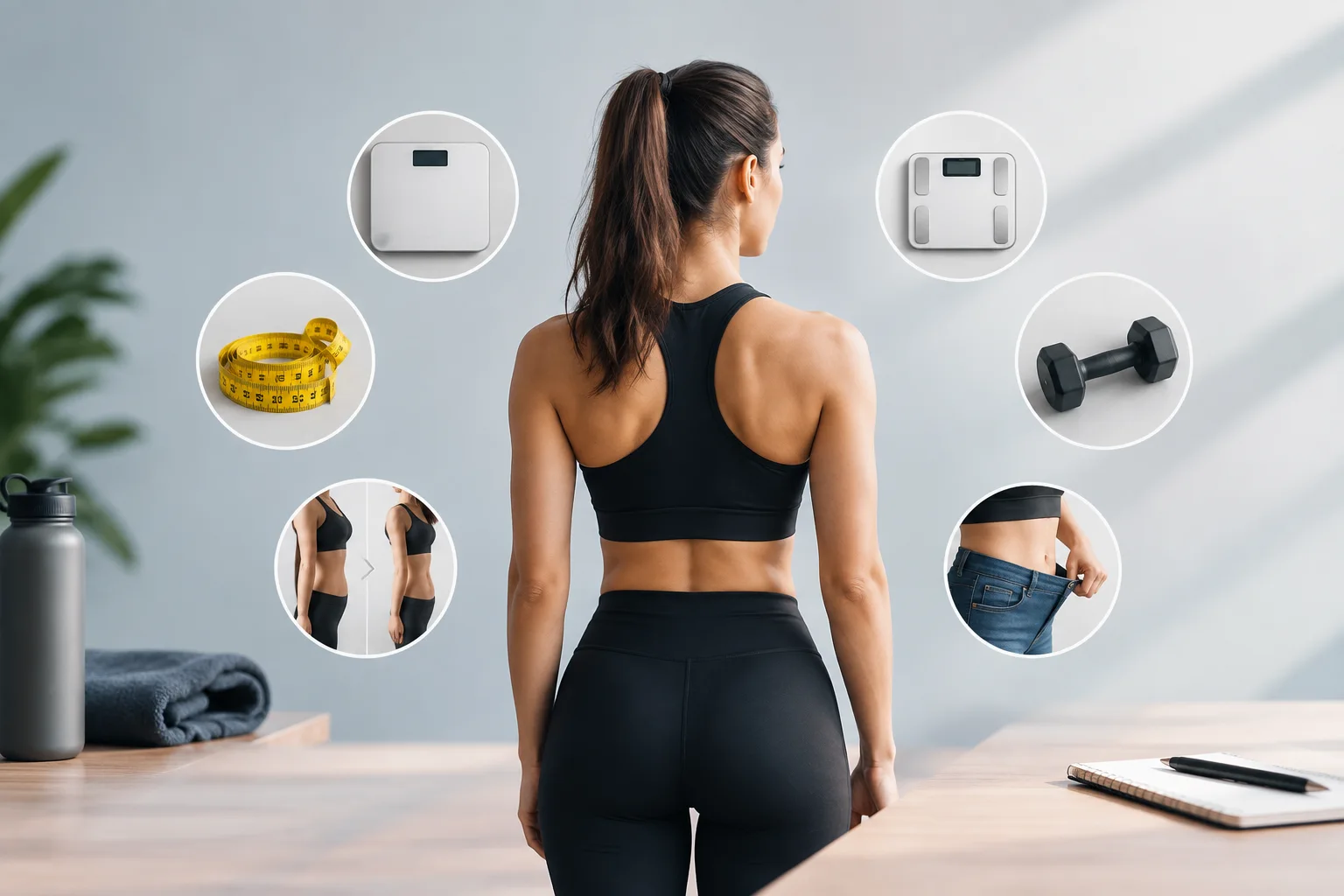
Start by selecting a few indicators that complement one another. For example, you might record waist circumference, a monthly progress photo, performance on selected exercises, and a weekly weight trend if appropriate. Each measure answers a different question, so look for patterns rather than expecting every metric to improve at the same time.
If weight remains stable while waist measurements gradually decrease and strength is maintained, that may be consistent with a change in body composition—but it does not prove exactly how much fat or muscle has changed. If measurements fluctuate, check whether conditions were consistent before revising your plan. Use the combined picture to guide reasonable adjustments, and seek qualified support if you have concerns about health, nutrition, or body composition.
How-To: How to Track Your Body Transformation Progress
A simple progress-tracking routine
- Choose your indicatorsSelect a few measures relevant to your goal: for example, waist circumference, performance, and optional progress photos.
- Set a consistent scheduleDecide when and how you will measure. Keep the time, technique, and conditions as similar as possible.
- Record the resultsLog measurements with dates and brief notes about unusual conditions, such as travel, illness, or a change in training.
- Review trends—not isolated readingsCompare results across several weeks and look for patterns across multiple indicators.
- Adjust thoughtfullyUse the overall pattern to inform training and recovery decisions. Seek qualified advice when health concerns or persistent unexplained changes arise.
Conclusion
Measuring body transformation progress requires more than watching the scale. Circumference measurements, progress photos, weight trends, body-composition assessments, fitness performance, and clothing fit each provide a different perspective. None is perfect on its own, but consistent tracking across several indicators can help you interpret changes more accurately.
Choose a manageable routine, compare results under similar conditions, and focus on longer-term patterns instead of daily fluctuations. Explore more evidence-informed fitness and transformation guidance on 5dfitness to support your training goals and build a sustainable approach to progress.
FAQ
Combine several indicators, such as circumference measurements, progress photos, weight trends if appropriate, body-composition assessments, and fitness performance. Use consistent methods and review changes over time.
Yes, body composition can change while total weight remains relatively stable, particularly when fat mass decreases while fat-free mass is maintained or increases. However, no single measurement can confirm exactly what changed.
A practical starting point is every two to four weeks, using the same measurement locations and conditions. The right frequency depends on your goals and whether tracking is helpful and comfortable for you.
They measure different things. Photos can document visual changes, while the scale tracks total body weight. Neither directly measures all aspects of body composition, so using complementary indicators can provide more context.
Waist circumference can be a useful way to track changes in abdominal size, but it does not directly measure body fat. Its value depends on consistent technique and interpretation alongside other indicators.
Strength improvements can show changes in physical performance and training adaptation. They do not independently prove fat loss or muscle gain, so consider them alongside other measurements.
The timeline varies with training, nutrition, starting point, consistency, and individual factors. Rather than relying on a fixed deadline, track changes over several weeks and focus on sustainable habits and meaningful trends.