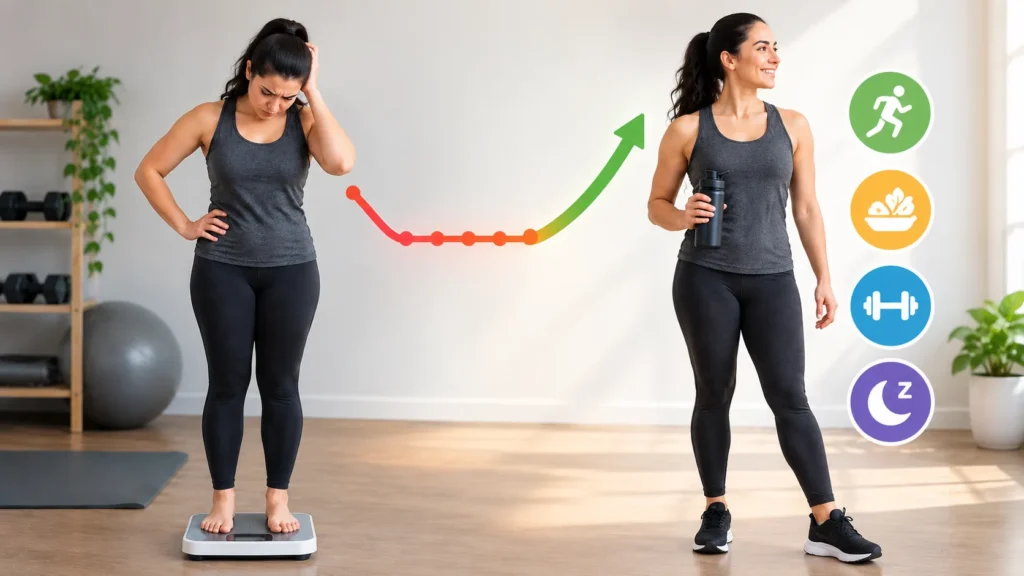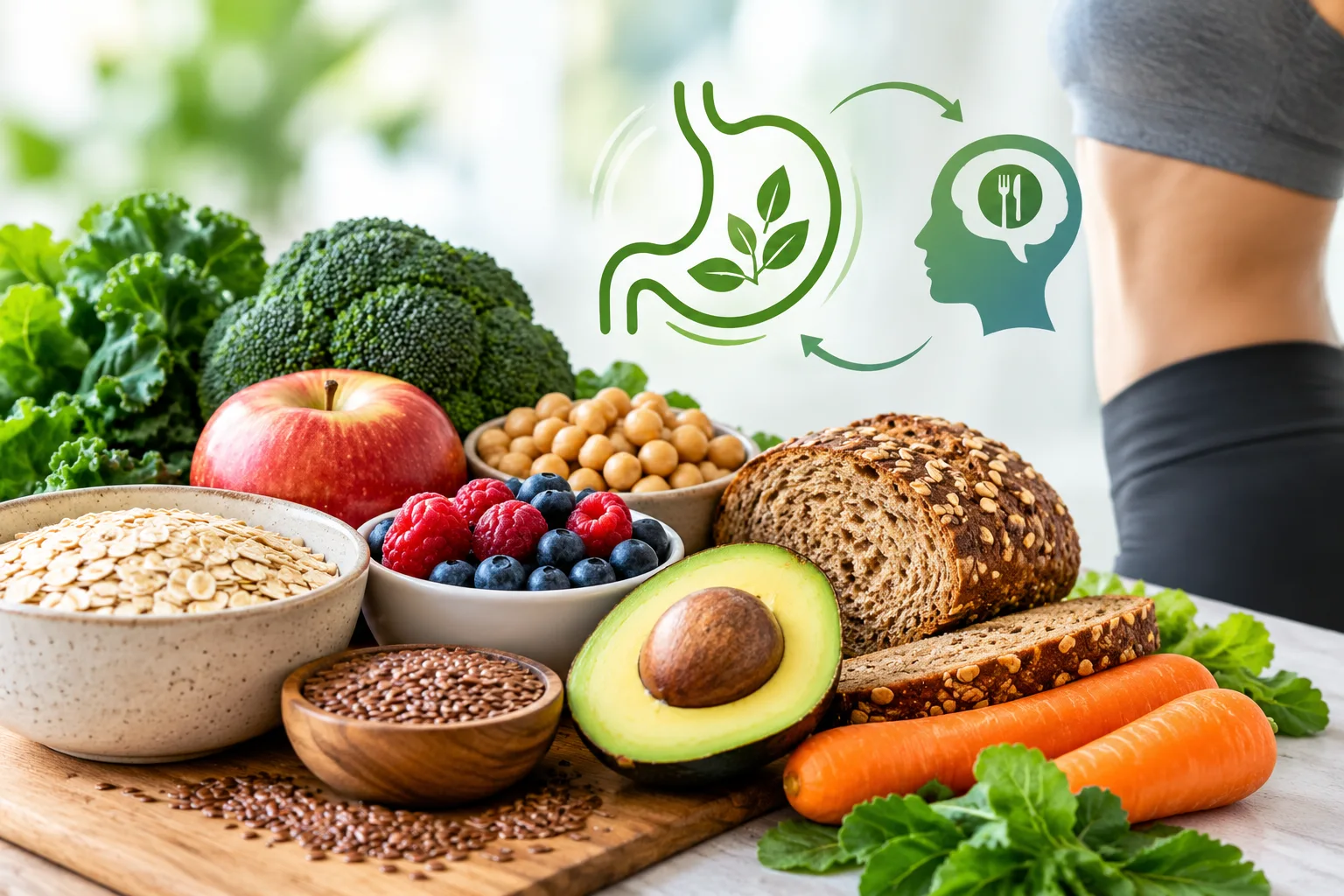
If you are trying to improve body composition, fiber for fat loss can be a useful part of a balanced nutrition strategy. Fiber does not directly “burn fat,” but it can make fat-loss diets easier to follow by increasing fullness, supporting appetite control and helping you build meals around nutrient-dense foods.
Research also suggests that certain types of viscous or soluble fiber can produce modest improvements in body weight and other measures of adiposity. For athletes, bodybuilders and fitness enthusiasts, the practical value is especially important: higher-fiber foods can help create satisfying meals without relying heavily on highly processed, calorie-dense foods.
How Does Fiber Help With Weight Management and Fat Loss?
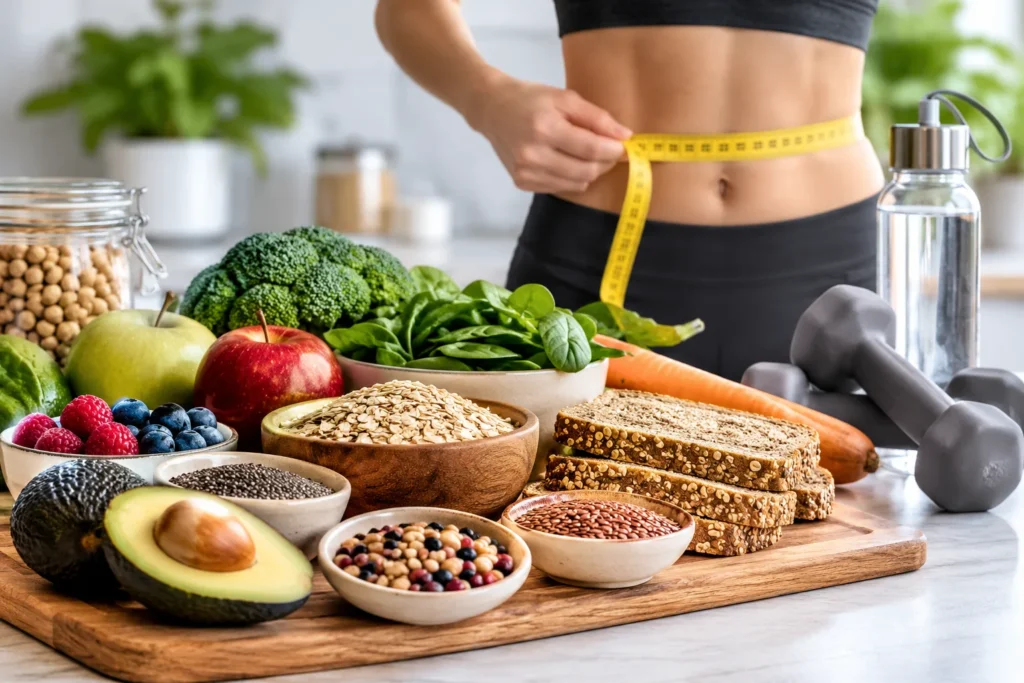
Fiber supports weight management mainly by influencing how filling a meal is, how quickly food is digested and how much energy is consumed over time. Unlike a fat-burning supplement, fiber works indirectly. Foods naturally rich in fiber often require more chewing, add volume to meals and can contribute to greater satiety.
Some viscous fibers also form gels that slow gastric emptying and may influence appetite regulation. Evidence is not identical for every type of fiber, so the strongest approach is to focus on a variety of fiber-rich whole foods rather than expecting one supplement or food to cause significant fat loss.
How Does Fiber Support a Calorie Deficit?
Fat loss generally requires a sustained energy deficit, meaning energy intake is lower than energy expenditure over time. Fiber can support this process by making meals more filling without necessarily adding a large amount of energy. Vegetables, legumes, fruits and whole grains can increase meal volume while providing fiber and other nutrients.
This does not mean that fiber automatically creates a calorie deficit. A person can still consume excessive calories while eating a high-fiber diet. The advantage is that fiber-rich foods may make an appropriate calorie target easier to maintain because meals can feel more satisfying. This is particularly useful during fat-loss phases when hunger becomes a major barrier to consistency.
Can Fiber Help Reduce Hunger During Fat Loss?
Yes, certain types of fiber may help reduce hunger, although the effect varies according to the type, amount and food source. Viscous fibers can absorb water and increase the thickness of digestive contents, potentially slowing gastric emptying and increasing satiety.
A systematic review of randomized controlled trials found that more viscous fibers tended to reduce appetite more often than less viscous fibers, although the overall effects on energy intake and body weight were relatively small.
For practical fat loss, this means fiber should be viewed as a satiety-supporting tool, not a magic solution. Combining fiber with adequate protein, minimally processed foods and an appropriate calorie intake is generally more useful than increasing fiber alone.
How Does Fiber Help You Feel Fuller and Control Appetite?
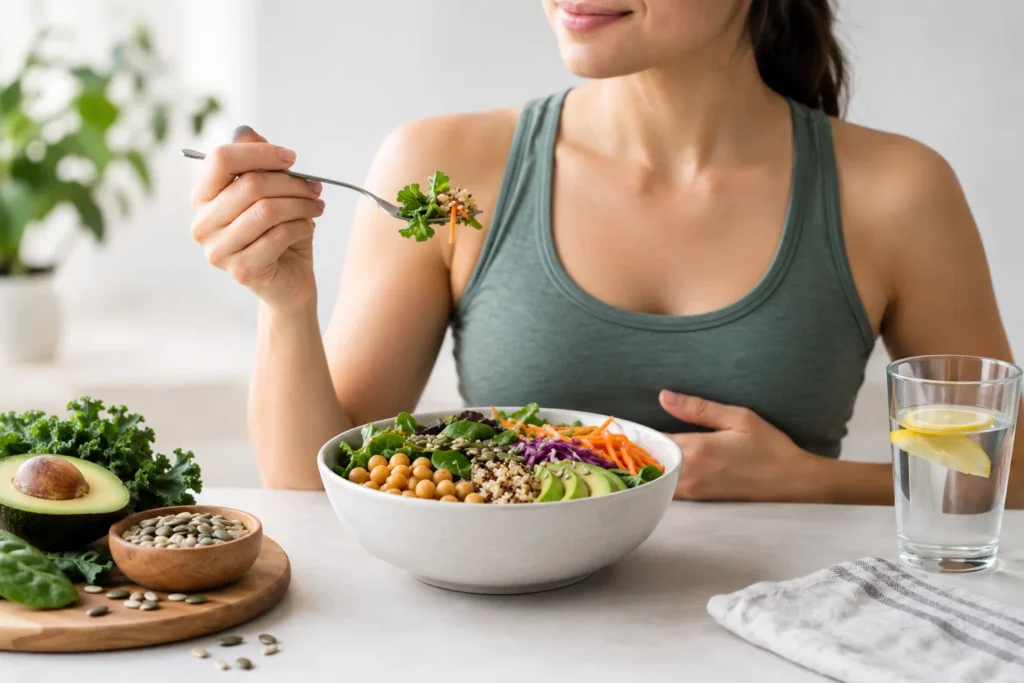
One of the most useful connections between fiber and weight management is its relationship with satiety. Fiber-rich foods can increase the physical volume of a meal and, depending on the type of fiber, influence digestion and gastric emptying. Soluble and viscous fibers are particularly relevant because they can absorb water and form a gel-like substance.
This can slow digestion and contribute to a longer-lasting feeling of fullness. However, individual responses differ, and fiber should be considered one component of an overall nutrition strategy rather than a standalone appetite-control method.
Why Does Fiber Increase Feelings of Fullness?
Fiber can increase fullness through several mechanisms. First, many high-fiber foods contain substantial water and physical volume, which can make meals more satisfying. Second, some soluble and viscous fibers form a gel during digestion and may slow gastric emptying. Third, fiber fermentation in the colon can produce short-chain fatty acids that may interact with metabolic and appetite-related pathways.
A systematic review and meta-analysis of soluble fiber interventions reported evidence that some soluble fibers can increase perceived satiety and influence post-meal energy intake.
The practical lesson is simple: instead of trying to eliminate hunger completely, use high-fiber foods to make normal meals more filling and easier to manage.
Can Fiber Help Control Appetite and Food Intake?
Fiber may help control appetite by increasing meal satisfaction and reducing the tendency to feel hungry soon after eating. This can be especially useful when calorie intake is being reduced for fat loss.
For example, replacing a low-fiber refined carbohydrate with oats, beans, lentils, vegetables or fruit can increase the fiber content and volume of a meal. The goal is not to avoid carbohydrates or drastically restrict food. Instead, the goal is to choose carbohydrate sources that provide more nutritional value and greater satiety.
Because fiber’s effects vary between individuals and fiber types, appetite control should be evaluated practically. If a higher-fiber meal keeps you satisfied longer and reduces unnecessary snacking, it can become a useful part of your fat-loss routine.
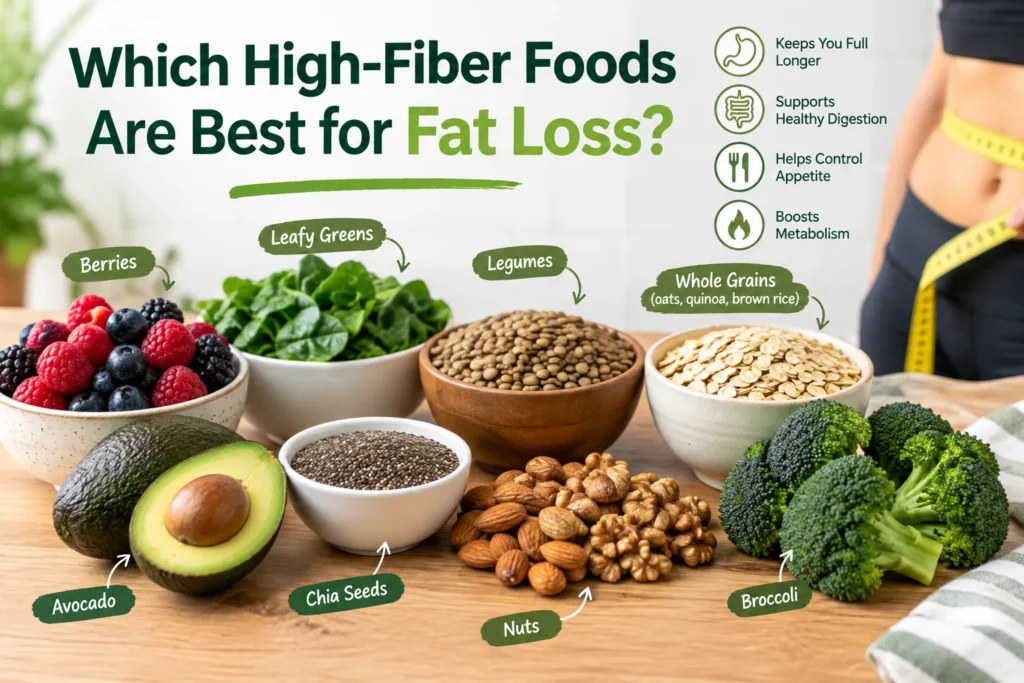
Which High-Fiber Foods Are Best for Fat Loss?
The best high-fiber foods for fat loss are generally those that provide substantial fiber along with relatively high nutrient density. Vegetables, fruits, legumes, whole grains, nuts and seeds can all contribute to daily fiber intake. However, calorie content still matters. Nuts, seeds and avocado are nutritious and fiber-containing but also energy-dense, so portion size can be important during a calorie deficit. Legumes, vegetables, berries and some whole grains can often provide a particularly useful combination of fiber, nutrients and meal volume.
Which Fruits and Vegetables Are High in Fiber?
Fruits and vegetables are practical ways to increase fiber while adding vitamins, minerals and water to meals. Berries, pears, apples, oranges and certain other fruits can contribute meaningful amounts of fiber, especially when eaten whole rather than consumed as juice.
Vegetables such as broccoli, Brussels sprouts, carrots, peas and leafy vegetables can also increase meal volume without requiring large calorie increases. This makes them useful during a fat-loss phase.
For example, adding vegetables to lunch and dinner, eating a whole piece of fruit as a snack and choosing a fruit-based breakfast can increase daily fiber intake without requiring complicated recipes. The key is variety. Different plant foods contain different combinations of fibers and other beneficial compounds.
Are Legumes and Whole Grains Good for Fat Loss?
Yes. Legumes such as lentils, beans and chickpeas are valuable because they can provide both fiber and protein, making them particularly useful in meals designed for satiety. They can be added to salads, soups, stews or main meals.
Whole grains such as oats and other minimally processed grain options can also contribute fiber while providing carbohydrates that support training. For athletes and fitness enthusiasts, this can be useful because carbohydrates remain an important energy source for many forms of exercise.
The important distinction is between choosing nutrient-dense carbohydrate sources and assuming that all high-fiber foods are automatically low-calorie. Portion size, total energy intake and the overall diet still determine whether fat loss occurs.
Which High-Fiber Foods Provide Fewer Calories?
For people actively managing calorie intake, vegetables and many whole fruits are particularly practical because they can provide fiber, water and food volume for relatively few calories. Legumes can also be highly useful, although their calorie contribution is higher than that of many non-starchy vegetables.
A useful approach is to build meals around a combination of:
- Vegetables for volume and fiber
- Fruit for fiber and micronutrients
- Legumes for fiber and plant protein
- Whole grains for fiber and training-supporting carbohydrates
- Protein-rich foods for muscle retention and satiety
This combination is generally more effective than focusing on a single “fat-loss food.”
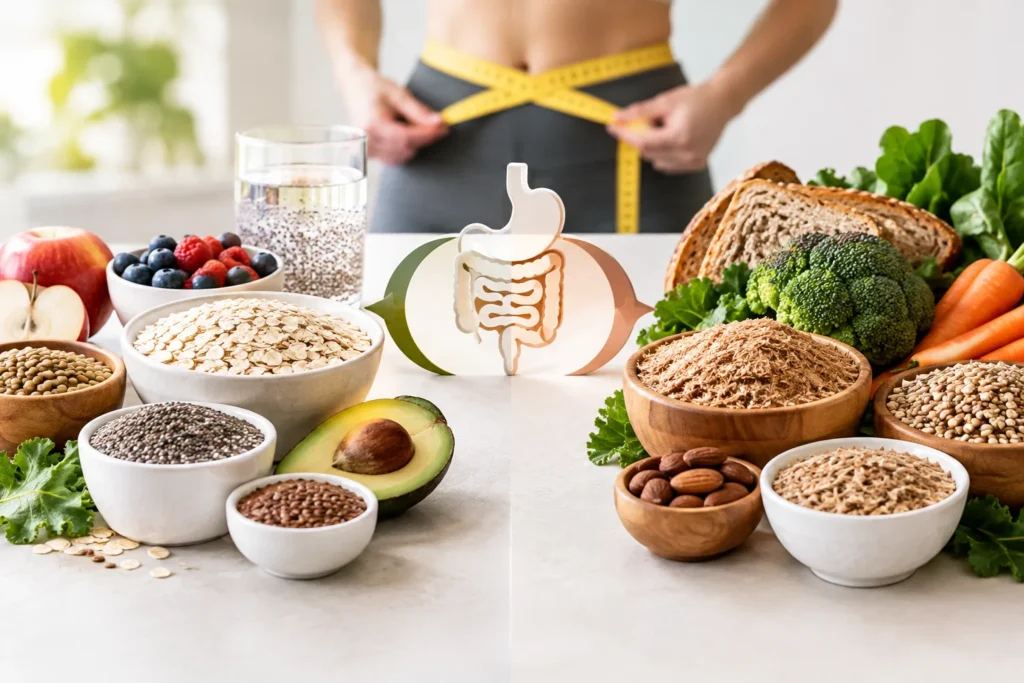
What Is the Difference Between Soluble and Insoluble Fiber for Weight Management?
Dietary fiber is not one uniform substance. Soluble and insoluble fibers differ in their physical properties and effects in the digestive system. Soluble fibers can dissolve or swell in water, and some types become viscous and form gels. Insoluble fibers generally add bulk to stool and support normal bowel movement. Both can be valuable in a balanced diet, but research suggests that certain viscous or gel-forming fibers may have a more noticeable effect on appetite and body-weight outcomes than some less viscous fibers.
What Is Soluble Fiber and How Does It Work?
Soluble fiber is found in foods such as oats, barley, legumes, fruits and some vegetables. Some soluble fibers are viscous, meaning they can thicken when mixed with water. This property is particularly relevant to weight management because increased viscosity can slow gastric emptying and potentially influence satiety.
Research does not show that every soluble fiber produces the same outcome. In a meta-analysis of 62 randomized trials involving 3,877 participants, viscous fiber produced modest reductions in body weight, BMI and waist circumference even without a prescribed energy-restricted diet. However, the average changes were relatively small.
This supports a balanced interpretation: soluble and viscous fiber can contribute to weight management, but they work best as part of an overall dietary pattern.
What Is Insoluble Fiber and Where Is It Found?
Insoluble fiber is found in foods including whole grains, vegetables, nuts, seeds and the skins of many fruits and vegetables. It does not dissolve in water in the same way as soluble fiber and is particularly associated with adding bulk to the digestive contents.
For fat loss, insoluble fiber is still valuable because many foods containing it are nutrient-dense and can help build satisfying meals. It should not be considered inferior simply because soluble fiber may have more direct evidence for certain appetite-related effects.
Rather than trying to maximize one type, most people can benefit from eating a variety of plant foods. A diverse diet naturally provides different fiber types and supports overall dietary quality.
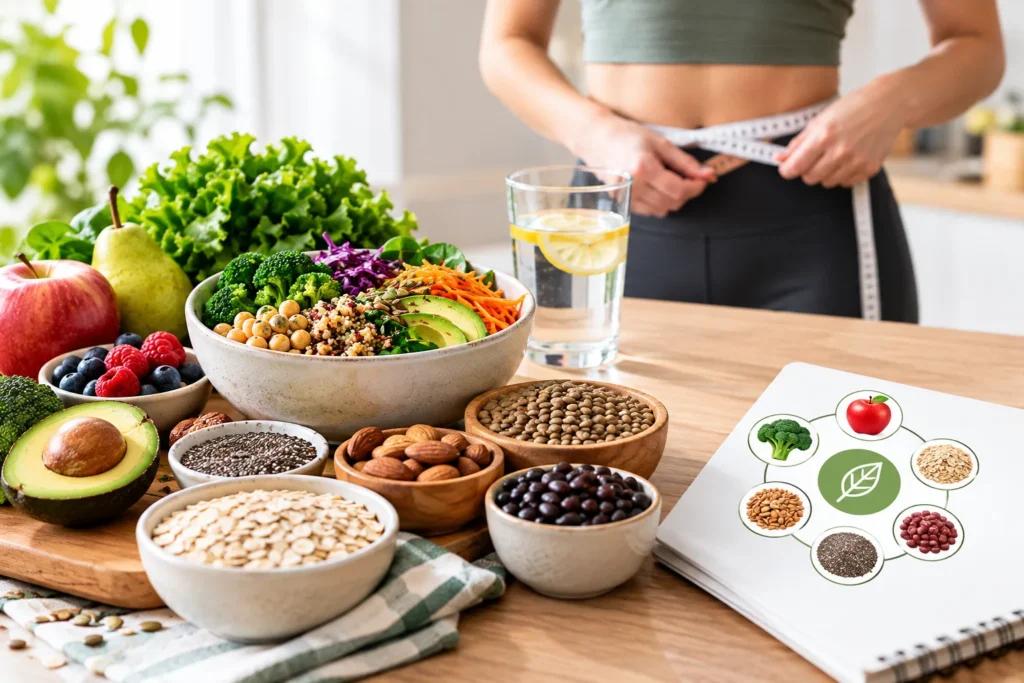
How Much Fiber Do You Need for Weight Management and How Can You Get More?
Increasing fiber intake should be practical and gradual. The goal is not to consume as much fiber as possible. More is not necessarily better, especially if a sudden increase causes bloating, gas or digestive discomfort. Instead, gradually increase fiber-rich foods while maintaining adequate fluid intake. For someone following a fat-loss diet, the best strategy is to replace some refined, highly processed foods with whole or minimally processed plant foods. This approach can increase fiber while also improving the nutritional quality and satiety of meals.
How Much Fiber Should You Eat Each Day?
A commonly used dietary target is around 14 grams of fiber per 1,000 calories, although individual needs can vary according to age, sex, energy intake and dietary pattern.
For someone eating 2,000 calories, this would correspond to roughly 28 grams of fiber per day. Someone consuming more or fewer calories would have a different practical target.
Importantly, there is no special “fat-loss fiber dose” that guarantees weight reduction. Evidence from clinical trials suggests that certain viscous fibers can modestly improve body-weight outcomes, but the overall calorie balance and dietary pattern remain fundamental.
For athletes, fiber intake should also be adjusted around training when necessary, because very high-fiber meals immediately before intense exercise may cause gastrointestinal discomfort.
How Can You Increase Fiber Intake Without Digestive Problems?
Increase fiber gradually rather than suddenly adding large amounts of beans, bran or fiber supplements to your diet. Start by adding one or two fiber-rich foods each day and allow your digestive system time to adapt.
Practical changes include:
- Add vegetables to lunch and dinner.
- Choose whole fruit instead of fruit juice.
- Add oats or another whole-grain option to breakfast.
- Include beans, chickpeas or lentils in regular meals.
- Add seeds in moderate portions.
- Increase fiber gradually over several weeks.
- Drink enough fluids throughout the day.
If a specific food consistently causes significant digestive symptoms, reduce the amount and consider discussing persistent symptoms with a qualified healthcare professional.
How Can You Add More Fiber to Everyday Meals?
A simple strategy is to upgrade meals you already eat rather than completely changing your diet.
For breakfast, use oats with fruit and seeds. At lunch, add vegetables and legumes to a protein-based meal. For dinner, combine a lean protein source with vegetables and a whole-grain or legume-based carbohydrate. For snacks, choose whole fruit rather than juice or highly processed snack foods.
The objective is consistency. A diet containing a moderate amount of fiber every day is more useful than occasionally consuming an extremely high-fiber meal.
High-Fiber Foods for Fat Loss: Fiber, Calories and Practical Uses
| Food | Main Benefit | Practical Use |
|---|---|---|
| Oats | Fiber-rich whole grain | Breakfast |
| Lentils | Fiber + plant protein | Lunch or dinner |
| Chickpeas | Fiber + plant protein | Salads and meals |
| Beans | Fiber + protein | Main meals |
| Berries | Fiber + high food volume | Snack or breakfast |
| Broccoli | Fiber + low energy density | Lunch or dinner |
| Pears | Whole-fruit fiber | Snack |
| Chia seeds | Fiber + healthy fats | Breakfast or yogurt |
Exact fiber and calorie values vary by portion size and preparation method.
How to Increase Fiber Intake for Fat Loss
- Step 1:
Start by identifying your current fiber intake.
- Step 2:
Add one additional serving of vegetables or whole fruit each day.
- Step 3:
Replace some refined grains with whole-grain options.
- Step 4:
Include beans, chickpeas or lentils several times per week.
- Step 5:
Increase fiber gradually rather than making a sudden dietary change.
- Step 6:
Maintain adequate fluid intake.
- Step 7:
Monitor digestion, hunger, training performance and overall calorie intake.
The objective is to create a sustainable eating pattern in which fiber supports satiety without making the diet unnecessarily restrictive.
What Does the Research Show?
Research generally supports fiber as a useful component of weight-management nutrition, but the magnitude of the effect depends on the type and context.
A systematic review and meta-analysis of 62 randomized controlled trials found that viscous fiber produced modest reductions in body weight and waist circumference, although the effect on body fat was not statistically significant in that analysis.
Another meta-analysis involving calorie-restricted diets found that viscous fiber supplementation was associated with reductions in body weight, BMI and body fat compared with control groups.
More recent evidence also continues to examine how different types and characteristics of dietary fiber influence body weight and metabolic outcomes.
The practical conclusion is that fiber should support a calorie-controlled, nutrient-dense diet rather than replace it.
Practical Conclusion
Fiber is not a magic fat-burning nutrient, but it can be a powerful supporting tool for weight management. By increasing meal volume, improving satiety and helping control appetite, fiber-rich foods can make a calorie-controlled diet more sustainable. Evidence suggests that certain viscous fibers can produce modest improvements in body weight and related measures, but the overall dietary pattern remains more important than any single nutrient.
For athletes, bodybuilders and fitness enthusiasts, the best approach is to combine adequate fiber with sufficient protein, appropriate carbohydrate intake, regular training, hydration and a sustainable calorie target. Building meals around vegetables, fruits, legumes and whole grains is a practical way to increase fiber while improving overall diet quality.
At 5dfitness, the goal is to turn evidence-based nutrition principles into practical strategies you can apply to your training and body-composition goals.
Ready to improve your fat-loss nutrition? Start by adding one additional high-fiber food to your meals today and build the habit gradually.
FAQ
Yes, fiber can support fat loss indirectly by increasing satiety, helping control appetite and making a calorie-controlled diet easier to maintain. It does not directly burn body fat.
A practical general target is around 14 grams per 1,000 calories, but individual requirements vary. Focus on gradually increasing fiber from a variety of whole foods.
Vegetables, berries, whole fruits, legumes, oats and other whole grains are useful choices. Legumes are particularly valuable because they can provide both fiber and protein.
Certain types, particularly viscous and soluble fibers, may increase fullness and reduce appetite. However, individual responses vary.
Some evidence suggests that viscous soluble fibers have a more direct effect on satiety and weight-related outcomes. However, both soluble and insoluble fiber contribute to a healthy dietary pattern.
Not necessarily. Fiber can support weight management, but sustained fat loss still depends largely on overall energy balance and dietary adherence.
Yes. Increasing fiber too quickly can cause bloating, gas or abdominal discomfort. Increase intake gradually and maintain adequate fluid intake.