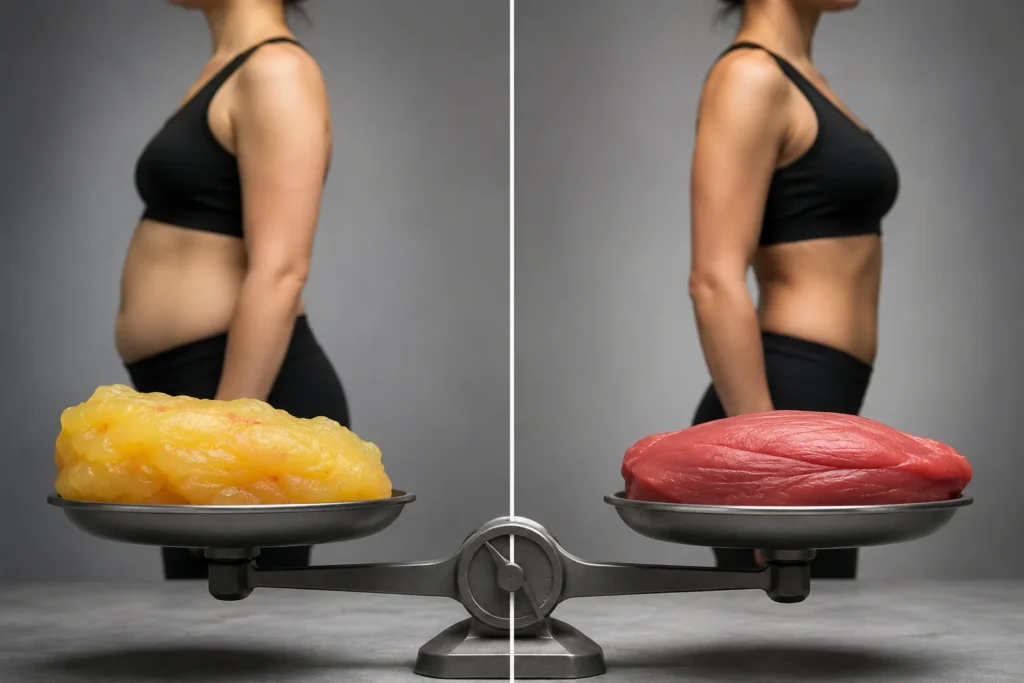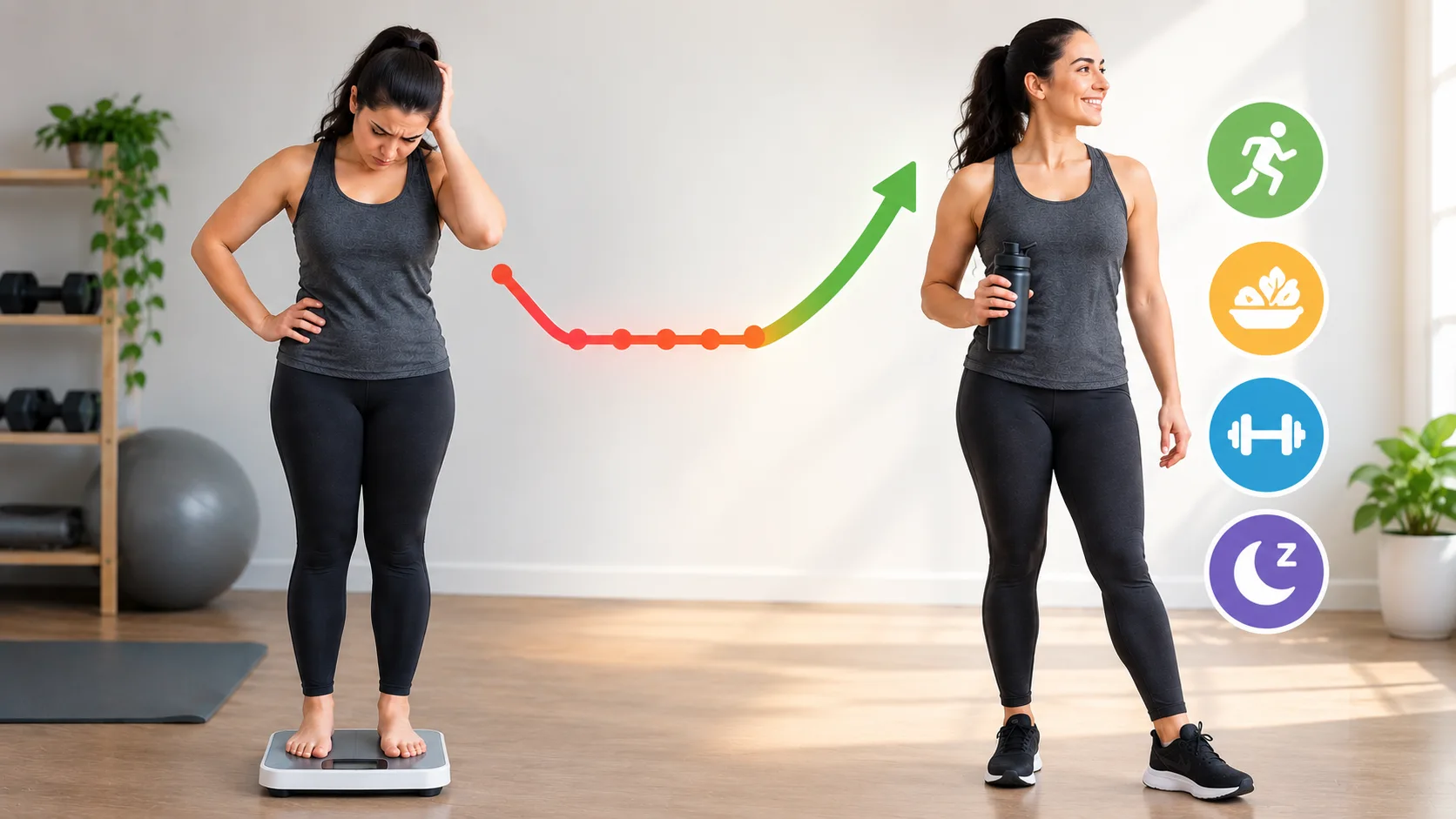
Losing body fat often feels straightforward at first: you train consistently, manage your food intake, and the scale gradually moves down. Then, sometimes, progress slows or appears to stop. This is commonly called a fat loss plateau or weight loss plateau. For athletes, fitness enthusiasts, bodybuilders, and anyone working toward a leaner physique, understanding why this happens is more useful than simply cutting calories harder.
At 5dfitness, the goal is to approach fat loss through measurable habits, training quality, nutrition, and realistic expectations. A plateau does not automatically mean your plan has failed; it may mean your current energy balance and activity level need to be reassessed.
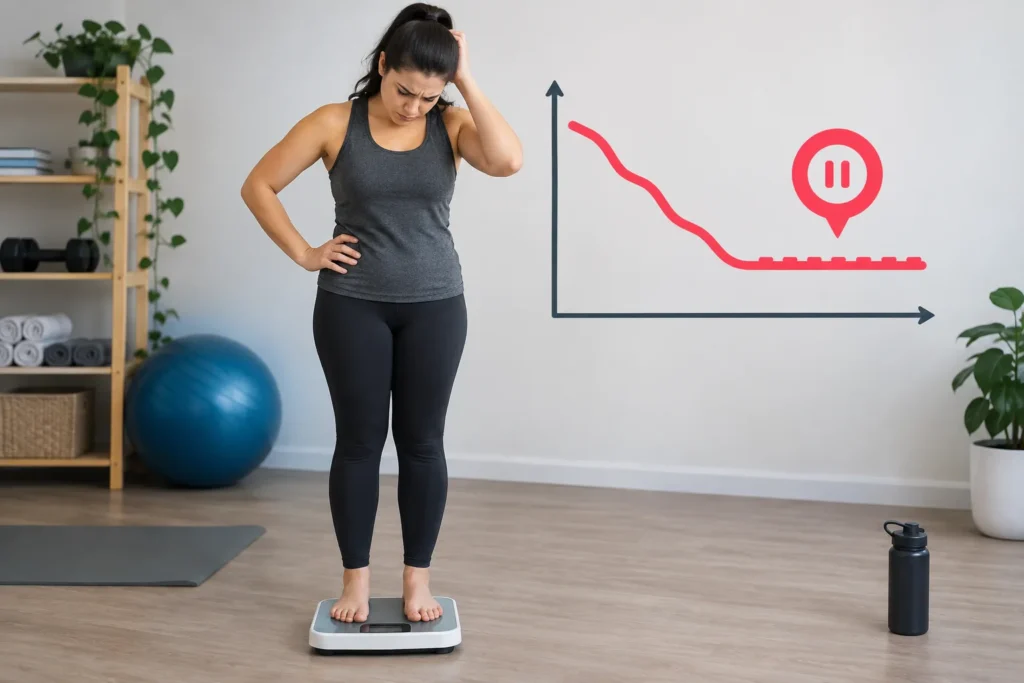
What Is a Fat Loss Plateau?
A fat loss plateau occurs when body weight or measurable fat-loss progress stops changing for a sustained period despite continuing the behaviors that previously produced results. It is different from seeing the scale fluctuate for a few days because body weight naturally changes with hydration, glycogen, food volume, and other factors. Mayo Clinic describes a weight-loss plateau as a point where weight loss stalls after an earlier period of progress.
For active people, the distinction between a genuine plateau and normal fluctuations matters. If your waist measurement is decreasing, gym performance is improving, or your body composition is changing, the scale alone may not tell the full story.
How Do You Know If You Have Hit a Weight Loss Plateau?
Look for a consistent lack of progress rather than reacting to one or two weigh-ins. Track your body weight under similar conditions and consider weekly averages instead of individual measurements. Waist circumference, progress photos, gym performance, and how your clothes fit can provide additional information.
A practical approach is to review your trend over several weeks. If your average weight, measurements, and other indicators remain essentially unchanged despite consistent nutrition and training, you may have reached a plateau. However, short-term stalls can simply reflect water retention or changes in glycogen. Mayo Clinic notes that early weight loss can include substantial water loss associated with glycogen depletion, which is one reason progress does not always continue at the same rate.
Why Does Fat Loss Plateau?
A plateau can happen because the energy balance that produced weight loss earlier has changed. As body weight decreases, the body generally requires fewer calories to maintain that lower weight. At the same time, physical activity patterns, appetite, food intake, and training efficiency can change. NIDDK explains that metabolism slows during weight loss and the body needs fewer calories at a lower weight.
This means a diet that created a meaningful calorie deficit at the beginning may eventually create a much smaller deficit. The solution is not automatically extreme calorie restriction. Instead, reassess the variables that influence energy intake and expenditure, while keeping the overall approach sustainable.
Can Metabolism Cause a Weight Loss Plateau?
Yes, changes in energy expenditure can contribute to a plateau. Your body uses energy for basic physiological functions, digestion, exercise, and everyday movement. As body size decreases, the energy required to move and maintain the body can also decrease. Muscle mass is another important factor in resting energy expenditure.
Mayo Clinic explains that body size, composition, muscle mass, physical activity, and nonexercise activity all influence daily calorie expenditure.
This does not mean that a “broken metabolism” is automatically responsible. A plateau usually reflects several interacting factors rather than one single metabolic problem. Maintaining resistance training, staying physically active, and periodically reviewing food intake can help keep your plan aligned with your current body and activity level.
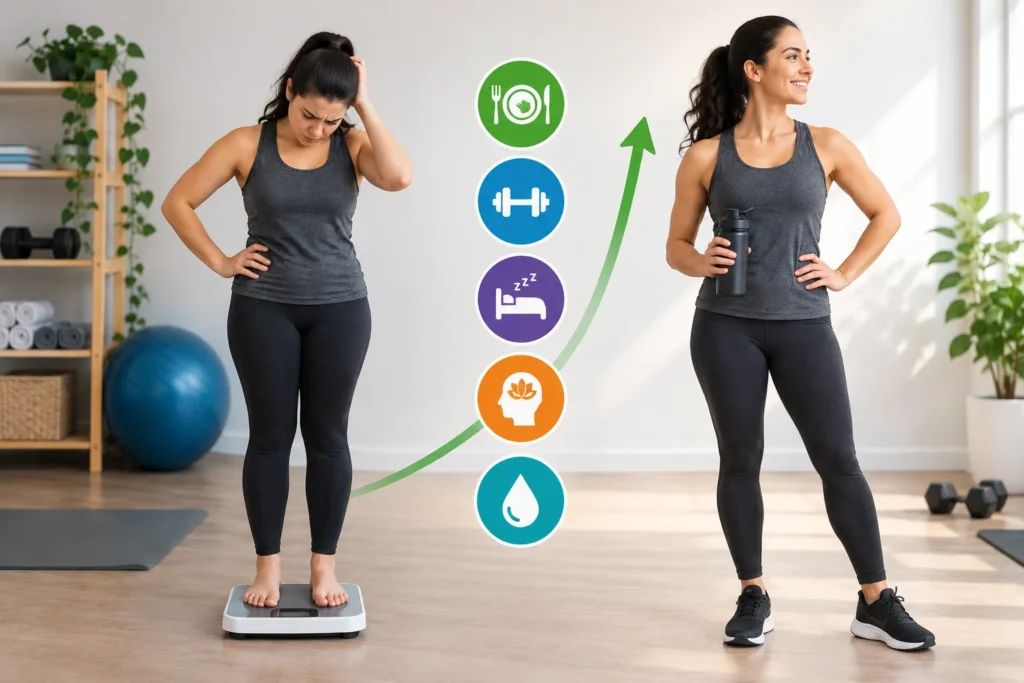
How Can You Overcome a Fat Loss Plateau?
The most effective response to a plateau is usually a structured review rather than a dramatic change. Start by checking whether portions, snacks, drinks, weekend meals, or reduced activity have gradually changed. Then evaluate your training routine and daily movement.
Physical activity contributes to energy expenditure and helps support weight management. Current CDC guidance recommends at least 150 minutes of moderate aerobic activity per week for general health, alongside muscle-strengthening activities on at least two days per week. Individual needs can be higher depending on goals and circumstances.
What Should You Change When Your Progress Stalls?
Begin with the simplest measurable adjustment. Review your recent calorie intake and compare it with your current body weight and activity level. If appropriate, make a modest nutrition adjustment rather than drastically cutting food. Also look at your daily movement: fewer steps, more sitting, or reduced training intensity can narrow your calorie deficit.
Strength training should remain part of a fat-loss program because preserving or building muscle is valuable for body composition and performance. You can also increase walking or other low-intensity movement without adding excessive recovery demands.
Consistency matters as much as intensity. Cleveland Clinic endocrinologist Shirisha Avadhanula, MD, emphasizes that plateaus are a normal part of weight loss and recommends maintaining healthy dietary habits while increasing activity when appropriate.
“Weight loss is hard, and every pound lost should be celebrated.” — Shirisha Avadhanula, MD
How Can You Track Progress Beyond the Scale?
Body weight is useful, but it should not be your only measurement. Daily weight can fluctuate because of hydration, glycogen, sodium intake, food volume, and other factors. For athletes and resistance-trained individuals, changes in muscle mass can further complicate interpretation.
Use several measurements together: weekly average body weight, waist circumference, progress photos, strength levels, training performance, and how clothing fits. This creates a more complete picture of body-composition progress.
Mayo Clinic also explains that weight loss involves changes in fat, lean tissue, and water, meaning scale weight does not always directly represent changes in body fat.
Why Might You Be Losing Fat Without Losing Weight?
Body recomposition can make the scale appear stagnant while your physique changes. If you are losing fat while maintaining or gaining muscle, total body weight may change very slowly even though your waist becomes smaller and your body looks leaner.
This is particularly relevant for people who combine resistance training with a structured nutrition plan. Instead of immediately reducing calories because the scale has not moved, check multiple indicators first.
If your waist measurement is decreasing, strength is stable or improving, and your physique is becoming leaner, you may be making meaningful progress without a large change in scale weight.
How-To: What Can You Do This Week to Break a Fat Loss Plateau?
Use this simple five-step process:
- Review your weight trend:
Compare weekly averages instead of individual weigh-ins.
- Audit your nutrition:
Check portions, snacks, drinks, sauces, and weekend eating.
- Review daily movement:
Track steps and look for decreases in everyday activity.
- Review daily movement:
Track steps and look for decreases in everyday activity.
- Keep resistance training consistent:
Prioritize progressive, well-structured strength work.
- Measure more than weight:
Track waist circumference, photos, performance, and body measurements.
Avoid making several major changes simultaneously. A single measurable adjustment makes it easier to understand what is actually working.
Practical Takeaway
A fat loss plateau is not necessarily a sign that your body has stopped responding or that your entire program has failed. It is often a signal to reassess your current calorie intake, activity level, training, and progress measurements.
The key is to avoid reacting emotionally to the scale. Measure trends, preserve training quality, maintain a sustainable nutrition strategy, and make small evidence-based adjustments when necessary. As Mayo Clinic notes, weight loss commonly slows as the body becomes lighter and energy requirements change.
For athletes and fitness enthusiasts, the goal should not simply be a lower number on the scale. The broader objective is sustainable fat loss while maintaining performance, muscle, recovery, and healthy habits.
Fat Loss Plateau Troubleshooting
| What You Notice | Possible Explanation | What to Check |
|---|---|---|
| Scale unchanged for a few days | Normal fluctuation | Water, sodium, glycogen |
| Weight stable for several weeks | Possible plateau | Calories and activity |
| Waist getting smaller | Body recomposition | Measurements and photos |
| Training feels easier | Exercise adaptation | Training intensity |
| Hunger has increased | Appetite adaptation | Meal structure and protein |
| Steps have decreased | Lower daily expenditure | Daily movement |
FAQ
Yes. Fat loss plateaus are common because your body may require fewer calories as you lose weight, while changes in activity and metabolism can also slow progress.
There is no fixed duration. A few days of stable weight may simply reflect normal fluctuations in water, glycogen, or food volume. A longer period without measurable progress may require reassessing your nutrition and activity.
Not necessarily. First review your actual calorie intake, portion sizes, activity level, and recent progress. If an adjustment is needed, a moderate change is generally more practical than extreme calorie restriction.
Yes. Increasing appropriate physical activity can increase energy expenditure. Combining resistance training with regular aerobic activity and daily movement can support continued fat loss.
Yes. Body recomposition can occur when you lose body fat while maintaining or gaining muscle. In this situation, your waist measurement and physique may change even when your scale weight changes very little.
Look at your weight trend over several weeks rather than individual weigh-ins. Also monitor waist measurements, progress photos, training performance, and how your clothes fit. These measurements can help distinguish a true plateau from normal weight fluctuations.