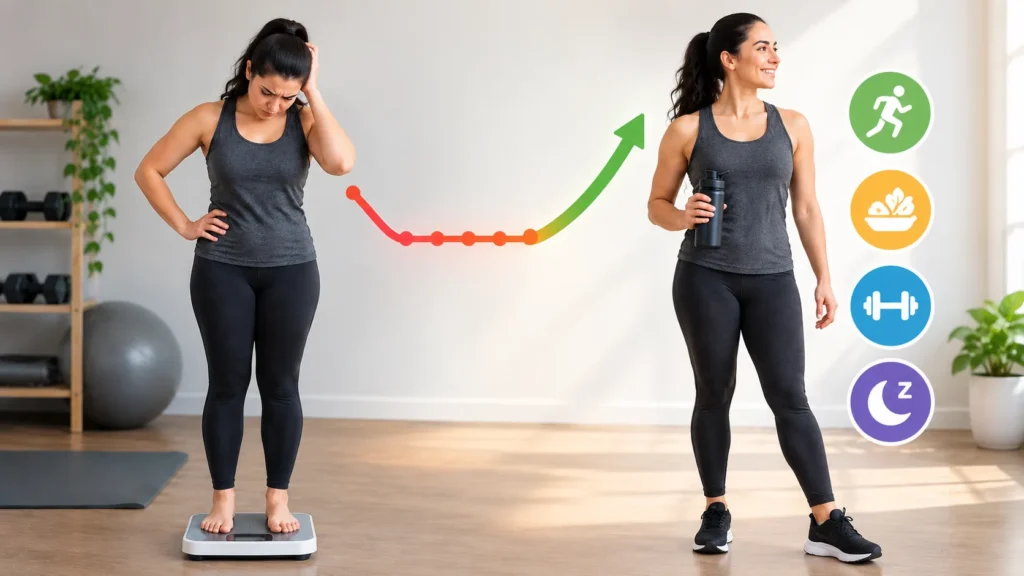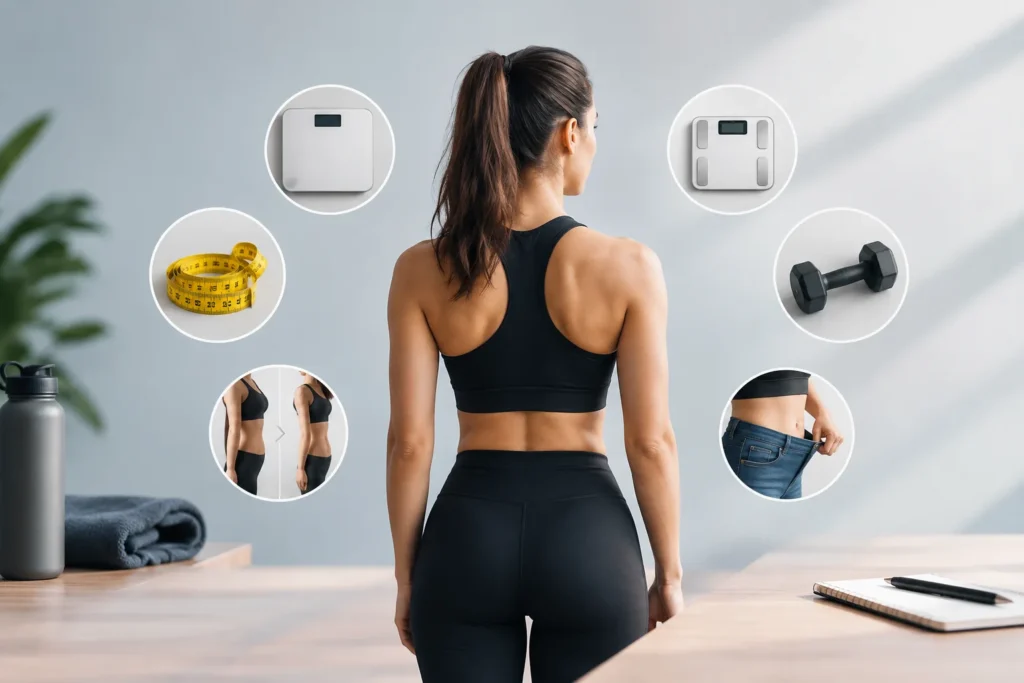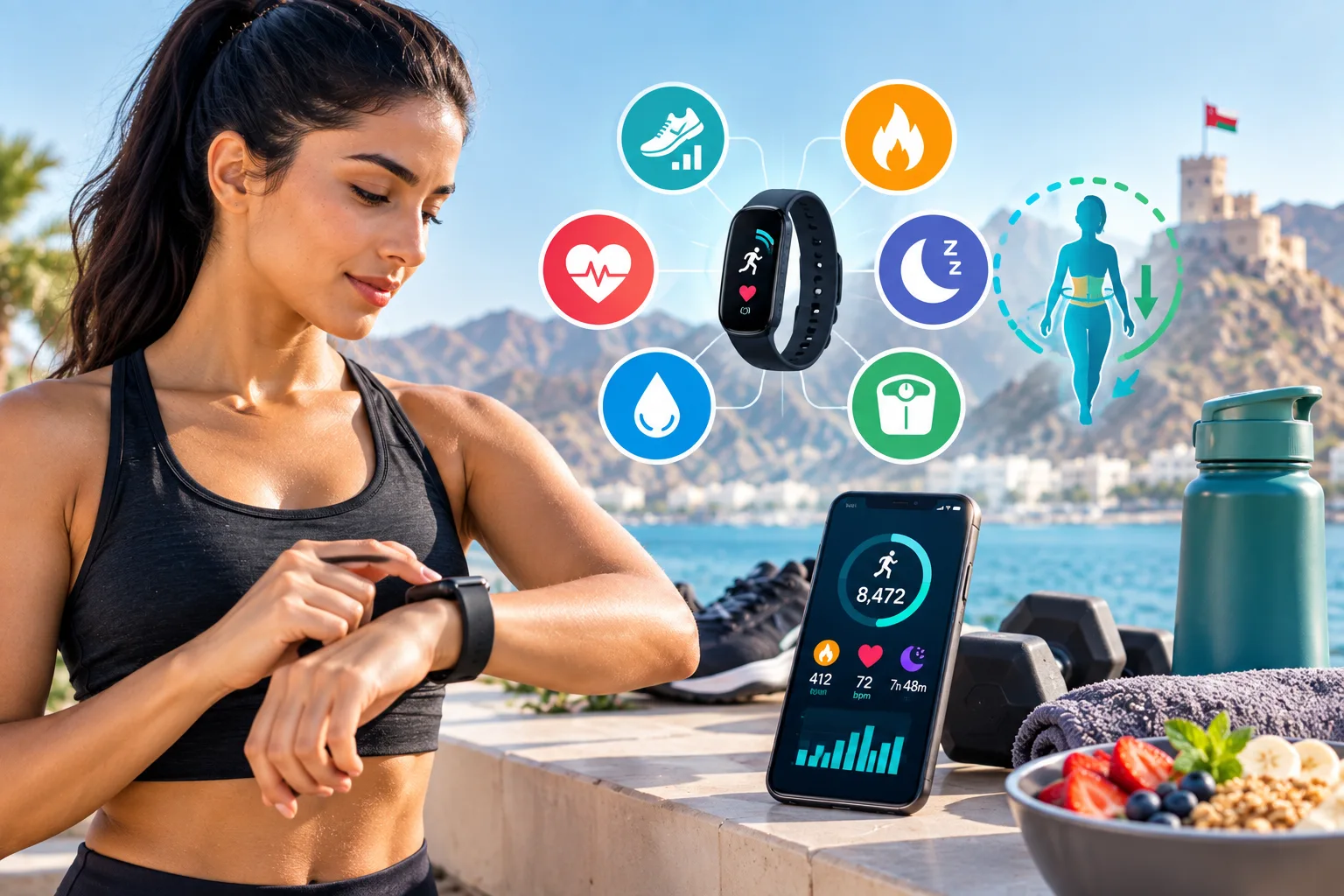
Losing weight requires more than simply exercising harder. Sustainable weight management depends on a combination of physical activity, nutrition, energy balance, sleep, and consistent behavior. A fitness tracker for weight loss can support this process by making daily activity more visible and measurable.
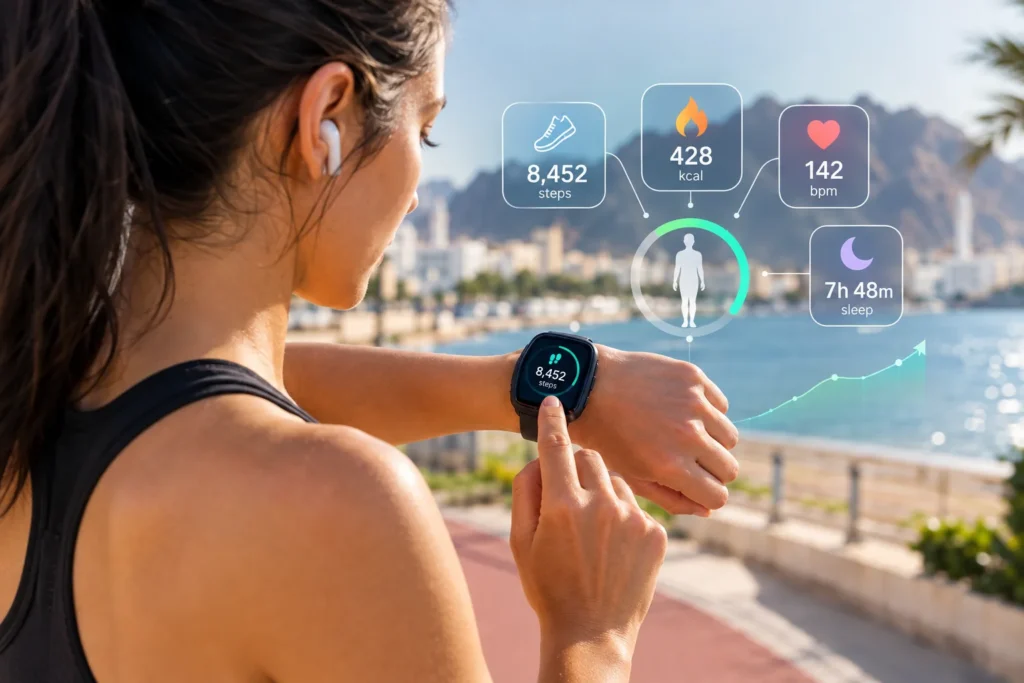
At 5dfitness, the goal is to explain how wearable technology can be used realistically rather than presenting it as a guaranteed solution for losing body fat. Research suggests that wearable activity trackers can modestly increase physical activity, while their impact on actual weight loss can vary depending on how they are used and what other lifestyle strategies accompany them.
Listen
Can a Fitness Tracker Really Help With Weight Loss?
A fitness tracker does not directly cause the body to lose fat. Instead, its potential value comes from helping people understand and manage behaviors associated with energy expenditure and physical activity. Features such as step counting, active minutes, workout tracking, heart-rate monitoring, and daily activity goals can provide immediate feedback throughout the day. This feedback may encourage users to move more, reduce sedentary periods, and remain consistent with exercise. A systematic review of randomized controlled trials found that wearable trackers were associated with modest increases in physical activity among healthy adults, although clear effects on weight reduction were not consistently demonstrated.
How Can a Fitness Tracker Increase Daily Physical Activity?
One of the simplest ways a wearable can support weight management is by making everyday movement measurable. Without tracking, it can be difficult to recognize how active or inactive a person actually is during a normal day.
A tracker can display steps, active minutes, distance, and periods of movement, allowing users to compare their activity with personal goals. For example, someone who usually takes 5,000 steps may gradually aim for 6,000 and then 7,000 rather than making a sudden and unrealistic jump.
This approach can help transform physical activity from an occasional workout into a daily habit. The device itself does not create the calorie deficit required for weight loss, but it can encourage behaviors that increase energy expenditure.
The CDC recommends that adults accumulate at least 150 minutes of moderate-intensity aerobic activity per week, alongside muscle-strengthening activity on at least two days. A wearable can help users monitor progress toward these broader activity targets.
Can Tracking Steps Help Support Weight Loss?
Step tracking can be useful because walking is accessible, measurable, and relatively easy to increase throughout the day. Instead of relying exclusively on structured gym sessions, users can identify opportunities to add movement through walking, taking stairs, active commuting, or short activity breaks.
However, there is no universal step count that guarantees weight loss. A target of 10,000 steps, for example, should not be treated as a biological requirement for losing fat. Individual energy expenditure depends on body size, walking speed, terrain, fitness level, and total daily activity.
The most useful strategy is to establish a realistic baseline and progressively increase activity when appropriate. Tracking steps can therefore function as a behavioral tool rather than a direct measurement of fat loss.
How Does Activity Tracking Improve Accountability?
Accountability is one of the most practical benefits of wearable technology. When activity data is visible, users can identify patterns that would otherwise remain unnoticed.
For example, someone may discover that weekday activity is high but weekend movement is very low. Another person may realize that they exercise regularly but spend most of the remaining day sitting.
This information can encourage specific behavioral adjustments. A person might introduce a 10-minute walk after lunch, increase daily movement during work breaks, or schedule additional activity on less active days.
The important point is that accountability should support consistency rather than create anxiety. A tracker should be treated as a feedback system, not as a judgment tool.
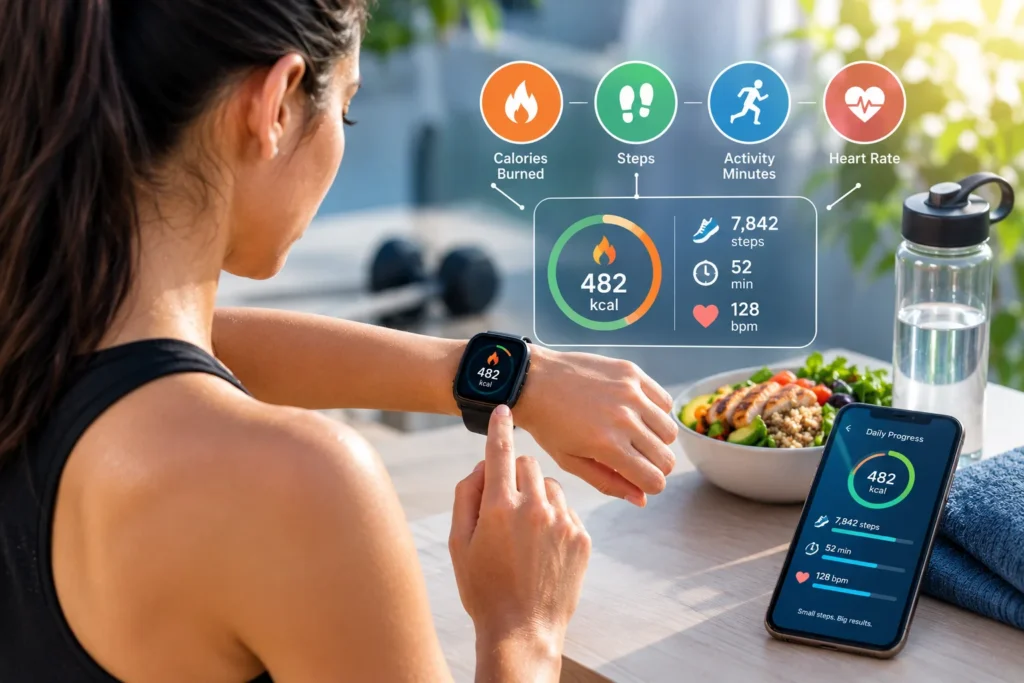
How Can Fitness Trackers Help You Manage Calories and Activity?
Calories play an important role in weight management because sustained weight loss generally requires an energy deficit. Physical activity increases the amount of energy the body uses, while food intake determines a major part of total energy availability. However, wearable devices cannot perfectly measure total energy expenditure. Research has repeatedly shown that calorie-burn estimates from consumer wearables can have substantial errors. Therefore, fitness tracker data should be interpreted as an estimate that helps identify trends rather than as an exact calorie account.
Can Fitness Trackers Accurately Measure Calories Burned?
Calorie estimation is one of the most misunderstood features of wearable devices.
A tracker typically estimates energy expenditure using information such as movement, heart rate, age, sex, body size, and proprietary algorithms. Because energy expenditure cannot be directly measured by a wrist device during normal daily life, the displayed calorie number is an estimation.
A systematic review and meta-analysis examining recent Fitbit devices found that energy expenditure measurements could differ meaningfully from criterion measures. Another systematic review found that no commercial wearable brand consistently demonstrated accurate energy-expenditure measurement across activities.
For this reason, users should avoid thinking, “My tracker says I burned 700 calories, so I can eat exactly 700 additional calories.”
A better approach is to use calorie estimates as one piece of information alongside body-weight trends, activity levels, nutrition, and workout performance.
How Can You Use Calorie Data Without Overestimating Your Energy Expenditure?
The safest way to use calorie data is to focus on trends rather than individual numbers.
Suppose a tracker reports that one workout burned 500 calories. That number should not automatically be treated as an exact measurement. Instead, users can compare similar workouts over time and observe whether activity volume, duration, or intensity is increasing.
For weight loss, nutrition should also be considered independently. A calorie estimate from a wearable should not be used as permission to consume additional food automatically.
This is particularly important because research has found energy-expenditure measurements to be less reliable than some other wearable metrics, such as step counts or heart-rate measurements.
The goal is not perfect numerical precision. The goal is better decision-making.
How Do Activity Goals Support a Calorie Deficit?
Activity goals can help users create more consistent movement patterns.
For example, someone could establish a daily step goal, a weekly active-minute target, and two or three structured workouts. These goals create measurable behaviors that can contribute to higher energy expenditure.
The calorie deficit itself still depends on the relationship between energy intake and energy expenditure. Increasing activity can contribute to that deficit, but excessive exercise is not necessarily the best strategy for sustainable weight loss.
A balanced approach combines regular movement, resistance training, aerobic exercise, adequate recovery, and appropriate nutrition.
The CDC notes that increased physical activity raises energy expenditure and, when combined with appropriate reductions in calorie intake, can contribute to a calorie deficit and weight loss.
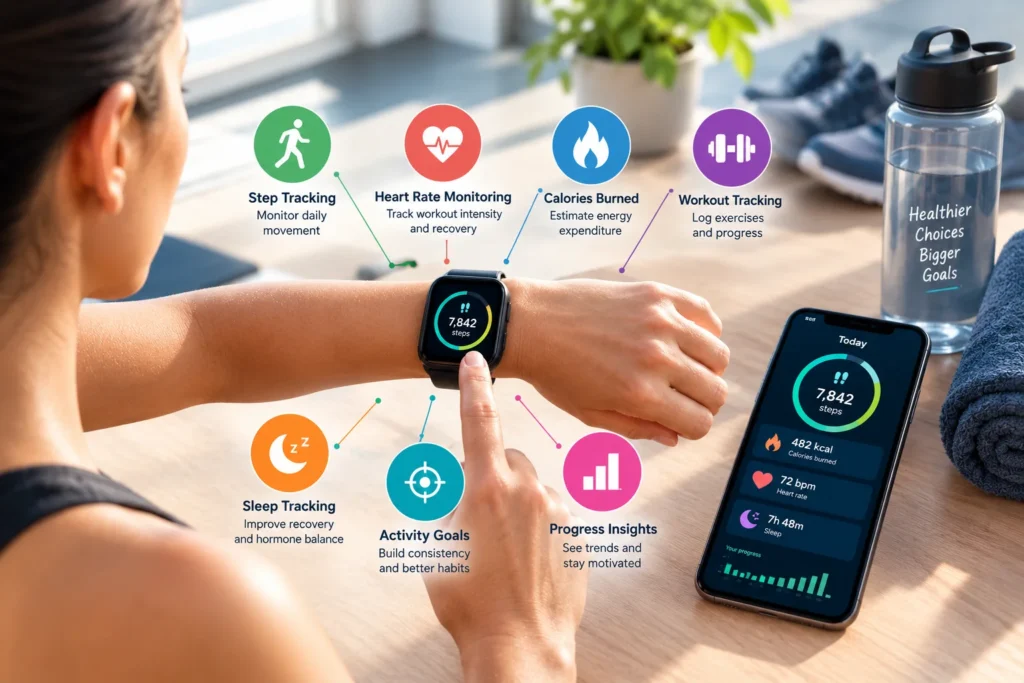
Which Fitness Tracker Features Are Most Useful for Weight Loss?
Not every feature on a wearable has equal value for weight management. Users often focus on calorie counters because calories appear directly connected to weight loss, but the scientific reliability of different measurements varies. Step counts, heart-rate data, workout duration, and activity trends can often provide more practical information than a single estimated calorie number. A good fitness tracker should therefore be evaluated according to how effectively it helps the user monitor behavior, establish realistic goals, and maintain consistency. The best device is not necessarily the one with the largest number of features; it is the one that provides useful information that the user can actually apply.
Is Step Tracking Important for Weight Loss?
Step tracking is one of the most practical features available on wearable devices.
Walking contributes to daily energy expenditure and can be incorporated into everyday life without requiring specialized equipment. A tracker can make this activity visible and encourage users to gradually increase their movement.
Step data can also help users identify sedentary patterns. If daily steps consistently decrease, the user can respond by adding short walks or movement breaks.
Research reviews generally suggest that step measurement is more reliable than energy-expenditure estimation, although accuracy can vary according to the device, walking speed, placement, and activity conditions.
For weight management, step tracking is therefore best viewed as a behavioral feedback tool rather than a guaranteed fat-loss measurement.
How Can Heart Rate Tracking Support Exercise?
Heart-rate monitoring can help users understand exercise intensity. During aerobic training, heart rate can provide useful feedback about how demanding a session is relative to the individual’s capacity.
For example, a user may notice that a particular walking pace produces a lower heart rate after several weeks of consistent training. This may indicate improved cardiovascular efficiency, although heart rate is influenced by many factors, including temperature, hydration, stress, sleep, medication, and fitness level.
Wearable heart-rate measurements are not perfect, but research generally indicates that some consumer devices can provide reasonably useful heart-rate estimates under certain conditions. Accuracy varies by device, activity, and measurement context.
Therefore, heart-rate data can support exercise management, but it should not be interpreted as a perfect measure of calorie expenditure.
Can Sleep Tracking Help With Weight Management?
Sleep tracking is increasingly included in modern wearable devices, and sleep can be relevant to healthy weight management.
Poor sleep can influence appetite regulation, recovery, exercise performance, and daily behavior. A wearable may help users recognize changes in sleep duration or consistency and encourage healthier sleep habits.
However, users should be careful with the precision of wearable sleep measurements. Consumer devices estimate sleep using sensors and algorithms rather than directly measuring brain activity in the way a clinical sleep study does.
Therefore, sleep tracking is more useful for observing patterns than diagnosing sleep disorders.
For someone trying to lose weight, maintaining regular sleep and recovery habits can complement nutrition and physical activity rather than replacing them.
Are Workout and Activity Goals Useful?
Workout and activity goals can turn an abstract intention such as “I need to exercise more” into measurable behaviors.
For example, instead of simply deciding to become more active, a person might set a goal of completing three resistance-training sessions and 150 minutes of moderate aerobic activity each week.
The advantage is that the user can evaluate adherence instead of relying on motivation alone.
Goals should remain realistic. Extremely aggressive targets can increase fatigue, reduce recovery, and make the process difficult to maintain.
The best goal is usually one that encourages progressive improvement while fitting the user’s lifestyle, fitness level, and recovery capacity.
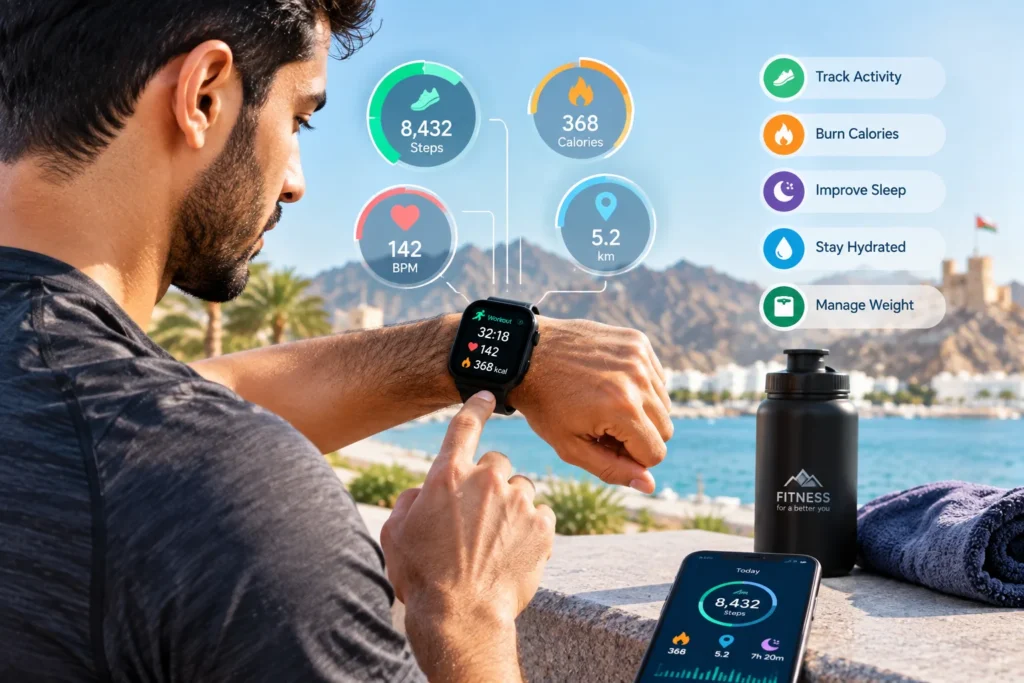
How Should You Use a Fitness Tracker to Support Weight Loss?
Using a wearable effectively requires more than wearing it every day. The device should be integrated into a broader strategy that includes physical activity, nutrition, recovery, and progress monitoring. The strongest use case is self-monitoring: the tracker provides feedback, while the user makes the decisions. Evidence from systematic reviews suggests that activity trackers can improve physical activity, but their effects on body weight are not always consistent. Therefore, the objective should be to use wearable data to build sustainable habits rather than expecting the device itself to produce weight loss.
How Should You Set Daily Activity Goals?
Start by establishing your current activity level.
If your average is approximately 5,000 steps per day, immediately targeting 15,000 may be unnecessary and difficult to maintain. A smaller progression can be more practical.
The same principle applies to workout duration. Someone who currently exercises once per week may benefit from gradually increasing frequency rather than attempting intense daily workouts.
Useful goals can include:
- Daily step targets
- Weekly active minutes
- Number of resistance-training sessions
- Number of aerobic workouts
- Reduced sedentary periods
- Consistent exercise days
Goals should be measurable and achievable. Once a target becomes consistently easy, it can be adjusted upward according to the user’s fitness level and recovery.
How Can You Use Your Tracker to Build Consistent Exercise Habits?
Consistency is often more important than occasional high-intensity efforts.
A tracker can provide reminders, progress notifications, activity streaks, and daily feedback. These features can help turn exercise into a routine.
One effective strategy is to connect activity goals with existing habits. For example, a person could walk after breakfast, complete a short walk after lunch, or schedule strength training at the same time on specific days.
The objective is to reduce the number of decisions required to become active.
Instead of asking every day, “Should I exercise today?”, a structured routine makes physical activity a predictable part of the schedule.
The tracker then becomes a feedback mechanism that shows whether the routine is actually being followed.
How Should You Monitor Your Progress Over Time?
Daily fluctuations in body weight are normal and can be influenced by hydration, food intake, sodium, glycogen, and other factors.
For this reason, evaluating progress based on a single day’s data can be misleading.
A better approach is to examine trends over several weeks. Useful indicators include:
- Average body weight
- Waist measurement
- Step-count trends
- Weekly exercise volume
- Strength or endurance improvements
- Workout consistency
- Sleep patterns
- Nutrition adherence
A wearable can provide valuable activity data, but body composition and weight trends should be interpreted alongside nutrition and training information.
The objective is to identify whether the overall strategy is working rather than becoming obsessed with individual daily numbers.
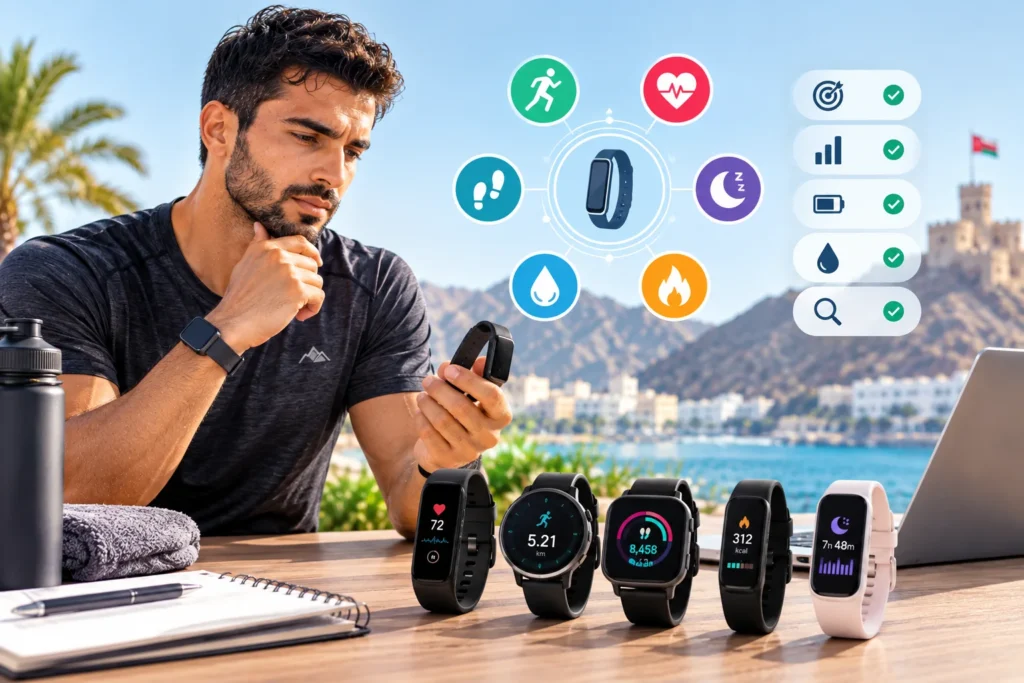
How Do You Choose the Best Fitness Tracker for Weight Loss?
Choosing the best fitness tracker for weight loss depends on the user’s goals, budget, preferred activities, comfort, and willingness to use the device consistently. There is no universally best tracker for everyone. Someone primarily interested in walking may prioritize reliable step tracking and battery life, while a strength-training enthusiast may care more about workout tracking, heart-rate monitoring, and recovery features. Accuracy also differs between metrics. Research consistently shows that energy-expenditure estimates can be considerably less reliable than some other measurements.
What Tracking Features Should You Look For?
For weight-management purposes, prioritize features that support measurable behaviors.
Useful features can include:
- Step tracking
- Heart-rate monitoring
- Workout tracking
- Active-minute tracking
- Daily and weekly goals
- Sleep monitoring
- Smartphone synchronization
- Long battery life
- Comfortable design
- Progress history
The most important question is not how many features a device offers but whether those features help you make better decisions.
For example, if your primary objective is increasing daily movement, accurate step tracking and convenient progress reports may be more valuable than advanced metrics that you rarely use.
How Important Are Battery Life and Comfort?
Comfort and battery life can have a major effect on adherence.
A tracker that is uncomfortable may spend more time sitting on a desk than being worn. Similarly, a device that requires frequent charging may create gaps in data.
For weight-management purposes, consistent tracking can be more useful than having sophisticated features that are used only occasionally.
A comfortable device that can be worn throughout the day and during appropriate workouts may therefore be more practical than a technically advanced but inconvenient model.
Before choosing a device, consider its size, strap design, water resistance, battery duration, charging method, and compatibility with your smartphone.
Should You Choose a Fitness Band or Smartwatch?
A fitness band is generally designed to focus on activity and health tracking, while a smartwatch typically combines these features with notifications, applications, communication tools, and broader functionality.
For someone who mainly wants step tracking, activity monitoring, and basic workout data, a fitness band may be sufficient.
A smartwatch may be more appropriate for someone who wants advanced workout features, GPS, music control, notifications, and a broader digital ecosystem.
The important consideration is whether the additional features will actually improve adherence and activity.
Buying a more expensive device does not automatically produce better weight-loss results.
How Much Should You Spend on a Fitness Tracker?
Budget should be based on useful functionality rather than brand prestige.
A low-cost device can provide enough information for someone whose main goal is increasing daily movement. A more expensive smartwatch may make sense for users who require advanced training, GPS, detailed workout analysis, or other smart features.
Before buying, identify the metrics that matter most to you.
If your primary goals are step tracking, exercise consistency, and activity monitoring, spending significantly more may not provide proportional benefits.
The best investment is a device that you will wear consistently and use to make practical decisions.
Fitness Tracker Metrics and Their Use for Weight Management
| Fitness Tracker Metric | Potential Use | Accuracy Consideration |
|---|---|---|
| Step Count | Monitor daily movement | Generally more useful than calorie estimates, but accuracy varies |
| Heart Rate | Monitor exercise intensity | Can be reasonably useful, depending on device and activity |
| Calories Burned | Estimate energy expenditure | Should be treated as an estimate, not an exact number |
| Active Minutes | Monitor exercise volume | Useful for tracking activity consistency |
| Workout Duration | Monitor training frequency and volume | Generally straightforward for timed sessions |
| Sleep Duration | Identify sleep patterns | Useful for trends, but wearable sleep estimates have limitations |
| Distance | Track walking/running volume | Accuracy can vary depending on GPS and activity |
| Activity Goals | Encourage consistency | Behavioral value depends on realistic goal setting |
Research reviews indicate that wearable accuracy differs substantially by metric, with energy expenditure generally presenting greater measurement challenges than steps and some heart-rate measurements.
Conclusion
A fitness tracker can be a valuable tool for weight management, but it should not be confused with a weight-loss treatment. Its main value comes from making physical activity measurable and encouraging better habits. Step counts, active minutes, workout tracking, heart-rate data, and progress trends can help users understand their behavior and remain accountable. However, calorie-burn estimates should be interpreted cautiously because wearable energy-expenditure measurements are not consistently accurate.
For sustainable results, combine wearable tracking with appropriate nutrition, regular aerobic activity, resistance training, adequate recovery, and realistic goals. The most effective fitness tracker for weight loss is ultimately the one that you can use consistently and whose information helps you make better decisions.
FAQ
Yes, a fitness tracker can support weight loss by helping you monitor activity, set goals, increase daily movement, and maintain accountability. However, wearing a tracker alone does not guarantee weight loss.
They can be useful as part of a broader weight-management strategy. Research suggests wearable trackers can increase physical activity, but evidence for direct and sustained weight reduction is less consistent.
The best device is the one that provides useful tracking features, feels comfortable, has adequate battery life, and fits your budget. There is no single device that is best for everyone.
Not always. Energy-expenditure estimates can have substantial errors, so calorie numbers should be treated as estimates rather than precise measurements.
Tracking steps can encourage more daily movement and help users build consistent walking habits. However, step count alone does not determine whether someone loses body fat.
Use it to establish an activity baseline, set realistic goals, monitor exercise consistency, review weekly trends, and combine activity data with appropriate nutrition and recovery.
Heart-rate tracking can help monitor exercise intensity, but it does not directly measure fat loss or provide a perfectly accurate calorie calculation.
Sleep tracking may help users identify patterns in sleep duration and consistency. However, consumer wearables should not be treated as diagnostic medical devices for sleep disorders.
There is no universal step count that guarantees weight loss. A better approach is to establish your baseline and gradually increase activity according to your fitness level and lifestyle.