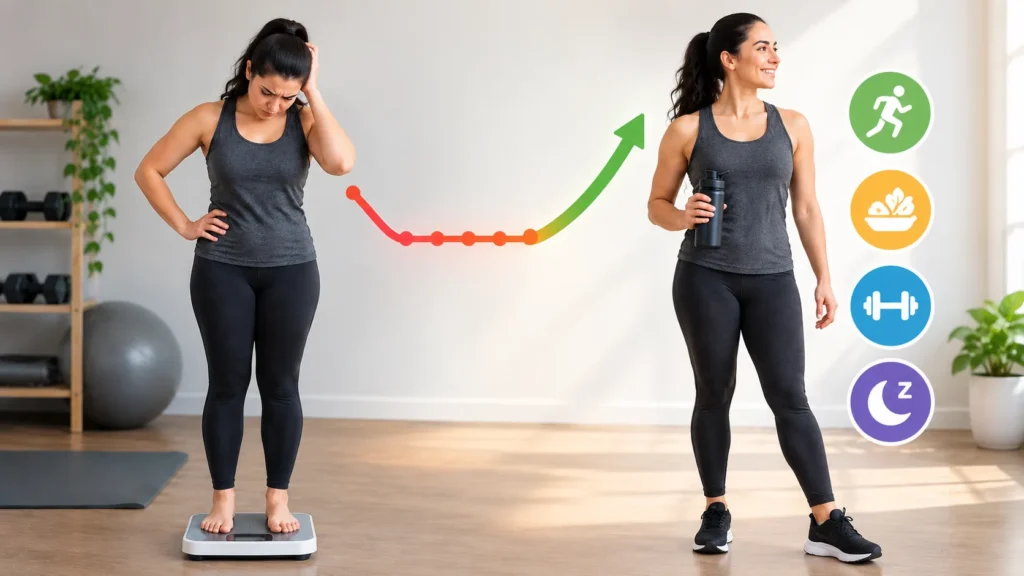
Understanding the factors affecting fat loss can help you build a more effective and sustainable fitness plan. Although calorie balance plays a central role, your results are also influenced by nutrition, exercise, muscle mass, sleep, stress, genetics, and individual health factors.
For athletes, bodybuilders, and fitness enthusiasts, the goal should not simply be to lose weight as quickly as possible, but to reduce body fat while preserving muscle and maintaining performance. This guide from 5dfitness explains what influences fat loss speed, why progress differs between individuals, and how to make practical adjustments based on evidence rather than fitness myths.

1. What Determines How Quickly You Lose Body Fat?
The rate of fat loss depends on the relationship between energy intake and energy expenditure, as well as how your body adapts to changes in diet and activity. A sustained calorie deficit encourages the body to use stored energy, but the amount of fat lost each week varies. Starting body composition, training habits, and consistency all influence the outcome. It is also important to distinguish fat loss from changes in total body weight, which can fluctuate because of water, glycogen, and digestive contents.
How Does a Calorie Deficit Affect the Rate of Fat Loss?
A calorie deficit occurs when you consistently consume less energy than your body uses. This creates the conditions for weight loss, including the use of stored body fat. However, the relationship is not perfectly linear: as body weight changes, energy needs can also change, and the body may adapt to a lower intake.
An extremely large deficit is not automatically better. It can increase hunger, fatigue, and difficulty maintaining training performance, and may make it harder to preserve muscle. A moderate, sustainable approach is generally more practical than severe restriction. Track your intake and progress honestly, then adjust gradually rather than cutting calories dramatically whenever the scale stops moving for a few days.
Why Is Fat Loss Different From Weight Loss?
Weight loss refers to a reduction in total body weight, whereas fat loss specifically means reducing the amount of fat tissue. Changes on the scale may also reflect water, glycogen, digestive contents, or muscle tissue. For example, a sudden drop after reducing carbohydrate intake may partly reflect lower glycogen stores and the water stored with them—not just fat loss.
Resistance training, adequate protein, and a sensible calorie deficit can help support muscle retention during fat loss. Monitor several indicators, such as average body weight, waist circumference, progress photographs, and gym performance. No single measurement is perfect, but combining them gives a more useful picture of whether your body composition is changing in the intended direction.
2. How Do Diet and Exercise Influence Fat Loss Speed?
Nutrition and physical activity are two major factors you can influence directly. Your eating pattern affects calorie intake, hunger, and the nutrients available to support training. Exercise contributes to energy expenditure and helps preserve or build physical capacity. Daily movement outside formal workouts also matters. The most effective approach is not necessarily the hardest diet or the longest cardio session; it is a realistic combination of food choices, resistance training, aerobic activity, and habits you can maintain over time.
How Does Protein Intake Support Fat Loss?
Protein supports muscle repair and helps preserve lean tissue during a calorie deficit. Protein-rich foods can also improve fullness, making it easier for some people to follow a nutrition plan without persistent hunger. Useful options include eggs, fish, lean meat, dairy products, tofu, beans, and lentils.
Your individual protein needs depend on factors such as body size, training volume, age, and health status. People who train regularly may benefit from paying particular attention to protein distribution across meals. However, protein does not independently guarantee fat loss: total energy intake and overall dietary quality still matter. Build meals around appropriate protein sources, vegetables, fruit, high-fiber carbohydrates, and suitable fats instead of relying on supplements or eliminating entire food groups unnecessarily.
Does Strength Training Help You Lose Body Fat Faster?
Strength training helps maintain muscle during weight loss and can improve strength and physical function. This matters because the aim of a body-composition programme is often to reduce fat while retaining as much lean mass as practical. A well-designed programme should include progressive resistance exercise, adequate recovery, and a workload that matches your experience and schedule.
Cardio also has a role: walking, cycling, swimming, and other aerobic activities increase energy expenditure and support cardiovascular health. You do not need to choose between weights and cardio. Combining both, while managing fatigue, can be more useful than relying on one exercise type alone. Remember that exercise calorie estimates are imperfect, so avoid automatically eating back every calorie reported by a fitness tracker.

3. How Do Metabolism, Age, Genetics, and Hormones Affect Fat Loss?
People do not all lose fat at the same rate, even when their routines appear similar. Body size, body composition, genetics, age, medications, health conditions, and daily movement can influence energy needs and appetite. Some factors are not directly controllable, but understanding them can help you set realistic expectations and identify when professional advice may be useful. Individual differences do not mean fat loss is impossible; they mean that a plan may need to be tailored and adjusted as your body and circumstances change.
How Does Metabolism Influence the Rate of Fat Loss?
Metabolism includes the processes through which your body uses energy. Total daily energy expenditure includes energy used at rest, digestion, planned exercise, and everyday movement. Larger bodies and bodies with more lean mass generally require more energy, although individual needs vary.
During weight loss, a smaller body may use less energy than it did previously. Some people also experience adaptive changes in energy expenditure and appetite, which can make continued progress more challenging. This does not mean metabolism has permanently “broken.” Reassess your energy needs as your weight changes, maintain regular movement, and avoid drastic restriction. If progress differs from expectations, review portion sizes, activity, and the measurement period before assuming that a metabolic problem is responsible.
Does Age, Genetics, or Hormonal Health Affect Fat Loss?
Age-related changes in muscle mass, activity, sleep, and health can influence body composition and energy needs. Genetics can affect fat distribution, appetite, and susceptibility to weight gain, but they do not determine a single unavoidable outcome. Hormonal and medical conditions—including hypothyroidism and polycystic ovary syndrome (PCOS)—may also complicate weight management for some people.
Some medications can affect appetite, energy balance, or body weight. Do not stop prescribed medication or use unregulated fat-burning products to compensate. If weight or body-composition changes remain difficult to explain despite consistent habits, discuss symptoms and medication effects with a qualified healthcare professional. Medical assessment is more appropriate than self-diagnosing a hormonal imbalance based only on slow progress.
4. How Do Sleep, Stress, and Recovery Affect Fat Loss?
Fat loss depends on habits beyond the gym and kitchen. Sleep, stress management, and recovery influence how consistently you can train, manage hunger, and maintain daily activity. Poor sleep can increase subjective hunger and make food choices harder for some people. Ongoing stress may also affect eating patterns and motivation. These factors do not override energy balance, but they can influence how manageable a calorie deficit feels and how well you sustain it over time.
How Does Poor Sleep Affect Fat Loss Progress?
Insufficient sleep may increase hunger, raise energy intake, and reduce the quality of daily decision-making. A systematic review and meta-analysis of randomized trials found that sleep restriction increased subjective hunger and average energy intake in the studied conditions. This does not prove that one poor night will prevent fat loss, but it supports treating sleep as part of a sustainable programme.
Most adults should aim for a regular sleep schedule and sufficient nightly sleep; many adults need around seven to nine hours. Keep your bedroom comfortable, reduce stimulating activities before bed, and avoid scheduling intense training at the expense of rest. If persistent sleep problems interfere with daily life, consider discussing them with a healthcare professional.
Can Chronic Stress and Poor Recovery Slow Progress?
Stress can influence appetite, eating behavior, sleep, and willingness to exercise. Some people eat more when stressed, while others skip meals or struggle to maintain a routine. Poor recovery may also reduce training quality and everyday movement. These effects can indirectly make a calorie deficit harder to maintain, although the response differs from person to person.
Use manageable strategies such as walking, planning meals, scheduling rest days, and keeping training demands realistic. More exercise is not always better if it leaves you exhausted and inconsistent. If stress or emotional eating feels overwhelming, support from a qualified mental health professional or registered dietitian may help. Sustainable progress depends on a routine that supports both physical performance and overall well-being.

5. How Can You Improve Your Rate of Fat Loss Safely?
The most useful strategy is to focus on factors you can measure and adjust. Rather than judging success by daily scale changes, establish a routine that includes a manageable calorie deficit, adequate protein, resistance training, regular movement, sleep, and recovery. Review progress over several weeks because normal fluctuations can hide gradual changes. If progress slows, make one measured adjustment at a time instead of combining severe food restriction with excessive exercise.
How Can You Track Fat Loss and Respond When Progress Slows?
Use multiple indicators to understand whether your plan is working. Weigh yourself under similar conditions if weighing is appropriate for you, and compare weekly averages rather than isolated readings. Measure your waist periodically, record gym performance, and note how clothing fits. Body-fat scales and wearable devices can provide estimates, but their readings may vary with hydration and measurement conditions.
Practical Ways to Monitor the Factors Affecting Fat Loss
| Factor | What to monitor | Practical adjustment |
|---|---|---|
| Nutrition | Portions, meal patterns, hunger | Make small, sustainable changes |
| Protein | Protein sources across meals | Include a suitable source at meals |
| Training | Strength, workout consistency | Maintain progressive resistance training |
| Daily activity | Walking and sedentary time | Add manageable movement |
| Sleep and stress | Sleep duration, fatigue, stress | Improve routine and recovery |
| Progress | Weekly weight trend, waist, performance | Review several weeks of data |
A simple weekly review
- Record your average weight, if appropriate, and waist measurement.
- Review nutrition and activity consistency.
- Check strength, fatigue, hunger, and sleep.
- If progress has stalled for several weeks, reassess portions and activity.
- Make one modest adjustment and monitor the response before changing more variables.
A short plateau does not automatically mean you need fewer calories. Water retention, menstrual-cycle changes, constipation, and recent changes in training can temporarily affect weight. If you experience persistent unexplained changes or suspect a medical or medication-related issue, seek professional guidance rather than pursuing more aggressive restriction.
Conclusion
The factors affecting fat loss include calorie balance, nutrition, training, daily activity, metabolism, sleep, stress, genetics, and individual health. You cannot control every variable, but you can build habits that make progress more consistent and sustainable. Track meaningful trends, preserve muscle through resistance training and adequate nutrition, and avoid extreme approaches that undermine recovery. At 5dfitness, our goal is to help you make evidence-informed fitness decisions. Start by reviewing one habit this week, make a realistic improvement, and build your fat-loss routine on consistency rather than quick fixes.
FAQ
Maintaining an appropriate calorie deficit is central, but nutrition quality, activity, sleep, health, and consistency influence how achievable that deficit is.
People differ in body size, starting composition, energy needs, genetics, daily movement, health, and adherence to their routines.
Both can support fat loss. Cardio increases energy expenditure, while strength training helps preserve muscle. Combining them can be effective.
Poor sleep can increase hunger and make healthy routines harder to maintain, but its effect varies. Improving sleep can support a more sustainable plan.
Energy needs may have decreased as your body changed, or activity and intake may have shifted. Check trends over several weeks before making adjustments.
Genetics can influence appetite, fat distribution, and weight regulation, but they do not make fat loss automatically impossible. Individualized strategies may help.