A member finishes a hard leg session in an air-conditioned Muscat gym, walks into the heat, and realizes the bottle is still almost full. The next morning brings a headache, heavy legs, and a workout that feels harder than expected. Hydration Fitness in Oman is not about carrying the largest bottle or forcing a fixed number of litres. It is about matching fluid and sodium intake to your body, session, sweat rate, food intake, and environment.
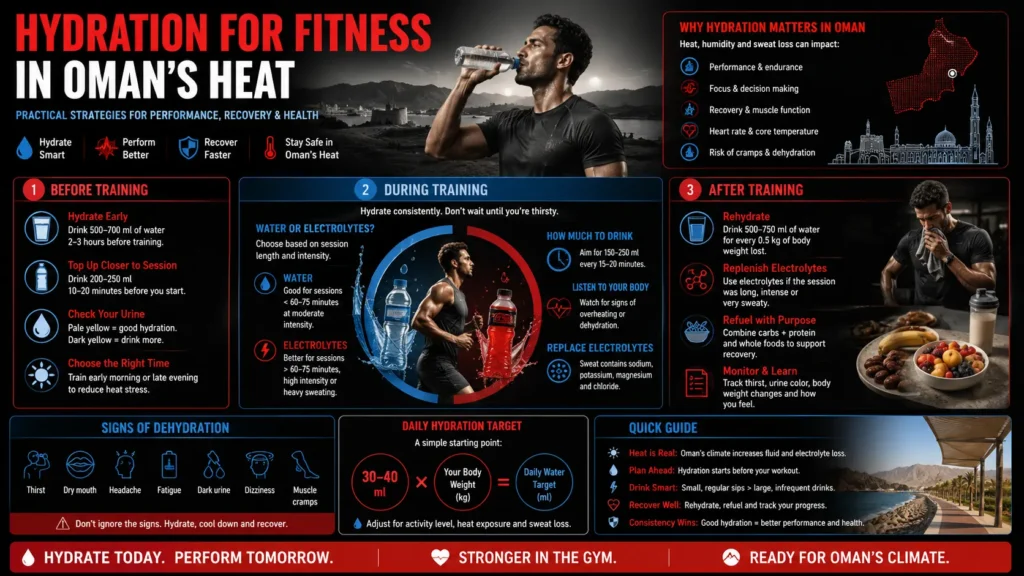
The practical goal is to begin training reasonably hydrated, drink enough to limit excessive fluid loss, and replace what the session actually cost. That supports temperature regulation, concentration, cardiovascular function, and repeatable training quality. It also belongs within the wider system of muscle recovery after demanding workouts.
Listen
Hydration Changes the Workout Before You Notice Thirst
Water helps transport nutrients, maintain blood volume, regulate body temperature, and support muscle and nerve function. As sweating increases, the cardiovascular system must work harder. The same pace may feel more difficult, heart rate may drift upward, and concentration may decline.
You can arrive at an indoor gym already under-hydrated after commuting, working in air conditioning, drinking coffee, or spending time outside.
“Hydration during a game, tournament or workout ― not just before and after ― can fall below the radar of an athlete and their trainer, but performance depends on it.”
Gabrielle Judd, MS, RD, CNSC, LDN, CISSN — Johns Hopkins Medicine
Coaches often see members interpret poor hydration as poor fitness. They add caffeine, shorten rest periods, or push harder, when the better first step is to review the whole day. Hydration Fitness in Oman should begin before the warm-up, not when dizziness or severe thirst appears.
There Is No Universal “Eight Glasses” Training Rule
Daily fluid needs vary with body size, diet, activity, health, medications, climate, and sweat loss. Total water also comes from food and other beverages. A sedentary office day, a heavy lower-body workout, and a long outdoor conditioning session should not produce the same drinking plan.
“We don’t offer any rule of thumb based on how many glasses of water people should drink each day…”
Lawrence J. Appel, MD, MPH, Institute of Medicine Panel Chair — National Academies
For a healthy person during normal daily life, thirst and regular meals often provide useful guidance. Exercise in Muscat heat changes the context. Sweat can rise quickly, and a person who starts a session behind may struggle to catch up comfortably. Use several signals rather than one rigid target:
- Thirst and dry mouth
- Urine that is consistently darker than pale straw
- Unusual headache, fatigue, or rising perceived effort
- A noticeable body-mass drop across repeated similar sessions
- Salt marks on clothing or very high sweat volume
Urine colour is a rough screening tool, not a diagnosis. Vitamins, foods, medications, and first-morning concentration can change it.
Measure Sweat Loss Instead of Guessing
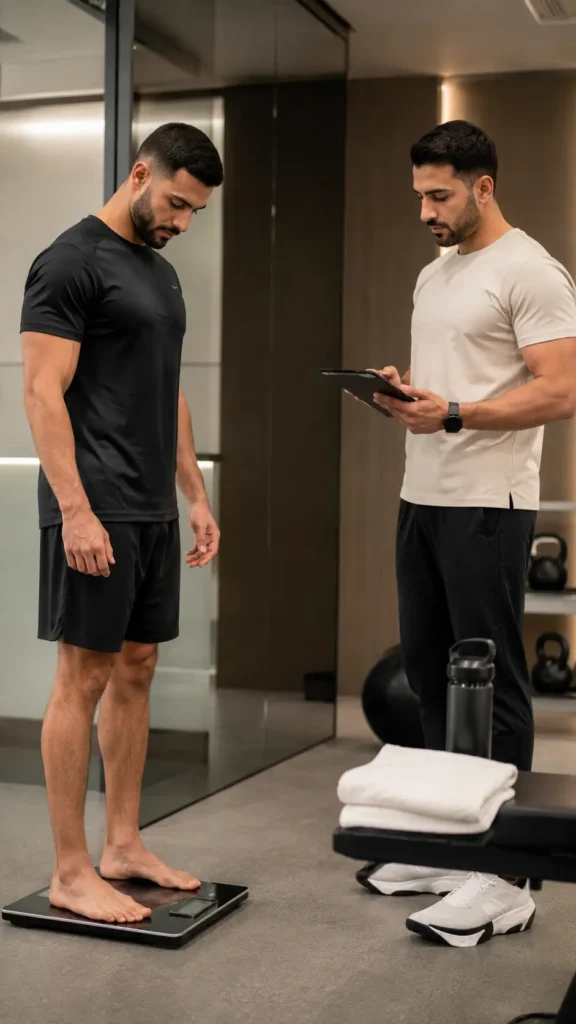
A simple sweat-rate check makes hydration more individual. Weigh yourself in minimal dry clothing before training, record what you drink, note any bathroom break, and weigh again after the session. Roughly, one kilogram of net body-mass loss represents about one litre of fluid deficit.
If body mass falls by 0.8 kg during a one-hour session and you drank 0.5 L, estimated sweat loss was about 1.3 L for those conditions. Repeat the check during different sessions because intensity, temperature, clothing, and acclimatization change sweat rate. ACSM and NATA guidance both support individualized fluid plans that limit excessive dehydration without encouraging overdrinking.
This is more useful than copying an influencer’s bottle target. It also supports safer decisions alongside training load and injury-risk management.
| Training situation | Usually adequate starting point | When electrolytes become more relevant | Common mistake |
|---|---|---|---|
| 45–60 minute indoor strength session | Water plus normal meals | Heavy sweating or another session later | Arriving dehydrated, then chugging afterward |
| Long cardio, HIIT, squash or padel | Planned fluids during the session | High sweat loss, long duration, visible salt loss | Ignoring sodium and fuel |
| Outdoor training in hot conditions | Earlier timing, water access, reduced intensity | Prolonged or very sweaty activity | Using the usual indoor plan |
| Light recovery or mobility day | Normal daily hydration | Usually unnecessary with balanced meals | Assuming every workout needs a sports drink |
| Ramadan evening training | Rehydrate and eat progressively after sunset | Significant sweat loss between sunset and bedtime | Drinking too much immediately before training |
The implication is not that sports drinks are mandatory. The drink should match the demand.
Water or Electrolytes: Choose by Session Demand
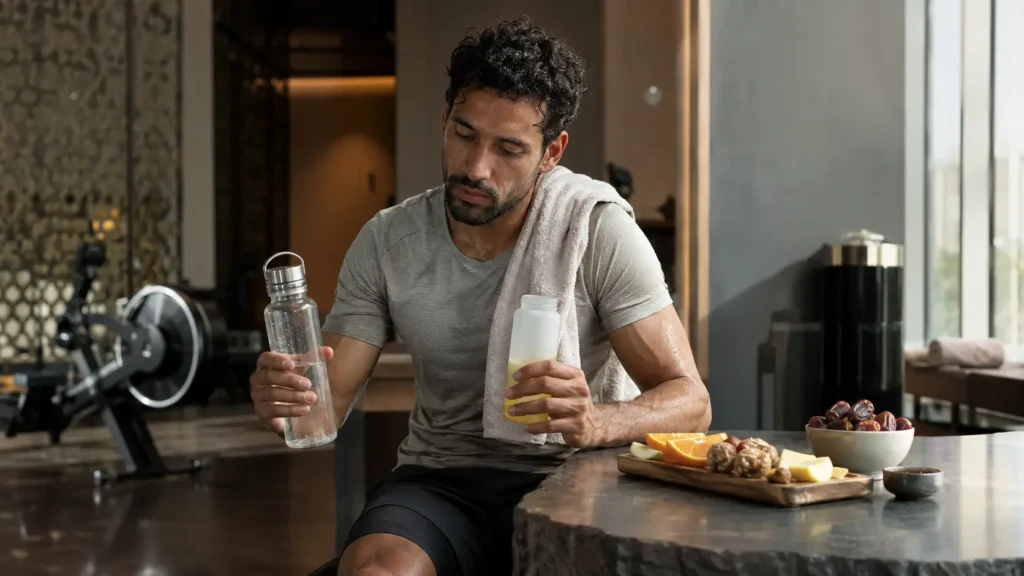
Water works well for many short or moderate gym sessions when you begin hydrated and eat regular meals. Electrolytes become more useful when training is long, intense, repeated, or very sweaty, especially when sodium losses are high. Carbohydrate-containing sports drinks may support prolonged performance, but they add energy and are unnecessary for every workout.
A practical decision rule:
- Choose water for most shorter indoor workouts.
- Consider electrolytes for long sessions, heavy sweaters, outdoor heat, tournaments, or two-a-day training.
- Include food because meals replace fluid, sodium, potassium, and carbohydrate.
- Avoid forced overdrinking. Finishing a session heavier than you started can indicate excessive intake.
Exercise-associated hyponatremia is uncommon in ordinary gym training but serious. It can occur when someone drinks far more fluid than they lose, diluting blood sodium. Nausea, worsening headache, confusion, swelling, or altered mental state during or after prolonged exercise requires urgent medical assessment.
Build Hydration Around the Training Day
Hydration Fitness in Oman works best as a sequence rather than a rescue attempt. Your plan should account for what happens before, during, and after the workout.
Before Training
Drink normally across the day and arrive without strong thirst. If the session is early, begin with water and assess whether breakfast is needed. The morning-training guide for Oman explains why fasted exercise should be chosen by comfort and performance, not hype.
For outdoor sessions, schedule activity during cooler periods where possible. The CDC advises athletes to reduce midday heat exposure, pace activity, drink more than usual in hot conditions, and stop if they feel faint or weak.
During Training
Keep fluid accessible and take manageable drinks rather than waiting until the end. Longer sessions need a more deliberate plan. Coaches should observe coordination, unusual fatigue, cramping patterns, and declining output rather than judging effort only by sweat.
After Training
Replace losses gradually, eat a balanced meal, and continue drinking over the following hours. Rehydration supports the broader post-workout recovery process, but it cannot compensate for inadequate protein, carbohydrate, sleep, or rest.

More Water Is Not Always Better
Hydration marketing can turn a useful habit into a competition. Constantly forcing clear urine, chasing oversized daily targets, or drinking rapidly after training can create discomfort and, in extreme cases, risk.
Alcohol is also a poor recovery fluid because it can worsen dehydration and interfere with the priorities that should follow training.
“The more alcohol you drink, the more dehydrated you’ll become, which can have serious consequences on recovery and overall health.”
Kelli Santiago, Board-Certified Sports Dietitian and Wellness Coach — University Hospitals
Persistent fatigue may also reflect poor sleep, inadequate calories, excessive training load, illness, or another health issue. Review signs of under-recovery and overtraining before assuming another electrolyte packet will solve the problem.
Make Hydration Part of the Program
The strongest hydration plan is simple enough to repeat: start the day with fluids available, arrive prepared, drink according to the session, replace meaningful losses, and adjust using evidence. Pair it with planned rest days, purposeful mobility work, and a consistent sleep schedule that supports muscle growth.
Hydration Fitness in Oman should improve training quality without becoming another rigid rule. At 5D Fitness, a coach can help connect sweat rate, session structure, recovery, and Muscat’s climate to a practical plan. Discuss repeated headaches, cramping, performance drops, or unusually high sweat loss with a qualified professional; concerning symptoms or medical conditions require healthcare guidance.
FAQ
Drink normally across the day and arrive without strong thirst. Exact needs depend on body size, climate, meals, and sweat rate.
Usually yes for a moderate indoor workout, especially when you start hydrated and eat balanced meals.
Consider them for long, intense, repeated, outdoor, or very sweaty sessions, especially when visible salt loss is high.
It may increase perceived effort, reduce concentration, and make quality sets harder to sustain as fluid loss grows.
Pale straw is a useful general sign, but food, vitamins, medication, and morning concentration can alter colour.
Compare pre- and post-workout body mass, then add drinks consumed and subtract urine output across the measured session.
Yes. Forced overdrinking can cause discomfort and, during prolonged activity, potentially dangerous low blood sodium.
No. Sweat reflects cooling and fluid loss, not direct body-fat loss.
Rehydrate progressively after sunset, eat a balanced meal or snack, and avoid rapidly drinking excessive fluid before training.
Seek urgent help for confusion, fainting, severe weakness, persistent vomiting, altered mental state, or worsening heat-illness symptoms.