Sleeping Schedule for Muscle Growth in Oman is an important topic for anyone training seriously in Muscat, Al Hail, Seeb, or anywhere across Oman. Many gym members focus on lifting heavier, eating more protein, and following structured workout plans, but they often underestimate the one recovery tool their body needs every night: sleep.
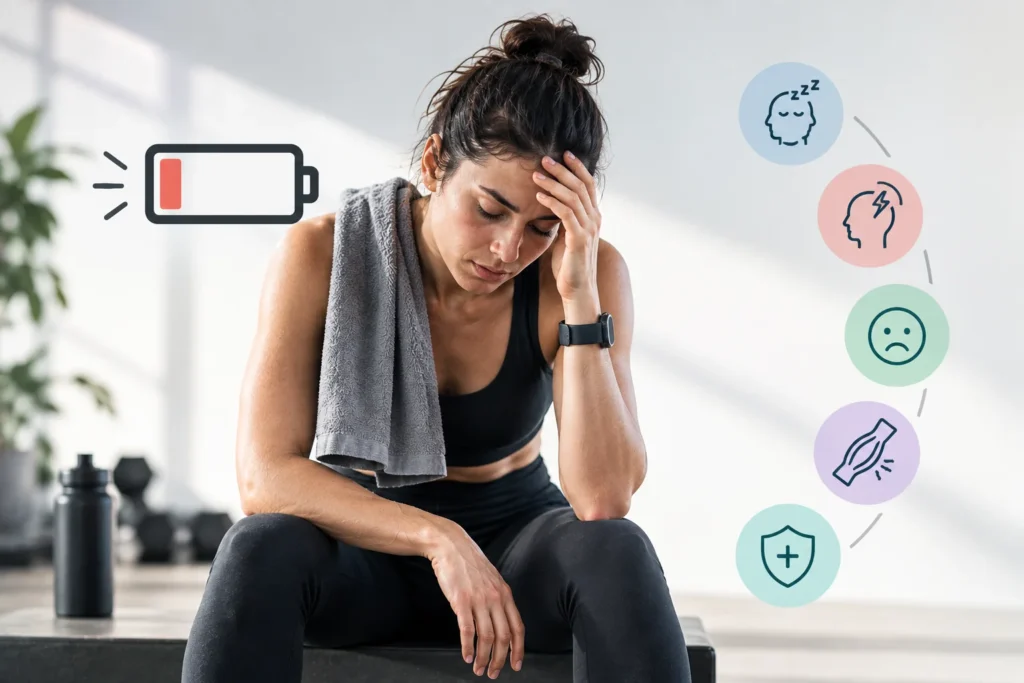
Muscle growth does not happen only while you train. Training creates stress. Sleep helps your body repair, adapt, and come back stronger. When sleep is poor, even a good workout plan can feel harder than it should. You may notice slower strength gains, longer soreness, weaker motivation, more cravings, and reduced performance.
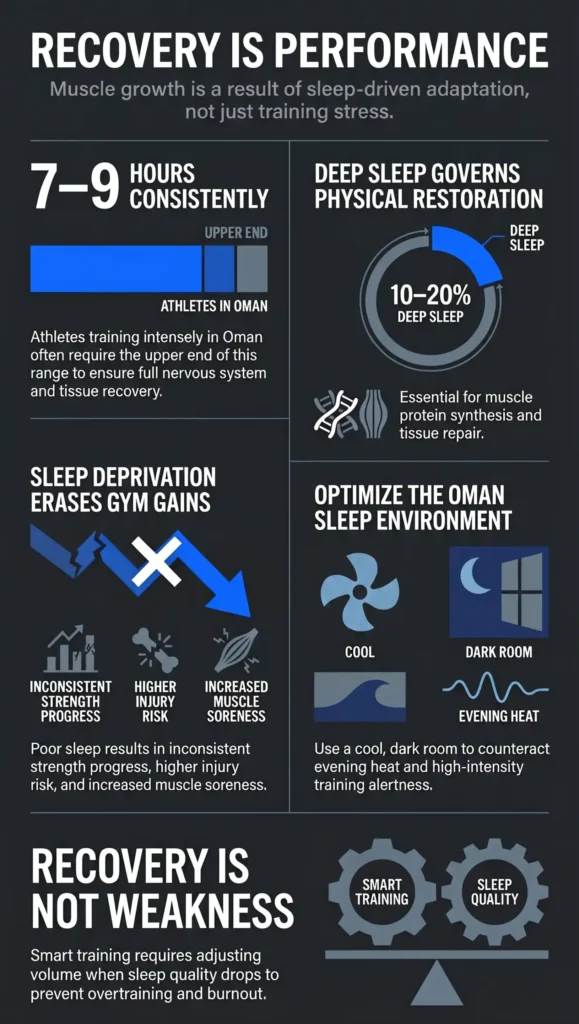
Most healthy adults are generally recommended to sleep 7 to 9 hours per night, while athletes and people training intensely may need more quality recovery depending on workload and lifestyle.
For people in Oman, recovery sleep can be affected by late work hours, family schedules, social gatherings, heat, caffeine timing, screen use, and evening training. This guide explains how sleep supports muscle growth, how to improve recovery sleep fitness habits, and when it may be time to adjust your training routine with professional guidance from 5d fitness.
Listen
How Does Sleeping Schedule relates to Muscle Growth?
Sleep is not passive rest. It is an active recovery process where the body restores energy, regulates hormones, repairs tissue, and prepares for the next training session. For gym members in Oman, this matters because training performance is often affected by lifestyle stress, evening workouts, hot weather, and inconsistent routines.
Why do muscles need sleep after training for muscle growth?
Muscles grow when the body adapts to training stress. During resistance training, muscles experience mechanical tension and small amounts of controlled tissue disruption. This is normal and useful when paired with enough recovery. Sleep gives the body time to repair that stress and support the processes linked with muscle protein synthesis.
When sleep is short or poor quality, recovery becomes less efficient. You may still train, but your body may not be fully prepared for progressive overload. This can lead to weak performance, heavier fatigue, and slower visible changes.
Good recovery sleep helps support:
- Muscle repair after strength training
- Nervous system recovery after intense workouts
- Better energy for the next session
- More stable appetite and mood
- Lower risk of burnout from excessive training pressure
A useful way to think about it is simple: the workout sends the signal, but recovery allows the result. Without sleep, your body receives the training stress but struggles to complete the adaptation.
How much sleep do adults and gym members usually need?
Most adults need 7 or more hours of sleep per night for optimal health, and the National Sleep Foundation’s expert panel lists 7 to 9 hours as appropriate for young adults and adults.
However, fitness needs can vary. Someone training lightly three times per week may recover well with consistent 7-hour sleep. A person doing heavy strength training, HIIT, padel, swimming, or fat-loss workouts several times per week may need closer to 8 or 9 hours, especially during high-volume training phases.
“Adults should sleep 7 or more hours per night on a regular basis to promote optimal health.”
The American Academy of Sleep Medicine and Sleep Research Society
For Oman-based gym members, the goal is not only hitting a number. Sleep quality matters too. If you wake up tired, feel sore for too long, lose strength, or rely heavily on caffeine, your recovery may not be matching your training load.
Why Is Recovery Sleep Fitness So Important for Strength and Performance?

Recovery sleep fitness is the connection between sleep quality, workout recovery, and training performance. It matters because strength training is not only muscular. It also challenges the nervous system, joints, hormones, and mental focus.
Can poor sleep reduce gym performance?
Yes. Poor sleep can reduce gym performance by affecting energy, focus, coordination, motivation, and perceived effort. When sleep is limited, a normal workout can feel unusually difficult. You may lift less weight, lose good form earlier, or struggle to complete planned sets.
Research reviews on sleep and athletes consistently highlight that sleep plays an important role in athletic performance, cognition, health, and mental well-being.
This is especially important for people training after work in Muscat. A late session after a long day may already require mental discipline. If sleep has been poor for several nights, the body may respond with lower output and higher fatigue.
Common gym signs of poor recovery sleep include:
- Warm-up sets feeling unusually heavy
- Slower reaction and coordination
- Lower motivation before training
- Longer soreness after leg or back workouts
- More cravings for sugar or high-calorie snacks
- Irritability or low patience during workouts
Sleep is part of performance preparation. A strong training plan should not only ask, “How hard can you train?” It should also ask, “Can your body recover from this?”
Does sleep affect muscle soreness?
Sleep can affect how sore, stiff, and heavy the body feels after training. Muscle soreness depends on workout intensity, training experience, exercise selection, hydration, nutrition, and recovery habits. Sleep is one of the most important parts of that recovery system.
When sleep is poor, soreness may feel more intense or last longer. You may also feel more sensitive to discomfort. This can reduce movement quality and make the next workout less productive.
For example, a person doing heavy leg training in Oman may feel normal soreness for 24 to 72 hours. But if they sleep only 5 hours for two nights, skip hydration, and train again too soon, that soreness may become a warning sign instead of normal adaptation.
Good recovery sleep does not remove all soreness. It helps the body handle training stress more effectively.
What Is the Link Between Deep Sleep, Hormones, and Muscle Growth?
Sleep supports several biological systems involved in recovery. This includes hormone regulation, tissue repair, immune function, nervous system recovery, and energy restoration. Deep sleep is especially important because it is associated with physical restoration.
How does deep sleep support recovery?
Deep sleep, also called slow-wave sleep, is strongly connected with physical recovery. During this stage, the body is in a more restorative state. Heart rate and breathing slow down, and the body supports repair processes that help you feel restored.
Adults typically spend a portion of the night in deep sleep, and this stage can be affected by inconsistent schedules, alcohol, stress, late caffeine, and fragmented sleep. Sleep Foundation notes that adults commonly spend about 10% to 20% of the night in deep sleep.
For gym members, deep sleep is valuable because recovery is not just about lying in bed.It could actually improve your muscle growth. Fragmented sleep can leave you feeling tired even if you spent enough hours in bed. That is why sleep quality, not just sleep duration, matters.
Better deep sleep habits often include:
- Keeping the room cool and dark
- Avoiding intense screen exposure near bedtime
- Reducing late caffeine
- Avoiding very heavy meals right before sleep
- Keeping sleep and wake times consistent
In Oman, room temperature can make a major difference. A hot bedroom can disrupt sleep continuity, especially after evening workouts. Cooling the room, taking a light shower, and managing hydration can make sleep more restorative.
What happens to hormones when sleep is poor?
Poor sleep can disturb the balance of hormones involved in recovery, appetite, energy, and stress. This does not mean one bad night will destroy progress. But repeated short sleep can create a recovery gap.
For fitness goals, the most relevant issue is that poor sleep may increase stress load while reducing training readiness. Cortisol may feel higher, cravings may increase, and motivation may drop. People trying to lose fat while building muscle may find this especially frustrating because poor sleep can make hunger and consistency harder to control.
Expert quote: A review on sleep hygiene for athletes notes that most adults require 7–9 hours of sleep per night and that some athletes may need more because of intensive exercise demands.
This is why smart coaching looks beyond sets and reps. If a client is training hard but sleeping poorly, the program may need adjustment before adding more volume.
How Can People in Oman Improve Sleep for Better Muscle Recovery?
Improving recovery sleep fitness does not require a complicated routine. Most people need simple habits that are realistic for their schedule in Muscat and Oman. The best sleep plan is one you can repeat.
What bedtime routine works best after evening workouts?
Many people in Oman train in the evening because mornings are busy and daytime heat can make outdoor activity difficult. Evening training can work well, but the transition from workout intensity to sleep needs planning.
After training, the body may still feel alert. Heart rate, body temperature, and mental stimulation can stay elevated. A calming post-workout routine helps the body move toward rest.
A practical evening recovery routine could include:
- Finish intense training at least a few hours before bed when possible
- Eat a balanced meal with protein and carbohydrates
- Hydrate, but avoid drinking too much right before sleep
- Take a warm or lukewarm shower
- Dim lights and reduce phone use
- Stretch lightly instead of doing another intense session
The goal is not perfection. It is creating a signal that tells your body the training day is complete.
Should caffeine timing change for gym recovery?
Yes. Caffeine can improve energy and workout performance for some people, but late caffeine can affect sleep. This is important in Oman because coffee, tea, karak, energy drinks, and pre-workout supplements are common.
If a person trains late and takes a strong pre-workout drink, they may sleep later, wake more often, or feel less refreshed. Even if they fall asleep, sleep quality may not be ideal.
A better strategy is to use caffeine earlier in the day or choose a lower-caffeine option for evening workouts. People who are sensitive to caffeine may need a longer cutoff window.
For recovery, caffeine should support training, not steal sleep from the body.
What should you eat before sleep for muscle recovery?
Nutrition and sleep work together. A recovery meal does not need to be extreme, but it should help the body rebuild after training. Many gym members benefit from protein at dinner, enough total calories, and carbohydrates that support glycogen restoration.
For people in Oman, practical recovery meals may include grilled chicken or fish with rice, eggs with bread, Greek yogurt with fruit, lean meat with potatoes, or a balanced homemade meal. Dates can be useful around training, but they should fit the full nutrition goal.
A heavy, greasy meal immediately before bed may disrupt sleep for some people. On the other hand, going to bed hungry after intense training may also reduce sleep quality. The best option is a balanced meal that feels comfortable.
What Sleep Mistakes Can Stop Muscle Growth in Oman?
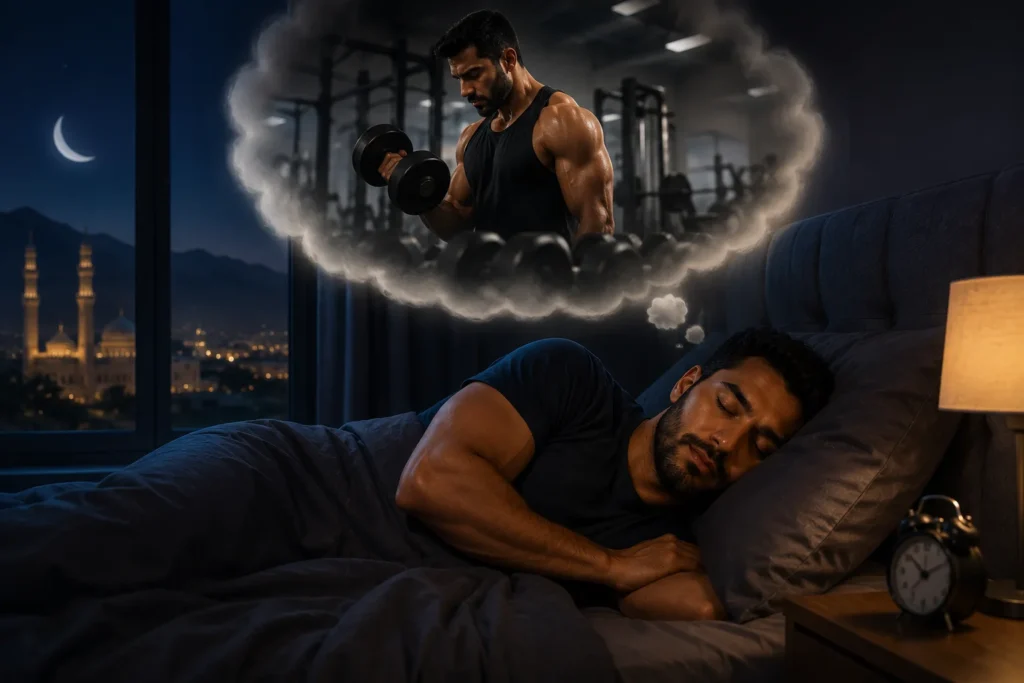
Many gym members do not fail because they lack discipline. They fail because their recovery system does not match their training ambition. Sleep mistakes are easy to ignore because they feel normal at first.
Is sleeping less during the week and catching up later enough?
Catching up on sleep may help some people feel better, but it is not a perfect solution. Muscle recovery works best with consistency. If someone sleeps poorly from Sunday to Thursday and tries to recover only on the weekend, training quality may still suffer during the week.
A better approach is to protect a realistic sleep window most nights. Even improving from 5.5 hours to 7 hours can make a noticeable difference in energy, appetite control, and workout consistency.
In Oman, late social schedules can make this challenging. The solution is not to remove social life. It is to plan training intensity around real life. If you know one night will be late, schedule a lighter session the next day instead of forcing a maximum-effort workout.
Can overtraining happen when sleep is poor?
Yes. Poor sleep can increase the risk of under-recovery, which may contribute to overtraining symptoms over time. Overtraining is not only caused by too many workouts. It can happen when total stress is too high and recovery is too low.
Signs that your sleep and training plan may not be balanced include long-lasting fatigue, declining performance, persistent soreness, poor mood, sleep disruption, and loss of motivation.
This is where coaching matters. A good trainer does not only push you harder. A good trainer knows when to reduce volume, change intensity, improve recovery habits, and protect long-term progress.
Expert quote: Research on athlete sleep practices states that sleep must be adequate in duration, quality, and timing to have a restorative effect on the body.
What Is Better for Muscle Growth: More Training or Better Sleep?
More training is not always better. Better training plus better recovery is usually more effective. Muscle growth depends on the balance between stimulus and adaptation. If training stress keeps increasing while sleep stays poor, the body may struggle to progress.
Comparison Table: Training More vs Sleeping Better
| Factor | More Training With Poor Sleep | Smart Training With Better Sleep |
|---|---|---|
| Strength progress | Often inconsistent | More stable and measurable |
| Muscle soreness | May last longer | Easier to manage |
| Motivation | Can drop quickly | More sustainable |
| Fat loss support | Harder due to cravings and fatigue | Easier to control routine |
| Injury risk | May increase with poor form and fatigue | Lower when recovery is respected |
| Long-term consistency | Often difficult | More realistic for busy lifestyles |
| Best for Oman gym members? | Not ideal during stressful weeks | Better for sustainable progress |
When should you reduce training instead of pushing harder?
You should consider reducing training when sleep has been poor for several nights and performance is dropping. This does not mean quitting. It means adjusting intelligently.
A coach may reduce:
- Total sets
- Training intensity
- Heavy compound lifts
- HIIT frequency
- Late-night sessions
- Back-to-back hard workouts
This is especially useful for people balancing work, family, commuting, and fitness in Muscat. Recovery is not weakness. Recovery is part of the plan.
How can a coach help improve recovery sleep fitness?
A coach can help by matching your workout plan to your real recovery capacity. Many people copy programs online, but those programs do not know your sleep, work hours, stress, food habits, or current fitness level.
A personalized plan can adjust training volume, rest days, cardio, strength progression, and recovery routines. This makes muscle growth more sustainable and reduces the frustration of training hard without seeing results.
Ready to build muscle with a plan that respects your body, lifestyle, and recovery? Book a coaching session with 5d fitness in Muscat and start training with a smarter system for strength, sleep, and long-term progress.
Conclusion
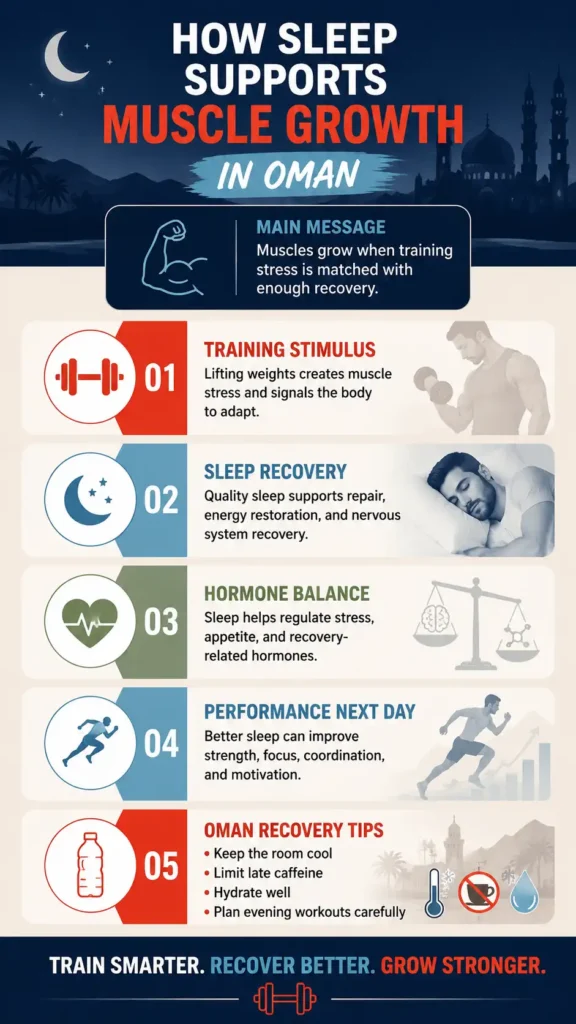
Building muscle is not only about training harder. For most gym members, real progress happens when workouts and recovery work together. Sleep is one of the most overlooked parts of fitness, yet it influences how the body repairs, restores energy, adapts to training, and prepares for the next session.
For people focusing on Muscle Growth in Oman, the goal should not be chasing perfect routines. Instead, build consistent habits that support long-term recovery: train with purpose, prioritize quality sleep, manage stress, hydrate well, and adjust training intensity when needed.
If your progress feels slower than expected, soreness lasts too long, or motivation drops despite consistent effort, your body may be asking for recovery—not more volume.
Muscle growth is created through the combination of smart training, balanced nutrition, and enough rest. The stronger your recovery system becomes, the stronger your performance can become.
At 5d fitness, sustainable results are built by respecting both effort and recovery—because training hard matters, but recovering well is what allows progress to last.
FAQ Section
Sleep supports muscle growth by helping the body repair training stress, restore energy, regulate hormones, and prepare for the next workout. Training creates the stimulus, but recovery allows adaptation.
Most adults should aim for 7 to 9 hours of quality sleep per night. People training intensely may need more depending on workout volume, stress, and recovery needs.
You may still build some muscle, but 5 hours of sleep can make recovery harder. Strength, motivation, soreness, appetite, and performance may all suffer over time.
Yes. Deep sleep is linked with physical restoration. It helps the body recover from training stress and supports the feeling of being rested.
Poor sleep may make soreness feel worse or last longer. It can also reduce energy and movement quality in the next workout.
If one night was poor, you can train lightly or adjust intensity. If sleep has been poor for several nights, a recovery session or rest day may be smarter than forcing a hard workout.
Both matter. Protein provides building blocks for muscle repair, while sleep supports the recovery environment. For best results, combine enough protein with consistent quality sleep.
Yes, late intense workouts can keep some people alert and delay sleep. A calming cooldown, earlier caffeine cutoff, and lighter evening routine can help.
A good routine includes consistent sleep times, a cool dark room, smart caffeine timing, balanced post-workout nutrition, hydration, and reduced screen exposure before bed.
Ask for help if you train consistently but feel tired, sore, unmotivated, or stuck. A coach can adjust your plan so training and recovery work together.