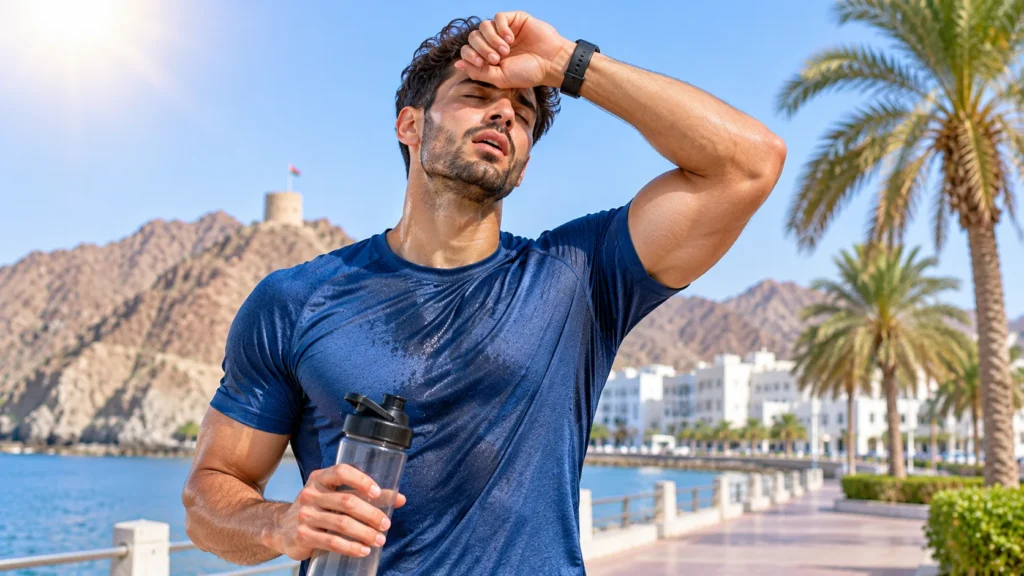
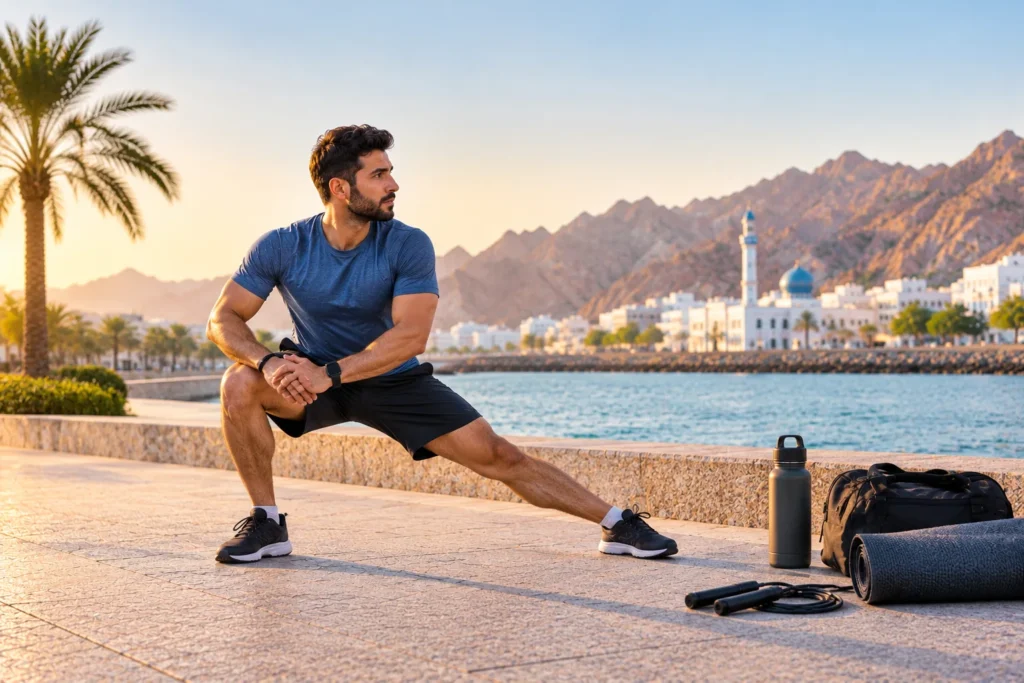
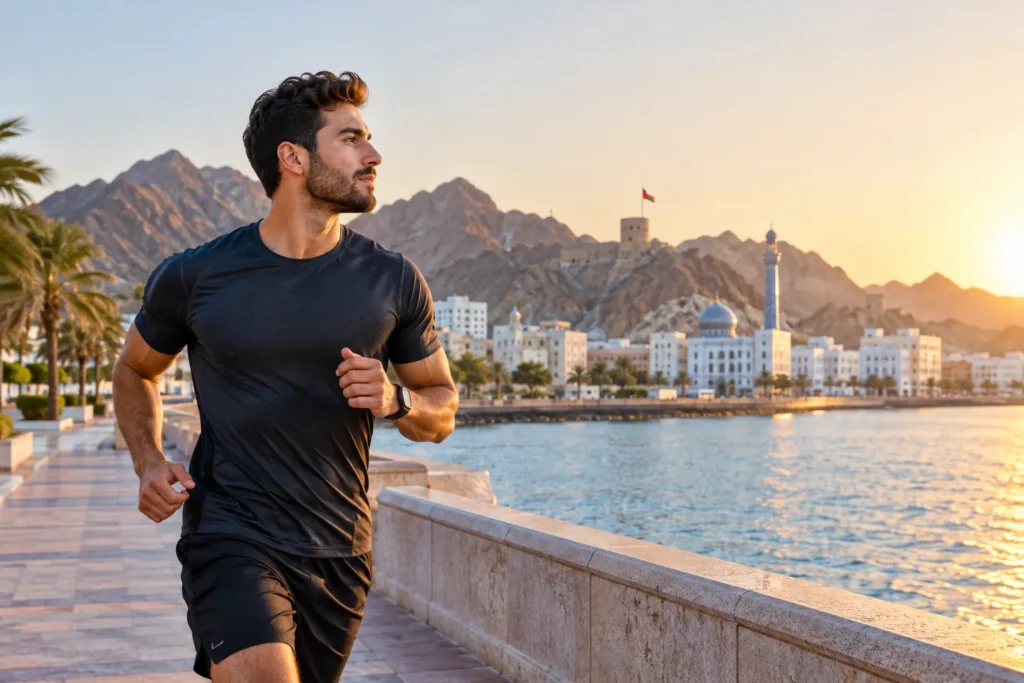
Following practical hydration tips in Muscat can help residents, workers, athletes, and fitness enthusiasts manage daily fluid needs in a hot climate. High temperatures and humidity can increase heat stress, especially when walking outdoors, commuting, exercising, or working outside.
At 5dfitness, our goal is to help readers make informed decisions about everyday fitness and wellbeing. Staying hydrated is not simply about drinking a large amount of water at once; it involves drinking regularly, recognizing changing fluid needs, and limiting unnecessary exposure to extreme heat. This guide explains how to build sustainable hydration habits, choose suitable drinks, and recognize potential warning signs.

Why Is Staying Hydrated Important in Muscat?
Muscat’s hot weather can make everyday activities more physically demanding, particularly during warmer periods of the year. The body loses water through sweating, and fluid losses can increase during outdoor work, exercise, or extended walking. Humidity can also make sweat evaporate less efficiently, reducing the body’s ability to cool itself. Maintaining hydration supports normal body functions and helps regulate temperature, but water alone cannot eliminate the risks associated with excessive heat. People should combine regular fluid intake with shade, suitable clothing, rest breaks, and sensible activity scheduling. Individual needs vary according to health, activity, environmental conditions, and sweat rate.
How Do Heat and Humidity Affect Your Hydration Needs?
When the body becomes hot, sweating helps release heat. The amount of fluid lost depends on temperature, humidity, clothing, activity intensity, and individual physiology. Someone working outdoors in direct sunlight may lose substantially more fluid than someone spending most of the day in an air-conditioned office. Humidity can further increase heat strain because sweat may evaporate less effectively. These factors mean there is no single daily water target that suits everyone in Muscat. Pay attention to thirst, the conditions you face, and changes in activity. People with kidney or heart conditions, or those taking medicines that affect fluid balance, should follow individualized medical advice.
How Much Water Should You Drink During Everyday Activities in Muscat?
Daily fluid requirements depend on food intake, body size, physical activity, sweat losses, and health status. Rather than following a rigid target, build a routine that makes water accessible throughout the day and adjust it to the conditions. The US Centers for Disease Control and Prevention (CDC) recommends carrying a water bottle and refilling it throughout the day. It also notes that light-yellow or clear urine usually indicates adequate fluid intake, although urine color can be affected by medications, supplements, and other factors. People should avoid both neglecting fluid needs and forcing themselves to drink excessive amounts.
How Can You Build a Consistent Daily Hydration Routine?
Start your day by drinking water with breakfast, then keep a refillable bottle available at work, during errands, and when traveling. Drink regularly rather than waiting until you feel extremely thirsty, particularly when spending extended periods in the heat. Pair water breaks with existing habits, such as meals or scheduled work breaks, to make the routine easier to maintain. During hotter conditions, increase attention to fluid availability and plan opportunities to cool down. Avoid treating a fixed number of glasses as a universal requirement. If a healthcare professional has prescribed a fluid restriction, follow that guidance instead of increasing intake independently.
How Can You Stay Hydrated While Working, Commuting, and Spending Time Outdoors?
Everyday routines often make hydration difficult because people become busy, leave home without water, or underestimate the effects of outdoor heat. Planning ahead can reduce these barriers. Workers, commuters, shoppers, and people who exercise outside should consider where they can refill water, take breaks, and move into cooler environments. The Omani government provides occupational safety requirements for summer midday work, including access to cold drinking water and shaded or air-conditioned rest areas. These protections are particularly relevant to people exposed to heat at work. Hydration should be part of a broader heat-safety plan rather than the only precaution.
What Practical Steps Help You Stay Hydrated Away From Home?
Use this everyday checklist to make hydration easier:
- Carry water: Take a refillable bottle when commuting, shopping, walking, or traveling.
- Plan refill points: Identify accessible drinking-water sources before longer trips.
- Choose cooler times: Schedule outdoor errands and exercise for cooler parts of the day whenever possible.
- Take regular breaks: Use shaded or air-conditioned spaces to reduce heat exposure.
- Dress appropriately: Wear lightweight, breathable clothing suited to the conditions.
- Watch for symptoms: Stop activity and move to a cooler place if you develop unusual dizziness, weakness, nausea, or a headache.
These steps are especially important for outdoor workers and people who are not yet acclimatized to the local climate. Employers should provide suitable water access, rest arrangements, and heat-safety procedures.

What Should You Drink to Stay Hydrated in Hot Weather?
For most routine daily activities, plain drinking water is a practical first choice. Water consumed with meals and fluids from water-rich foods also contribute to total intake. Electrolyte drinks may be useful during prolonged, strenuous exercise or activities involving substantial sweat losses, but they are not automatically necessary whenever the weather is hot. Drinks high in added sugar should not be the default source of hydration. The World Health Organization’s hot-weather advice recommends drinking water regularly and avoiding sugary, alcoholic, or caffeinated drinks during periods of heat. Individual medical needs may require different advice.
When Are Electrolyte Drinks Necessary?
Sweat contains water and electrolytes, including sodium. For a typical day of office work, errands, or light activity, water and regular meals are usually sufficient for most healthy people. During prolonged, intense exercise or heavy sweating, an electrolyte-containing drink may help replace some of the sodium and fluid lost. The appropriate choice depends on activity duration, sweat rate, environmental conditions, and individual needs. Sports drinks are not a substitute for cooling and rest, and consuming excessive fluids can also be harmful. People with medical conditions affecting sodium or fluid balance should seek professional advice before using electrolyte supplements routinely.
How Can You Recognize and Prevent Dehydration in Muscat?
Recognizing early symptoms helps people respond before heat-related illness becomes more serious. Thirst, dry mouth, darker urine, headache, fatigue, and dizziness can indicate that fluid intake may be insufficient, although these symptoms have other possible causes. Heat exhaustion can also involve nausea, weakness, heavy sweating, and feeling faint. Prevention requires more than drinking water: reduce strenuous activity during the hottest periods, use cooler environments, take breaks, and ensure water is readily available. The CDC advises people to recognize heat-related symptoms and seek appropriate care when needed. Severe symptoms must not be treated as ordinary dehydration alone.
What Should You Do If You Notice Warning Signs?
If you feel dizzy, weak, nauseated, or unusually tired in the heat, stop your activity and move to a cool or shaded place. Loosen unnecessary clothing and sip water if you are fully alert and able to swallow normally. Seek medical advice if symptoms persist or worsen. Confusion, fainting, seizures, or very hot skin with altered mental status can indicate a medical emergency. Call local emergency services immediately rather than trying to manage the situation with water alone. Do not give fluids to someone who is unconscious or unable to swallow safely. People at higher risk, including older adults and those with chronic health conditions, may need additional precautions.
Conclusion
The most useful hydration tips in Muscat are simple: keep water accessible, drink regularly, adapt your habits to activity and heat exposure, and take symptoms seriously. Remember that hydration needs differ between individuals, and excessive water intake is not a safe shortcut to better health. Combine appropriate fluid intake with shade, rest, suitable clothing, and sensible scheduling to reduce heat-related risks. Explore more practical fitness and wellbeing guidance from 5dfitness and build daily habits that support safer, more consistent activity in Oman’s climate.
Frequently Asked Questions
There is no single amount suitable for everyone. Needs depend on activity, heat exposure, body size, diet, and health. Drink regularly and adjust to your circumstances.
For most everyday activities, water is usually sufficient. Prolonged strenuous exercise or heavy sweating may require additional electrolyte replacement.
Yes. Air conditioning does not eliminate fluid needs, and dehydration can occur indoors if fluid intake is insufficient or illness increases fluid loss.
Possible signs include thirst, dry mouth, darker urine, headache, fatigue, and dizziness. These symptoms are not specific to dehydration, so consider the overall situation.
It is better to drink according to your needs rather than forcing large quantities. Excessive fluid intake can dangerously lower blood sodium, particularly during exercise.
Seek urgent help for confusion, seizures, loss of consciousness, or other severe heat-related symptoms. Persistent or worsening symptoms also require medical assessment.