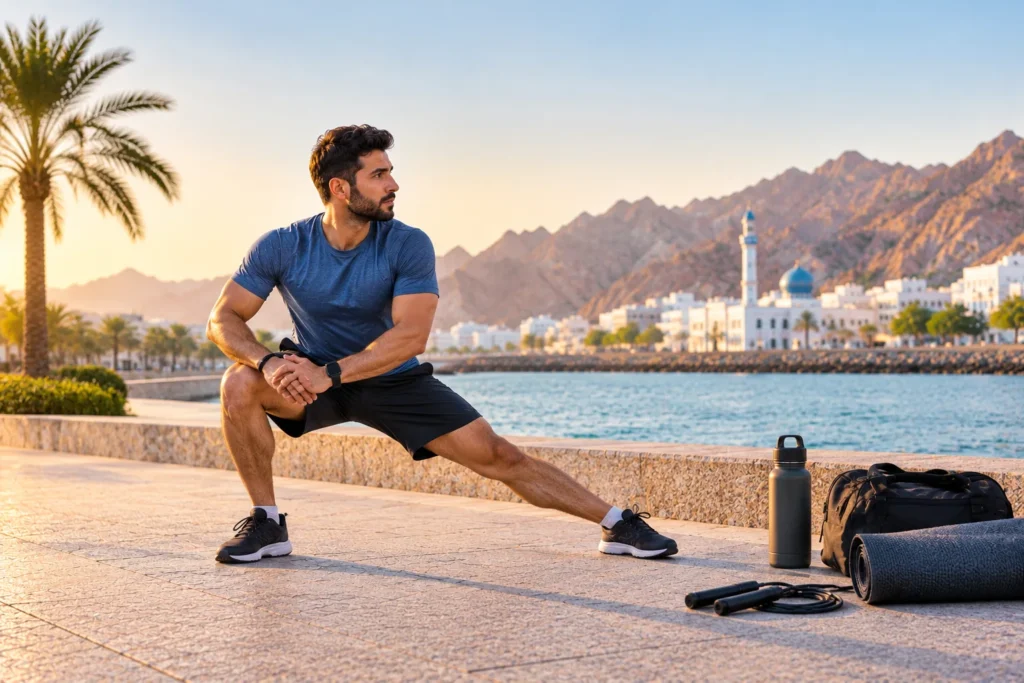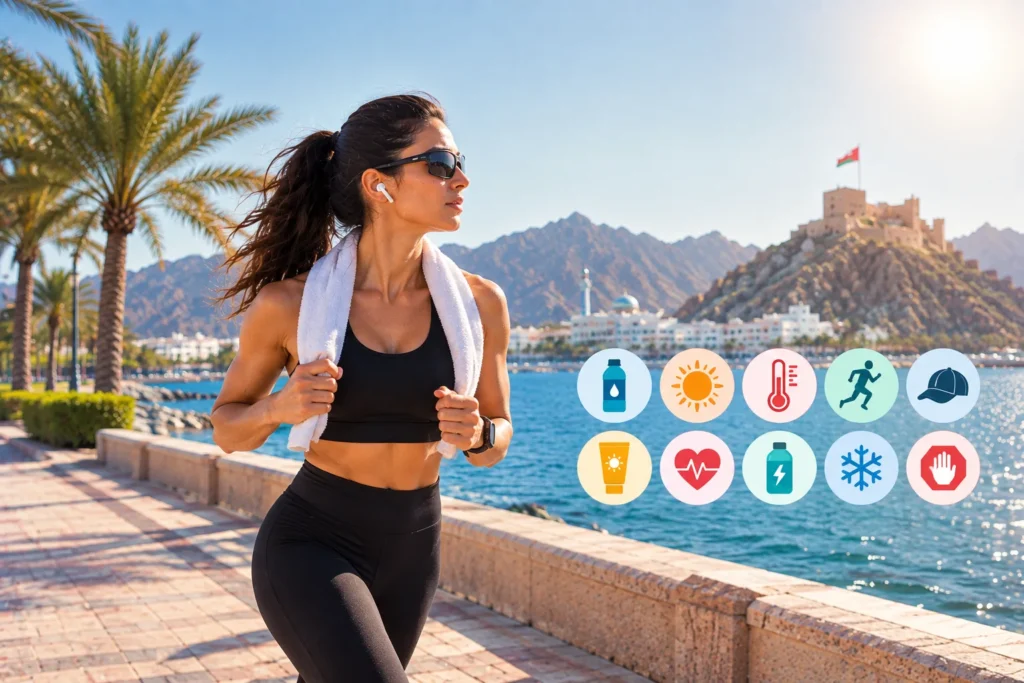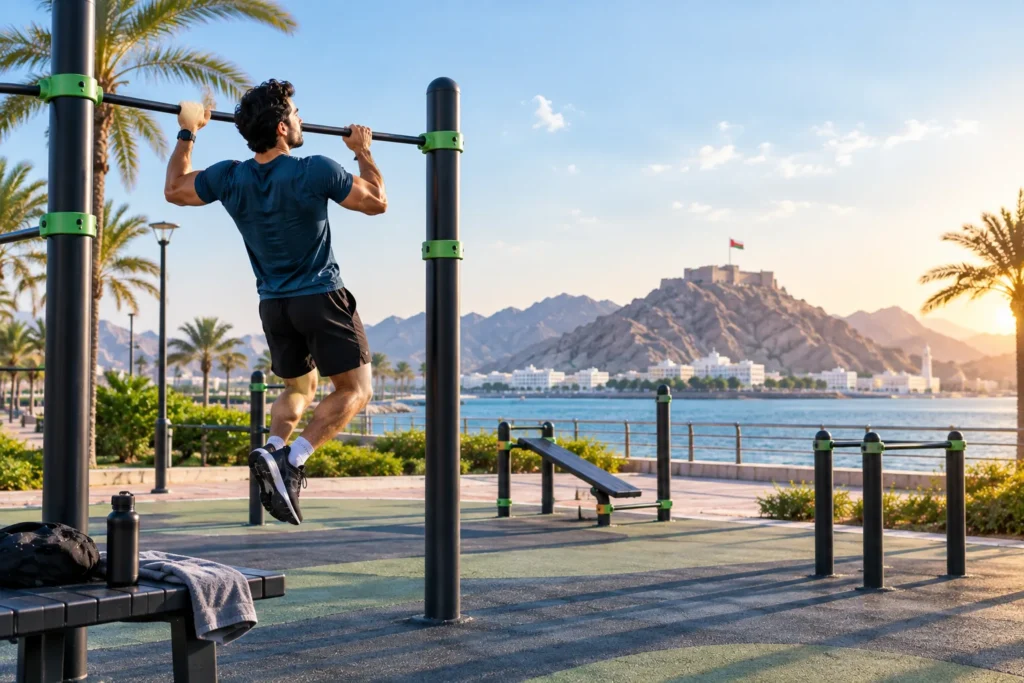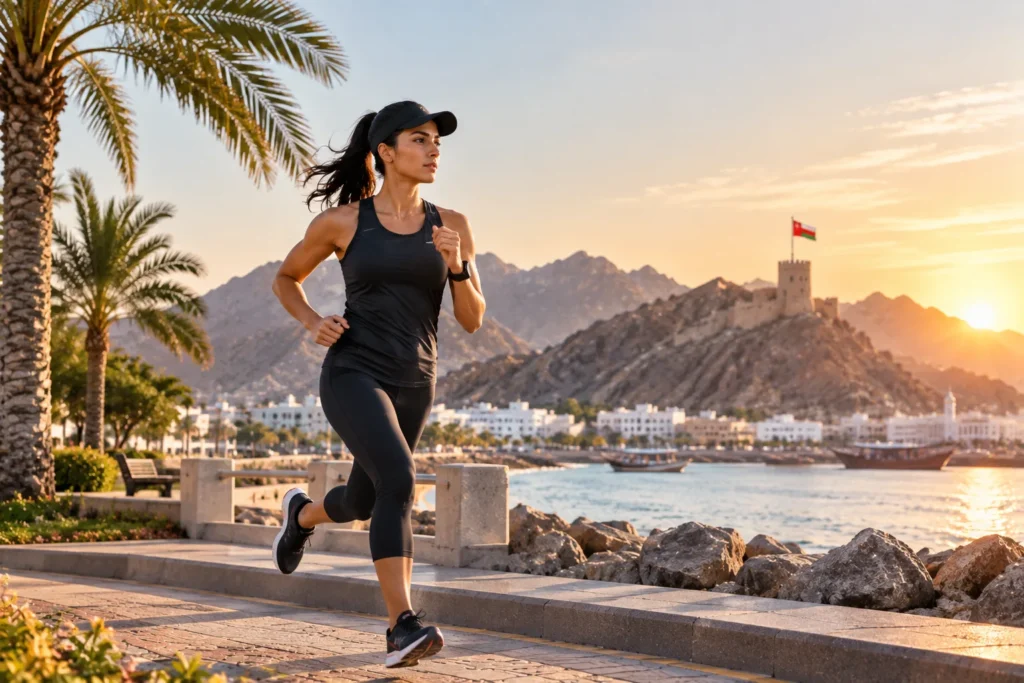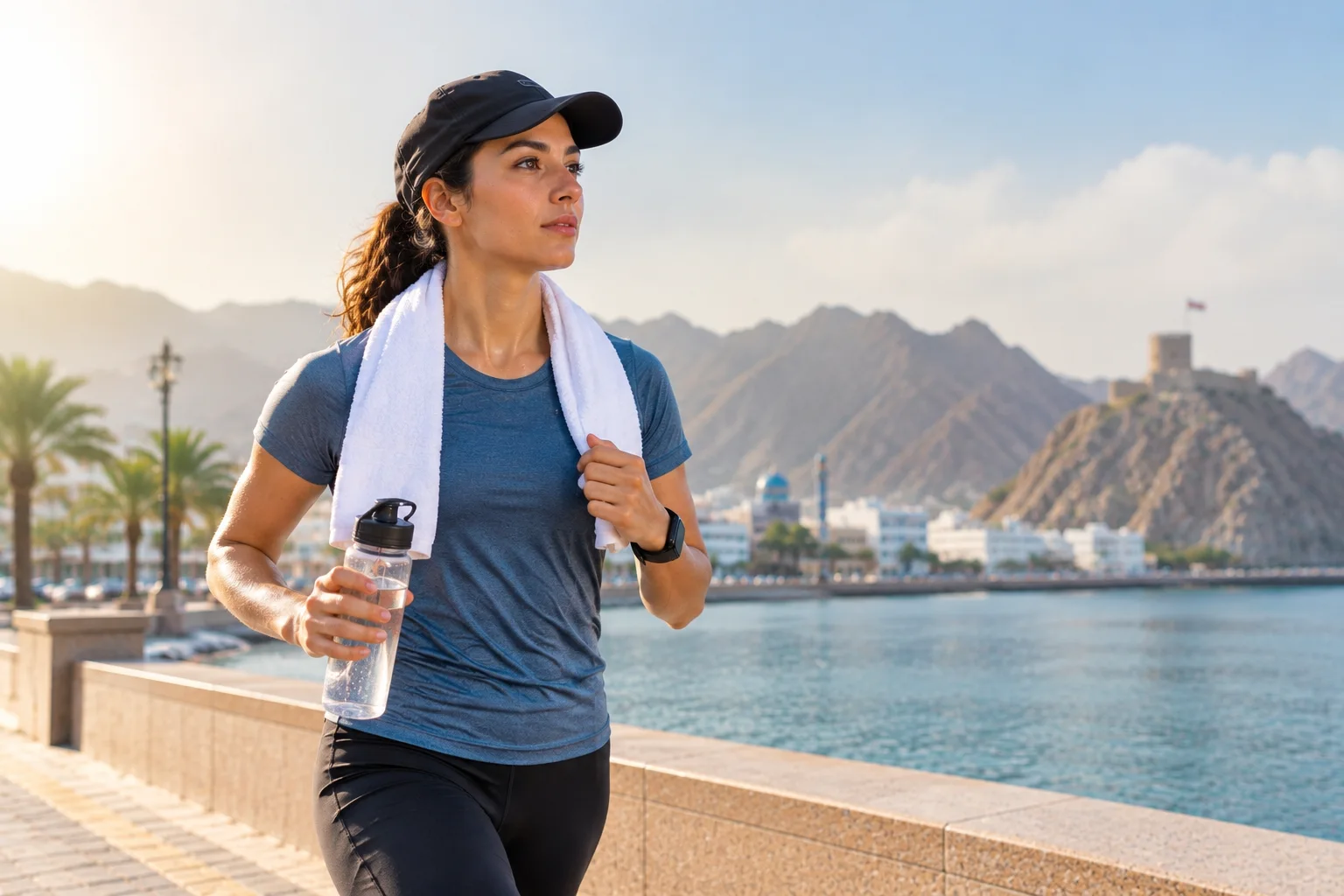
Exercising in humid weather in Muscat requires careful planning because high humidity can make it harder for the body to cool itself during physical activity. Whether you are an athlete, bodybuilder, runner, or fitness enthusiast, understanding how heat and humidity affect exercise can help you maintain performance while reducing the risk of heat-related illness.
High temperatures combined with humidity increase thermal stress, particularly during prolonged or intense workouts. This guide explains how to choose safer training times, manage hydration, adjust exercise intensity, recognize warning signs, and build a practical routine suited to Muscat’s climate. With an evidence-based approach, 5dfitness aims to help you make informed decisions about outdoor training.
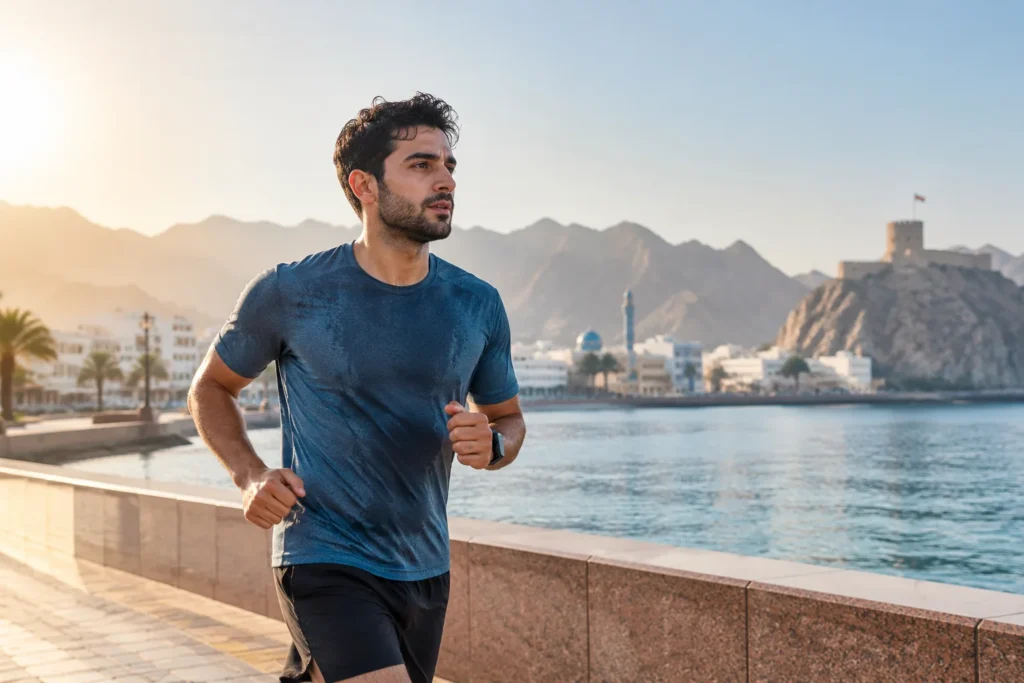
How Does Humid Weather Affect Exercise in Muscat?
Humidity influences exercise because the body relies heavily on sweat evaporation to release heat. When the air contains substantial moisture, sweat evaporates less efficiently, making it harder to regulate body temperature. As a result, the same workout may feel more demanding in humid conditions than in cooler, drier weather. Exercise increases heat production, while high environmental temperatures and humidity can limit the body’s ability to dissipate that heat. The resulting physiological strain may affect endurance, perceived effort, and recovery. Understanding these effects is the first step toward adapting your training plan to local conditions.
Why Does High Humidity Make Exercise More Difficult?
During physical activity, muscles generate heat, and the body increases blood flow to the skin and produces sweat to help control temperature. In humid conditions, sweat evaporates more slowly because the surrounding air is already moisture-rich. Sweat that remains on the skin does not provide the same cooling benefit as sweat that evaporates. Consequently, body temperature may rise more quickly, and the cardiovascular system must work harder to support both exercising muscles and temperature regulation. You may notice that your heart rate feels unusually high or that your normal running pace requires more effort. These responses are reasons to reduce intensity rather than push through discomfort.
Who Is at Greater Risk During Hot and Humid Workouts?
Anyone exercising in hot and humid conditions can experience heat-related illness, but risk can increase during prolonged activity, intense training, inadequate hydration, or insufficient acclimatization. Beginners, people returning after a break, outdoor workers who also train, and athletes wearing heavy or restrictive equipment should take particular care. Some medications and medical conditions can also affect heat tolerance. Previous experience with hot weather does not guarantee protection, especially when conditions become hotter or more humid than usual. If you have a medical condition that may affect temperature regulation, seek professional medical advice about suitable exercise precautions.
When Is the Safest Time to Exercise Outdoors in Muscat?
Choosing an appropriate workout time can reduce exposure to environmental heat. In Muscat, outdoor exercise is often more manageable during the early morning or later in the evening than during the hottest part of the day. However, air temperature alone does not tell the whole story: humidity, direct sunlight, wind, and the duration of exercise all influence heat stress. Check local weather conditions before training and adjust your plans when conditions are unfavorable. On particularly hot or humid days, moving your session indoors may be a safer choice than attempting to maintain your usual outdoor routine.
Is Early Morning Better for Outdoor Training?
Early morning can be a practical option because temperatures are often lower than later in the day, and sunlight may be less intense. Running, cycling, walking, and outdoor conditioning sessions may therefore be easier to manage before the day heats up. Nevertheless, mornings can still be humid, so do not assume that an early workout is automatically safe. Check the forecast, begin with a manageable effort, and pay attention to how your body responds. If the air feels oppressive or the weather presents a high heat risk, shorten the session, reduce intensity, or choose an air-conditioned indoor environment.
When Should You Move Your Workout Indoors?
Indoor training is worth considering when outdoor conditions create excessive heat stress, especially for high-intensity intervals, long-distance running, or demanding strength and conditioning sessions. A gym with effective air conditioning can provide a more controlled environment and make it easier to regulate exercise intensity. If you train outdoors, use local weather guidance and heat-risk information rather than relying only on how the temperature feels. Individuals who are not acclimatized to the heat should be especially conservative. Remember that changing your location or modifying a session is a sensible training decision, not a sign of reduced commitment.
How Can You Stay Hydrated and Manage Exercise Intensity in Humid Weather?
Hydration and workload management are essential components of exercising safely in humid weather. Sweat losses vary considerably according to body size, exercise duration, intensity, clothing, and environmental conditions. There is no single fluid target that is appropriate for every person or workout. Start exercise well hydrated, make fluids accessible, and adapt your intake to your individual needs and sweat losses. At the same time, reduce the workload when environmental stress increases. A workout that is appropriate in cool conditions may need to be shorter or less intense in Muscat’s heat and humidity.
How Much Water Should You Drink During Exercise?
Begin your workout adequately hydrated and drink at regular opportunities according to thirst, exercise duration, and your personal sweat rate. For shorter, moderate sessions, water is generally sufficient for many people. Longer workouts or sessions involving heavy sweating may require a more individualized hydration strategy, including replacement of electrolytes such as sodium. Avoid forcing excessive amounts of fluid, because overdrinking can also be dangerous. Athletes who need precise guidance can estimate sweat loss by comparing body mass before and after a session while accounting for fluids consumed and urine produced. Individual requirements differ, so use estimates as a guide rather than a rigid rule.
How Should You Adjust Exercise Intensity in Humid Conditions?
Reduce pace, resistance, or interval intensity when heat and humidity make exercise more demanding. Consider shortening your session, adding rest periods, or replacing intense intervals with steady, low-to-moderate activity. Use perceived effort alongside pace, power, or heart-rate data, because performance metrics may change in hot conditions. Do not treat a slower pace as evidence of lost fitness when the environment is placing additional demands on your body. Allow yourself to stop if you feel unwell. Training adaptations depend on consistent, recoverable exercise, not on forcing every session to match performance targets established in cooler weather.
What Should You Wear and How Can You Prepare for Outdoor Exercise?
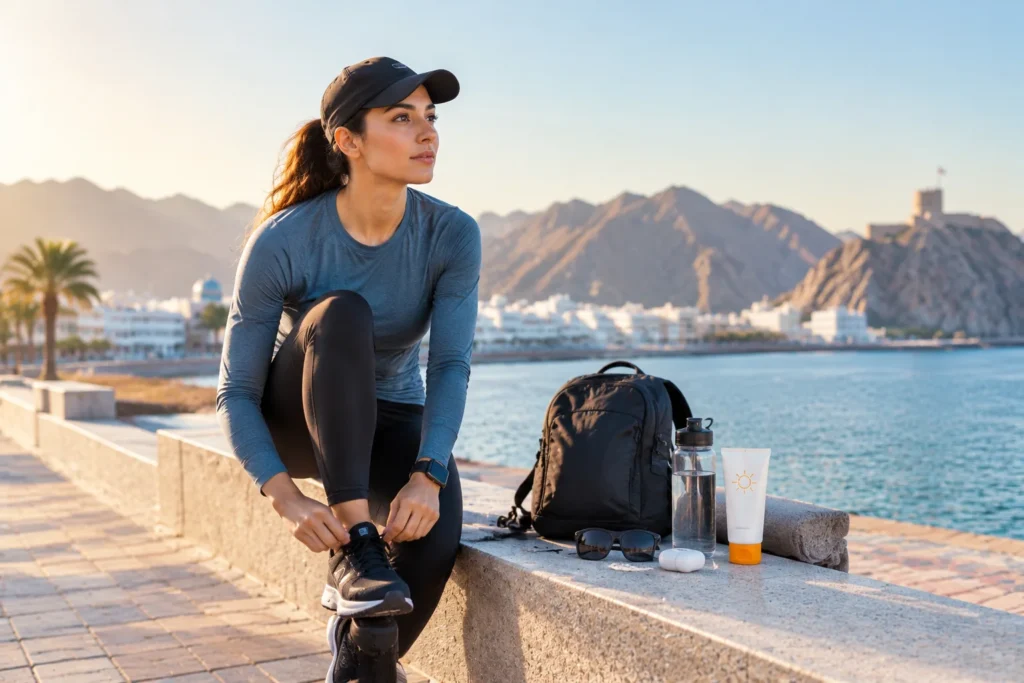
Appropriate clothing and preparation can make outdoor exercise more manageable, although they cannot eliminate the risks associated with severe heat and humidity. Lightweight, breathable clothing can support comfort, while suitable footwear and sun protection help address other environmental challenges. Plan your route, consider access to shade and water, and tell someone your intended route if you are exercising alone in a remote area. Athletes should also account for equipment requirements: helmets, protective padding, and other necessary gear should not be removed when safety rules require them. Instead, adjust the training environment or session to reduce heat exposure.
What Clothing Is Best for Humid Weather?
Choose lightweight, breathable clothing that allows comfortable movement and helps sweat evaporate. Light-colored fabrics may reduce the absorption of sunlight, while a hat and suitable sunscreen can provide additional protection during daytime activity. Wear footwear appropriate for the surface and sport. Avoid adding unnecessary layers or non-breathable garments in an attempt to increase sweating; losing more fluid does not automatically mean losing more body fat. For sports that require protective equipment, follow the relevant safety standards and consider shorter sessions or a cooler training location instead of compromising protection.
How Can You Prepare Before Leaving Home?
Check the weather forecast and heat-risk information, choose a suitable route, and identify places where you can rest or access water. Carry a charged phone when appropriate, especially if training alone. Start with a gradual warm-up in a cooler location when possible, and avoid suddenly beginning strenuous exercise in oppressive conditions. If you are new to exercising in the heat, increase exposure gradually over several days rather than immediately attempting your usual workload. Acclimatization commonly develops over approximately one to two weeks, although the process varies by individual and activity. Reduce the workload further if you are unwell, unusually fatigued, or recovering poorly.
What Are the Warning Signs of Heat-Related Illness During Exercise?
Recognizing warning signs early is essential because heat-related illness can progress quickly during exercise. Symptoms may include unusual weakness, dizziness, headache, nausea, muscle cramps, excessive fatigue, or feeling faint. Heat exhaustion can require prompt cooling and medical assessment, while heat stroke is a life-threatening emergency. Do not assume that a highly trained athlete is immune to these conditions. If symptoms develop, stop exercising and move to a cooler place. Severe symptoms, particularly confusion, seizures, collapse, or altered consciousness, require immediate emergency assistance and rapid cooling.
Which Symptoms Mean You Should Stop Exercising?
Stop immediately if you feel faint, dizzy, unusually weak, nauseated, or confused, or if you develop a worsening headache or other concerning symptoms. Move to a cool or shaded place, loosen unnecessary clothing, and begin cooling your body. Sip fluids only if you are fully alert and can swallow safely. Do not resume the workout simply because symptoms briefly improve. If symptoms are severe, persistent, or worsening, seek urgent medical attention. The Centers for Disease Control and Prevention advises: “If you feel faint or weak, STOP all activity and get to a cool place.” Follow that principle rather than trying to finish your planned session.
What Should You Do if Heat Stroke Is Suspected?
Confusion, seizures, collapse, or altered consciousness during or after exercise may indicate exertional heat stroke. This is a medical emergency. Call local emergency services immediately and begin rapid cooling while help is on the way. Move the person out of the heat, remove unnecessary outer clothing, and use available cooling methods, such as cold-water immersion when appropriate and safe, or continuous cold-water application to the skin. Do not give fluids to a person who is confused, unconscious, or unable to swallow safely. The American College of Sports Medicine emphasizes the seriousness of this condition: “Exertional heat stroke is a true medical emergency.” Prompt action can be lifesaving.
How Can You Plan a Safer Workout in Muscat?
- Check conditions: Review the forecast, humidity, and heat-risk guidance before leaving home.
- Choose your location: Select a cooler time of day or train indoors if outdoor conditions are too demanding.
- Adjust the workload: Reduce pace, resistance, duration, or interval intensity when necessary.
- Prepare hydration: Bring water and consider electrolytes for prolonged activity or substantial sweat losses.
- Wear suitable clothing: Choose breathable fabrics, appropriate footwear, and sun protection.
- Monitor your response: Pay attention to unusual fatigue, dizziness, nausea, weakness, or confusion.
- Stop when necessary: End the session if concerning symptoms develop and seek help when symptoms are severe.
- Recover appropriately: Cool down in a comfortable environment, replace fluids as needed, and allow recovery before your next demanding session.
Outdoor vs. Indoor Exercise: Which Is Better in Humid Weather?
| Factor | Outdoor Exercise | Indoor Exercise |
|---|---|---|
| Environmental exposure | Directly affected by temperature, humidity, sunlight, and wind. | May offer better environmental control when ventilation or air conditioning is effective. |
| Training flexibility | Useful for running, cycling, walking, and outdoor sports. | Suitable for strength training, cardio machines, and structured conditioning. |
| Hydration needs | Planning water access is particularly important for longer sessions. | Water may be easier to access, but fluid needs still depend on workload and sweating. |
| Best approach | Choose a safer time and modify the session according to conditions. | Consider this option when outdoor heat and humidity create excessive strain. |
Conclusion
Exercising in humid weather in Muscat requires a flexible approach that accounts for temperature, humidity, workout intensity, hydration, and individual heat tolerance. Choosing a suitable time, adjusting training demands, wearing breathable clothing, and recognizing warning signs can help reduce avoidable risks.
No single hydration plan or workout schedule is suitable for everyone, so monitor your response and adapt your routine to the conditions. If the weather creates excessive heat stress, indoor training or postponing the session may be the safest choice. 5dfitness encourages athletes and fitness enthusiasts to prioritize informed decisions, consistent training, and long-term health over completing a workout at any cost.
Frequently Asked Questions
It can be safe when conditions are suitable and you adjust your workout, hydration, and clothing. Avoid strenuous outdoor exercise when heat risk is high, and move indoors when necessary.
Early morning and later evening are often more comfortable than the hottest part of the day. However, humidity and actual weather conditions still matter, so check the forecast before training.
No. Sweating mainly helps regulate body temperature and reflects fluid loss. It does not directly measure fat burning. Sustainable fat loss depends on longer-term energy balance and consistent habits.
Water is sufficient for many shorter workouts. Sports drinks containing electrolytes may be useful during prolonged activity or when sweat losses are substantial, depending on individual needs.
Heat acclimatization often develops over approximately one to two weeks of gradual exposure, but individual responses vary. Increase workload progressively and reduce training demands if symptoms occur.
Stop immediately, move to a cool place, and begin cooling. Drink only if you are fully alert and can swallow safely. Seek urgent medical help if symptoms are severe, persistent, or worsening.