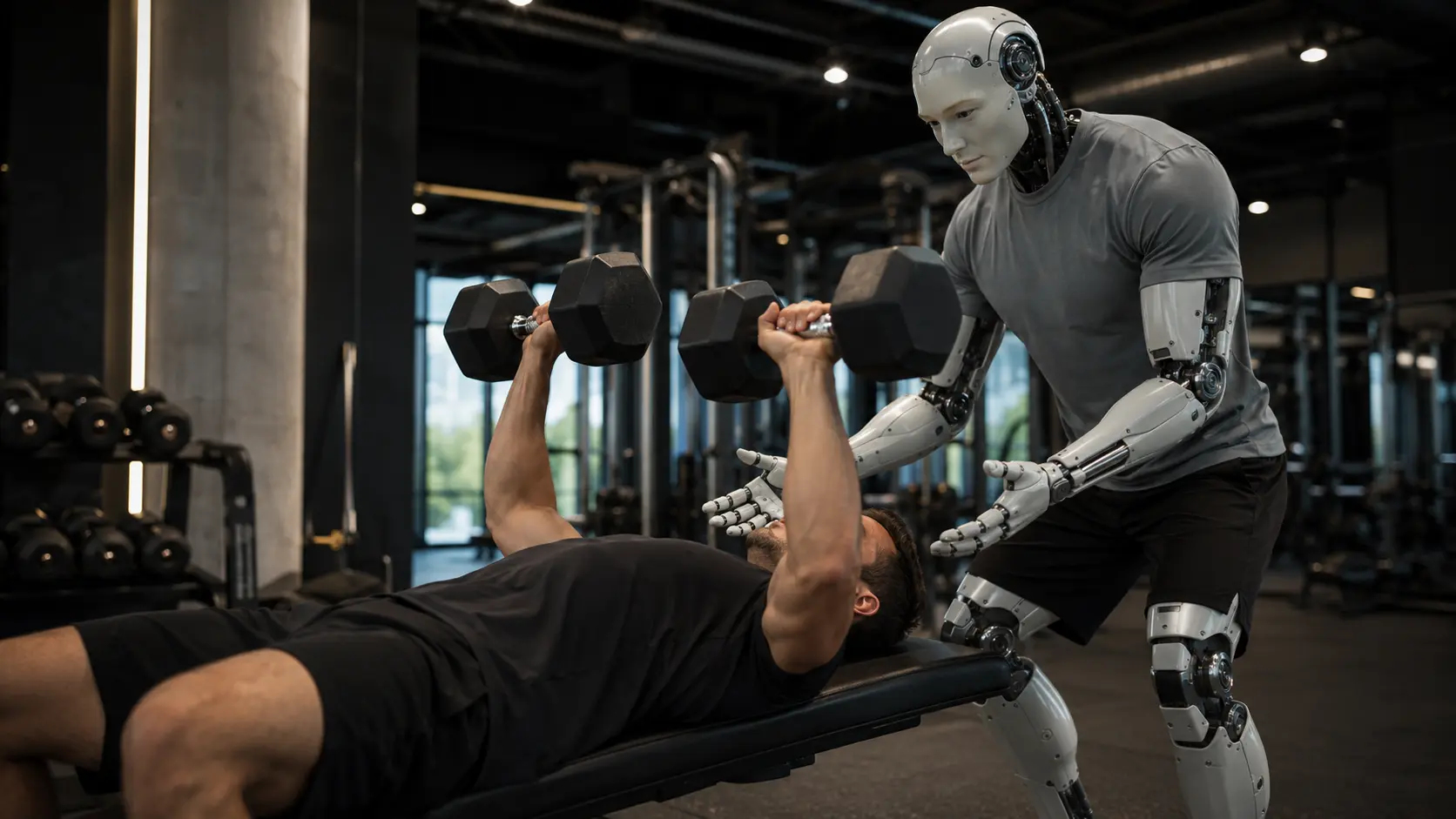
The future of fitness is not about replacing coaches with screens. It is about giving members better feedback, clearer progress, and smarter decisions every time they train. That is why AI Fitness Coaching in Oman is becoming a serious trend for people who want structure without guesswork.
Many gym members in Muscat work hard but still wonder why their strength stalls, recovery drops, or fat loss slows down. A smart system can notice patterns a busy person may miss: sleep quality, training load, heart rate response, consistency, and recovery signals. At 5D Fitness, this trend matters because modern members want premium coaching that feels personal, measurable, and motivating.
Listen
What Is AI Fitness Coaching in Oman?
AI Fitness Coaching in Oman combines human coaching knowledge with digital tools that analyze training data and help personalize workouts. The goal is not to make exercise colder or more robotic; the goal is to make training more precise, especially for people balancing work, heat, family schedules, and performance goals in Muscat.
Why AI Coaching Feels Different From a Generic App
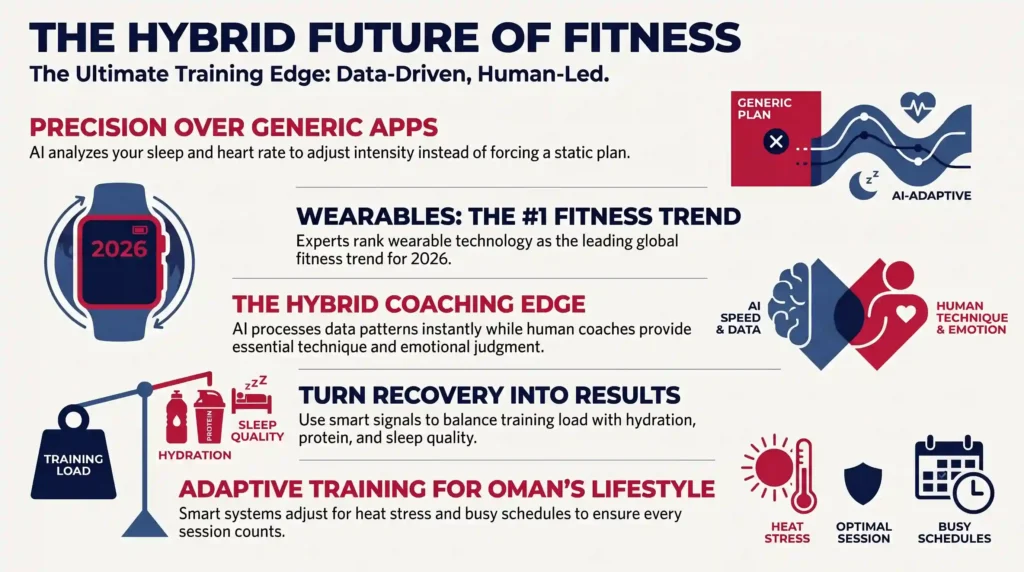
A generic workout app usually gives everyone the same plan. AI fitness coaching looks at how you respond. If your sleep was poor, your heart rate was unusually high, or your previous session created too much fatigue, the program can suggest lower volume, longer rest, or a technique-focused day instead of forcing intensity.
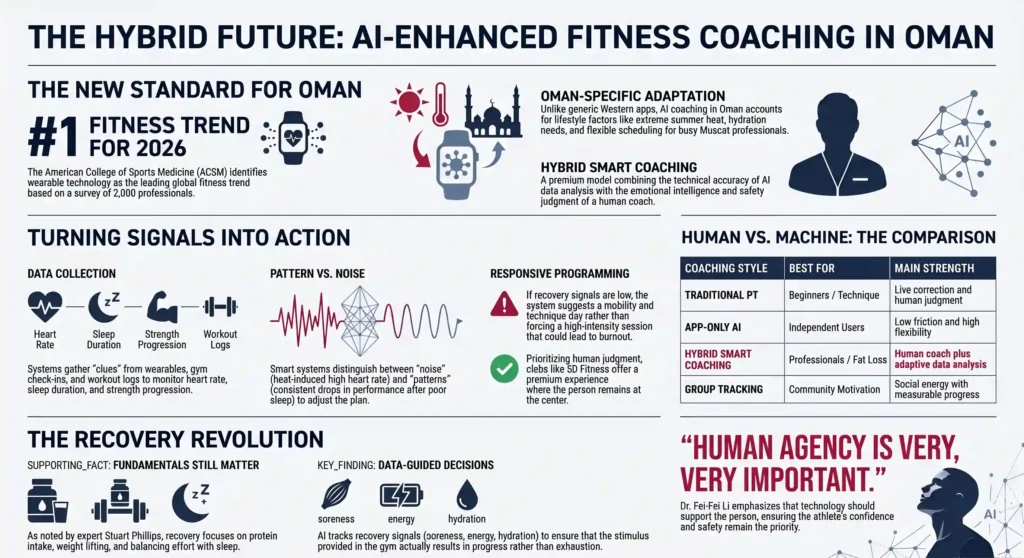
This is where smart coaching systems become useful. They can connect wearable fitness data, strength progress, attendance, recovery notes, and goal history into one clearer picture. The American College of Sports Medicine reported that wearable technology is the number one fitness trend for 2026, based on a survey of 2,000 clinicians, researchers, and exercise professionals. Sarah M. Camhi, PhD, FACSM, ACSM-EP, EIM, explained in ACSM’s trend report, “Wearable technology is a powerful tool” for tracking health and fitness.
For beginners, that means less confusion. For athletes, it means sharper adjustments. For busy professionals, it means every session can have a reason instead of feeling random.
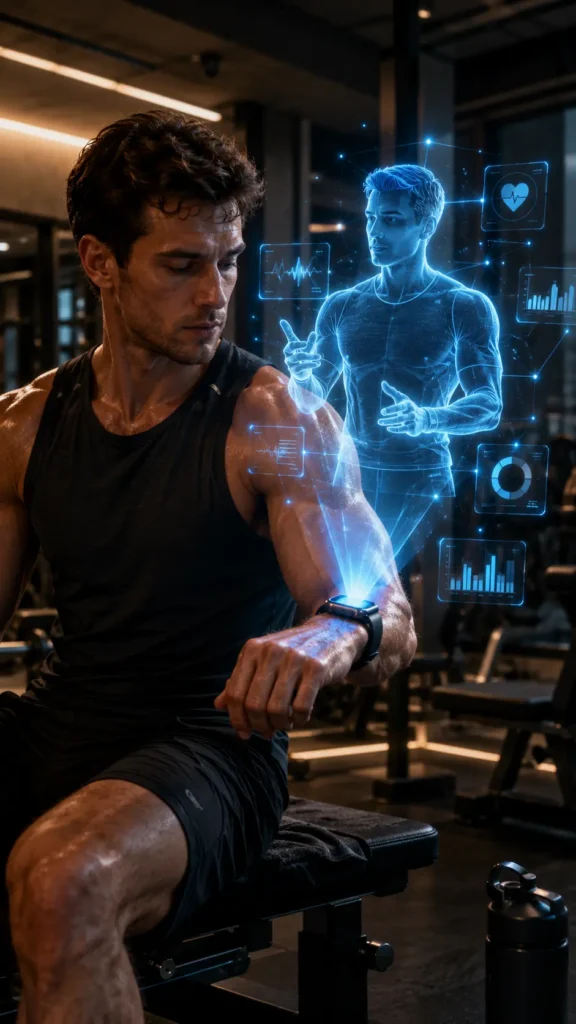
How Do Smart Coaching Systems Actually Improve Results?
Smart coaching systems are most valuable when they turn data into action. Numbers alone do not build muscle, reduce body fat, or improve endurance. The benefit comes when technology helps a coach or member make better choices before the next session begins.
How Smart Coaching Systems Read Training Signals
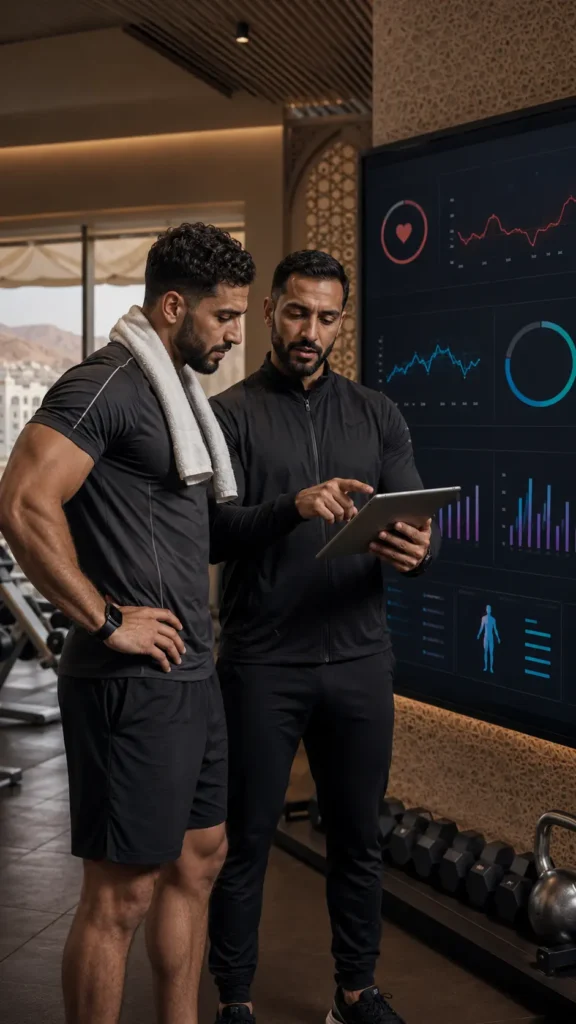
A smart coaching system can collect signals from wearables, gym check-ins, workout logs, and member feedback. These signals are not magic; they are clues. A coach still needs to interpret them, but AI can organize them faster and spot trends earlier.
Useful signals may include:
- heart rate response during cardio or conditioning sessions
- weekly training volume, strength progression, and missed sessions
- sleep duration, recovery quality, soreness, and energy levels
This is especially helpful in Oman because lifestyle and climate can affect consistency. Some people train early before work, others prefer indoor evening sessions, and many need flexible programming during hotter months. The World Health Organization recommends adults complete 150–300 minutes of moderate-intensity aerobic activity weekly and muscle-strengthening activities on at least two days per week. AI Fitness Coaching in Oman can help members organize those guidelines into realistic weekly plans. Over time, this turns scattered numbers into a simple coaching story.
What Data Should Actually Change Your Workout?
Not every metric deserves attention. A step count may encourage movement, but it should not automatically decide your squat volume. A high heart rate during a hot day in Muscat may reflect heat stress, poor sleep, dehydration, or nervous system fatigue. Smart coaching systems work best when they separate useful patterns from noise.
For strength training, the most important data usually includes completed sets, load, reps, perceived effort, range of motion, and recovery. For fat loss, the system should track consistency, daily activity, cardio completion, strength maintenance, and nutrition habits. For performance, it may monitor speed, power, heart rate zones, and rest intervals.
Recent research on adaptive fitness systems shows why real-time feedback matters. A 2026 paper on FlexAI described a multimodal system using computer vision, physiological sensors, and large language models to deliver personalized workout guidance, while monitoring form and exertion to adjust intensity, rest, and motivation.
The key lesson is simple: data should guide better coaching decisions, not overwhelm the member.
Will AI Replace Personal Trainers?

This is the question many gym members ask first. The honest answer is no, not when coaching is done well. AI can process information quickly, but it cannot fully understand fear, confidence, pain history, body language, cultural preferences, or the emotional side of transformation.
Where Human Coaching Still Wins
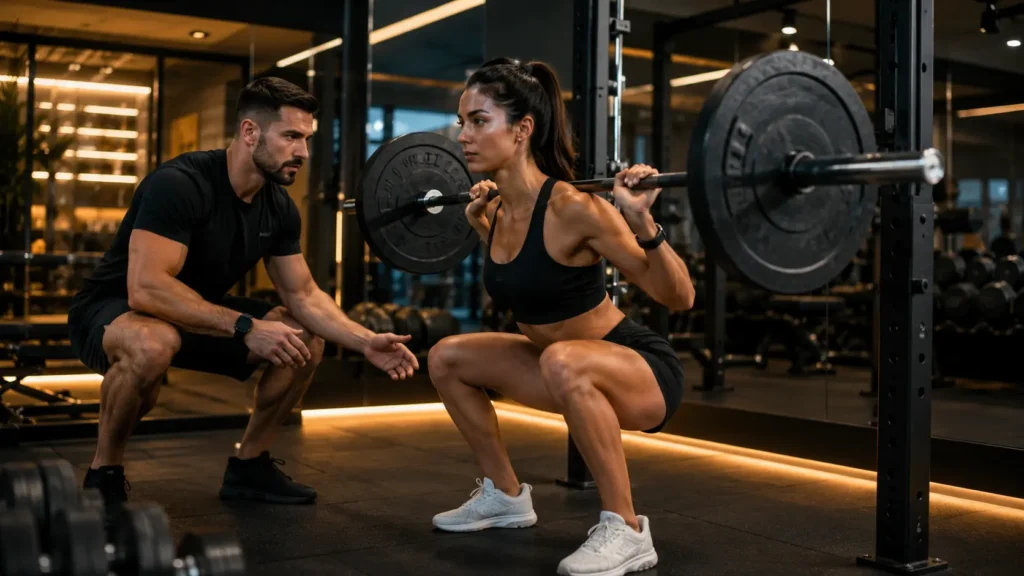
Human coaches still provide the most important part of training: judgment. A system may suggest increasing load, but a coach can see that your tempo is rushed or your shoulder position is unstable. AI may recommend a calorie target, but a coach can notice that the plan is unrealistic for your family meals, Ramadan routine, work stress, or eating habits in Oman.
“Human agency is very, very important.”
Fei-Fei Li
That idea applies perfectly to fitness technology: the person, not the machine, remains at the center.
A strong coach can use AI to see patterns faster, then apply human judgment to protect technique, motivation, safety, and confidence. That combination creates a more premium experience than either technology or coaching alone.
When AI Can Make Coaching More Personal
AI can make personal training feel more personal when it supports the coach behind the scenes. Imagine a member who trains three times per week. The system notices that their Wednesday performance drops whenever Tuesday sleep is poor. Instead of pushing another hard session, the coach changes Wednesday to mobility, technique, and moderate conditioning.
That small change can prevent burnout. It can also keep the member coming back because the plan feels responsive.
“Wearables are certainly not going anywhere.”
Walter R. Thompson
His point reflects a bigger shift: members are already collecting data, so premium clubs should help them use it intelligently.
Smart personalization may adjust training intensity when recovery is low, exercise selection when movement quality changes, cardio zones when endurance improves, and weekly goals when attendance patterns shift. The emotional benefit matters too. When a member sees that the plan responds to real life, trust grows.
Is AI Fitness Coaching Better Than Traditional Coaching?
The best answer depends on the member’s goal. Traditional coaching is excellent for hands-on instruction, confidence, accountability, and technique. AI-assisted coaching is excellent for tracking patterns, adapting plans, and connecting training with recovery data. The strongest model is a hybrid approach.
| Coaching Style | Best For | Strength | Limitation |
| Traditional personal training | Technique, confidence, accountability | Human judgment and live correction | Less automated data tracking |
| App-only AI coaching | Independent users with simple goals | Flexible and low-friction | Limited emotional and technical context |
| Hybrid smart coaching | Busy professionals, fat loss, strength, performance | Human coach plus adaptive data | Requires good system setup |
| Group coaching with smart tracking | Motivation and community | Social energy with measurable progress | Less individualized than personal training |
For a premium gym in Muscat, hybrid coaching offers the strongest experience. Members get the warmth of a real coach and the clarity of data-driven progress. This matters because most people do not fail from lack of effort; they fail because they cannot tell which effort is working. A comparison also helps members choose the right starting point without feeling pushed into a program that does not match their confidence, budget, or schedule.
How Can AI Fitness Coaching Support Oman’s Lifestyle?
Fitness in Oman has unique realities. Summer heat can affect outdoor training. Work schedules can be demanding. Families and social commitments shape meal timing. Travel, stress, and inconsistent sleep can disrupt routines. AI Fitness Coaching in Oman becomes valuable when it respects that lifestyle instead of copying a generic Western fitness plan.
How AI Helps Busy Professionals Train Consistently
Busy professionals in Muscat often need efficient sessions that deliver results without wasting time. A smart system can recommend shorter strength blocks, targeted conditioning, or active recovery when the calendar is crowded. It can also show whether a member is training consistently enough to support their goal.
For example, a member trying to lose fat may combine two strength sessions, one HIIT session, one swimming recovery session, and daily steps. Another member focused on performance may use strength training, padel, mobility, and recovery tracking. AI Fitness Coaching in Oman can help organize these moving parts into a plan that feels realistic.
Why Recovery Data Matters as Much as Training Data
Training creates the stimulus, but recovery creates the result. If a member keeps increasing intensity while sleep, hydration, or soreness worsens, progress can slow down. That is why smart coaching systems should never focus only on calories burned.
“Just get your protein within the hours that you’re awake, lift your weights, and you’re all good to go.”
Stuart Phillips
His practical message is useful for members who overcomplicate recovery: fundamentals still matter.
AI can support those fundamentals by reminding members to balance effort with sleep, protein, hydration, and lower-intensity movement. In Muscat, where heat and daily schedules can affect fatigue, recovery tracking may help members stay consistent without constantly feeling drained. It can also show patterns over time, turning recovery from a vague idea into a coaching decision that protects performance, confidence, and lasting long-term adherence.
How Should You Start With AI Fitness Coaching in Oman?
Starting should feel simple. The goal is not to track every possible metric from day one. The goal is to identify the few signals that matter for your body, your schedule, and your training outcome.
What to Look for Before Booking
Before joining an AI-supported coaching program, ask whether the system improves coaching decisions or simply displays attractive dashboards. A useful program should connect data to action, protect exercise technique, and still include human support.
A strong coaching experience should include a clear starting assessment, progress tracking for strength and recovery, and coach-led adjustments rather than blind algorithmic changes. This is where 5D Fitness can position AI Fitness Coaching in Oman as a premium, human-led service. The promise is not “train like a robot.” The promise is better clarity, safer progression, and a plan that adapts as your life changes. A new member should leave the first consultation knowing what will be tracked, why it matters, how often the plan will change, and who is responsible for coaching decisions. That clarity makes the technology feel supportive rather than intimidating, and it makes booking the next training session easier too, immediately today.
Conclusion
AI Fitness Coaching in Oman reflects a real shift toward personalized, measurable, and adaptive training. Wearables, smart coaching systems, performance tracking, and digital feedback can help members understand their bodies better. But the winning formula is still human: skilled coaches, consistent habits, smart recovery, and a supportive environment.
For members in Muscat, the opportunity is powerful. Stop guessing, stop restarting, and start following a plan that learns from your effort. Book a consultation with 5D Fitness and start training with clarity.
FAQ
AI Fitness Coaching in Oman uses smart tools, wearable data, and coach-led interpretation to personalize workouts, track recovery, and adjust training plans for better results.
Yes, when supervised by qualified coaches. Beginners should use smart coaching systems for structure, technique support, gradual progression, and clear feedback.
Yes. AI coaching can track consistency, cardio, strength progress, steps, and recovery, helping members follow a realistic fat-loss plan.
No. AI supports data analysis, but personal trainers provide judgment, technique correction, emotional support, and safe exercise modifications.
It may use workout logs, heart rate, sleep, soreness, attendance, strength progress, cardio performance, steps, and member feedback.
Yes. Athletes can monitor load, recovery, performance trends, conditioning, and readiness while still relying on expert coaches for programming.
Adjustments can happen weekly or session by session, depending on recovery, progress, goal changes, missed sessions, and data quality.
Yes. Progress dashboards, reminders, measurable goals, and adaptive feedback can increase accountability and help members stay engaged.
No. Wearable data is useful for trends, but individual readings can be imperfect. A coach should interpret patterns.
It suits busy professionals, beginners, strength trainees, fat-loss clients, and performance-focused members who want clearer feedback and smarter progression.