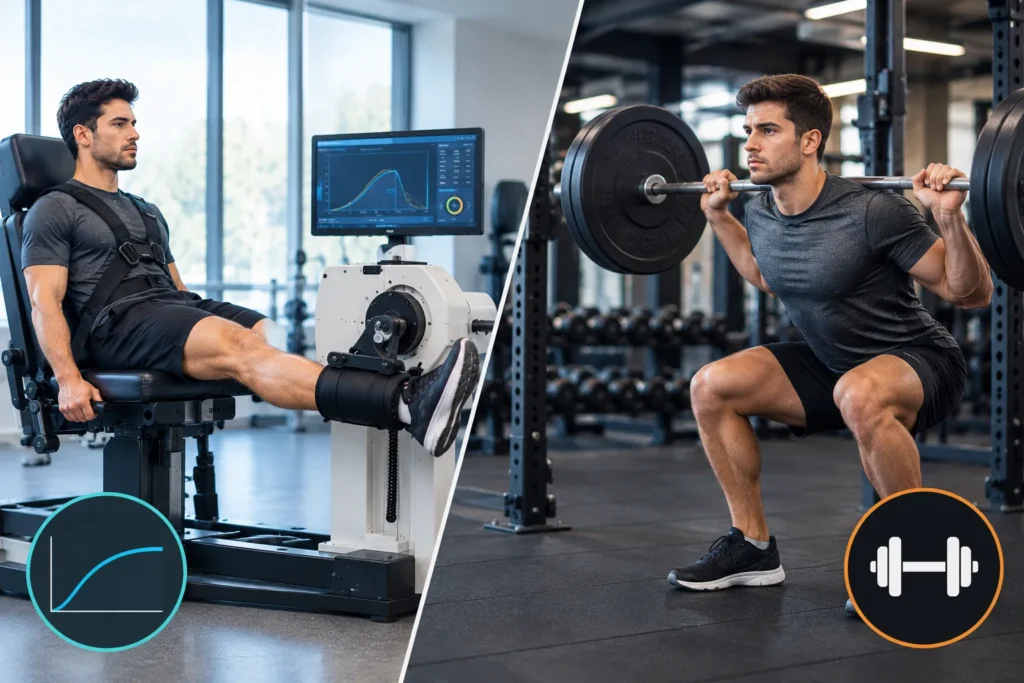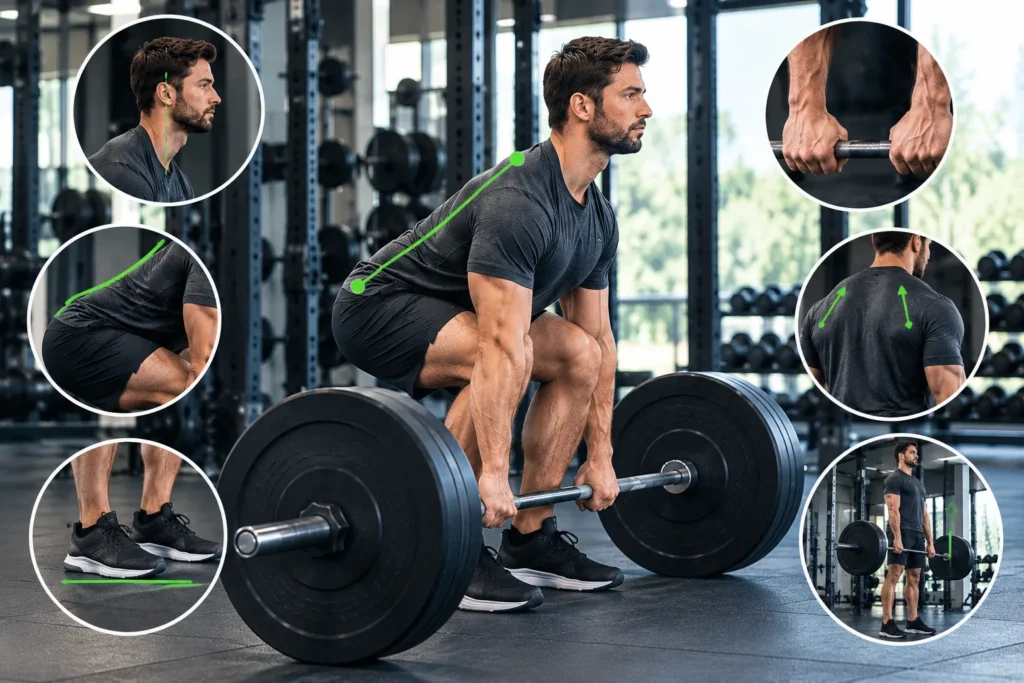
Not every exercise needs to be performed at its most difficult level to produce meaningful results. In fitness training, choosing the right variation can be just as important as selecting the right sets, repetitions, or resistance. Exercise regression is a practical approach that reduces the difficulty of a movement while preserving its primary training purpose. It can help beginners develop movement skills, allow experienced athletes to adjust training demands, and support a gradual return to exercise after a break.
Listen
At 5dfitness, understanding how to adapt exercises is part of building a sustainable and evidence-informed approach to strength, performance, and physical fitness.
What Is Exercise Regression and How Does It Work?
Exercise regression is the process of selecting an easier version of an exercise to match an individual’s current strength, mobility, coordination, or movement ability. Instead of abandoning a movement because it is too challenging, the exercise is adjusted so that the person can practise a similar movement pattern with more manageable demands.
This approach is useful in resistance training, functional fitness, bodyweight workouts, and physical conditioning. A regression should not remove the purpose of an exercise; it should make that purpose more achievable while maintaining appropriate technique and control.
What Does Exercise Regression Mean in Fitness Training?
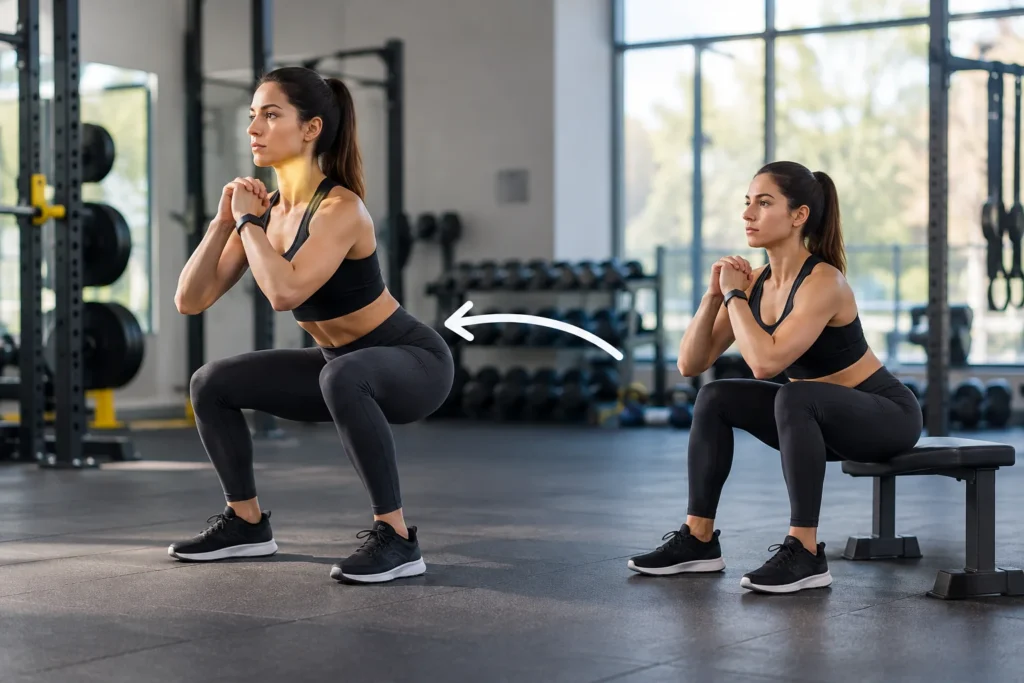
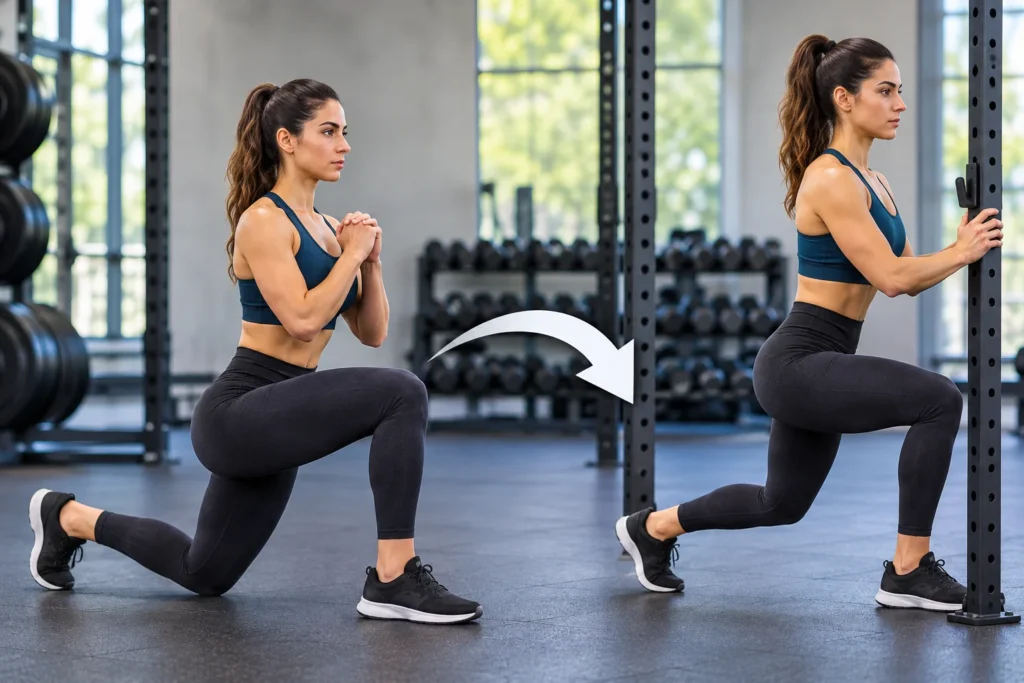
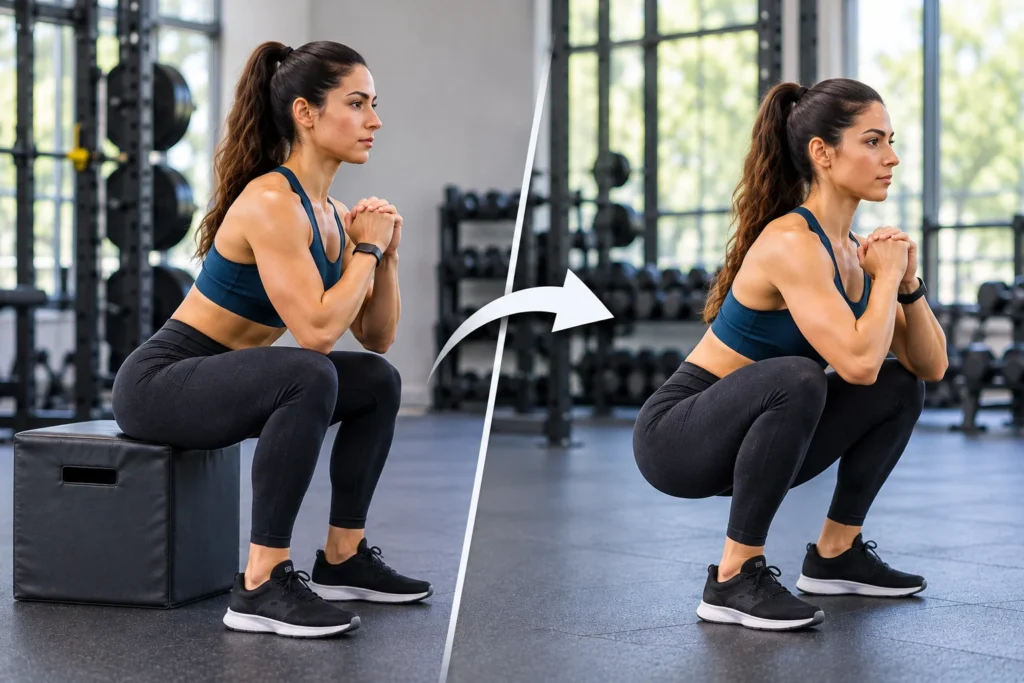
In practical terms, exercise regression means reducing one or more demands of a movement. A trainer might replace a floor push-up with an incline push-up, use a box squat instead of a deep free-standing squat, or introduce a supported split squat before an unsupported lunge. Each variation makes the task more manageable while retaining a similar movement pattern.
Regression can involve reducing external resistance, changing body position, shortening the range of motion when appropriate, increasing stability, or simplifying coordination requirements. The right adjustment depends on why the original exercise is difficult. For example, someone may have sufficient strength but struggle with balance, while another person may need a lighter load. Identifying the limiting factor helps ensure that the regression addresses the actual problem rather than simply making the workout easier.
What Is the Difference Between Exercise Regression and Progression?
Exercise regression and exercise progression are opposite but complementary methods of adjusting training difficulty. Regression reduces the demands of a movement, while progression gradually increases them as an individual develops the necessary strength, control, and skill.
For example, a beginner might start with a wall push-up, progress to an incline push-up, and eventually perform a standard floor push-up. The movement pattern remains broadly similar, but the physical demands increase. The National Strength and Conditioning Association (NSCA) describes regression as selecting a less complicated exercise that uses the same movement pattern. This is an important distinction: regression is not random exercise substitution; it is a purposeful adjustment that preserves the training objective.
“Progressions and regressions play a critical role in sports training and rehabilitation.”
Research supports the importance of adjusting exercise demands to individual capacity. A 2024 review published in the Journal of Bodywork and Movement Therapies explains.
When Should You Use Exercise Regression?
Exercise regression is useful whenever the current version of a movement exceeds an individual’s ability to perform it with appropriate control. This may happen because of limited training experience, insufficient strength, reduced mobility, poor coordination, fatigue, or a return to exercise after a long break. It can also be appropriate when a workout needs to be adjusted to manage training load.
However, not every difficult repetition requires a regression. Coaches and athletes should consider the reason for the difficulty, the exercise objective, and whether the issue can be corrected through instruction or a small adjustment.
Should You Regress an Exercise When Your Technique Breaks Down?
A repeated loss of control or inability to maintain appropriate technique can indicate that an exercise is currently too demanding. For example, if a person repeatedly loses trunk position during a push-up, lowering the hands onto a stable bench may make the movement more manageable. Similarly, a box squat can provide a clear depth target for someone who struggles to control a free-standing squat.
However, technique should be assessed in context. A single imperfect repetition caused by temporary fatigue does not automatically mean that the exercise must be replaced. Consider the load, number of repetitions, rest periods, movement experience, and whether the person can correct the problem with a coaching cue. If technique continues to deteriorate, reducing the difficulty is a sensible way to restore control.
Is Exercise Regression Useful for Beginners and Returning Athletes?
Yes. Beginners often need time to develop basic movement skills before performing complex or heavily loaded exercises. Starting with a manageable variation can help them practise alignment, coordination, and controlled movement without facing unnecessary technical demands.
Regression can also help people returning after a period of inactivity. Strength, endurance, and exercise tolerance may decline during a prolonged break, so immediately returning to previous training loads may be unrealistic. A lighter or simpler variation provides an opportunity to rebuild capacity gradually. People returning after injury, surgery, or persistent pain should follow guidance from an appropriately qualified healthcare professional rather than choosing exercise regressions as a substitute for assessment or rehabilitation.
How Can You Regress an Exercise Without Losing Its Purpose?
A good regression changes the difficulty of a movement without unnecessarily changing its main training objective. For example, an incline push-up still trains a pushing pattern, while reducing the amount of body weight that must be moved. A supported split squat still involves a single-leg-dominant lower-body pattern, but additional support makes balance less demanding. The key is to identify which variable is creating the difficulty and adjust that variable first. This makes exercise modification more systematic and helps individuals progress when they are ready.
How Can You Reduce Resistance, Range of Motion, or Movement Complexity?
One approach is to reduce external resistance. Someone who cannot maintain controlled technique during a heavy dumbbell squat may use a lighter load or begin with body weight. Another option is to adjust the range of motion. A person who struggles to control a deep squat may initially use a box or target to practise a comfortable, controlled depth.
Stability and support can also be modified. Holding a stable support during a split squat reduces the balance challenge, while elevating the hands during a push-up reduces the effective load. Finally, a complex movement can be replaced with a simpler variation that uses a similar pattern. These adjustments should be based on the individual’s needs; a shorter range of motion is not automatically better, and it should not become a permanent restriction when greater movement capacity is appropriate.
How Can You Choose the Right Regression for Your Needs?
Start by identifying the main limitation. Is the movement difficult because of strength, balance, mobility, coordination, resistance, or fatigue? Then select a variation that reduces that specific demand while retaining the intended movement pattern.
For example, if a person struggles with balance during a lunge but can comfortably produce force, using light hand support may be more appropriate than removing resistance from every lower-body exercise. If a push-up is too demanding because of upper-body strength, elevating the hands can reduce the load while preserving the pushing action. A useful regression should allow controlled repetitions and an appropriate training challenge. If the movement remains painful or unusually difficult, stop and seek qualified advice rather than repeatedly changing variations without understanding the cause.
What Are the Best Exercise Regression Examples?
Common exercises can often be adapted through simple changes in body position, support, resistance, or movement complexity. These variations are particularly useful for beginners because they provide a clear way to practise fundamental movement patterns. However, there is no single regression that works for everyone. The best option depends on the individual’s ability, training goal, and the reason the original movement is challenging. The following examples illustrate practical ways to adjust familiar exercises without losing their primary purpose.
How Can You Regress a Squat or Push-Up?
For a squat, a beginner can start with a box squat, sitting back toward a stable bench or box before standing again. This provides a depth reference and can help develop confidence and control. A supported squat, using a stable handhold when appropriate, is another option. As control improves, the person can gradually reduce support or use a more demanding squat variation.
For push-ups, wall push-ups are a simple starting point. The next option may be an incline push-up with hands on a stable elevated surface. Lowering the hand position gradually increases the challenge until a standard floor push-up becomes manageable. The NSCA also lists modified or wall push-ups among possible regressions for the bodyweight pushing pattern. The objective is to maintain a controlled body position rather than simply completing more repetitions.
What Are Suitable Regressions for Planks and Lunges?
A standard plank can be regressed by placing the knees on the floor while maintaining a stable trunk position. This reduces the lever length and makes the exercise less demanding. Another option is an elevated plank with the hands on a stable bench or surface. As trunk control improves, the individual can gradually move toward a standard forearm or high plank.
For lunges, holding a stable support can reduce balance demands. A supported split squat may also be easier to control than a dynamic forward or walking lunge. Once the individual can maintain alignment and control through the required range, the support can be reduced or the movement can become more dynamic. These examples show why regression should be selected according to the limiting factor rather than applied as a generic reduction in workout intensity.
How Do You Know When to Progress From a Regressed Exercise?
Regression should usually be viewed as one stage of a flexible training process, not a permanent level. As strength, coordination, and movement control improve, the individual may be ready for a more challenging variation. Progression should be based on demonstrated ability rather than an arbitrary deadline or the desire to copy another person’s workout. A movement that is currently manageable can become more demanding through increased resistance, range of motion, reduced support, or greater complexity. The objective is to apply an appropriate training stimulus while preserving the quality of movement.
What Signs Show That You Are Ready to Progress?
You may be ready to progress when you can perform the current variation consistently, maintain appropriate technique, control the movement through the intended range, and complete the planned repetitions without excessive difficulty. You should also be able to recover appropriately between sets and training sessions.
For example, someone who can perform several controlled incline push-ups with stable trunk positioning may gradually lower the hand support. A person who can complete supported split squats with good balance may begin reducing hand assistance. Progression does not need to involve a large jump in difficulty. Small adjustments allow the body to adapt while making it easier to identify whether the next variation is appropriate. If technique deteriorates or symptoms develop, return to a manageable level and reassess.
What Common Mistakes Should You Avoid When Regressing Exercises?
One common mistake is choosing a regression that changes the exercise so much that it no longer serves the original purpose. Another is making several adjustments at once, which makes it difficult to identify which change actually helped. Beginners may also assume that a regression is ineffective because it looks easier than the standard exercise. In reality, an appropriately selected variation can still provide a meaningful training stimulus.
Avoid progressing too quickly simply because you can complete a certain number of repetitions. Repetition count alone does not demonstrate movement quality or readiness. The 2024 review by Rodríguez and colleagues highlights the importance of planned exercise progressions and regressions in adapting training to individual capacity. When pain, injury, or significant movement restrictions are involved, seek guidance from a qualified professional rather than relying on generic online examples.
A Simple 5-Step Guide
- Identify the difficulty:
Determine whether the main limitation is strength, balance, mobility, coordination, resistance, or fatigue.
- Keep the movement goal:
Choose a simpler variation that preserves the main movement pattern.
- Adjust one variable:
Reduce resistance, modify the range of motion, add support, or simplify the movement.
- Check movement quality:
Perform controlled repetitions without forcing the movement or ignoring pain.
- Progress gradually:
Increase difficulty when you can consistently perform the current variation with appropriate control.
| Standard Exercise | Possible Regression | Main Demand Reduced |
|---|---|---|
| Bodyweight Squat | Box Squat | Depth control and movement confidence |
| Floor Push-Up | Incline Push-Up | Effective bodyweight resistance |
| Standard Plank | Knee Plank | Trunk loading and lever length |
| Walking Lunge | Supported Split Squat | Balance and coordination |
| Single-Leg Romanian Deadlift | Supported Hip Hinge | Balance demand |
| Full-Range Dip | Assisted Dip | Upper-body loading |
These are general examples, not universal prescriptions. Select variations according to individual ability, goals, and any relevant professional guidance.
Conclusion
Exercise regression is not a sign of weakness or a step backward. It is a practical training strategy that helps individuals match exercise demands to their current abilities while maintaining the purpose of a movement. Whether you are learning your first push-up, improving squat control, returning to training after a break, or adjusting a challenging functional exercise, the right regression can help you practise more consistently and develop the foundation for future progress.
The key is to identify the limiting factor, choose a suitable variation, monitor movement quality, and progress gradually when ready. 5dfitness promotes a balanced approach to fitness in which smart exercise selection and sustainable training habits support long-term development.
Frequently Asked Questions
Exercise regression means using an easier variation of a movement to match an individual’s current strength, mobility, coordination, or experience.
It allows people to practise movement patterns with more manageable demands, develop technique, and adjust training to their current ability.
Consider regression when you repeatedly struggle to maintain appropriate technique, control, or stability despite reasonable adjustments to instruction and workload.
Not necessarily. A suitable regression can still provide an effective training stimulus when its difficulty matches the individual’s current capacity and training goal.
Regression reduces exercise demands, while progression gradually increases difficulty as strength, control, and movement ability improve.
Yes. Experienced athletes may use regressions when learning new movements, managing fatigue, adjusting training loads, or returning from a break.
You can consider a more difficult variation when you consistently perform the current version with appropriate control, technique, and recovery.