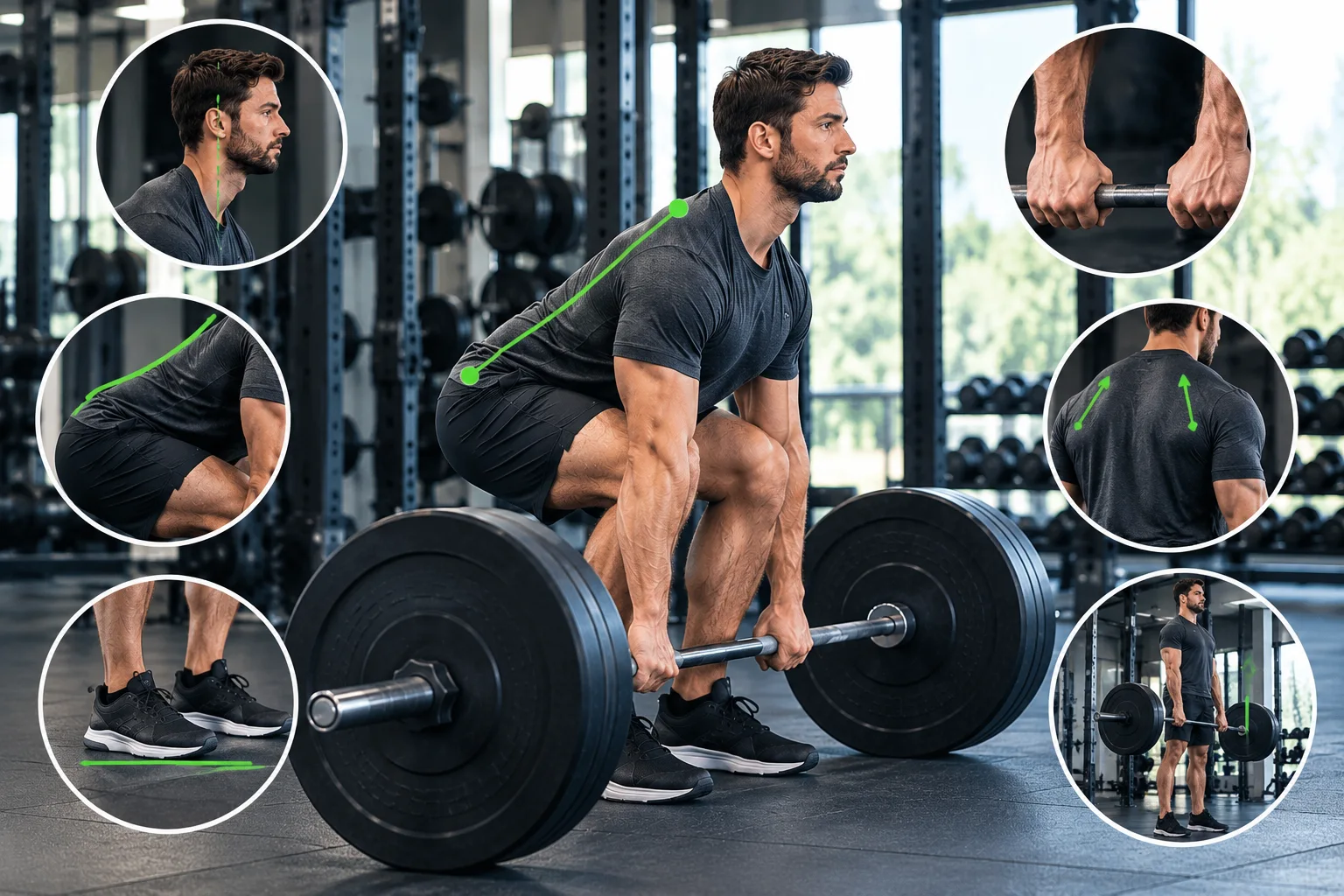
Improving deadlift technique is essential for building strength, controlling the barbell, and making each repetition more consistent. Whether you are a beginner or an experienced lifter, small adjustments to your setup, bracing, bar path, and lifting mechanics can improve performance.
Listen
The deadlift trains several major muscle groups, including the glutes, hamstrings, quadriceps, and spinal erectors. However, lifting heavier weights is not the only measure of progress. At 5dfitness, we emphasize understanding movement mechanics, selecting appropriate loads, and developing repeatable technique to support long-term strength training.
What Is Proper Deadlift Technique and Why Does It Matter?
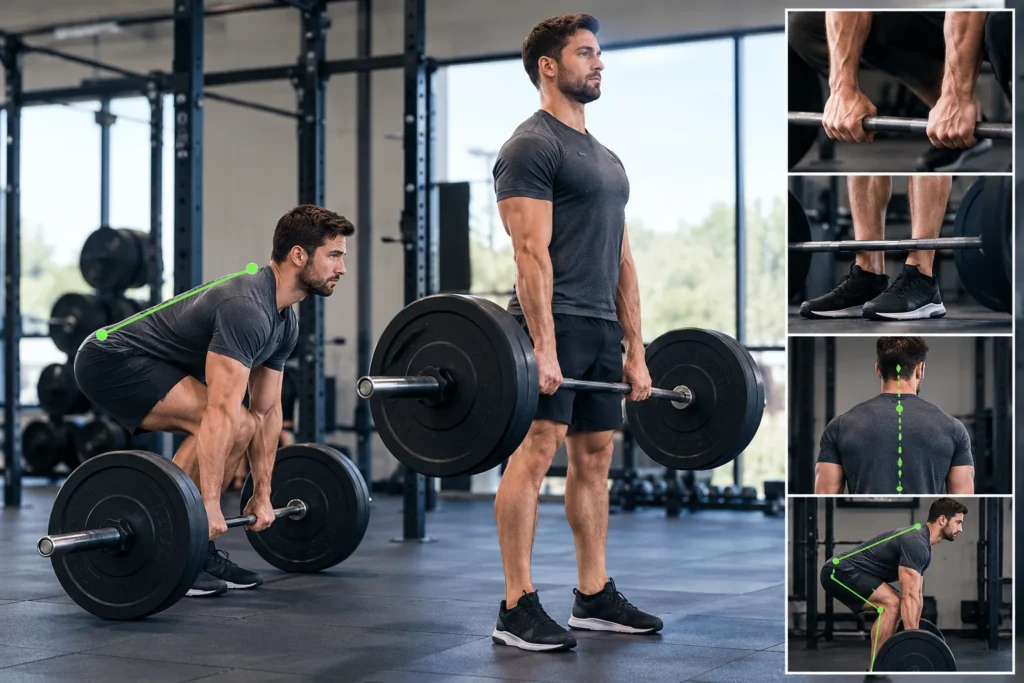
Proper deadlift technique combines a stable starting position, effective core bracing, controlled movement, and coordinated hip and knee extension. The objective is to lift the barbell efficiently while maintaining control throughout the repetition. Individual limb proportions, mobility, and the chosen deadlift variation influence the ideal setup, so there is no single position that suits everyone. Nevertheless, fundamental principles such as keeping the bar close, creating tension before lifting, and avoiding uncontrolled movements can help improve consistency and performance.
What Makes a Deadlift Technically Efficient?
An efficient deadlift minimizes unnecessary movement while allowing the lifter to produce force effectively. The bar should generally travel close to the body, while the lifter maintains balance over the feet and establishes tension before initiating the pull.
The American Council on Exercise (ACE) identifies the hip hinge as the primary movement pattern of the deadlift. Its deadlift technique guide explains how hip mobility and spinal stability contribute to effective lifting mechanics.
In practice, efficiency means coordinating the legs, hips, trunk, and upper back rather than relying on one body part. Avoid jerking the bar off the floor or changing your starting position repeatedly during the pull. Instead, establish a repeatable setup, brace your torso, and lift with controlled intent. Efficient technique should be evaluated alongside load, range of motion, and consistency—not simply by how quickly the bar moves.
Which Muscles Work Together During a Deadlift?
The deadlift involves several muscle groups working together. The gluteus maximus and hamstrings contribute to hip extension, while the quadriceps help extend the knees. The spinal erectors and abdominal muscles help stabilize the trunk, and the latissimus dorsi contributes to controlling the bar’s position. The forearm muscles support grip.
These muscles do not work independently. Their contributions change according to the deadlift variation, body proportions, load, and movement phase. For example, the conventional deadlift generally involves more forward torso inclination than the sumo variation, which changes joint positions and muscular demands.
Understanding these roles helps identify weaknesses without assuming that every difficult repetition is caused by a single muscle group. If your grip fails first, grip training may be useful. If your starting position repeatedly breaks down, technique practice and appropriate load adjustments may be more relevant.
How Should You Set Up for a Proper Deadlift?
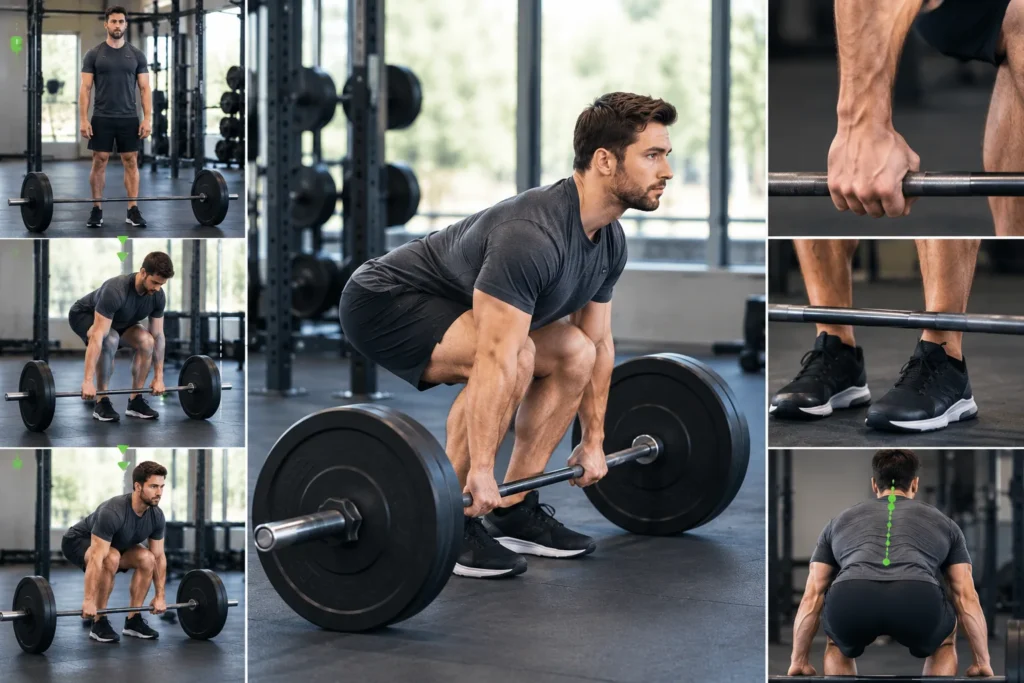
A consistent setup creates the foundation for a controlled pull. Before lifting, position your feet, approach the bar, establish your grip, and create tension through your trunk and upper back. Your exact hip height and torso angle will depend on your proportions and whether you use a conventional or sumo stance. Rather than copying another lifter’s position exactly, aim for a balanced stance that allows you to reach the bar comfortably and maintain control. Practicing the setup with a light load helps make these steps repeatable before heavier working sets.
How Should You Position Your Feet and Grip the Bar?
For a conventional deadlift, start with your feet approximately hip-width apart and the bar over the middle of your feet. Hinge at the hips and bend your knees enough to reach the bar without forcing yourself into an uncomfortable position. Your hands typically grip the bar just outside your legs.
Choose a grip that feels secure and allows you to maintain control. A double-overhand grip is a useful starting point for many lifters. A mixed grip or lifting straps may be appropriate in certain training situations, but each option has trade-offs. A mixed grip places the hands in different orientations, while straps reduce grip demands.
Avoid setting your feet so close to or far from the bar that you must move it around your knees unnecessarily. Your starting position should allow the bar to rise vertically or along a close, efficient path. If you cannot reach the bar comfortably, consider an elevated starting position or a suitable variation while developing mobility and strength.
How Can You Brace Your Core Before Lifting?
Core bracing helps the trunk resist unwanted movement under load. Before initiating the pull, inhale and expand your abdomen and trunk in multiple directions, then tighten the surrounding muscles as if preparing for a firm impact. Maintain that pressure through the most demanding part of the repetition, breathing and resetting between repetitions when needed.
Bracing is not the same as sucking in your stomach or simply lifting your chest. Excessively arching your lower back is also unnecessary. Aim for a controlled trunk position that you can maintain while the hips and knees extend.
Practice bracing with lighter weights before using challenging loads. If you cannot maintain control, reduce the load or shorten the range of motion temporarily. People with relevant medical conditions, including conditions affecting blood pressure, should seek qualified guidance about appropriate breathing strategies before heavy lifting.
How Can You Improve Deadlift Technique During the Lift?
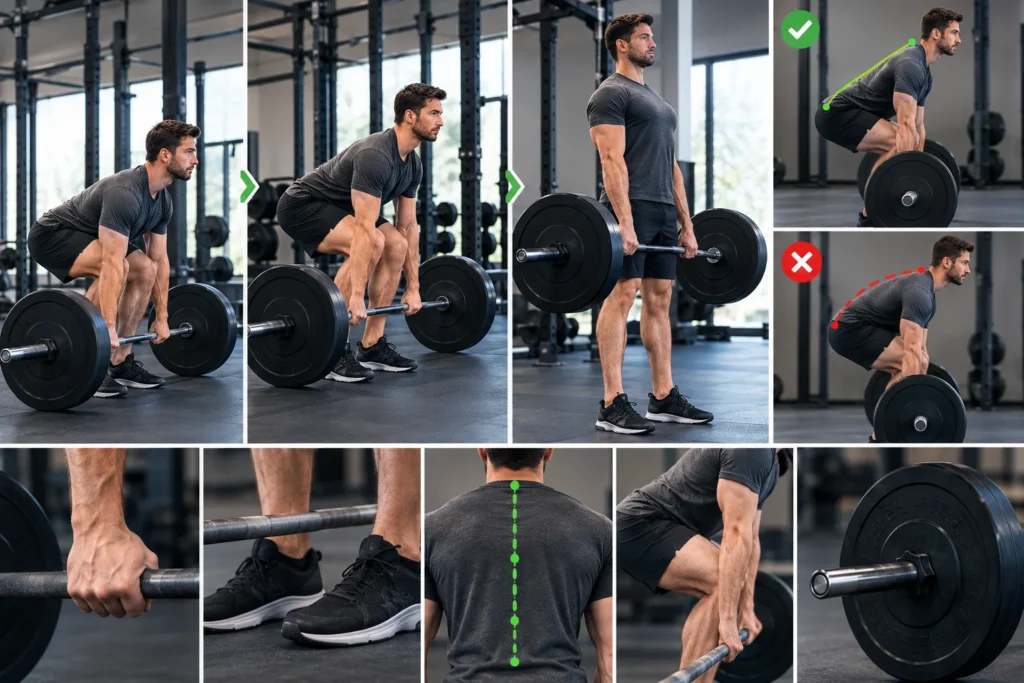
Once your setup is consistent, focus on coordinating the initial pull, movement past the knees, and lockout. The bar should remain close to your body, while your hips and knees extend in a coordinated pattern. Avoid thinking of the movement as simply pulling with your back or thrusting your hips forward as quickly as possible. A controlled lift allows you to maintain balance and identify where technique begins to deteriorate. These principles can be applied to both conventional and sumo deadlifts, although the precise joint positions differ between the variations.
How Can You Keep the Bar Close to Your Body?
Keeping the bar close can improve lifting mechanics by reducing the horizontal distance between the load and your body. If the bar drifts forward, the external moment acting around your hips and trunk may increase, potentially making the lift more demanding.
The National Strength and Conditioning Association (NSCA) discusses this principle in its article, The Deadlift and Its Application to Overall Performance. The article states:
“The further the bar is away from the legs, the more the lower back has to activate to perform the lift.”
To improve control, engage your lats before lifting and imagine keeping your armpits tight as you pull. Allow the bar to travel close to your shins and thighs without deliberately scraping your skin. Filming a working set from the side can help reveal whether the bar moves forward. If it does, reduce the load and practice a controlled pull with a consistent setup.
What Common Deadlift Mistakes Reduce Lifting Efficiency?
Technique errors often appear when lifters rush the setup, use more weight than they can control, or lose position during difficult repetitions. Some variation in posture is normal, and a rounded appearance alone does not automatically establish that a lift is unsafe. The more useful question is whether the lifter can control the movement, maintain an appropriate position for their abilities, and repeat the technique under the intended load. Recognizing patterns early makes it easier to select the right correction instead of adding more weight and reinforcing the same problem.
Why Can Lifting Too Heavy Limit Technical Progress?
When a load exceeds your current technical capacity, you may struggle to brace, maintain the bar path, or complete the intended range of motion. Repeatedly practicing poor-quality repetitions can make it harder to identify which part of the movement needs improvement.
Use a weight that allows you to perform controlled repetitions without losing your intended setup. If your hips rise rapidly before the bar leaves the floor, the bar drifts forward, or your grip repeatedly fails, pause and assess the cause rather than forcing additional repetitions.
Progressive overload remains important, but it should follow technical consistency. Increase weight gradually when your current load is manageable and recovery is adequate. If you experience sharp pain, unusual weakness, or persistent symptoms, stop the exercise and seek appropriate professional assessment rather than attempting to correct the problem by changing technique alone.
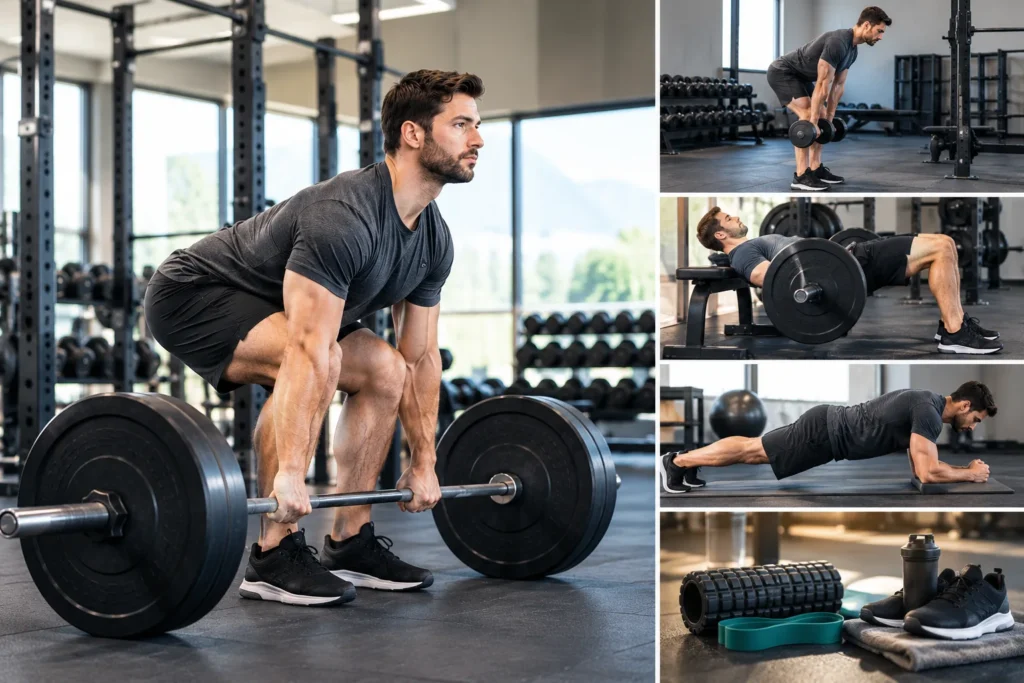
How Can You Train to Improve Deadlift Performance Safely?
Improving deadlift performance requires more than repeating heavy sets. Technical practice, appropriate accessory exercises, sensible programming, and consistent feedback all contribute to progress. Choose drills that address your specific limitation rather than adding every available variation to your program. For example, a lifter who struggles to hinge at the hips may benefit from hinge practice, while someone who loses position near the floor may need lighter deadlift repetitions and a review of their setup. The aim is to improve the quality of each repetition before increasing the demands of training.
How Can You Practice and Review Your Deadlift Technique?
Use this practical how-to sequence during your next session:
- Warm up progressively. Begin with general movement and lighter sets, increasing the load gradually.
- Practice your setup. Check foot position, grip, bar placement, and core bracing before each repetition.
- Use manageable working weights. Prioritize consistent movement over maximal loading.
- Record a set if possible. A side-view video can help you review bar drift, starting position, and lockout.
- Change one variable at a time. Adjust your setup, bracing, or load so you can assess whether the change improves control.
- Track your training. Record load, repetitions, perceived effort, and any technique issues.
Accessory exercises such as Romanian deadlifts, hip hinges with a dowel, and appropriately selected rows can support specific training goals. However, these exercises do not replace practicing the deadlift itself. If you are new to lifting, unsure about your technique, or returning after an injury, consider working with a qualified strength coach or healthcare professional.
Conclusion
Improving deadlift technique starts with a repeatable setup, effective core bracing, a controlled bar path, and coordinated hip and knee extension. Correcting technical errors and selecting an appropriate training load can help you develop strength without sacrificing movement quality. Remember that the best technique is one you can perform consistently and adapt to your individual needs.
At 5dfitness, we support evidence-informed training that prioritizes sustainable progress over unnecessary risk. Your next step: record a manageable working set, identify one technical improvement, and practice it consistently before increasing the load. Better repetitions provide a stronger foundation for long-term performance.
FAQ
Start with a manageable load, learn the hip hinge, practice bracing, and prioritize consistent repetitions before increasing weight.
The bar should travel close to your body, but you do not need to force it against your shins or scrape your skin.
Neither is universally better. The appropriate variation depends on your goals, body proportions, comfort, and ability to perform the movement consistently.
Frequency depends on your training experience, total workload, and recovery. Many programs include deadlifts once or twice weekly, but this is not a universal prescription.
Not automatically. If technique becomes inconsistent, maintain or reduce the load until you can perform the intended movement with control.