Artificial sweeteners and body weight have become an important topic in nutrition research, particularly among people trying to lose fat or maintain a healthy body composition. Sugar-free drinks, diet foods, and low-calorie products are often marketed as alternatives to regular sugar.
Listen
However, do these products actually help people lose weight, or can they influence appetite and eating habits in unexpected ways? At 5dfitness, understanding the science behind nutrition choices is essential for making informed decisions. The answer depends largely on whether sweeteners replace sugar, how they are consumed, and the overall dietary pattern.
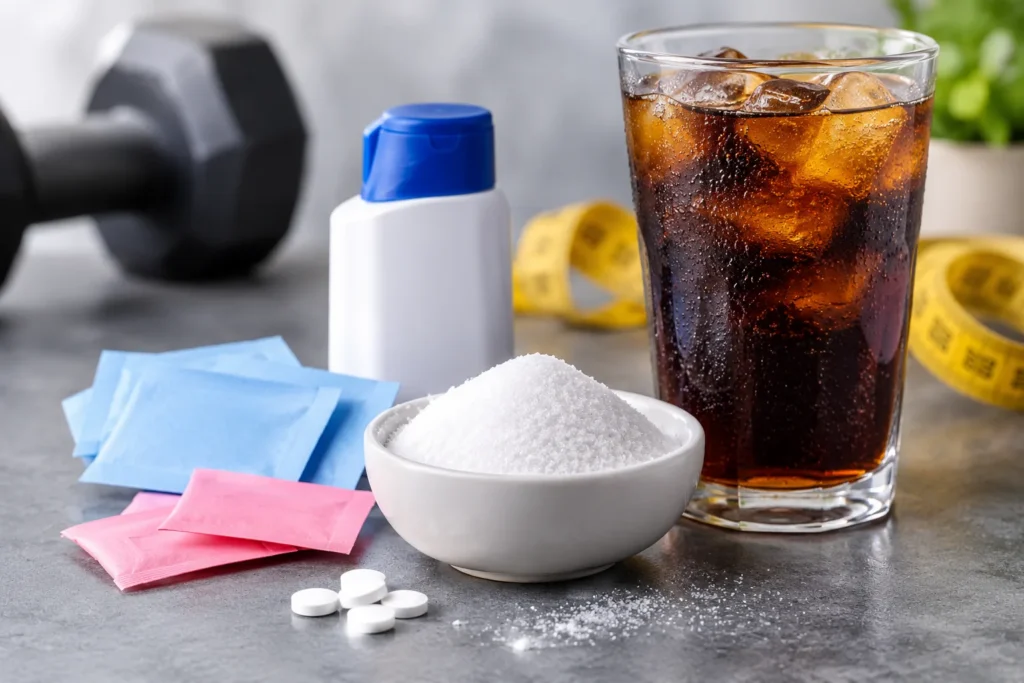
What Are Artificial Sweeteners and How Do They Work?
Artificial sweeteners are substances used to provide a sweet taste with little or no energy compared with regular sugar. They are commonly found in diet beverages, sugar-free desserts, chewing gum, and other reduced-sugar products. Some are synthetic compounds, while others, such as stevia-derived sweeteners, come from natural sources. They are often grouped under the broader term non-sugar sweeteners (NSS) or non-nutritive sweeteners (NNS). Understanding these categories matters because not every sugar substitute has the same chemical structure, calorie content, or metabolic effects.
What Are the Most Common Types of Artificial Sweeteners?
Common non-sugar sweeteners include aspartame, sucralose, saccharin, acesulfame potassium, and steviol glycosides. These compounds provide sweetness without contributing the same amount of energy as table sugar. Their sweetness intensity varies, so manufacturers generally use much smaller quantities than they would use of sucrose.
Sugar alcohols, including erythritol and xylitol, are different. They are sometimes marketed alongside artificial sweeteners, but they belong to a separate group called polyols and may provide some calories. This distinction is important when evaluating food labels. A product described as “sugar-free” is not automatically calorie-free, and its total energy content still matters when managing body weight.
How Are Artificial Sweeteners Different From Regular Sugar?
Regular sugar provides approximately four calories per gram and contributes to total energy intake. Most high-intensity non-sugar sweeteners provide negligible calories at the quantities normally used. Replacing a sugar-sweetened drink with a genuinely low-calorie alternative can therefore reduce energy intake, provided the person does not compensate by eating more elsewhere.
However, sweetness alone does not determine whether a food supports weight management. A sugar-free dessert may still contain substantial fat and calories, while a naturally sweet food such as fruit provides fiber, vitamins, minerals, and other nutrients. The overall nutritional composition of a product is more informative than its “sugar-free” label.
How Do Artificial Sweeteners Affect Body Weight?
The relationship between artificial sweeteners and body weight is not as simple as saying they cause weight gain or guarantee weight loss. Their effect depends on what they replace, the amount consumed, and the person’s broader eating habits. When non-sugar sweeteners replace calorie-containing sugar, they may help reduce energy intake in some circumstances.
However, using them without changing the rest of the diet does not automatically create an energy deficit. Research also differs depending on study design and duration.
Can Artificial Sweeteners Help Reduce Daily Calorie Intake?
Replacing a sugar-sweetened beverage with a low-calorie alternative can reduce the calories consumed from that drink. For example, someone who regularly drinks a beverage containing added sugar may lower their daily energy intake by choosing a genuinely low-calorie version instead.
The benefit depends on whether the substitution is maintained and whether the person compensates by eating additional calories later. If a diet drink replaces a high-calorie soft drink but is accompanied by extra snacks, the expected calorie reduction may disappear. Therefore, sweeteners can be a substitution tool, but they are not a weight-loss strategy on their own. Consistent calorie balance and overall food quality remain central to body-weight management.
What Does Scientific Research Say About Artificial Sweeteners and Weight Loss?
Research findings depend partly on whether studies compare sweeteners with sugar, water, or no intervention. A 2026 systematic review and meta-analysis of randomized controlled trials found that non-nutritive sweeteners had broadly comparable effects to control interventions within weight-management programs. Some subgroups showed modest additional weight reduction, but the results did not establish a universal weight-loss effect.
The World Health Organization takes a cautious position. Its 2023 guideline states: “WHO suggests that non-sugar sweeteners not be used as a means of achieving weight control or reducing the risk of noncommunicable diseases.” This is a conditional recommendation, not a declaration that every approved sweetener is toxic. It reflects uncertainty about long-term benefits and the importance of building sustainable dietary habits.

Do Artificial Sweeteners Affect Appetite, Cravings, and Metabolism?
Body weight is influenced by more than the calorie content of individual foods. Appetite, food preferences, eating patterns, and metabolic responses can all affect long-term energy balance. Researchers have therefore investigated whether sweet taste without a comparable sugar intake changes hunger, cravings, or glucose regulation.
Results are mixed, and responses may vary by sweetener, dose, individual characteristics, and study design. It is important to distinguish demonstrated effects from proposed mechanisms that still require stronger human evidence.
Do Artificial Sweeteners Increase Hunger or Cravings?
One common concern is that sweet taste without sugar may increase hunger or encourage people to seek more sweet foods. However, current human research does not consistently show that non-sugar sweeteners increase appetite. A 2026 systematic review of randomized trials found no significant effect on hunger during the weight-maintenance phase. During weight-loss programs, the review reported a small reduction in hunger in the non-nutritive sweetener groups.
These findings do not mean every person will respond in the same way. Some individuals may find sugar-free products useful when managing cravings, while others may notice that frequently choosing intensely sweet foods makes it harder to reduce their preference for sweet tastes. Personal eating patterns and overall diet quality should guide decisions rather than assumptions about a universal appetite response.
How Do Artificial Sweeteners Affect Blood Glucose and Insulin?
Most high-intensity non-sugar sweeteners do not provide glucose in the same way as ordinary sugar, so replacing a sugary drink with a sugar-free version can reduce the carbohydrate and energy consumed from that drink. However, it is inaccurate to assume that all sweeteners have identical effects on glucose metabolism or insulin responses.
The 2026 review found no clear overall advantage of non-nutritive sweeteners over control interventions for improving lipid profiles, and it reported mixed findings for glucose-related outcomes. These results underline the importance of avoiding broad claims that sweeteners improve metabolism. People with diabetes or other medical conditions should consider their individual nutritional needs and follow advice from their healthcare professionals.
Are Artificial Sweeteners Better Than Sugar for Weight Management?
Whether artificial sweeteners are a better choice depends on the comparison. Replacing a sugar-sweetened beverage with a low-calorie alternative can reduce energy intake, but replacing water or an unsweetened drink offers no equivalent calorie-saving advantage.
The World Health Organization recommends against relying on non-sugar sweeteners as a long-term weight-control strategy. Its guidance should be understood alongside evidence from controlled trials, which sometimes shows modest benefits when sweeteners replace caloric sugar. The practical question is not whether sweeteners are universally good or bad, but whether a particular substitution improves the overall diet.
How Does Replacing Sugar With Sweeteners Change Calorie Intake?
The potential calorie reduction is greatest when a sweetener replaces a meaningful source of added sugar. For example, changing from a regular soft drink to a zero-sugar version may reduce energy intake if the serving size and other ingredients are comparable.
The following table illustrates how different choices can fit into a weight-management plan:
| Choice | Energy Contribution | Practical Consideration |
|---|---|---|
| Regular sugar | Provides calories | Adds to daily energy intake |
| Aspartame or sucralose | Negligible at typical use levels | Can replace sugar in selected products |
| Stevia-derived sweeteners | Usually negligible | Check the full product ingredients |
| Erythritol | Low, but not always zero | A sugar alcohol, not a high-intensity artificial sweetener |
| Water or unsweetened tea | No meaningful calories | Useful everyday options |
The table describes general categories, not every packaged product. Added ingredients, serving sizes, and formulations can change the final calorie content.
Are Diet Drinks Better Than Sugar-Sweetened Beverages?
For someone who regularly consumes sugar-sweetened drinks, switching to a low-calorie alternative can be a practical way to reduce added sugar and energy intake. A 2022 systematic review and meta-analysis published in JAMA Network Open examined the replacement of sugar-sweetened beverages with low- or no-calorie alternatives and found modest improvements in body weight and some cardiometabolic risk factors.
However, diet drinks should not automatically replace water as the main source of hydration. Water, sparkling water without added sugar, and unsweetened tea are straightforward everyday choices. Diet beverages may be useful for some people during a transition away from sugary drinks, but long-term weight management should not depend on them alone.

How Should You Use Artificial Sweeteners During a Weight Loss Journey?
Artificial sweeteners can be considered within a balanced eating pattern, but they should not become the foundation of a fat-loss plan. Sustainable weight management depends on appropriate energy intake, nutrient-dense foods, physical activity, sleep, and consistent habits. For athletes and bodybuilders, adequate protein, carbohydrate availability, and total energy intake also matter for training performance and recovery. A practical approach is to evaluate what a sweetened product replaces, check its full nutritional label, and assess whether it helps maintain a sustainable diet.
How Can You Choose Sweetened Products More Carefully?
Start by checking the nutrition label rather than relying on marketing terms such as “diet,” “light,” or “sugar-free.” Compare total calories, added sugars, serving size, and other ingredients. Some products contain little sugar but remain energy-dense because of fats or other ingredients.
Also consider how frequently you consume these products. If a low-calorie sweetener helps you replace a regular sugary drink without increasing other food intake, it may be a useful option. If it encourages frequent snacking or makes your diet more complicated, an unsweetened alternative may work better. The goal is to choose foods that support your overall nutritional needs rather than focusing on one ingredient.
5 Practical Steps for Using Sweeteners During Weight Loss
- Identify what you are replacing:
Use a low-calorie sweetener as a possible substitute for added sugar, not as an extra source of sweetness.
- Check the nutrition label:
Compare calories, added sugars, serving sizes, and other ingredients.
- Monitor your eating habits:
Notice whether sugar-free products help manage cravings or lead to additional snacking.
- Prioritize nutrient-dense foods:
Build meals around vegetables, fruits, whole grains, protein sources, and healthy fats.
- Track long-term progress:
Assess body-weight trends, dietary consistency, and training performance rather than judging success by one product choice.
Conclusion
Artificial sweeteners do not automatically cause weight gain, nor do they guarantee weight loss. Their most practical potential benefit is reducing energy intake when they replace sugar-containing products. However, long-term body-weight management depends on the entire dietary pattern, not one ingredient. Choosing mostly nutrient-dense foods, maintaining an appropriate calorie intake, and building consistent habits are more important than relying on sugar substitutes.
At 5dfitness, the focus is on applying nutrition science to realistic fitness and body-composition goals. Understanding the difference between replacing sugar and simply consuming more sweetened products can help you make better decisions.
Frequently Asked Questions
There is no strong evidence that all artificial sweeteners directly cause weight gain. Weight changes depend on total energy intake, food choices, and long-term habits.
They may help when they replace higher-calorie sugary products, but they do not independently cause fat loss.
Human research does not consistently show increased appetite. Some studies report neutral effects, while others suggest small reductions in hunger in certain settings.
They can reduce calories when replacing sugar, but water and unsweetened drinks are also useful choices. The best option depends on the product and dietary context.
They do not directly burn fat. They may support a calorie deficit if they replace calorie-containing foods or drinks without compensation elsewhere.
They can fit into a cutting diet if they help manage food choices and do not displace nutrient-dense foods or interfere with overall dietary consistency.