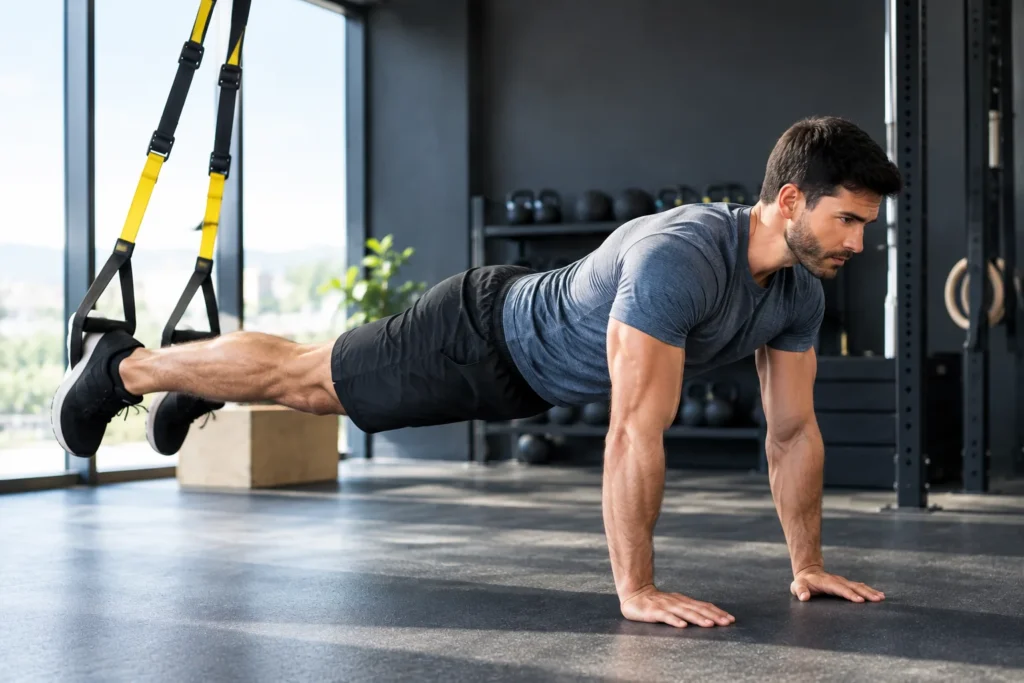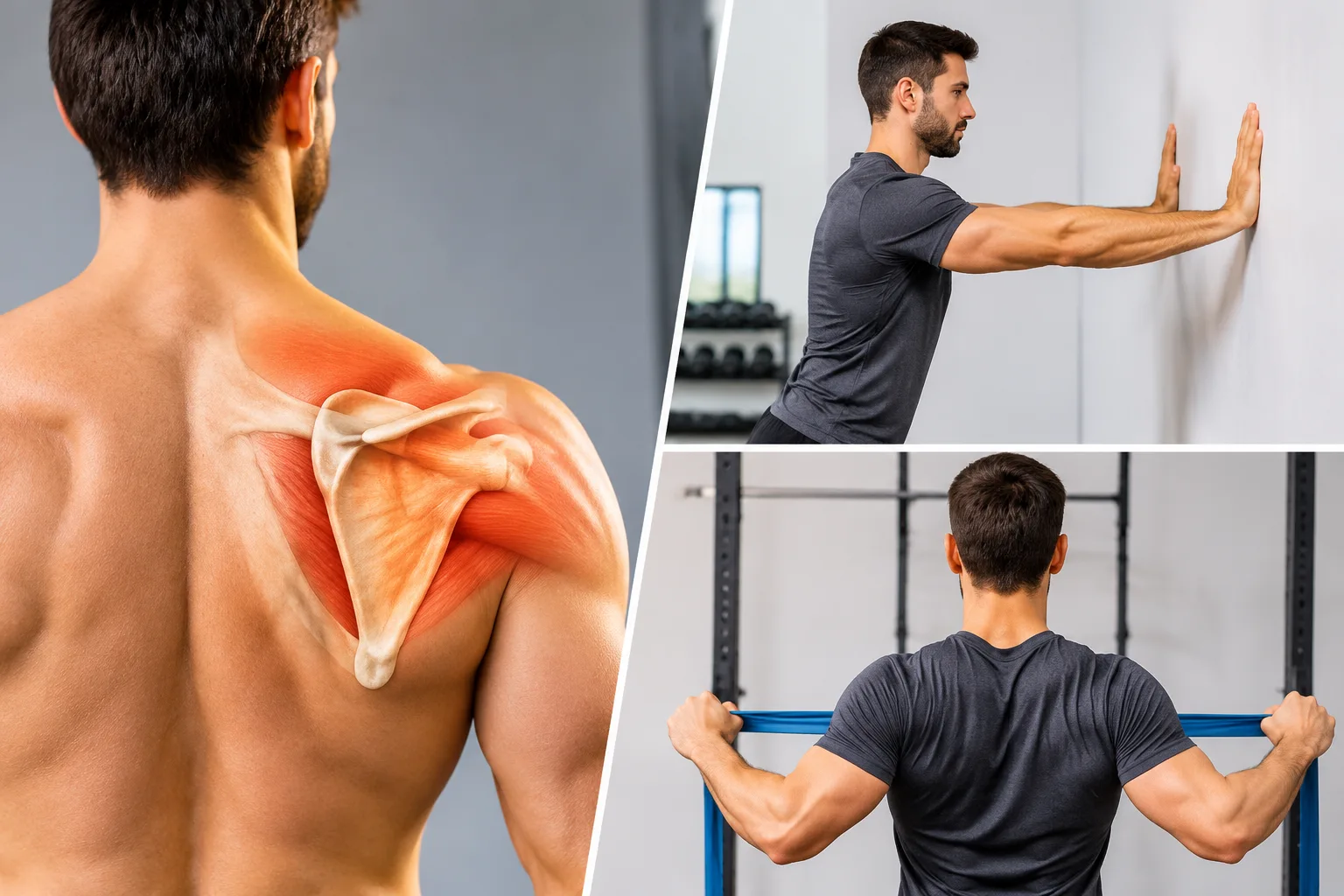
Scapular control exercises can help athletes improve shoulder movement, coordination, and technique during upper body training. The scapula, commonly known as the shoulder blade, plays an important role in connecting the arm to the trunk and supporting movements such as pressing, pulling, and lifting overhead.
Listen
However, effective control does not mean keeping the shoulder blades permanently pulled back or down. It means coordinating their movement with the arms and torso. In this guide, 5dfitness explores the muscles involved, practical exercises, training strategies, and common mistakes that can affect scapular control.
What Is Scapular Control and How Does It Work?
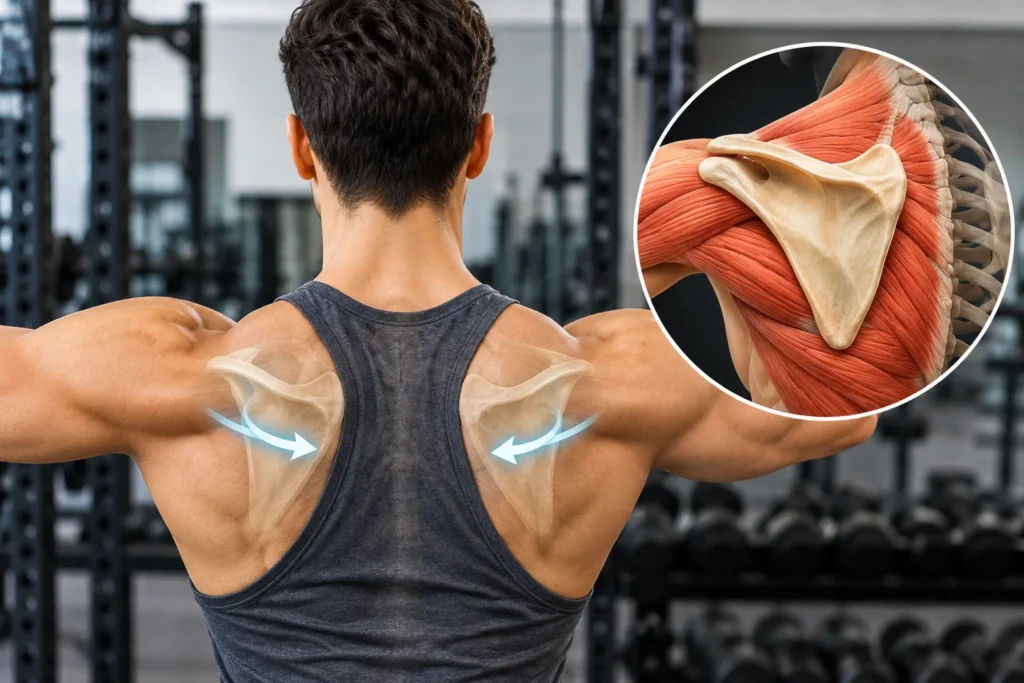
Scapular control refers to the ability to coordinate the position and movement of the shoulder blades during different activities. The scapula moves across the rib cage through several actions, including upward rotation, downward rotation, elevation, depression, protraction, and retraction. These movements help position the shoulder joint and support efficient arm movement. Good control requires coordination between several muscles rather than relying on one muscle or holding the shoulder blades in a fixed position. Understanding this movement is essential before selecting exercises or changing upper body training technique.
Which Muscles Are Responsible for Scapular Control?
Several muscles work together to control the scapula:
- Serratus anterior: Helps keep the scapula against the rib cage and contributes to protraction, upward rotation, and posterior tilt.
- Middle trapezius: Supports scapular retraction.
- Lower trapezius: Contributes to upward rotation, posterior tilt, and scapular positioning.
- Upper trapezius: Works with the serratus anterior and lower trapezius during upward rotation.
- Rhomboids: Assist with retraction and downward rotation.
These muscles must coordinate rather than work independently. For example, overhead movements require the scapula to rotate upward as the arm rises. Training only retraction strength will not develop every movement pattern required for effective shoulder mechanics.
What Is the Difference Between Scapular Stability and Mobility?
Scapular stability describes the ability to control the shoulder blade under different loads, while mobility refers to its capacity to move through the necessary range. Scapular control combines both qualities. A shoulder blade that moves freely but cannot be controlled under resistance may struggle during demanding exercises. Conversely, a scapula held rigidly in one position cannot adapt naturally to changing arm positions. Effective upper body training develops controlled movement, not excessive stiffness or unrestricted motion.
Why Is Scapular Control Important During Upper Body Training?
The shoulder complex depends on coordinated movement between the scapula, upper arm, and surrounding muscles. During pressing, pulling, and overhead exercises, the scapula provides a moving foundation for the shoulder joint. Poor coordination may lead to compensatory movement, reduced exercise quality, or difficulty managing training loads. Scapular control is therefore relevant to both beginners learning movement technique and experienced athletes performing demanding upper body exercises. It should be considered part of overall movement quality rather than a separate skill used only during rehabilitation.
How Does Scapular Control Affect Pressing and Pulling Exercises?
During pressing movements, the scapula must adapt to the direction and range of the exercise. In a push-up, for example, it should be able to move into protraction during the final phase rather than remaining squeezed together throughout the repetition. During rows, controlled retraction helps coordinate the shoulder blade with the upper arm.
Overhead pressing requires another pattern: upward rotation and appropriate posterior tilt as the arms rise. Forcing the shoulder blades down and back throughout this movement can interfere with their natural mechanics. The objective is to maintain control while allowing the scapula to move according to the task.
Can Poor Scapular Control Affect Exercise Technique?
Limited coordination can contribute to compensatory patterns, such as excessive shoulder elevation, uncontrolled scapular movement, or reduced movement quality during arm elevation. However, scapular movement differences do not automatically indicate an injury. The 2013 clinical consensus on scapular dyskinesis emphasizes that multiple factors may contribute, including muscle function, flexibility, joint conditions, and kinetic-chain mechanics.
As the consensus statement in the British Journal of Sports Medicine explains, exercises should emphasize lower trapezius and serratus anterior activation while addressing other contributing factors. This supports a balanced approach rather than focusing on a single muscle.
What Are the Best Scapular Control Exercises?
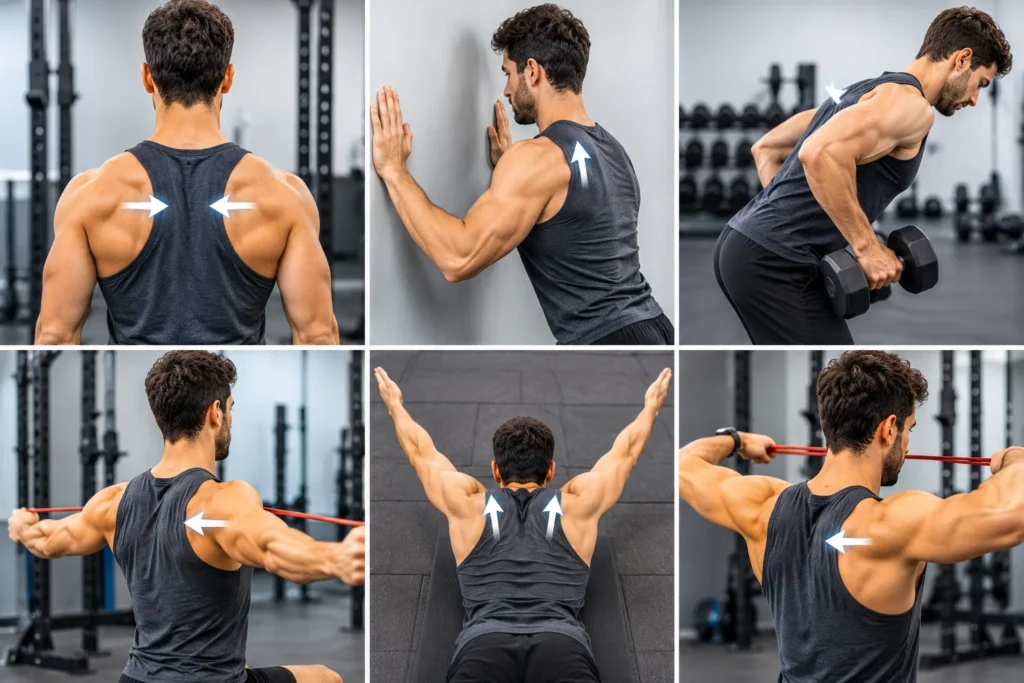
The most useful scapular control exercises train different movement patterns and levels of resistance. Beginners can start with low-load movements that make shoulder-blade motion easier to understand. As coordination improves, exercises can progress toward body-weight support and resistance training. No single exercise develops every aspect of scapular function, so a combination of controlled protraction, retraction, upward rotation, and stabilization is more practical. The following exercises can be adapted to different fitness levels, provided they are performed with comfortable, controlled movement.
How Do Scapular Push-Ups Improve Scapular Control?
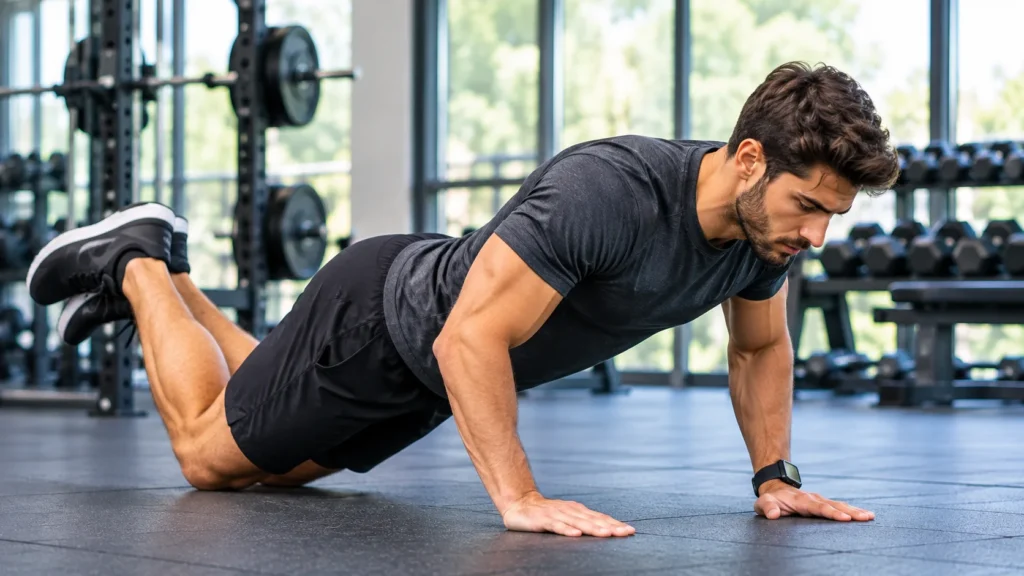
<PRIVATE_PERSON>Scapular push-ups</PRIVATE_PERSON> train controlled protraction and retraction while the arms remain relatively straight.
- Start in a high plank position, with hands under the shoulders.
- Keep the elbows extended and allow the chest to move slightly toward the floor as the shoulder blades come closer together.
- Push the floor away, spreading the shoulder blades without rounding the entire lower back.
- Repeat slowly while keeping the trunk stable.
Beginners can perform this movement against a wall or on an elevated surface to reduce resistance. The main goal is controlled movement around the rib cage, not maximizing the range or speed.
How Can Wall Slides Improve Scapular Movement?
Wall slides help develop coordination during arm elevation. Stand facing or leaning against a wall, with forearms supported and elbows bent. Slowly slide the arms upward while maintaining comfortable contact with the wall. Allow the shoulder blades to rotate naturally as the arms rise. Avoid forcing the shoulders downward or arching the lower back to gain extra range.
This exercise can help athletes practice upward rotation and coordinated shoulder movement. Start with a manageable range and increase it gradually without pain or excessive compensation.
Why Are Push-Up Plus and Band Pull-Aparts Useful?
The push-up plus adds an active protraction phase to a standard push-up position. It challenges the serratus anterior and teaches the athlete to move the shoulder blades while maintaining trunk control. It can begin against a wall before progressing to a bench or floor.
Band pull-aparts train controlled horizontal movement and involve the muscles around the shoulder blades, including the middle trapezius and posterior shoulder muscles. Hold a resistance band at chest height, pull it apart without shrugging, and return slowly. Use light resistance first; excessive tension can encourage compensation instead of better control.
How Can You Improve Scapular Control During Upper Body Workouts?
Scapular training works best when it progresses from simple movement awareness to controlled resistance and finally to sport- or exercise-specific tasks. Rather than adding many corrective drills to every session, select a small number that address your movement needs. Include them in warm-ups or accessory training, then apply the same movement awareness during pressing, pulling, and overhead exercises. Training should remain gradual: technique and consistency matter more than increasing resistance quickly. Athletes with existing shoulder symptoms should seek individualized guidance before changing their training programme.
How Should You Incorporate Scapular Exercises Into Your Warm-Up?
A short warm-up can include two or three exercises, such as wall slides, scapular push-ups, and light band pull-aparts. Perform one or two controlled sets of approximately 8–12 repetitions, adjusting the range and resistance to your ability. These numbers are practical starting points, not a universal prescription.
The aim is to prepare the shoulder complex for the session and improve movement awareness. Avoid turning the warm-up into a fatiguing workout. If a drill causes pain, unusual weakness, or increasing discomfort, stop and reassess the exercise.
How Can You Maintain Scapular Control During Pressing and Pulling?
Use a load that allows you to control the full repetition. During rows, coordinate shoulder-blade movement with the upper arm instead of jerking the shoulders backward. During push-ups, allow natural protraction at the top. During overhead presses, let the scapulae rotate upward as the arms rise.
A useful coaching cue is to keep the neck relaxed and avoid unnecessary shrugging, while recognizing that some elevation is a normal part of overhead movement. Video feedback or a coach’s observation can help identify repeated compensations that are difficult to notice independently.
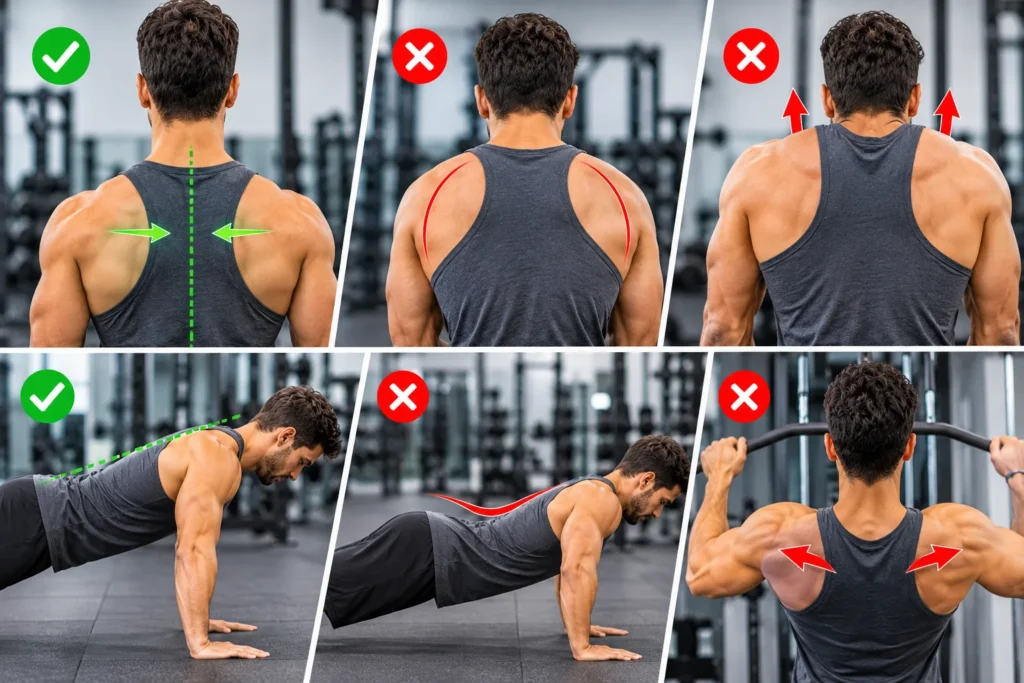
What Common Mistakes Should You Avoid During Scapular Control Training?
Improving scapular control requires more than adding exercises to a programme. Incorrect cues, excessive resistance, and poor progression can reinforce the very movement patterns athletes want to improve. A common mistake is treating the shoulder blades as structures that must always remain retracted and depressed. In reality, their position changes throughout upper body movements. Training should develop control across different directions and positions, with resistance appropriate to the athlete’s current ability. Understanding these mistakes makes exercise selection more effective and helps avoid unnecessary discomfort.
Why Should You Avoid Forcing Your Shoulder Blades Down and Back?
The instruction to keep the shoulders down and back can be useful in certain exercises, but applying it to every movement is inappropriate. During overhead reaching, the scapula needs to rotate upward and move with the arm. Restricting this motion may interfere with normal shoulder mechanics.
Instead, focus on smooth, coordinated movement. Use exercise-specific cues: controlled retraction during rows, natural protraction during push-up plus, and upward rotation during overhead movements. The correct scapular position depends on the task.
How Can Excessive Weight Affect Scapular Movement?
When resistance is too heavy, athletes may compensate by shrugging, twisting the torso, shortening the range, or moving too quickly. These changes make it harder to practice the intended movement pattern. Reduce the load until you can complete repetitions with a steady tempo and consistent technique.
Progress resistance only when you can maintain control through the required range. If discomfort, visible asymmetry, or weakness persists, consult a qualified healthcare professional rather than trying to correct the problem by increasing exercise volume.
A Simple Scapular Control Routine
Use this routine as a general movement-practice example, not as an individualized rehabilitation prescription.
| Exercise | Sets | Repetitions |
|---|---|---|
| Wall Slides | 2 | 10 |
| Scapular Push-Ups | 2 | 8–12 |
| Band Pull-Aparts | 2 | 12 |
| Push-Up Plus (modified if needed) | 2 | 8–10 |
How to apply it:
- Begin with the easiest variation you can control.
- Move slowly and avoid unnecessary neck or trunk compensation.
- Rest between sets as needed to maintain technique.
- Progress the range or resistance gradually.
- Stop if an exercise causes pain or unusual symptoms.
Conclusion
Improving scapular control means developing the ability to coordinate shoulder-blade movement under different conditions, not keeping the shoulders locked in one position. Exercises such as wall slides, scapular push-ups, push-up plus, and band pull-aparts can help athletes practice this control. Combine them with sound pressing and pulling technique, gradual resistance progression, and appropriate recovery. For more evidence-informed training guidance and practical fitness education, explore the resources available at 5dfitness and make movement quality a consistent part of your upper body programme.
Frequently Asked Questions
Two or three sessions per week can be a practical starting point. Adjust frequency according to training volume, recovery, and individual needs.
Yes. Wall slides and wall-based scapular push-ups offer accessible starting variations with relatively low resistance.
They primarily target scapular movement and stabilization. They may complement, but do not replace, exercises specifically designed for rotator cuff strength.
No. The scapula must move naturally. Retraction is useful in some movements, while protraction and upward rotation are necessary in others.
They may form part of a suitable rehabilitation programme, but shoulder pain can have different causes. Persistent pain, weakness, or restricted movement should be assessed by a healthcare professional.