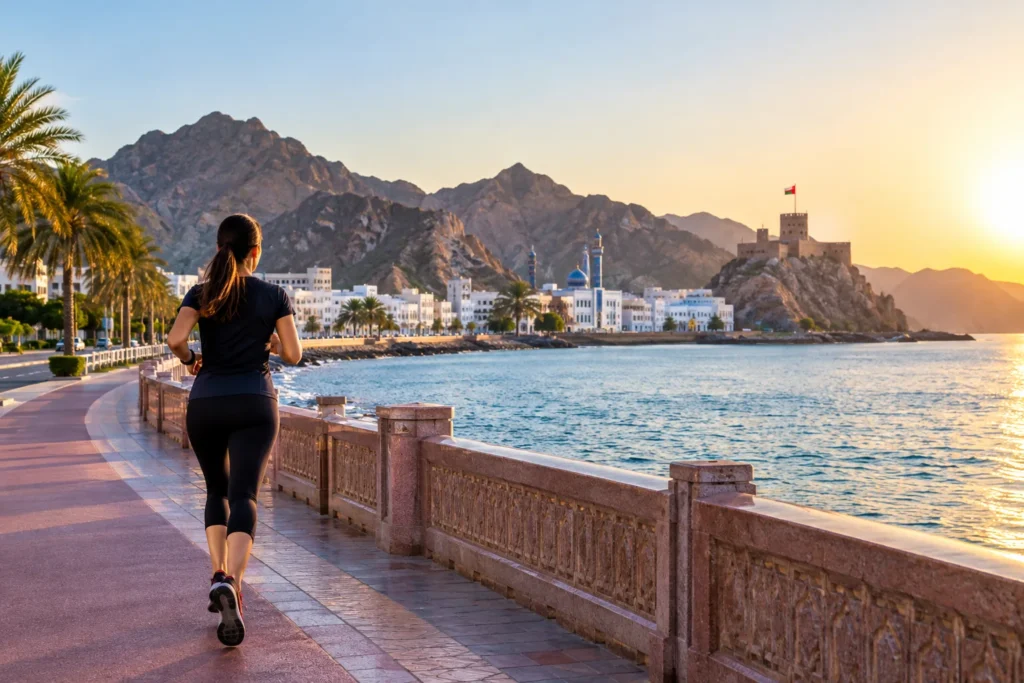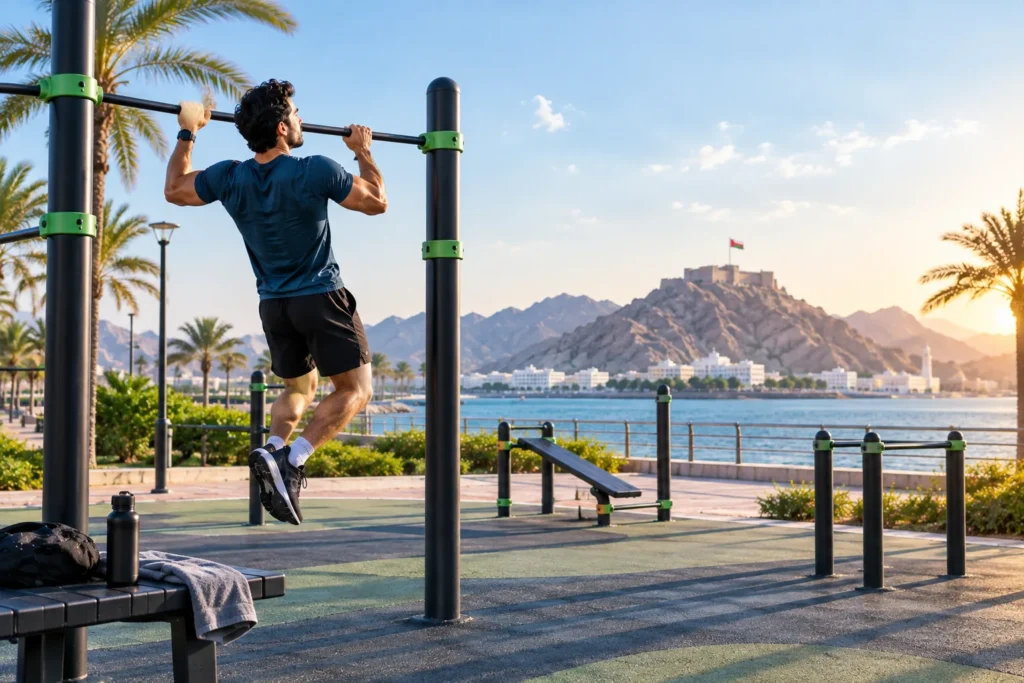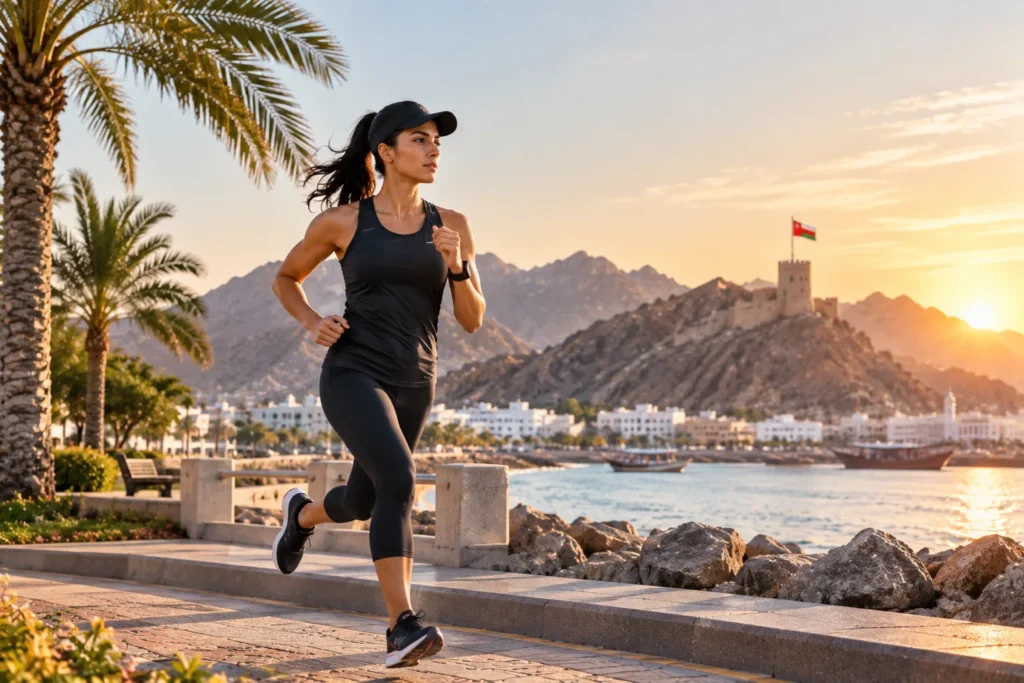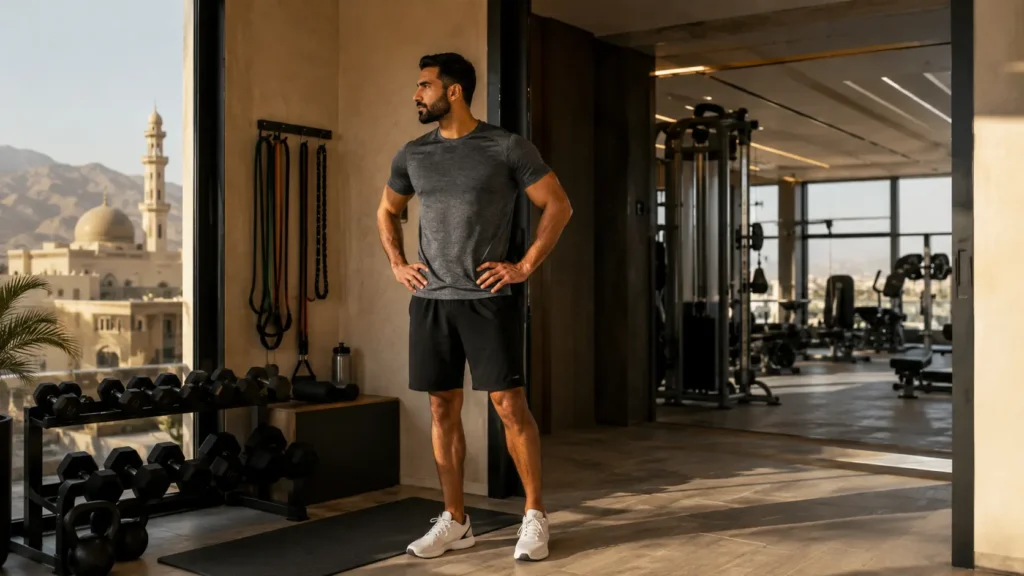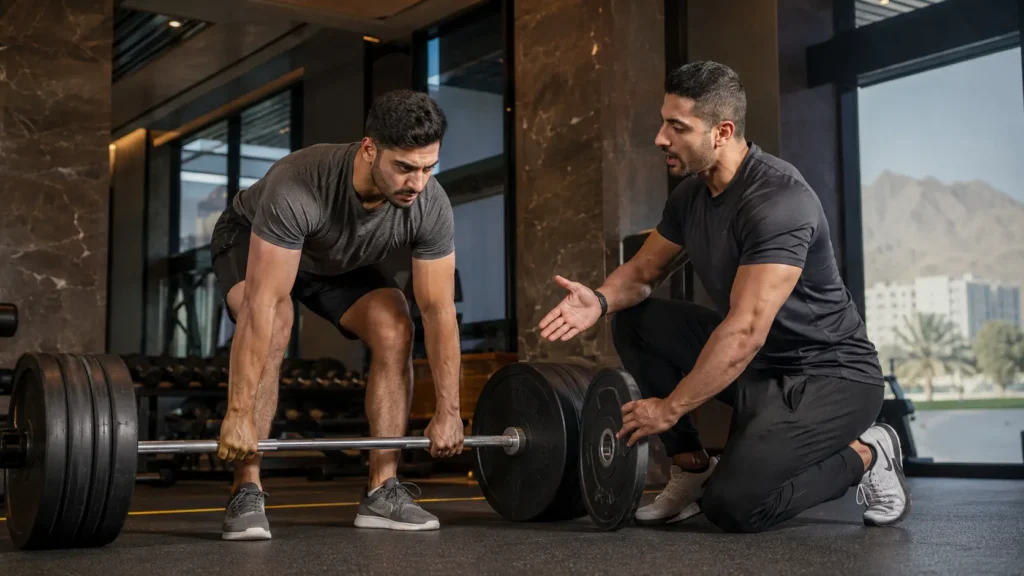
Exercising in Muscat heat requires more planning than a typical workout in mild weather. High temperatures, humidity, direct sun exposure, and prolonged outdoor activity can increase cardiovascular and thermoregulatory strain, making hydration, workout timing, intensity, and recovery especially important. For athletes, runners, bodybuilders, and fitness enthusiasts, the goal is not necessarily to stop training during hot periods, but to adapt training to the environment. This guide from 5dfitness explains how to exercise more safely in Muscat’s heat, when to train outdoors, how to manage hydration, how to adjust workout intensity, and which symptoms mean you should stop exercising.
Listen
How Does Muscat’s Heat Affect Exercise and Workout Performance?
Exercising in hot conditions places additional demands on the body’s ability to regulate temperature. During exercise, muscles generate heat while the body relies heavily on sweating and blood flow to the skin to release it. High environmental temperatures can make this process more difficult, while humidity can reduce the effectiveness of sweat evaporation. As a result, the same workout may feel harder in hot weather than it does under cooler conditions. Dehydration can add further physiological strain and may reduce exercise capacity. Understanding these effects helps athletes make practical adjustments instead of simply trying to maintain their normal pace or training load regardless of environmental conditions.
Why Does Exercise Feel Harder in Muscat’s Heat?
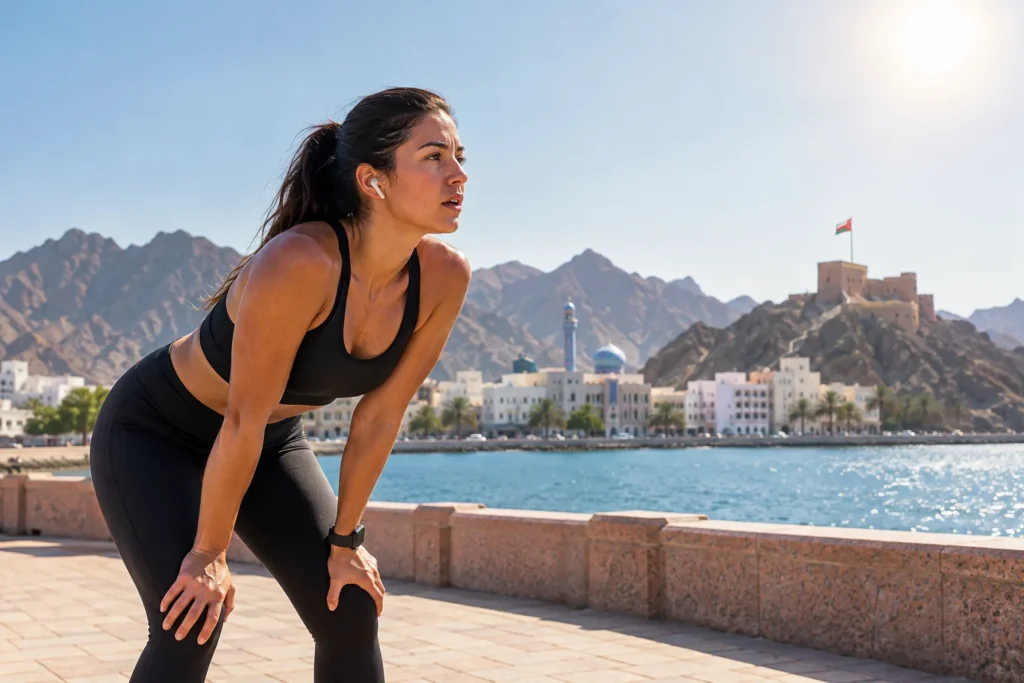
Exercise can feel harder in hot weather because the body must simultaneously support physical performance and regulate its internal temperature. As environmental heat rises, more blood is directed toward the skin to help dissipate heat. At the same time, working muscles require blood flow to support exercise. Sweating also causes fluid loss, which can further increase cardiovascular strain if fluids are not adequately replaced.
This means a running pace, cycling speed, or workout intensity that feels manageable in cooler weather may produce greater perceived effort in the heat. Rather than judging a session only by pace or weight lifted, athletes should pay attention to perceived exertion, unusual fatigue, dizziness, weakness, and other warning signs.
How Does Humidity Affect Outdoor Exercise?
Humidity matters because sweating only cools the body effectively when sweat can evaporate from the skin. When the surrounding air is already humid, evaporation becomes less efficient. This can make it harder for the body to release heat, particularly during prolonged outdoor exercise.
For people exercising in Muscat, humidity should therefore be considered alongside temperature. A workout that appears manageable based on temperature alone may feel considerably more stressful when humidity is high. Athletes should consider environmental conditions before starting outdoor training and be prepared to shorten, slow, or move a session indoors when conditions become unsuitable.
What Is the Best Time to Exercise in Muscat’s Hot Weather?
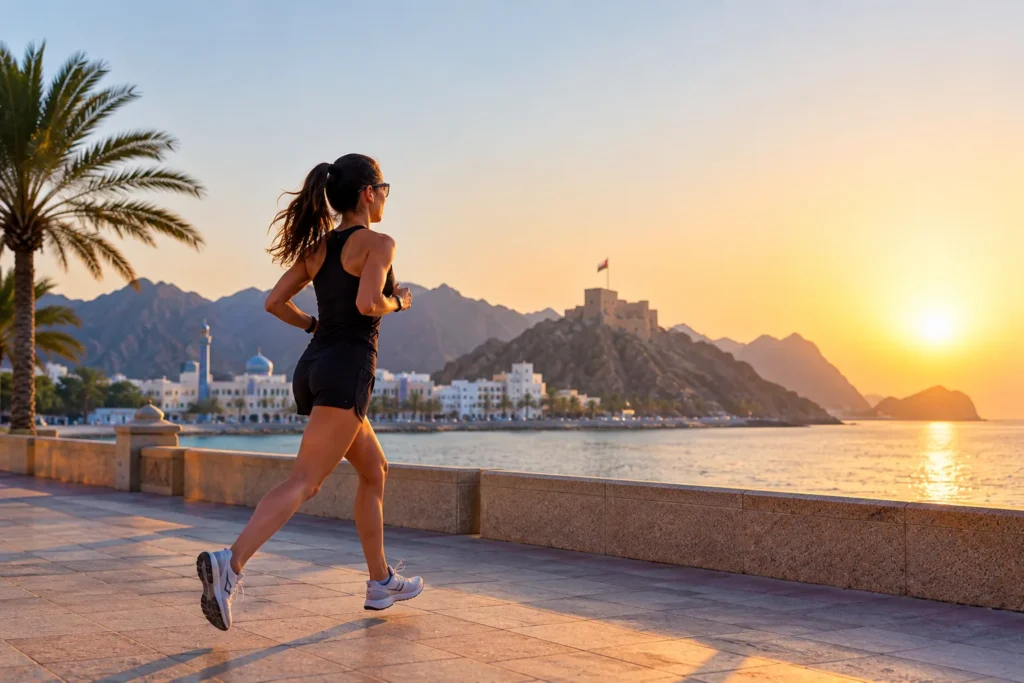
Workout timing is one of the simplest ways to reduce heat exposure. During very hot periods, outdoor exercise is generally more manageable during cooler parts of the day rather than around the hottest part of the afternoon. Early morning and later evening sessions can reduce direct solar exposure, although actual conditions should still be checked before training. The safest time is not necessarily identical every day because temperature, humidity, wind, cloud cover, and sun exposure can change. Athletes should therefore use environmental conditions as part of their training decision rather than relying only on the clock.
Is Early Morning the Best Time for Outdoor Exercise in Muscat?
Early morning can be a practical option because temperatures and solar radiation are often lower than during the middle of the day. It can be particularly useful for runners, cyclists, and people performing outdoor conditioning sessions.
However, “early morning” does not automatically mean risk-free. Humidity may still be high, and athletes should consider how they feel after waking, their hydration status, and the expected environmental conditions. A demanding interval workout performed in unsuitable conditions may still create substantial heat stress even when scheduled early.
For longer or harder sessions, athletes should also plan access to water and avoid routes with prolonged direct sun exposure. When conditions are already excessively hot, moving the workout indoors may be a better option than simply starting slightly earlier.
Is Evening Exercise Safer During Hot Weather?
Evening exercise can reduce exposure to the strongest daytime solar radiation and may provide more comfortable conditions than afternoon training. It can work well for strength training, running, walking, cycling, and other activities when outdoor temperatures have fallen sufficiently.
However, athletes should not assume that sunset immediately means cool conditions. Surfaces such as roads and buildings can retain heat, and humidity may remain elevated. The actual temperature and environmental conditions should therefore guide the decision.
If an evening workout still feels unusually difficult, reducing intensity or moving indoors can be more appropriate than forcing the planned session.
Should You Avoid Outdoor Workouts During the Hottest Hours?
For most people, avoiding unnecessary outdoor exercise during the hottest part of the day is a sensible heat-management strategy. The risk becomes more relevant when the workout is intense, prolonged, performed in direct sunlight, or combined with inadequate hydration.
Instead of treating the workout schedule as fixed, athletes can move demanding sessions to cooler periods and use the hottest part of the day for indoor training, mobility work, recovery, or rest. This approach allows training consistency without unnecessarily increasing heat exposure.
How Can You Stay Hydrated While Exercising in Muscat’s Heat?
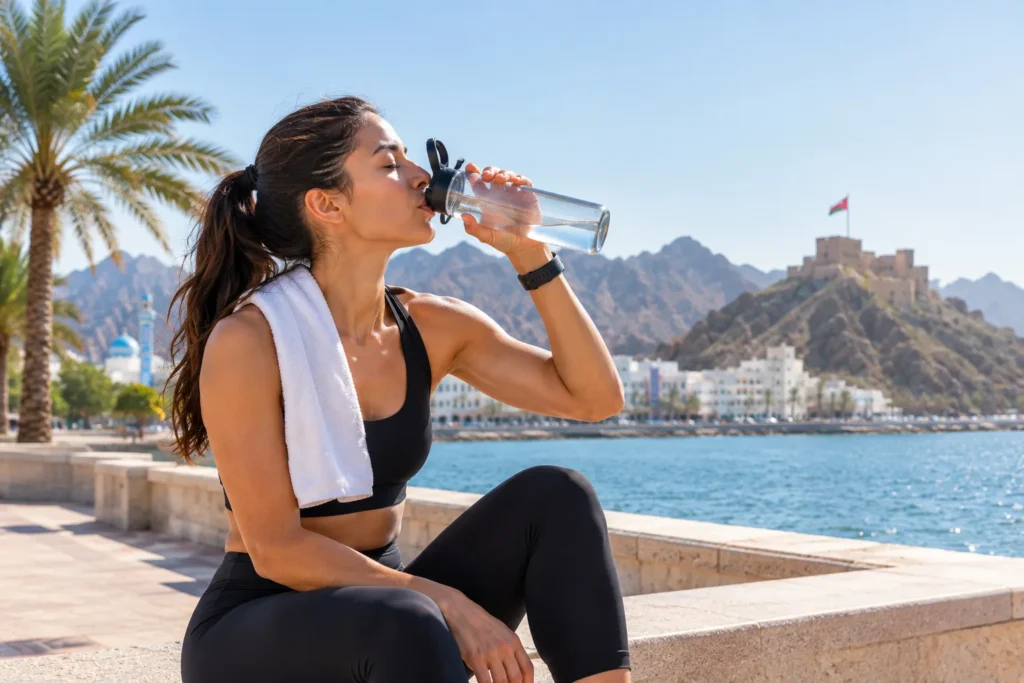
Hydration becomes particularly important when exercising in hot conditions because sweating can lead to substantial fluid losses. However, hydration should not mean drinking an arbitrary amount of water. Fluid needs vary according to body size, exercise duration and intensity, environmental conditions, sweat rate, clothing, and individual physiology. Drinking excessively can also be harmful. A practical approach is to begin exercise adequately hydrated, have fluids readily available, drink according to individual needs, and replace significant losses after training. For longer or highly sweaty sessions, electrolytes may also have a role.
How Should You Hydrate Before and During Exercise?
Start a workout in a reasonably hydrated state rather than waiting until you become very thirsty. During exercise, keep fluids accessible and drink regularly according to your thirst, sweat losses, workout duration, and environmental conditions.
For athletes who train frequently in the heat, monitoring body weight before and after comparable sessions can provide useful information about individual sweat losses. Large changes in body weight during exercise can indicate substantial fluid loss.
There is no universal amount of water that every athlete should drink per hour. Individual sweat rates differ considerably, so hydration strategies should be personalized rather than copied from another athlete.
The objective is also not to finish a workout heavier than when you started because of excessive fluid intake. Overhydration can create its own health risks.
When Do Electrolytes Matter During Hot-Weather Workouts?
Electrolytes, particularly sodium, become more relevant when exercise is prolonged, sweating is substantial, or sessions are repeated in hot conditions. Sweat contains sodium and other electrolytes, although the concentration varies considerably between individuals.
For a short, moderate workout, ordinary meals and water may often be sufficient. Longer or highly sweaty sessions can create greater electrolyte replacement needs. Athletes who consistently train for long periods in hot conditions may benefit from developing an individualized hydration strategy based on sweat rate, body-mass changes, diet, and training conditions.
Electrolyte products are not automatically necessary for every workout, and more is not always better. The strategy should match the duration and demands of the session.
How Should You Adjust Your Workout in Hot Weather?
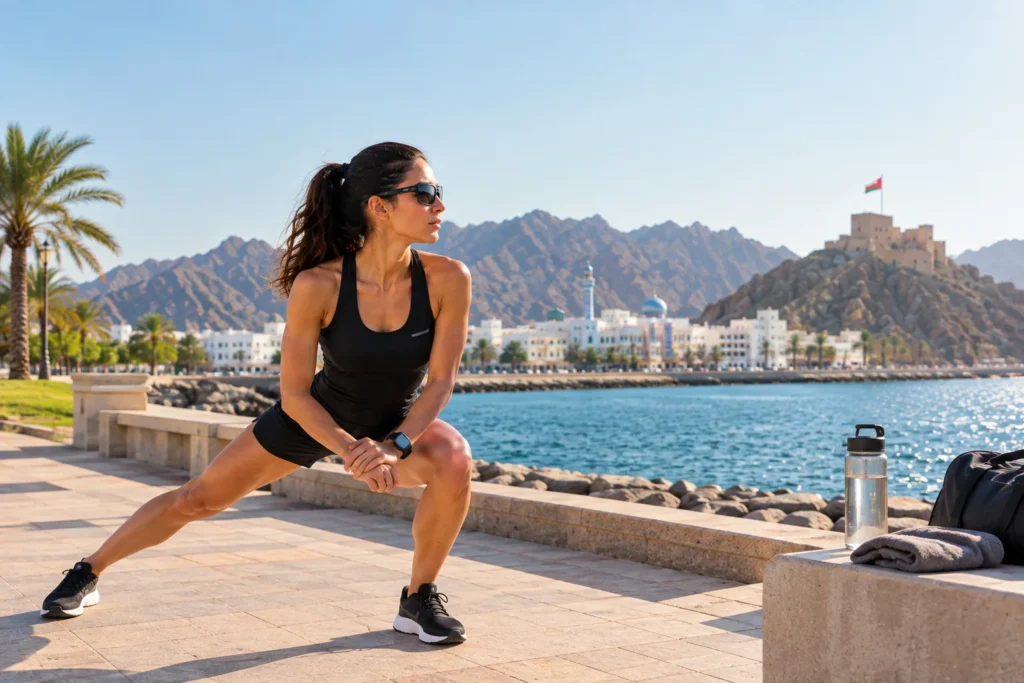
Training in the heat requires flexibility. The objective is to maintain useful training stimulus without allowing environmental stress to overwhelm the body’s ability to regulate temperature. Adjustments may include reducing pace, lowering resistance, shortening intervals, increasing rest periods, moving indoors, or reducing the overall duration of a session. Athletes who are new to hot-weather training should be particularly cautious because heat adaptation takes time. A gradual approach can allow the body to adapt while reducing unnecessary risk.
Should You Reduce Exercise Intensity in Muscat’s Heat?
Intensity may need to be reduced when environmental heat is high, especially during long or demanding sessions. For example, a runner may use perceived effort rather than trying to maintain a normal pace, while a strength athlete may increase rest periods or reduce training volume.
The correct adjustment depends on the individual and the environmental conditions. A highly trained athlete who has adapted to the heat may tolerate conditions differently from someone who has recently arrived in Muscat or has not trained outdoors for several weeks.
A useful principle is to treat environmental stress as another training variable. If the heat increases the difficulty of a session, the planned workload may need to decrease to maintain an appropriate overall training stimulus.
What Should You Wear for Outdoor Exercise in Hot Weather?
Lightweight, loose-fitting, breathable clothing can help improve comfort during outdoor exercise. Clothing that allows air movement and sweat evaporation is generally more practical than heavy or restrictive materials.
Sun protection is also important. Depending on the activity, this may include sunscreen, sunglasses, a hat, and choosing shaded routes where possible. Sunscreen should be applied and reapplied according to the product instructions.
The best clothing also depends on the sport. A runner, cyclist, and outdoor strength athlete may have different practical requirements. The common objective is to reduce unnecessary heat retention while protecting the skin from excessive sun exposure.
How Can You Gradually Adapt to Exercising in the Heat?
Heat acclimatization is a physiological adaptation that develops through repeated exposure to exercise in hot conditions. Research-based consensus recommendations commonly describe a gradual acclimatization period of approximately one to two weeks for athletes.
The key is progression rather than immediately performing normal high-intensity training in extreme conditions. Training duration and intensity can be increased gradually as the body adapts.
Athletes returning to Muscat after spending time in a cooler climate should be especially careful. Previous fitness does not necessarily mean immediate heat adaptation. The first sessions should be conservative, with attention to hydration, perceived exertion, recovery, and warning signs.
What Are the Warning Signs That You Should Stop Exercising in the Heat?
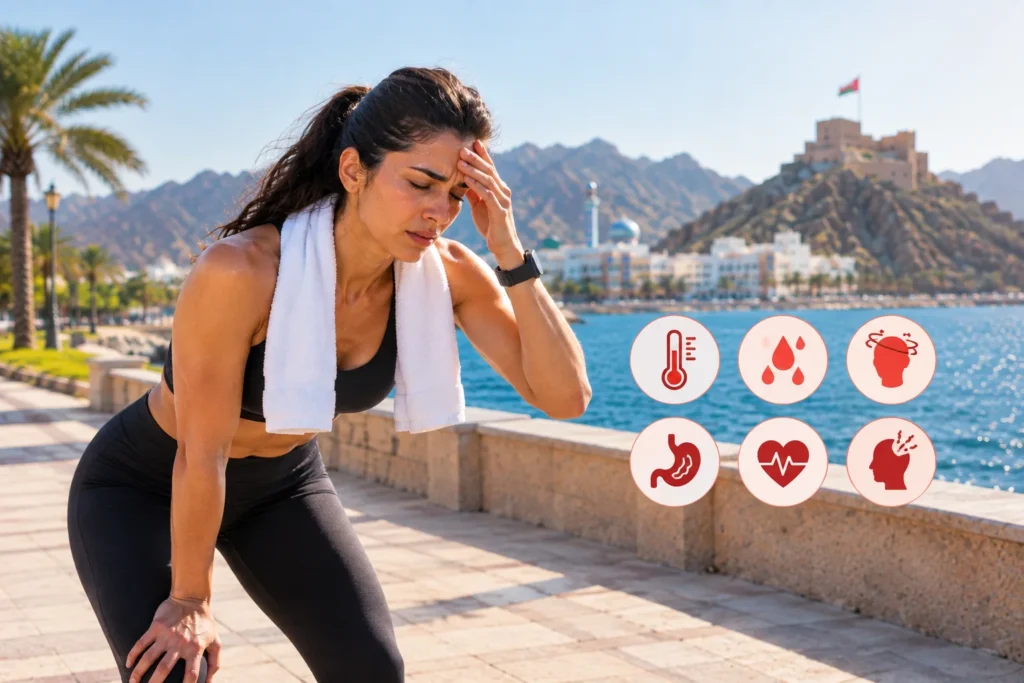
Knowing when to stop is as important as knowing how to start. Heat-related illness can progress quickly, particularly during intense or prolonged exercise. Symptoms such as unusual weakness, dizziness, headache, nausea, heavy sweating, muscle cramps, confusion, or fainting should not be treated as normal signs of a productive workout. If symptoms develop, stop exercising and move to a cooler environment. Severe symptoms, especially confusion, altered mental status, collapse, or suspected heatstroke, require urgent medical attention and rapid cooling.
What Are the Early Signs of Heat Exhaustion During Exercise?
Possible warning signs include unusual fatigue, weakness, dizziness, headache, nausea, excessive sweating, muscle cramps, and reduced ability to continue exercising normally.
These symptoms should not be ignored simply because the athlete expects to “push through” discomfort. Continuing intense exercise while experiencing signs of heat illness can increase the risk of more serious complications.
The appropriate response is to stop the activity, move to a cooler or shaded location, begin cooling, and replace fluids as appropriate. If symptoms are severe, worsening, or do not improve, medical evaluation should be sought.
What Symptoms Could Indicate a Heat-Related Emergency?
Confusion, altered mental status, loss of consciousness, collapse, or severe neurological symptoms can indicate a serious heat-related emergency. Exertional heatstroke is a medical emergency and requires immediate action rather than waiting for symptoms to disappear.
The CDC advises athletes who feel faint or weak to stop activity and get to a cool place. Severe or concerning symptoms require urgent medical care.
Athletes should also avoid exercising alone during very hot conditions when possible. Training with a partner provides an additional layer of safety because another person may notice changes in behavior or coordination before the affected athlete recognizes them.
Exercising in Muscat Heat: Safety Adjustments at a Glance
| Training Factor | Hot-Weather Adjustment |
|---|---|
| Workout timing | Prefer cooler parts of the day |
| Intensity | Reduce when heat increases perceived effort |
| Duration | Shorten sessions when necessary |
| Hydration | Start hydrated and replace individual fluid losses |
| Electrolytes | Consider for prolonged or high-sweat sessions |
| Clothing | Lightweight and breathable |
| Sun exposure | Use shade and appropriate sun protection |
| Recovery | Allow additional cooling and recovery |
| Warning signs | Stop immediately if concerning symptoms appear |
| Alternative | Move demanding sessions indoors when conditions are unsuitable |
How to Exercise Safely in Muscat’s Heat?
- Step 1:
Check the expected temperature, humidity, and outdoor conditions before training.
- Step 2:
Choose a cooler time of day whenever possible.
- Step 3:
Start the session adequately hydrated.
- Step 4:
Wear lightweight, breathable clothing and protect yourself from direct sun.
- Step 5:
Begin at a manageable intensity rather than immediately pushing your normal pace.
- Step 6:
Keep water available throughout the workout.
- Step 7:
Extend rest periods or reduce workload when heat significantly increases perceived effort.
- Step 8:
Stop immediately if you develop dizziness, weakness, nausea, confusion, or other concerning symptoms.
- Step 9:
Move to a cool environment and seek medical attention when symptoms are severe or persistent.
- Step 10:
Gradually build heat exposure instead of suddenly performing your full training load in very hot conditions.
Expert Perspectives and Scientific Evidence
The CDC’s guidance for athletes emphasizes several practical strategies for hot-weather exercise: schedule activity earlier or later in the day, pace activity gradually, drink more water than usual, wear lightweight clothing, and stop activity if you feel faint or weak.
A consensus statement on training and competing in the heat identifies heat acclimatization as one of the most important interventions for reducing physiological strain. It recommends repeated exercise-heat exposure over approximately one to two weeks while beginning exercise adequately hydrated and minimizing dehydration.
These recommendations reinforce an important principle: safe hot-weather training is based on adaptation and adjustment, not simply tolerance.
Conclusion
Exercising in Muscat heat requires a more strategic approach than simply following a normal workout schedule. Choosing cooler training times, managing hydration, adjusting intensity, wearing appropriate clothing, allowing adequate recovery, and recognizing heat-illness symptoms can make outdoor training more manageable and safer.
For athletes and fitness enthusiasts, the goal should be consistency without unnecessary exposure to excessive environmental stress. If conditions become unsuitable, moving a workout indoors is not a failure of training—it is an intelligent adjustment to the environment.
5dfitness is committed to providing practical, evidence-informed fitness guidance for people who want to train effectively in real-world conditions.
Ready to train smarter in Muscat’s heat? Adjust your workout timing, hydration, and intensity before your next outdoor session—and make heat safety part of your training plan.
FAQ
Early morning or later evening can be more practical than exercising during the hottest part of the day. Always consider the actual temperature, humidity, and sun exposure rather than relying only on the clock.
Outdoor exercise can be possible when conditions are appropriate, but very high heat and humidity can substantially increase physiological strain. On particularly hot days, consider reducing the workload or moving the workout indoors.
Start adequately hydrated, keep fluids accessible, and drink according to your individual needs, sweat losses, and workout duration. Longer or very sweaty sessions may require attention to electrolytes as well.
If heat significantly increases perceived effort or causes unusual fatigue, reducing intensity, increasing rest, or shortening the session is sensible. Maintaining the exact same workload is not always appropriate in a different environment.
Choose lightweight, breathable, loose-fitting clothing when appropriate for your activity. Use suitable sun protection and seek shade whenever possible.
Dizziness, weakness, headache, nausea, unusual fatigue, heavy sweating, muscle cramps, and especially confusion or fainting are warning signs. Stop exercising and move to a cooler environment.
Heat acclimatization generally develops progressively. Sports-medicine consensus recommendations commonly describe repeated heat exposure over approximately one to two weeks, although the appropriate progression varies between individuals.