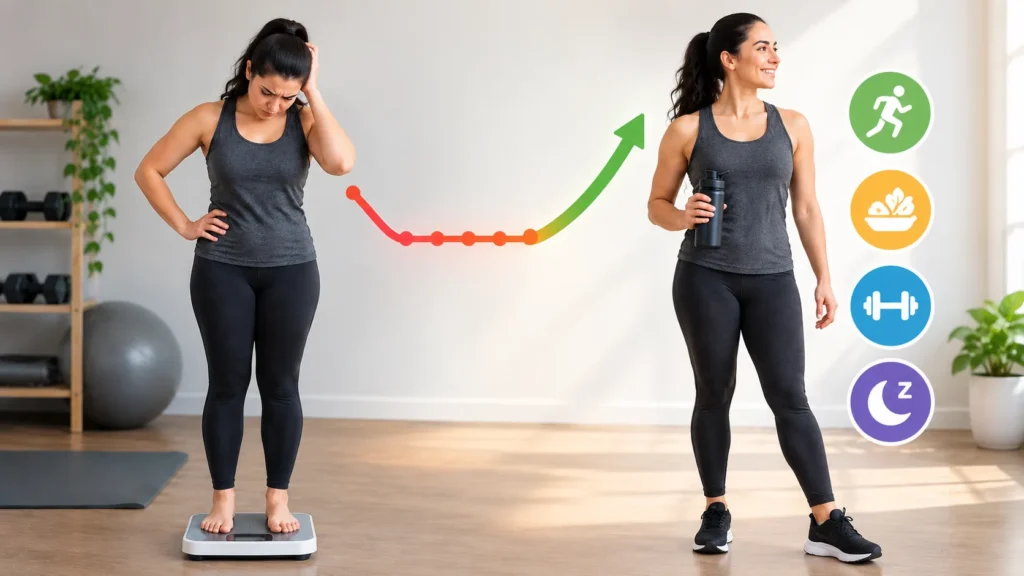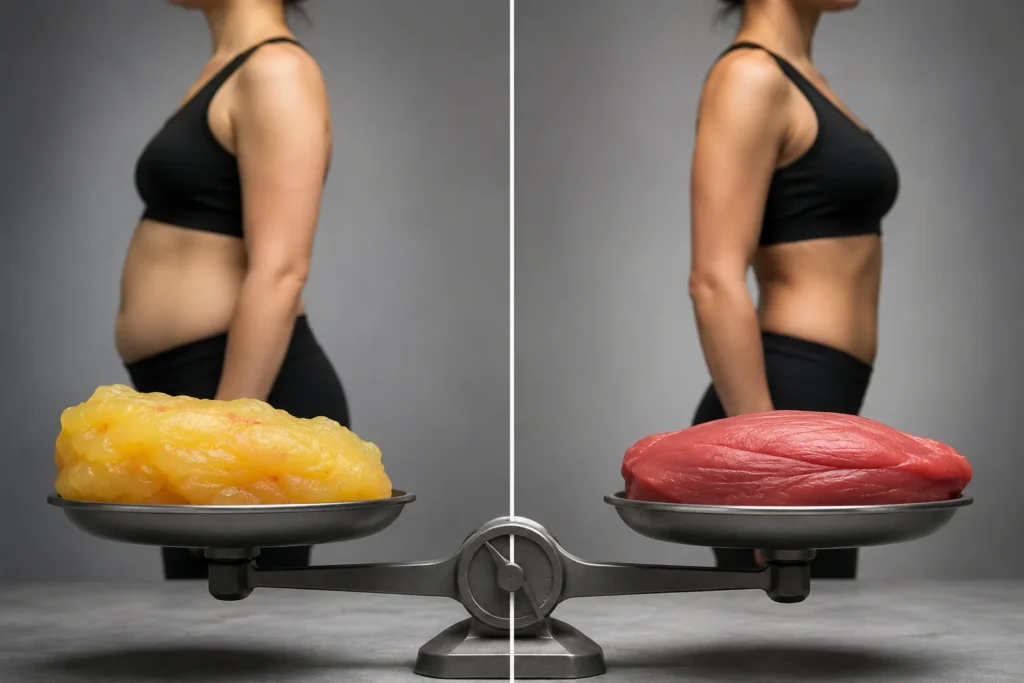
Cardio exercise is one of the most practical ways to increase energy expenditure, improve cardiovascular fitness, and support fat loss. But with so many options available—from running and cycling to HIIT and home-based workouts—choosing the best cardio exercises can be confusing. The most effective option is not necessarily the workout that burns the most calories in a single session.

Sustainability, exercise intensity, fitness level, recovery, and overall nutrition all influence results. For people aiming to reduce body fat, the best approach is usually a combination of regular aerobic activity, appropriate resistance training, and a calorie-controlled eating pattern.
Listen
What Are the Best Cardio Exercises for Fat Loss?
The best cardio exercises for fat loss are activities that increase energy expenditure while remaining appropriate for your fitness level and easy enough to perform consistently. Running, brisk walking, cycling, swimming, rowing, stair climbing, jump rope, and high-intensity interval training (HIIT) can all contribute to a fat-loss program.
The right choice depends on factors such as body weight, joint health, training experience, available equipment, and personal preference. A workout that burns a large number of calories but is too difficult to repeat regularly may be less useful than a moderate workout that you can perform several times each week.
Is Running One of the Best Cardio Exercises for Fat Loss?
Running is a vigorous form of aerobic exercise that can produce a relatively high energy expenditure in a limited amount of time. It can improve cardiovascular fitness while engaging multiple lower-body muscle groups.
However, running is not automatically the best choice for everyone. Its higher impact can make it challenging for beginners or people with certain joint problems. Starting with brisk walking, alternating walking and jogging, or gradually increasing running volume can make the activity more manageable.
Running can be particularly useful when combined with resistance training and a balanced nutritional strategy. The goal should be to create a sustainable training routine rather than simply maximizing calorie expenditure during individual workouts.
Can Walking Help With Fat Loss?
Yes. Brisk walking can be an effective form of moderate-intensity cardio, particularly for beginners, people with higher body weight, and individuals who prefer lower-impact exercise.
Walking is also easy to incorporate into daily life. Increasing daily steps, walking after meals, or scheduling dedicated brisk walks can increase total physical activity without creating excessive recovery demands.
Because consistency is important for weight management, walking can be a valuable part of a long-term fat-loss strategy even when it does not feel as intense as running or HIIT.
Is Cycling Effective for Burning Body Fat?
Cycling can provide a strong cardiovascular workout while placing relatively low impact on the joints. Both stationary cycling and outdoor cycling can be used to increase energy expenditure.
Intensity can easily be adjusted by changing resistance, speed, terrain, or intervals. This makes cycling suitable for beginners as well as more experienced athletes.
For fat loss, cycling becomes particularly useful when it is performed consistently and combined with appropriate nutrition. Longer moderate sessions can build aerobic capacity, while shorter interval sessions can increase exercise intensity.
Is Swimming a Good Cardio Workout for Weight Loss?
Swimming can provide a full-body cardiovascular workout while reducing impact on the joints. Because the water provides resistance in multiple directions, swimming requires coordinated movement from the upper and lower body.
Different swimming strokes and training speeds create different levels of intensity. Beginners can start with shorter intervals and gradually increase total swimming time.
Swimming may be especially useful for people who find running uncomfortable or who want to add variety to their cardio routine.

Is HIIT Better Than Traditional Cardio for Fat Loss?
HIIT, or high-intensity interval training, alternates short periods of vigorous exercise with recovery periods. Traditional moderate-intensity cardio generally involves maintaining a more consistent pace for a longer period.
Neither method is universally superior for fat loss. HIIT can provide a time-efficient workout, while moderate-intensity cardio may be easier to perform for longer durations and recover from more frequently. The better choice depends on individual fitness, training goals, preferences, and recovery capacity.
What Is the Difference Between HIIT and Moderate-Intensity Cardio?
HIIT typically involves repeated periods of high effort followed by lower-intensity recovery. Examples include sprint intervals, cycling intervals, or bodyweight circuits.
Moderate-intensity cardio includes activities such as brisk walking, steady cycling, or comfortable jogging performed at a sustainable pace.
The main difference is intensity and how the workload is distributed. HIIT can be useful when training time is limited, while moderate cardio can make it easier to accumulate more total exercise volume.
For many people, combining both approaches can provide a practical balance between intensity, volume, fitness development, and recovery.
Can HIIT Burn More Calories in Less Time?
HIIT can produce substantial energy expenditure during relatively short workouts because the exercise intensity is high. However, comparing workouts only by calories burned during the session can be misleading.
Total weekly activity, exercise consistency, nutrition, recovery, and individual characteristics all influence fat-loss results. A 20-minute HIIT workout may be challenging, but someone who enjoys brisk walking may be able to perform longer and more frequent sessions.
Therefore, HIIT should be viewed as one tool within a broader training program rather than a guaranteed shortcut to fat loss.
How Often Should You Do HIIT for Fat Loss?
The appropriate amount of HIIT depends on training experience and the intensity of the sessions. Because high-intensity exercise places greater demands on the body, it should be balanced with easier training and adequate recovery.
Beginners can start with a small amount of interval training and gradually increase workload as their fitness improves. More experienced athletes may use HIIT strategically alongside moderate cardio and resistance training.
The goal is not to perform every workout at maximum intensity. A sustainable weekly schedule is generally more useful than repeatedly training to exhaustion.

What Are the Best Cardio Exercises You Can Do at Home?
You do not need a treadmill, stationary bike, or gym membership to perform effective cardio. Many bodyweight movements can elevate heart rate and create a challenging aerobic workout at home.
Depending on fitness level and available space, options include jumping jacks, high knees, mountain climbers, burpees, jump rope, marching, step-ups, and bodyweight circuits.
Home cardio can be particularly useful for people with limited time or limited access to fitness facilities.
What Are the Best No-Equipment Cardio Exercises?
Some effective no-equipment options include:
- Jumping jacks
- High knees
- Mountain climbers
- Burpees
- Fast bodyweight squats
- Marching or jogging in place
- Skater steps
- Stair climbing
- Bodyweight cardio circuits
These movements can be combined into intervals. For example, a beginner might perform 30 seconds of activity followed by 30–60 seconds of recovery.
The intensity should be adjusted according to fitness level. Beginners do not need to perform advanced movements such as burpees at maximum speed to benefit from home cardio.
Can Home Cardio Help Reduce Belly Fat?
Home cardio can contribute to overall fat loss, but it cannot selectively remove fat from the abdomen.
The body loses fat according to overall energy balance and individual biological factors rather than choosing a specific area to burn fat from. Therefore, exercises such as high knees, mountain climbers, or jumping jacks can increase energy expenditure, but they should not be presented as exercises that specifically burn belly fat.
A combination of regular physical activity, resistance training, adequate nutrition, sleep, and sustainable calorie control is a more effective strategy for reducing overall body fat.
How Does Cardio Help With Weight Loss and Fat Loss?
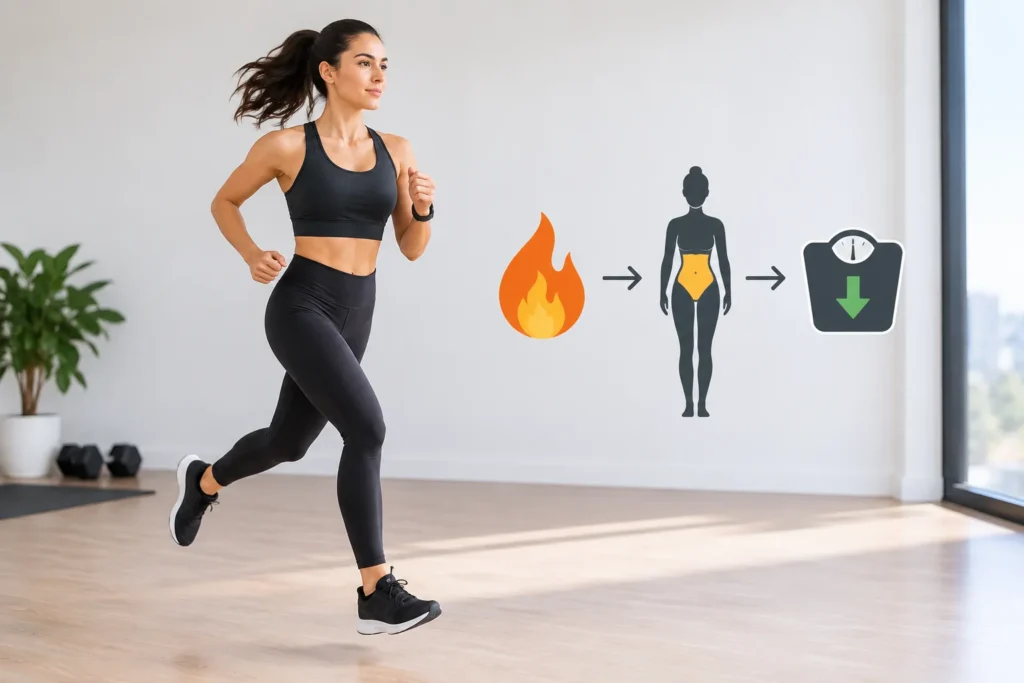
Cardio contributes to weight management primarily by increasing energy expenditure. When combined with an appropriate eating pattern, regular physical activity can help create the energy deficit required for weight loss.
However, cardio does not operate independently of nutrition. A person can perform substantial amounts of exercise while consuming enough additional calories to offset the energy expenditure.
The CDC notes that both eating patterns and physical activity play important roles in weight management, and that people may require different amounts of physical activity depending on their individual circumstances.
How Much Cardio Should You Do for Fat Loss?
There is no single cardio duration that works for everyone. Current physical activity guidelines recommend that adults generally accumulate at least 150–300 minutes of moderate-intensity aerobic activity per week, or 75–150 minutes of vigorous-intensity activity, or an equivalent combination. Muscle-strengthening activity is also recommended on at least two days per week.
People pursuing weight loss may need more activity depending on their calorie intake, starting body composition, lifestyle, and weight-management goals.
Instead of immediately trying to perform large amounts of cardio, it is usually better to build volume gradually and select activities that can be maintained consistently.
Is Cardio Alone Enough to Lose Weight?
Cardio can support weight loss, but cardio alone is not necessarily the most effective strategy for improving body composition.
Nutrition plays a major role in creating the energy deficit required for fat loss. Resistance training can also help preserve lean muscle mass during weight loss.
The CDC emphasizes that healthy weight management involves regular physical activity together with healthy eating patterns and other lifestyle factors.
For this reason, a balanced program combining cardio, resistance training, nutrition, sleep, and recovery is generally more practical than relying exclusively on cardio.

Is Cardio or Strength Training Better for Fat Loss?
Cardio and strength training serve different but complementary purposes. Cardio is particularly useful for increasing aerobic fitness and energy expenditure, while resistance training helps develop and maintain muscle strength and lean mass.
For people focused on fat loss, choosing between cardio and strength training does not have to be an either-or decision.
A combined approach can provide cardiovascular benefits while supporting muscle retention and overall physical performance.
Is Cardio Better Than Strength Training for Burning Calories?
Cardio can produce substantial energy expenditure during a workout, particularly when performed at moderate or vigorous intensity.
However, the number of calories burned during an individual session is not the only factor that matters. Maintaining muscle mass, recovering properly, performing consistently, and following an appropriate nutritional strategy are also important.
Resistance training can therefore complement cardio rather than compete with it. A well-rounded program can include both forms of exercise.
Should You Combine Cardio and Strength Training for Fat Loss?
For many people, combining cardio and resistance training is a strong approach to improving body composition.
One practical weekly structure could include:
- 2–3 resistance-training sessions
- 2–4 cardio sessions
- Daily low-intensity movement such as walking
- At least one recovery-focused day when needed
The exact schedule should depend on training experience, fitness level, recovery, and personal goals.
WHO recommends that adults combine aerobic activity with muscle-strengthening exercises on at least two days per week.
How Can You Build an Effective Cardio Plan for Fat Loss?
An effective cardio plan should be realistic, progressive, and compatible with the rest of your lifestyle. Rather than choosing the most difficult workout available, start with an activity you can perform consistently and gradually increase duration, frequency, or intensity.
- Step 1: Choose a Sustainable Cardio Activity
Select an activity that you enjoy and can perform regularly.
Good options include:
Walking
Running
Cycling
Swimming
Rowing
Stair climbing
Jump rope
HIIT
Home cardio circuits
Enjoyment matters because long-term consistency is more important than choosing a theoretically perfect exercise. - Step 2: Establish Your Weekly Cardio Volume
Begin with a manageable amount of activity and gradually build toward recommended weekly levels.
For general health, adults should aim for 150–300 minutes of moderate aerobic activity or 75–150 minutes of vigorous activity per week, according to WHO recommendations.
If you are currently inactive, starting below these targets and progressing gradually can be more realistic. - Step 3: Combine Different Intensities
A balanced program does not need every session to be hard.
For example:
Monday: 30-minute brisk walk
Tuesday: Strength training
Wednesday: 20-minute HIIT
Thursday: Recovery or light walking
Friday: 40-minute cycling session
Saturday: Strength training + short cardio
Sunday: Rest or easy walking
This type of structure distributes training stress and allows harder sessions to be separated by easier activity. - Step 4: Monitor Progress Beyond the Scale
Body weight is only one measurement of progress.
You can also monitor:
Waist circumference
Fitness level
Running or cycling performance
Daily activity
Training consistency
Recovery
Strength levels
How clothing fits
Tracking several indicators can provide a more complete picture of changes in fitness and body composition.

What Are the Most Important Factors When Choosing the Best Cardio Exercise?
The best cardio exercise is not necessarily the one with the highest theoretical calorie burn. It should fit your fitness level, goals, schedule, injury history, preferences, and recovery capacity.
For some people, running may be ideal. For others, brisk walking, cycling, swimming, or home-based cardio may be more sustainable.
The most effective program is therefore the one that allows you to accumulate enough physical activity while maintaining good recovery and a balanced diet.
Regular physical activity also provides benefits beyond weight management. The CDC reports that physical activity supports heart health, healthy weight, sleep, mental health, and the prevention of several chronic conditions.
What Does an Expert Recommendation Say About Cardio?
The World Health Organization recommends at least 150–300 minutes of moderate-intensity aerobic activity or 75–150 minutes of vigorous-intensity activity per week for adults, along with muscle-strengthening activity on at least two days.
This reinforces an important principle: successful fitness programming should not focus exclusively on one type of exercise.
The objective is to create a balanced and sustainable activity pattern that supports cardiovascular health, body composition, strength, and long-term adherence.
Conclusion
The best cardio exercises for fat loss are not necessarily the most intense or difficult workouts. Running, cycling, swimming, brisk walking, rowing, stair climbing, jump rope, and HIIT can all be effective tools when they are matched to your fitness level and performed consistently.
For sustainable results, focus on building regular physical activity rather than trying to maximize calorie burn in every workout. Combining cardio with resistance training and a balanced nutritional strategy can provide a more complete approach to improving body composition.
WHO recommends regular aerobic activity alongside muscle-strengthening exercise, while the CDC emphasizes that physical activity and eating patterns both play important roles in healthy weight management.
At 5dfitness, the goal is to help you build a practical fitness routine based on sustainable training principles—not short-term promises. Choose the cardio activities you can maintain, progress gradually, and combine them with strength training and appropriate nutrition for better long-term results.
FAQ
There is no single best cardio exercise for everyone. Running, cycling, brisk walking, swimming, rowing, stair climbing, and HIIT can all support fat loss when performed consistently and combined with appropriate nutrition.
HIIT can be time-efficient and provides vigorous exercise, but it is not automatically better for everyone. Moderate cardio can be easier to perform frequently and may allow greater overall training volume.
For general health, adults should aim for 150–300 minutes of moderate activity or 75–150 minutes of vigorous activity per week. Individual weight-loss needs vary.
Yes. Jumping jacks, high knees, mountain climbers, burpees, bodyweight circuits, marching, and stair climbing can all be used for home cardio.
Not necessarily. Cardio can increase energy expenditure, while strength training can help maintain muscle and improve strength. Combining both can be an effective approach to body-composition goals.
No exercise can reliably target fat loss from only one body area. Cardio can contribute to overall fat loss, which may eventually reduce abdominal fat as part of broader changes in body composition.
Walking can contribute to fat loss, particularly when it increases total daily energy expenditure and is combined with appropriate nutrition. Its effectiveness depends on factors such as duration, pace, frequency, and overall energy balance.