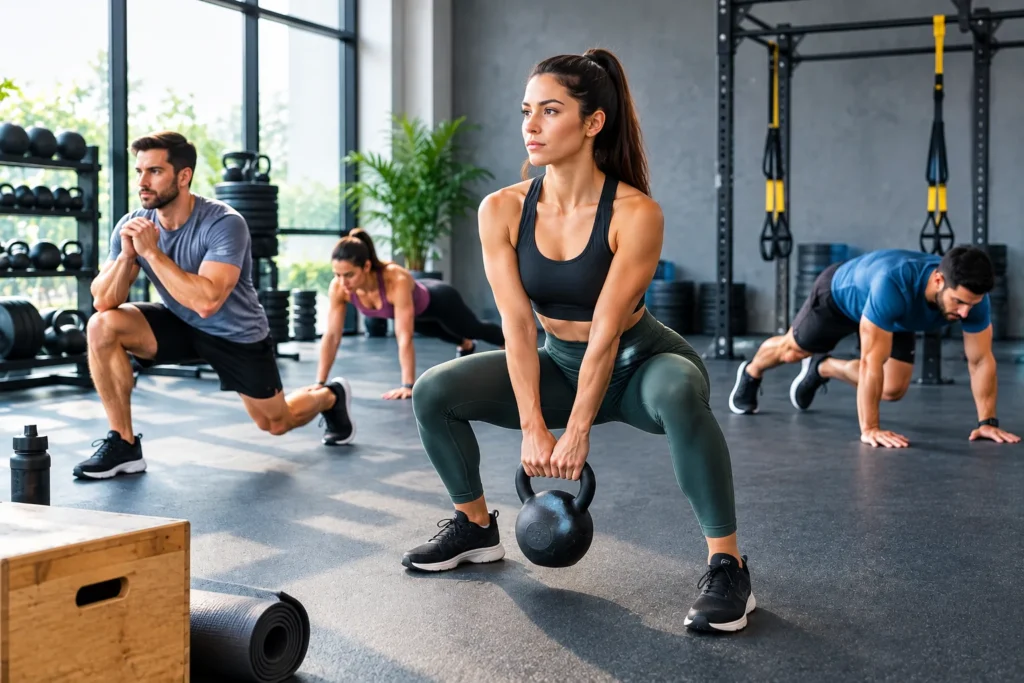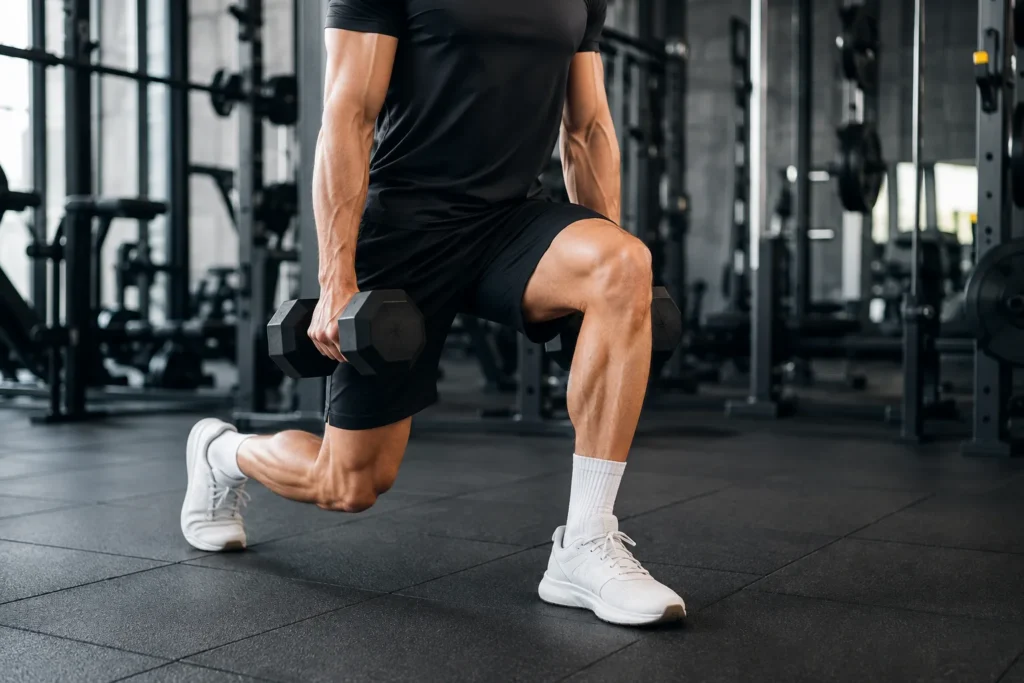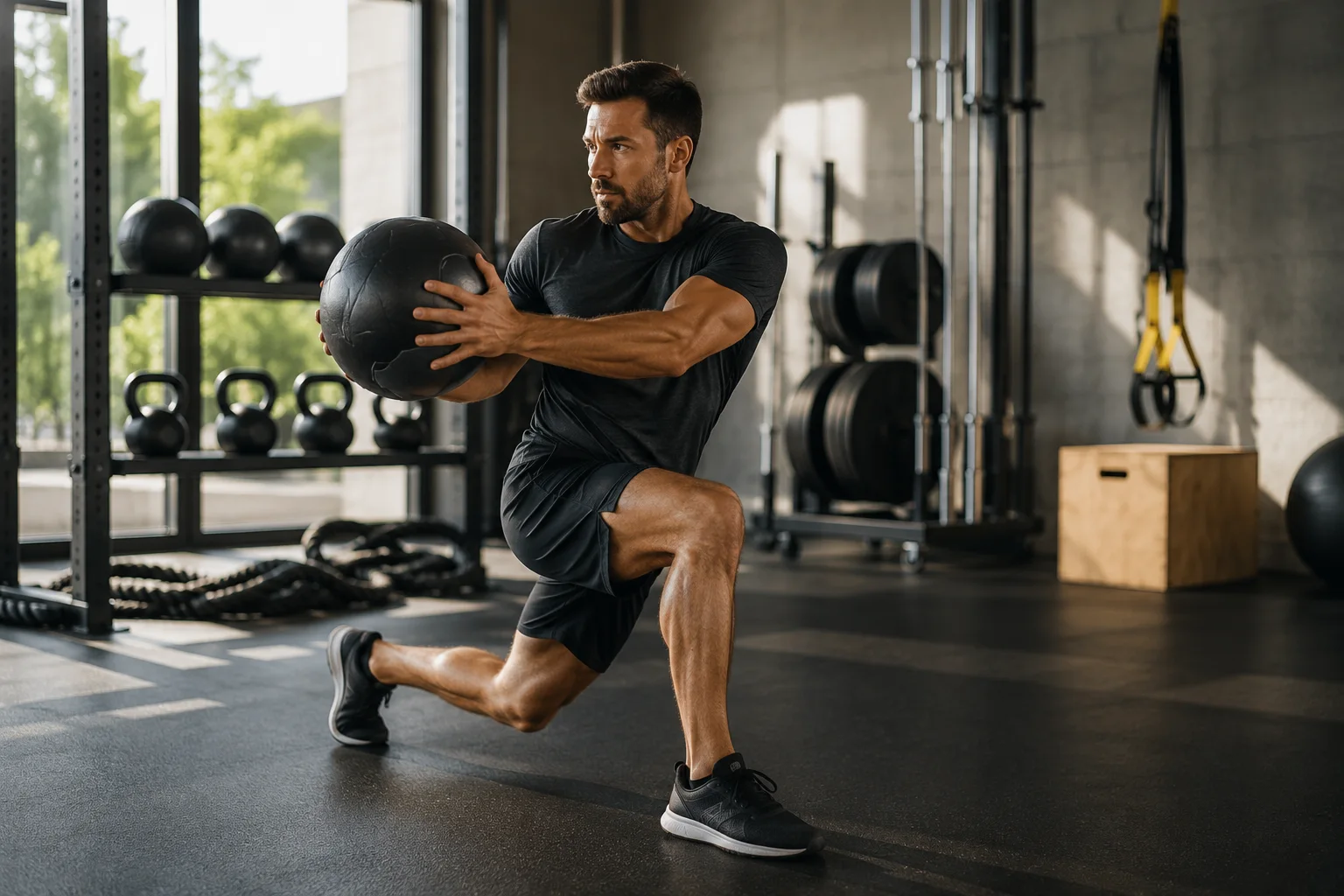
Functional training is a form of exercise designed to improve movement quality, strength, balance, coordination, mobility, and physical capacity in ways that can transfer to everyday activities and sports performance. Unlike training approaches that focus primarily on isolated muscles, functional training commonly uses multi-joint movements that involve several muscle groups working together.
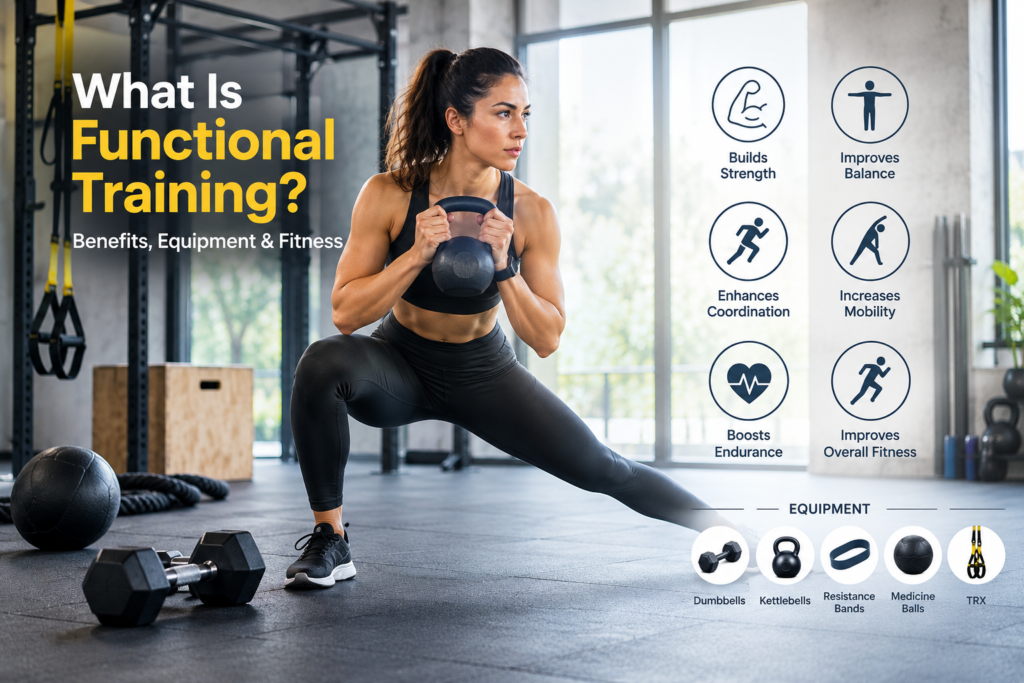
For athletes, fitness enthusiasts, bodybuilders, and people who want to improve overall physical performance, understanding how functional training works can help determine whether it fits their goals. At 5dfitness, we focus on evidence-based fitness information to help readers understand the practical benefits and limitations of different training methods.
Listen
What Is Functional Training and How Does It Work?
Functional training refers to exercise that emphasizes coordinated movement patterns rather than focusing exclusively on individual muscles. Many functional exercises involve movements such as squatting, pushing, pulling, rotating, carrying, lifting, and lunging. These patterns require multiple joints and muscle groups to work together while the body maintains stability and control.
The concept of functional training can be applied to many populations. Athletes may use it to improve sport-specific movement capacity, while recreational exercisers may use it to develop strength, balance, mobility, and coordination. The exercises and intensity can be adjusted according to the individual’s fitness level and objectives.
How Is Functional Training Different From Traditional Strength Training?
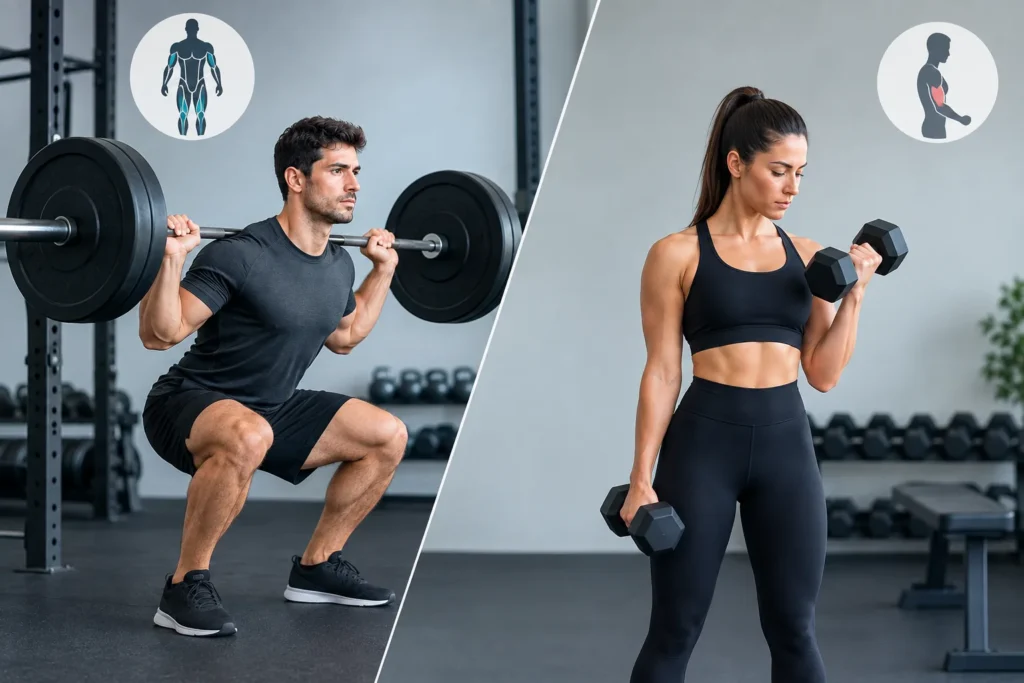
Traditional strength training can involve both compound and isolation exercises. Functional training generally places greater emphasis on integrated movement patterns and the ability to control the body through different planes of movement.
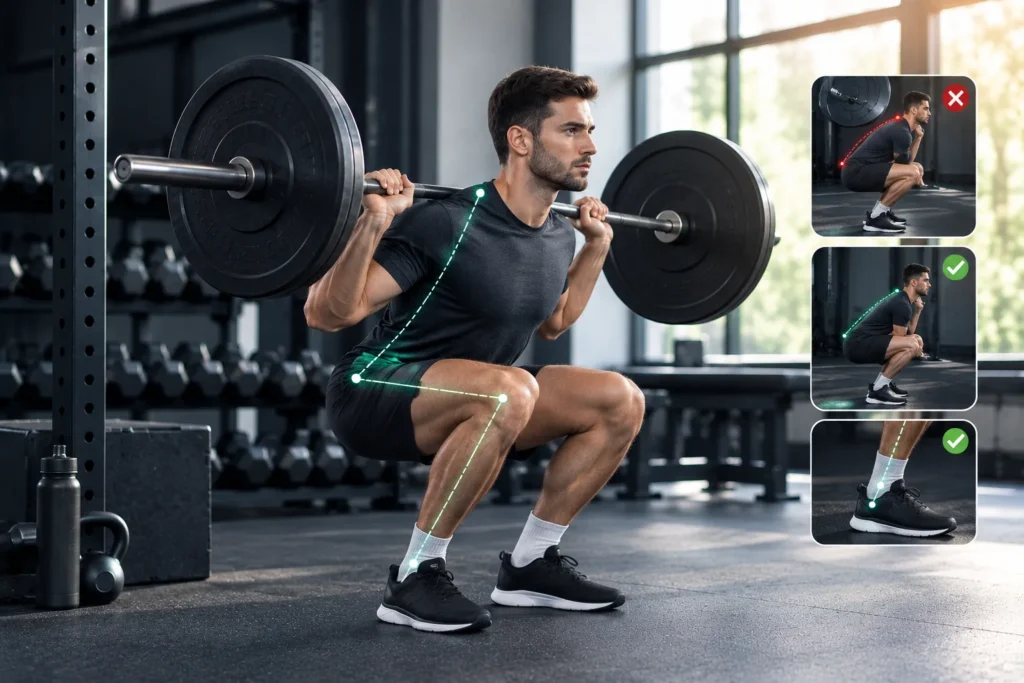
For example, a squat involves coordinated movement at the hips, knees, and ankles while the trunk helps maintain stability. A loaded carry requires the body to produce force while maintaining posture and controlling movement. These exercises can develop strength while also challenging balance, coordination, and stability.
This does not mean traditional strength training and functional training are opposing approaches. In practice, they can complement each other. Isolation exercises may be useful for addressing specific muscles or weaknesses, while functional movements can develop coordinated physical abilities.
The appropriate combination depends on the individual’s goals, training experience, injury history, and overall program design.
Who Can Benefit From Functional Training?
Functional training can be adapted for beginners, recreational exercisers, athletes, and experienced strength-training participants.
Beginners may benefit from basic bodyweight movements that develop movement awareness, balance, and fundamental strength. More advanced athletes can use external resistance, unstable loads, unilateral exercises, and more complex movement patterns to increase training demands.
Functional training can also be useful for people who want to improve general physical fitness rather than focus exclusively on muscle size. However, exercises should be selected according to the person’s current ability rather than simply choosing movements because they appear advanced.
Progressive overload, appropriate technique, sufficient recovery, and a suitable training volume remain important regardless of whether the program is described as functional.
What Are the Benefits of Functional Training?
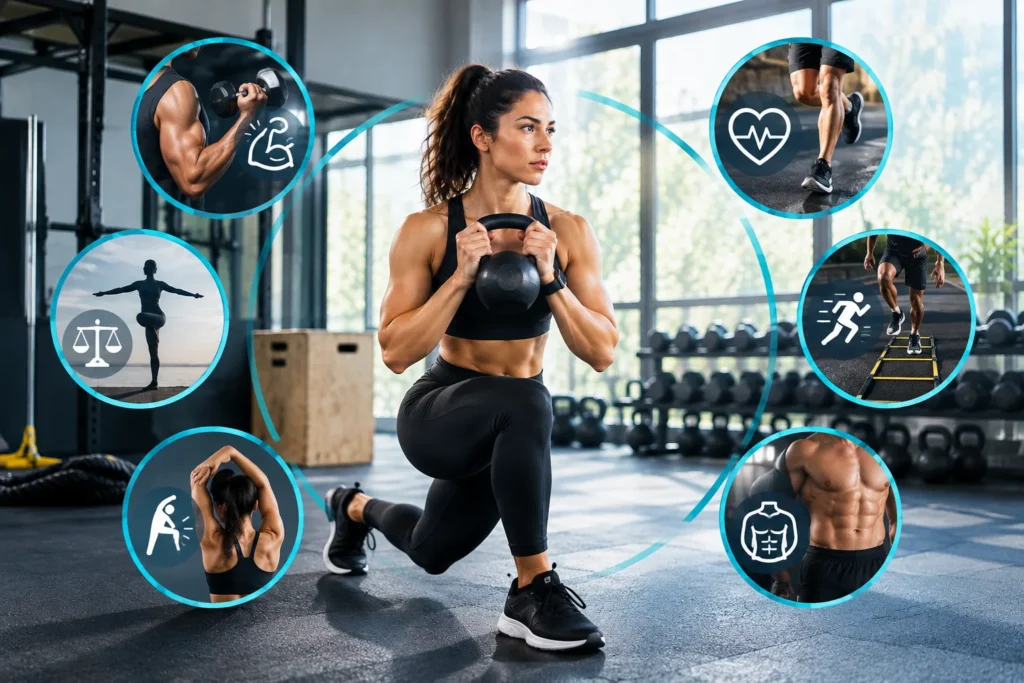
The benefits of functional training depend on how the program is designed and what physical qualities it targets. A well-structured program can challenge multiple components of fitness, including muscular strength, endurance, balance, coordination, mobility, and movement control.
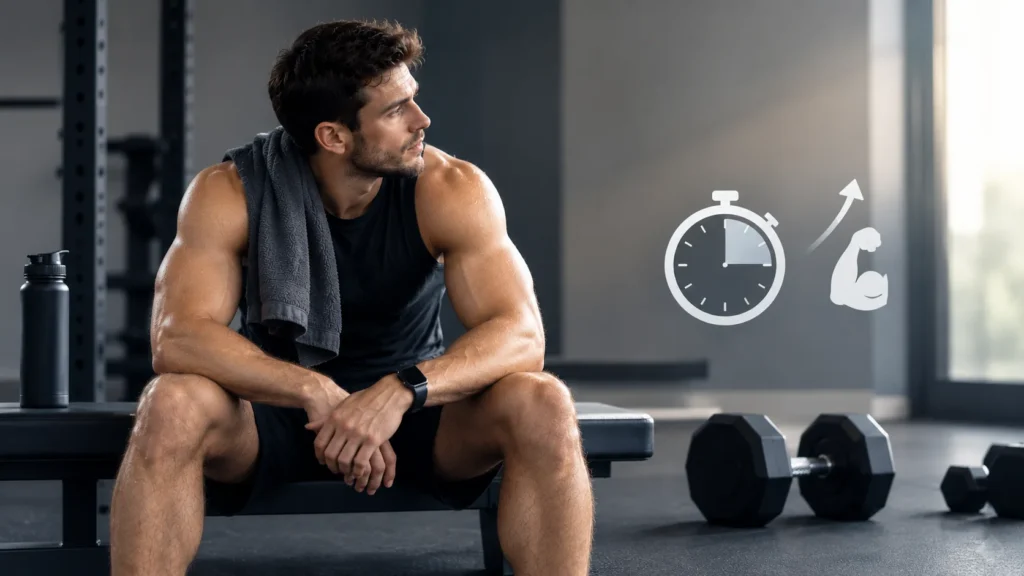
Because many functional exercises involve several joints and muscle groups, they can also make training time-efficient. However, the benefits should not be exaggerated. Functional training is not automatically superior to every other form of exercise. Its effectiveness depends on exercise selection, progression, consistency, and the individual’s goals.
Can Functional Training Improve Strength and Movement Control?
Functional exercises can develop strength while requiring the body to coordinate force production across multiple joints.
Movements such as squats, lunges, rows, presses, deadlifts, carries, and loaded step-ups can challenge large muscle groups while also requiring trunk stability and controlled movement.
Unilateral exercises can add another challenge because each side of the body must contribute independently. This may help develop balance and coordination while exposing differences in strength or movement control between the two sides.
For athletes and fitness enthusiasts, this integrated approach can be useful because many real-world activities and sports movements require force production while maintaining body position and coordination.
Can Functional Training Improve Balance and Coordination?
Balance and coordination are important components of physical fitness because the body must constantly control its position while moving.
Functional exercises can challenge these qualities through unilateral movements, changes in direction, controlled loading, and exercises that require simultaneous movement of the upper and lower body.
For example, a single-leg squat variation requires the athlete to control the hip, knee, and ankle while maintaining balance. A unilateral carry requires the trunk to resist unwanted movement while walking.
These exercises can increase the coordination demands of training. However, more instability is not always better. Excessive instability can reduce the amount of force an individual can produce and may make it more difficult to progressively overload the target muscles.
Can Functional Training Improve Mobility and Flexibility?
Functional training can contribute to movement quality by taking joints through controlled ranges of motion.
Exercises such as deep squats, lunges, overhead movements, and controlled rotations can challenge mobility in different areas of the body. When these movements are performed with appropriate technique and range of motion, they can help individuals practice moving efficiently through available joint ranges.
However, mobility and flexibility are related but distinct concepts. Flexibility generally refers to the ability of a muscle or group of muscles to lengthen, while mobility involves the ability to actively control movement through a range of motion.
A complete fitness program may therefore combine functional movements with specific mobility or flexibility exercises when additional work is required.
What Equipment Is Needed for Functional Training?
One of the advantages of functional training is that it does not require a large amount of specialized equipment. Many exercises can be performed using body weight alone.
As fitness levels increase, equipment can be introduced to provide progressive resistance and create new movement challenges. The equipment should serve the training objective rather than become the objective itself.
Can Functional Training Be Performed With Body Weight?
Yes. Bodyweight exercises can form the foundation of functional training.
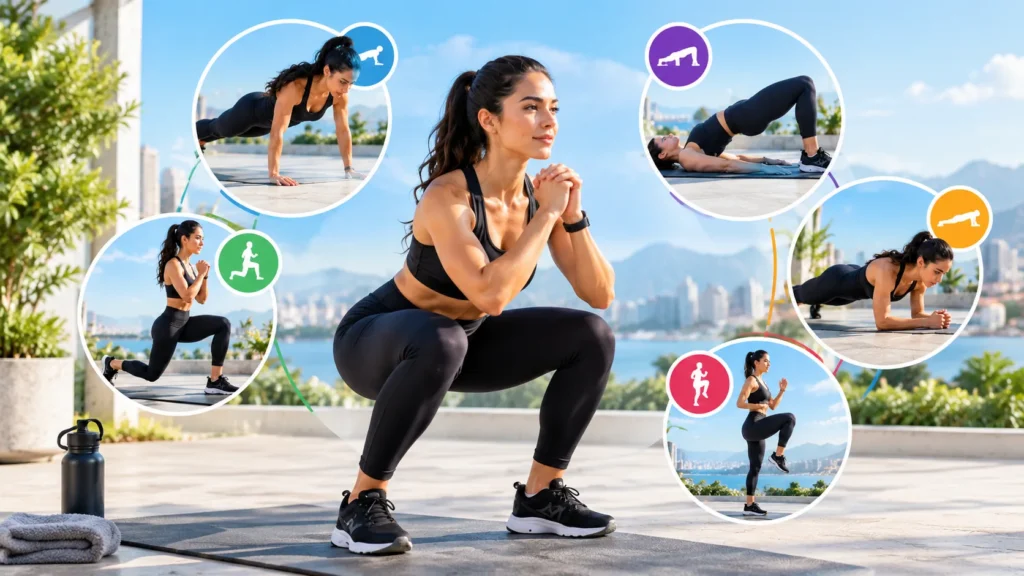
Squats, lunges, push-ups, step-ups, planks, mountain climbers, and controlled single-leg movements can all be used without gym equipment.
Bodyweight training is particularly useful for beginners because resistance can often be modified through exercise selection, range of motion, tempo, repetitions, and leverage.
For example, a beginner may start with a supported squat and gradually progress toward a more demanding unilateral variation. Similarly, a push-up can be modified by changing the body angle before progressing toward more difficult versions.
This makes bodyweight functional training accessible for people who exercise at home or have limited equipment.
Which Equipment Can Make Functional Training More Effective?
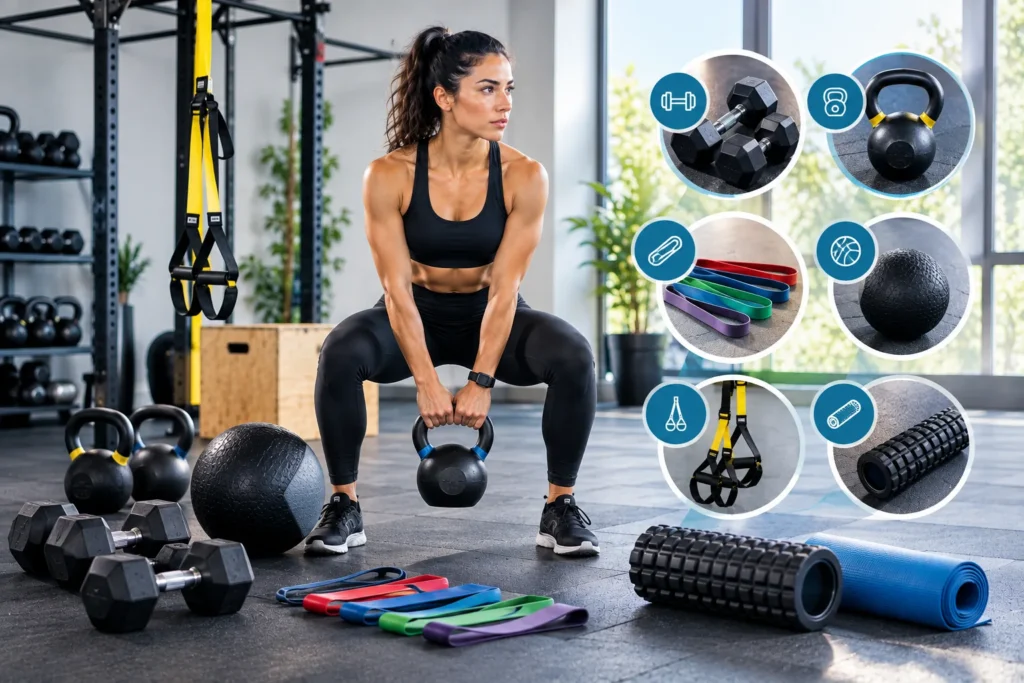
Several pieces of equipment can expand the range of functional exercises available.
Dumbbells: Useful for presses, rows, lunges, squats, carries, and unilateral movements.
Kettlebells: Particularly useful for swings, carries, squats, presses, and other dynamic movements.
Resistance bands: Useful for pulling movements, rotational exercises, activation work, and resistance training when space or equipment is limited.
Medicine balls: Can be used for throws, rotational movements, carries, and power-focused exercises.
TRX or suspension trainers: Allow users to perform bodyweight movements while adjusting resistance through body position.
Equipment selection should depend on the person’s goals and training level. More equipment does not necessarily produce better results.
Is Functional Training Possible at Home?
Functional training can be performed effectively at home when exercises are selected appropriately.
A home program might include squats, reverse lunges, push-ups, glute bridges, planks, resistance-band rows, and loaded carries if suitable weights are available.
The main challenge is progressive overload. As an individual becomes stronger, the exercises need to become more demanding through increased resistance, repetitions, range of motion, training volume, or movement complexity.
A simple home setup consisting of resistance bands, adjustable dumbbells, and a stable exercise surface can provide enough variety for many general fitness programs.
“Physical activity is one of the most important things you can do for your health.”
Centers for Disease Control and Prevention (CDC)
How Does Functional Training Affect Physical Fitness?
Functional training can influence several components of physical fitness because many exercises simultaneously challenge strength, coordination, balance, stability, and cardiovascular capacity.
The exact effect depends on program design. A low-repetition strength-focused functional program will produce different adaptations from a high-volume circuit involving continuous movement.
For this reason, it is important to distinguish the concept of functional training from a specific workout format. Functional training is an approach to exercise selection and movement, not one fixed routine.
Can Functional Training Improve Overall Physical Fitness?
A well-designed functional program can contribute to multiple areas of physical fitness.
Strength exercises can improve the ability to produce force. Repeated movements can develop muscular endurance. Unilateral and multi-directional exercises can challenge balance and coordination. Exercises performed through appropriate ranges of motion can contribute to movement capacity.
Functional circuits can also increase cardiovascular demand when exercises are performed continuously with limited rest. However, cardiovascular improvement depends on factors such as exercise intensity, duration, frequency, and individual fitness level.
For comprehensive fitness development, functional training can therefore be combined with dedicated aerobic exercise and structured resistance training when necessary.
Can Functional Training Help With Weight Management?
Functional training can contribute to energy expenditure and support a physically active lifestyle, but it should not be presented as a guaranteed method for rapid fat loss.
Body-weight changes are influenced by overall energy balance, dietary intake, physical activity, sleep, and other factors.
Higher-intensity functional circuits may increase energy expenditure during a workout because they involve large muscle groups and continuous movement. Nevertheless, the long-term effect on body composition depends on the individual’s overall lifestyle and consistency.
For people seeking fat loss, functional training can be one component of a broader strategy that includes appropriate nutrition, resistance training, aerobic activity, adequate protein intake, and sufficient recovery.
Can Functional Training Improve Athletic Performance?
Functional training can support athletic performance when exercises are selected according to the demands of a specific sport.
Athletes may use movements involving acceleration, deceleration, unilateral strength, rotation, jumping, landing, carrying, and changes of direction.
However, functional training should not simply imitate a sport. Effective athletic conditioning generally combines strength development, power training, energy-system conditioning, technical practice, mobility, and recovery.
The best exercise selection is therefore determined by the physical demands of the sport and the athlete’s individual weaknesses rather than by whether an exercise looks “sport-specific.”
What Are the Best Functional Exercises for Beginners and Athletes?
There is no universal list of the best functional exercises because exercise selection should match the individual’s ability, goals, and training environment.
Beginners should generally prioritize movement quality and learn fundamental patterns before progressing toward more complex exercises. Experienced athletes can gradually increase resistance, speed, range of motion, complexity, and training volume.
Which Functional Exercises Are Suitable for Beginners?
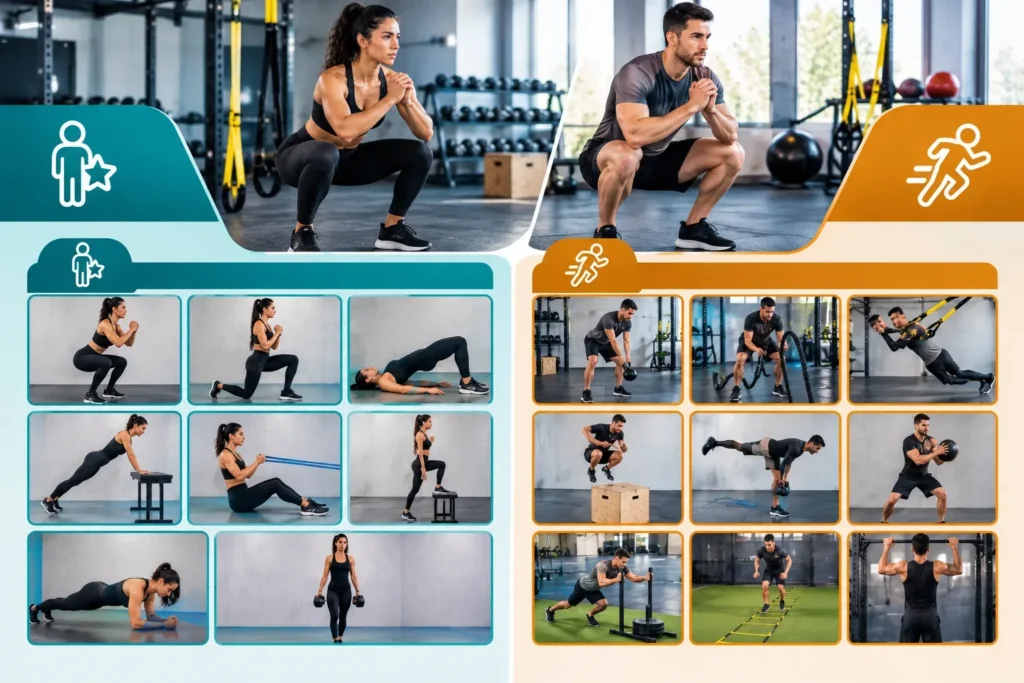
Beginners can start with fundamental movements such as:
- Bodyweight squats
- Reverse lunges
- Glute bridges
- Incline push-ups
- Resistance-band rows
- Step-ups
- Planks
- Farmer carries with light weights
The primary objective should be developing controlled movement rather than completing as many repetitions as possible.
A beginner can start with relatively low training volume and gradually increase workload as technique and tolerance improve. This progressive approach reduces unnecessary fatigue and allows the musculoskeletal system to adapt.
Which Functional Exercises Are Useful for Advanced Athletes?
Advanced athletes can use more demanding variations such as:
- Kettlebell swings
- Loaded carries
- Bulgarian split squats
- Single-leg Romanian deadlifts
- Medicine-ball throws
- Push presses
- Pull-ups
- Multi-directional lunges
- Jumping and landing drills
The appropriate exercise depends on the athlete’s sport and physical requirements.
For example, a field-sport athlete may need acceleration and change-of-direction work, while a combat-sport athlete may require rotational strength and repeated high-intensity efforts.
Advanced exercises should not be selected simply because they are difficult. The movement should have a clear purpose within the training program.
How Should a Beginner Build a Functional Training Routine?
A beginner can structure a simple full-body session around fundamental movement patterns.
A basic routine may include:
- Squat pattern
- Push pattern
- Pull pattern
- Lunge pattern
- Hip-hinge pattern
- Core stability exercise
- Carry or controlled conditioning movement
Start with manageable resistance and focus on technique. As the body adapts, training volume or resistance can gradually increase.
A warm-up can include several minutes of light aerobic activity followed by dynamic movements related to the upcoming exercises.
Recovery should also be considered. Training the same movement patterns intensely every day may limit adaptation and increase unnecessary fatigue.
How to Start Functional Training: A Simple Step-by-Step Approach
- Step 1: Identify your goal
Decide whether your primary objective is general fitness, strength, athletic performance, mobility, muscle development, or weight management.
- Step 2: Learn fundamental movement patterns
Start with squatting, hinging, pushing, pulling, lunging, carrying, and core-stability movements.
- Step 3: Choose an appropriate resistance
Use body weight or light external resistance initially. Increase resistance only when you can perform the movement with good control.
- Step 4: Build a balanced full-body routine
Include movements that challenge the major movement patterns rather than repeatedly training only one area.
- Step 5: Progress gradually
Increase resistance, repetitions, sets, range of motion, or exercise complexity over time instead of making large increases suddenly.
- Step 6: Prioritize recovery
Allow enough recovery between demanding sessions and support training with adequate nutrition, hydration, and sleep.
Practical Summary
Functional training is an exercise approach that emphasizes coordinated movement patterns and physical qualities such as strength, balance, stability, mobility, coordination, and endurance.
Its main advantage is versatility. Functional exercises can be performed with body weight, dumbbells, kettlebells, resistance bands, medicine balls, suspension trainers, or other equipment.
However, functional training is not automatically better than traditional strength training. The most effective program is the one that matches the individual’s goals, fitness level, training experience, and recovery capacity.
For beginners, the priority should be learning fundamental movement patterns and gradually increasing training demands. Athletes can use more advanced functional movements when they have a clear connection to their performance requirements.
At 5dfitness, our goal is to make fitness concepts easier to understand through practical, evidence-based information.
FAQ
Functional training is an exercise approach that emphasizes coordinated movement patterns involving multiple joints and muscle groups. It can target strength, balance, coordination, mobility, stability, and endurance.
Potential benefits include improved strength, balance, coordination, movement control, muscular endurance, and general physical fitness. The results depend on exercise selection and program design.
Yes. Functional training can be modified for beginners by using bodyweight exercises, simpler movement patterns, lower resistance, and manageable training volumes.
Yes. Functional exercises can contribute to muscle growth when they provide sufficient resistance, training volume, and progressive overload. Traditional resistance exercises can also be included when muscle hypertrophy is a primary goal.
Functional training can increase physical activity and energy expenditure, which may support weight management. However, long-term fat loss also depends heavily on nutrition, overall energy balance, sleep, and consistency.
No equipment is strictly required. Bodyweight exercises can provide a foundation, while dumbbells, kettlebells, resistance bands, medicine balls, and suspension trainers can provide additional resistance and exercise variety.
Yes. Many functional exercises can be performed at home using bodyweight or simple equipment such as resistance bands and dumbbells.
Functional training generally emphasizes coordinated movement patterns and physical qualities such as balance, stability, and movement control. Bodybuilding primarily focuses on developing muscle size and muscular symmetry through resistance training. The two approaches can be combined.