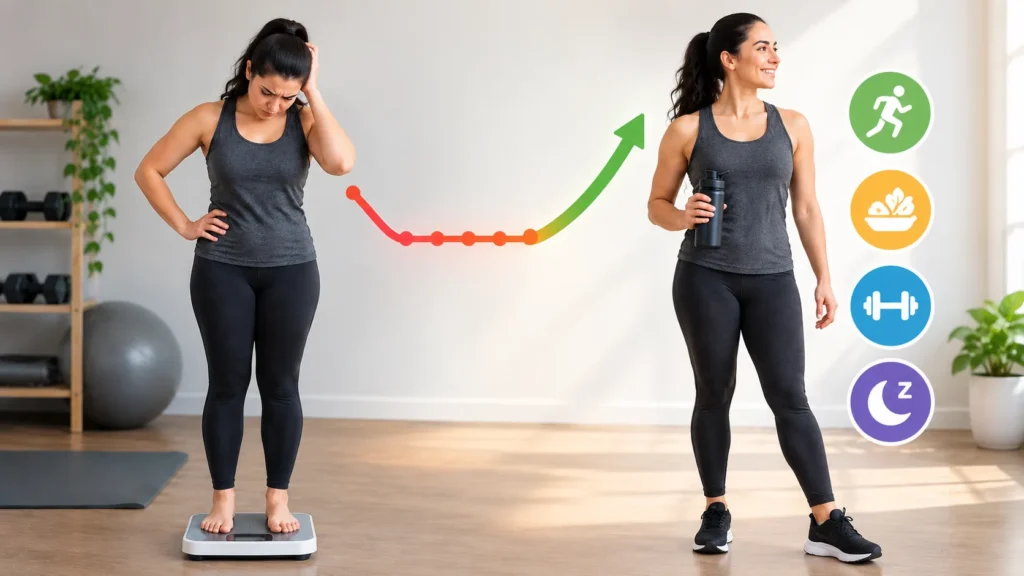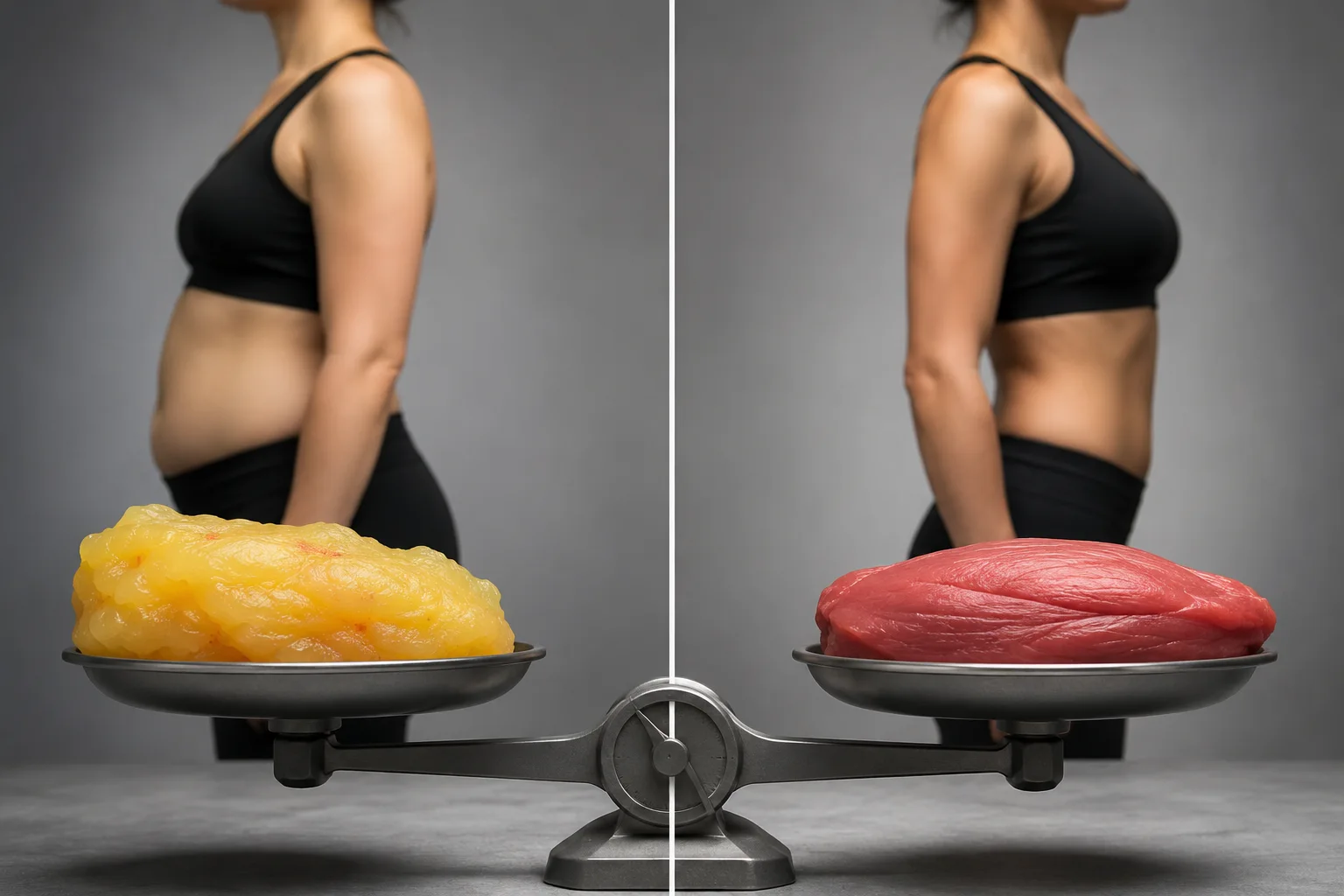
Weight loss and fat loss are often used interchangeably, but they are not the same process. Weight loss refers to a reduction in total body weight, which can include fat, muscle, water, glycogen, and other tissues. Fat loss, in contrast, specifically refers to reducing the amount of stored body fat. Understanding the difference between weight loss and fat loss is important for athletes, bodybuilders, and anyone who wants to improve body composition rather than simply see a lower number on the scale. At 5dfitness, the goal is to look beyond scale weight and understand what is actually changing inside the body.
Listen
What Is the Difference Between Weight Loss and Fat Loss?
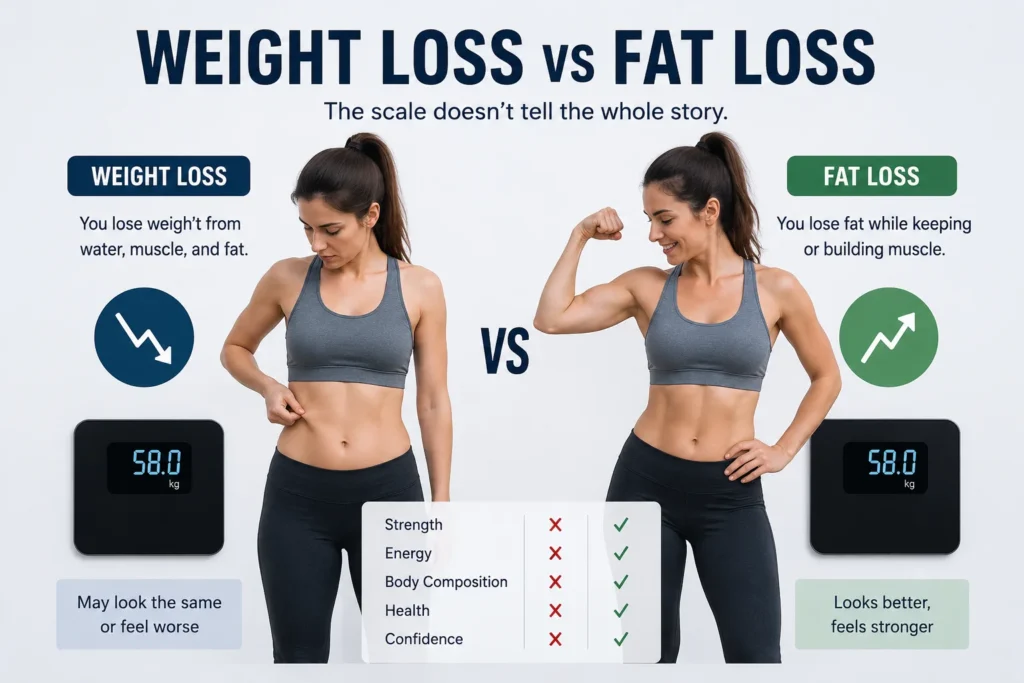
Weight loss is a broad term that describes a decrease in total body mass. Fat loss is more specific: it means reducing stored adipose tissue. Because body weight is influenced by several components, a person can lose weight without losing a proportional amount of body fat.
What Does Weight Loss Actually Mean?
Weight loss occurs when total body mass decreases over time. This can happen because of reductions in body fat, muscle tissue, water, glycogen, or a combination of these components. For example, a sudden reduction in carbohydrate intake can reduce stored glycogen, and because glycogen is stored alongside water, scale weight may fall quickly without representing an equivalent loss of body fat.
Energy balance remains an important part of weight management. When energy intake is consistently lower than energy expenditure, the body draws on stored energy, contributing to weight loss. However, the resulting weight change is not necessarily composed entirely of fat. Nutrition, exercise, hydration, glycogen levels, and changes in lean tissue can all influence the number on the scale.
What Is Fat Loss and Why Is It Different?
Fat loss refers specifically to a reduction in stored body fat. It is therefore a more precise measure of changes in body composition than total scale weight.
A person can lose several kilograms while experiencing relatively little improvement in body-fat percentage if a significant portion of the weight lost comes from water or lean tissue. Conversely, someone following resistance training and an appropriate nutrition plan may experience meaningful fat loss while their scale weight changes slowly because they are maintaining or gaining lean tissue.
For athletes and fitness enthusiasts, this distinction is particularly important. A lower body weight is not automatically equivalent to a better physique, improved athletic performance, or healthier body composition. The quality of weight loss matters.
Is Losing Weight Always the Same as Burning Fat?
No. Weight loss does not automatically mean that all or most of the weight lost comes from body fat.
Short-term changes in body weight can be strongly affected by hydration, glycogen, food volume, sodium intake, and bowel contents. During longer periods of energy restriction, body fat can contribute substantially to the energy being lost, but lean tissue can also be lost.
This is why judging progress from a single weigh-in can be misleading. A better assessment can combine body weight trends with waist measurements, body-fat estimates when reliable, strength performance, photographs, and how clothing fits.
Why Can You Lose Weight Without Losing Much Body Fat?
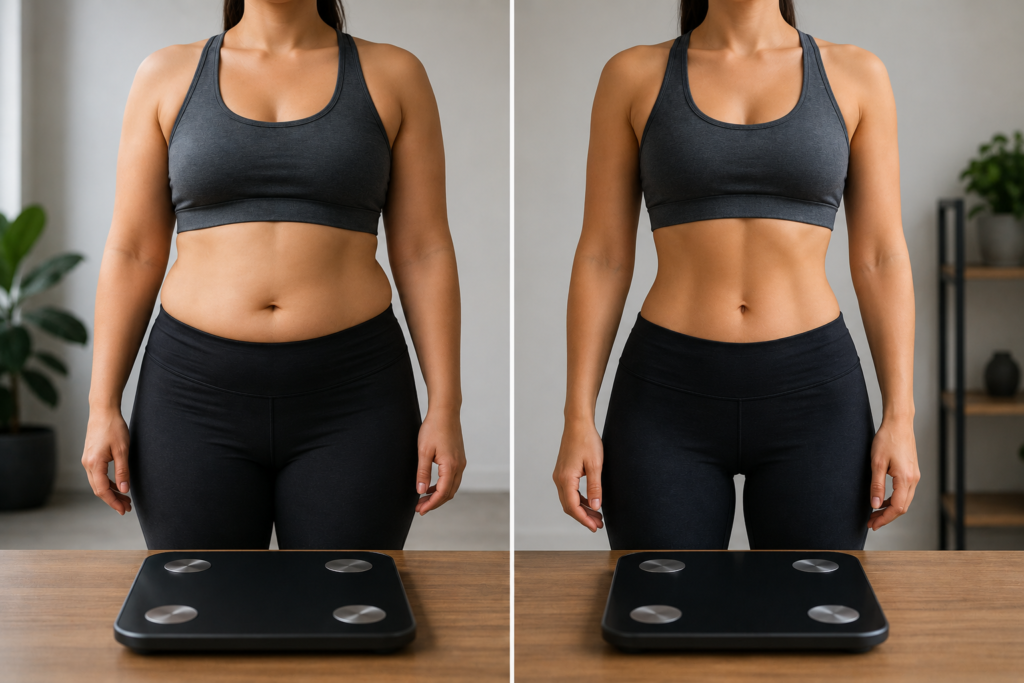
The distinction between scale weight and body composition becomes especially important during dieting. A rapid drop in weight may look impressive, but it does not necessarily indicate that a person has achieved substantial fat loss.
How Does Water Loss Affect the Number on the Scale?
Water can cause significant short-term changes in body weight. Glycogen stored in muscles and the liver is associated with water, so changes in carbohydrate intake can influence both glycogen stores and the amount of water retained in the body.
Similarly, changes in sodium intake, sweating, hydration, menstrual-cycle-related fluid shifts, and food intake can affect scale weight.
This explains why someone may lose weight quickly during the first days of a diet and then see the rate of change slow down. The early reduction may include a meaningful amount of water rather than representing a sudden acceleration in fat loss.
For this reason, daily scale fluctuations should not be interpreted as daily changes in body fat. Looking at a weekly average or longer-term trend is generally more informative than reacting to an individual measurement.
Can You Lose Muscle While Trying to Lose Fat?
Yes. Weight-loss interventions can result in the loss of both fat mass and lean mass. The objective of a well-designed fat-loss program is therefore not simply to make body weight decrease as quickly as possible, but to maximize the proportion of weight lost from fat while preserving lean tissue.
Resistance training is particularly relevant here. Evidence summarized by the American College of Sports Medicine indicates that resistance exercise can help preserve lean tissue during weight loss, while greater loss of fat-free mass has been associated with greater subsequent weight regain.
Adequate protein intake, resistance exercise, an appropriately sized energy deficit, and recovery can all support the goal of maintaining muscle during fat loss.
Why Is Body Composition More Important Than Scale Weight?
Body composition describes how total body weight is distributed among components such as fat mass and fat-free mass. Two people can have exactly the same body weight while having very different amounts of body fat and lean tissue.
For someone interested in fitness, this distinction can be more meaningful than scale weight alone. For example, maintaining a similar body weight while losing fat and gaining or preserving muscle can produce substantial changes in appearance and physical performance.
Therefore, progress should be evaluated according to the goal. If the goal is improving body composition, relying exclusively on the scale can hide important changes.
“Healthy weight loss includes a lifestyle with healthy eating patterns, regular physical activity, enough sleep, and stress management.”
Centers for Disease Control and Prevention (CDC)
How Can You Improve Metabolism to Support Fat Loss?
“Boosting metabolism” is one of the most common topics in weight management, but metabolism is more complex than a single switch that can simply be turned up. Energy expenditure is influenced by body size, body composition, physical activity, food intake, and other physiological factors.
What Role Does Metabolism Play in Fat Loss?
Metabolism represents the collection of processes through which the body uses energy. Daily energy expenditure includes resting energy expenditure, the energy required to process food, physical activity, and other components.
When energy intake is lower than total energy expenditure over time, the body must draw on stored energy. This can contribute to reductions in body weight and body fat.
However, energy expenditure can change during weight loss. Research on adaptive thermogenesis suggests that some people experience reductions in energy expenditure beyond what would be predicted from changes in body size and composition alone. The magnitude varies between individuals and appears to be influenced by methodological and physiological factors.
This does not mean that metabolism “stops.” Rather, the body can adapt to prolonged energy restriction.
Can Strength Training Help Support Metabolism?
Strength training is one of the most useful forms of exercise for people who want to lose fat while maintaining lean tissue.
Muscle tissue contributes to total energy expenditure, although the idea that simply adding muscle dramatically accelerates metabolism is often overstated. The larger benefit of resistance training during fat loss is its role in preserving or improving muscle strength and lean tissue.
ACSM notes that resistance training can help preserve lean tissue during weight loss. This makes it particularly valuable when the objective is improving body composition rather than simply reducing scale weight.
A practical approach is to combine resistance training with regular aerobic activity and a sustainable nutrition strategy rather than relying on a single “metabolism-boosting” exercise or food.
What Are the Most Effective Ways to Increase Daily Energy Expenditure?
There is no single food or exercise that permanently transforms metabolism. A more effective approach is to increase overall physical activity while maintaining a sustainable nutrition pattern.
Useful strategies include:
- Regular resistance training
- Walking and other forms of daily movement
- Aerobic exercise
- Maintaining or building lean tissue
- Avoiding unnecessarily extreme calorie restriction
- Getting sufficient sleep
- Following a sustainable eating pattern
The National Institute of Diabetes and Digestive and Kidney Diseases recommends regular physical activity as part of healthy weight management and notes that adults may benefit from at least 150 minutes of moderate-intensity aerobic activity per week, alongside muscle-strengthening activities on at least two days.
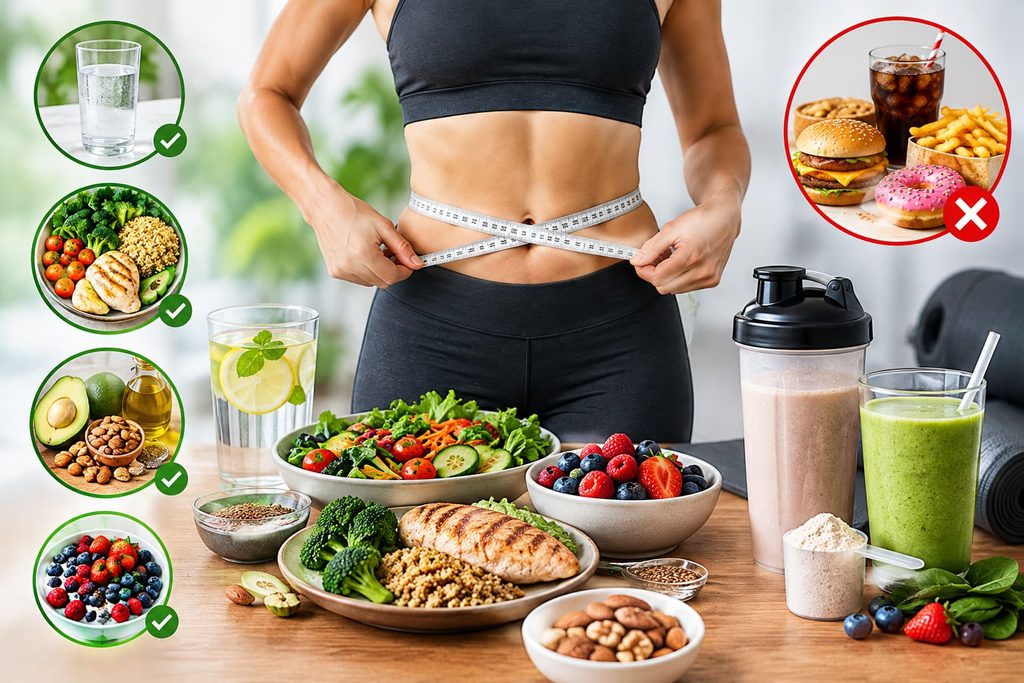
What Nutrition Strategies Can Support Fat Loss and Reduce Belly Fat?
Nutrition plays a central role in creating the energy deficit required for fat loss. However, reducing belly fat requires a broader approach because the body does not allow people to choose exactly where stored fat will be removed first.
Can Specific Foods Burn Belly Fat?
No single food can selectively burn belly fat.
Foods can support fat loss by making it easier to control total calorie intake, maintain satiety, and preserve nutritional quality. Protein-rich foods, vegetables, fruits, whole grains, legumes, and minimally processed foods can all fit into an effective fat-loss diet.
The important factor is the overall dietary pattern rather than a single “fat-burning” food.
NIDDK recommends a healthy eating plan that includes vegetables, whole fruits, whole grains, and protein sources such as lean meats, seafood, beans, lentils, nuts, seeds, and soy products.
How Can You Reduce Abdominal Fat Through Nutrition?
Reducing abdominal fat generally requires reducing overall body fat rather than trying to manipulate one specific region.
A sustainable calorie deficit, sufficient protein, regular physical activity, and a nutrient-dense diet can support overall fat loss. As total body fat decreases, abdominal fat may also decrease, although the rate and pattern of fat loss vary considerably between individuals.
Research has found that reductions in total body fat are associated with reductions in abdominal subcutaneous and visceral fat. Exercise and calorie-restriction strategies can both contribute to reductions in abdominal fat, although individual responses vary.
Therefore, claims that a particular food, supplement, or abdominal exercise can independently eliminate belly fat should be treated cautiously.
How Important Is Protein During Fat Loss?
Protein is important because preserving lean tissue is one of the major challenges during calorie restriction.
Including a suitable amount of protein in meals can support muscle maintenance when combined with resistance training and an appropriate training program. Protein-rich foods can also contribute to satiety, making a calorie-controlled diet easier for some people to maintain.
Good options include eggs, dairy products, lean meat, poultry, fish, legumes, soy foods, and other protein-rich foods.
The exact protein requirement depends on factors such as body size, training status, age, total calorie intake, and individual goals. Therefore, a fixed protein target should not automatically be applied to every person.
“Resistance has been shown to better preserve lean tissue during weight loss.”
American College of Sports Medicine (ACSM)
How Can You Lose Fat Without Losing Muscle?
The most effective approach to body recomposition is not simply to pursue the fastest possible reduction in body weight. Instead, the goal is to create conditions that encourage fat loss while preserving lean tissue.
How Does Resistance Training Help Preserve Muscle During Fat Loss?
Resistance training provides a stimulus for the body to maintain muscle tissue while energy intake is reduced.
This is particularly important because calorie restriction without an appropriate exercise strategy can result in losses of fat-free mass. ACSM has highlighted evidence that resistance training can help preserve lean tissue during weight loss and may reduce the amount of fat-free mass lost compared with diet alone.
A practical resistance-training program should progressively challenge the major muscle groups while allowing sufficient recovery. The exact program should depend on training experience, age, injury history, schedule, and goals.
The objective during a fat-loss phase is not necessarily to set personal records every session. Maintaining strength and training quality can be a useful indicator that lean tissue is being preserved.
How Fast Should You Lose Weight to Prioritize Fat Loss?
Faster weight loss is not automatically better.
The CDC notes that people who lose weight at a gradual, steady pace—around 1 to 2 pounds per week—are more likely to keep it off than people who lose weight more quickly.
However, this should not be treated as a universal target. Appropriate weight-loss rates vary according to starting body weight, body composition, training status, age, health, and the size of the calorie deficit.
For athletes and resistance-trained individuals, an overly aggressive calorie deficit can make training and recovery more difficult and may increase the challenge of preserving lean tissue.
How Can You Measure Fat Loss More Accurately?
The scale is useful, but it should not be the only measurement.
A more complete progress-tracking system can include:
- Weekly average body weight
- Waist circumference
- Body-fat measurements when reliable
- Progress photographs
- Strength and training performance
- Clothing fit
- Changes in body measurements
Each method has limitations. Home body-fat scales, for example, can be influenced by hydration and other factors. The most useful strategy is often to combine several measurements and focus on trends rather than individual readings.
The key question is not simply, “How much weight have I lost?”
A better question is:
“How much of the weight I have lost appears to come from body fat, and how well am I preserving lean tissue?”
Practical Conclusion
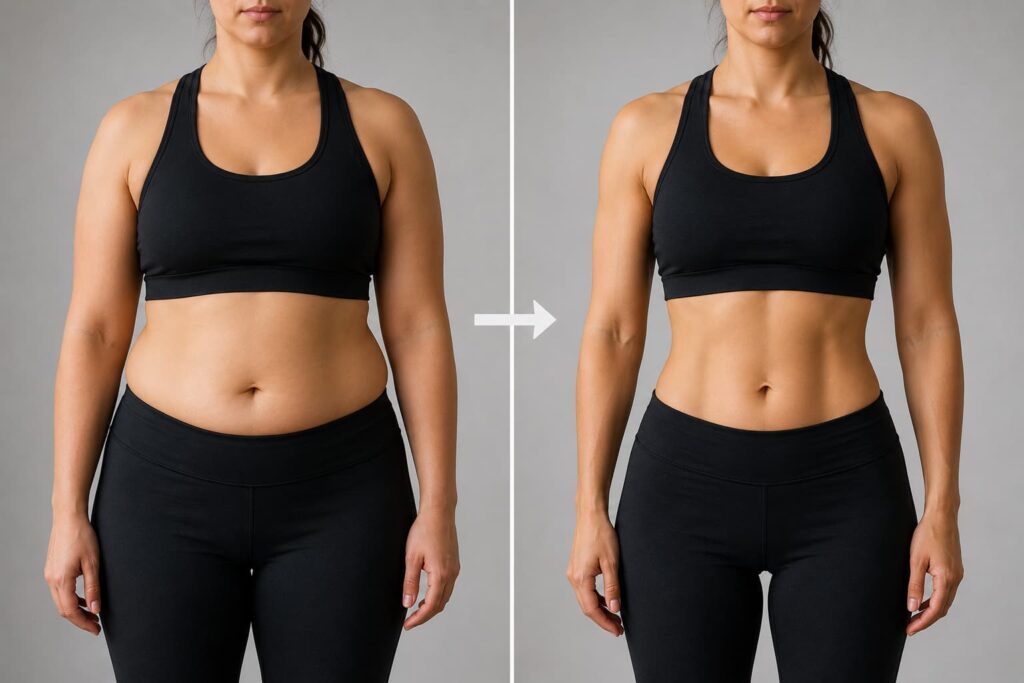
Understanding the difference between weight loss and fat loss can completely change how you evaluate your fitness progress. Weight loss measures a reduction in total body mass, while fat loss specifically refers to reducing stored body fat. A lower number on the scale can result from changes in fat, muscle, water, glycogen, or a combination of these factors.
For people focused on improving body composition, the priority should be sustainable fat loss while preserving as much lean tissue as possible. This generally involves a manageable calorie deficit, adequate nutrition, resistance training, regular physical activity, sufficient recovery, and realistic expectations.
Instead of chasing the fastest possible drop in body weight, focus on the quality and sustainability of the change. Tracking body weight alongside waist measurements, performance, and other body-composition indicators can provide a much clearer picture of progress.
At 5dfitness, the focus should always be on understanding the process behind the number on the scale—not simply making that number smaller.
FAQ
No. Weight loss means a reduction in total body weight, while fat loss specifically means reducing stored body fat. Weight changes can also come from water, glycogen, muscle, and other tissues.
Early weight loss can include water and glycogen, while excessive calorie restriction can also contribute to lean-tissue loss. Looking at longer-term trends and combining scale weight with waist measurements and performance can provide a better picture.
Yes. Resistance training, adequate protein, an appropriate calorie deficit, and good recovery can help preserve lean tissue during fat loss. However, the amount of muscle preserved varies between individuals.
You cannot reliably choose exactly where your body loses fat. Reducing overall body fat can reduce abdominal fat over time, but the distribution and rate of fat loss are influenced by individual physiology.
Not necessarily. Fat loss ultimately depends on sustained energy balance. Physical activity, body composition, food intake, and physiological adaptation all influence energy expenditure.
It depends on the goal. For someone primarily interested in improving body composition and maintaining muscle, reducing body fat while preserving lean tissue is generally more informative than simply reducing scale weight.
Use several indicators rather than relying on one measurement. Track longer-term body-weight averages, waist circumference, body-fat estimates when reliable, progress photos, clothing fit, and training performance.