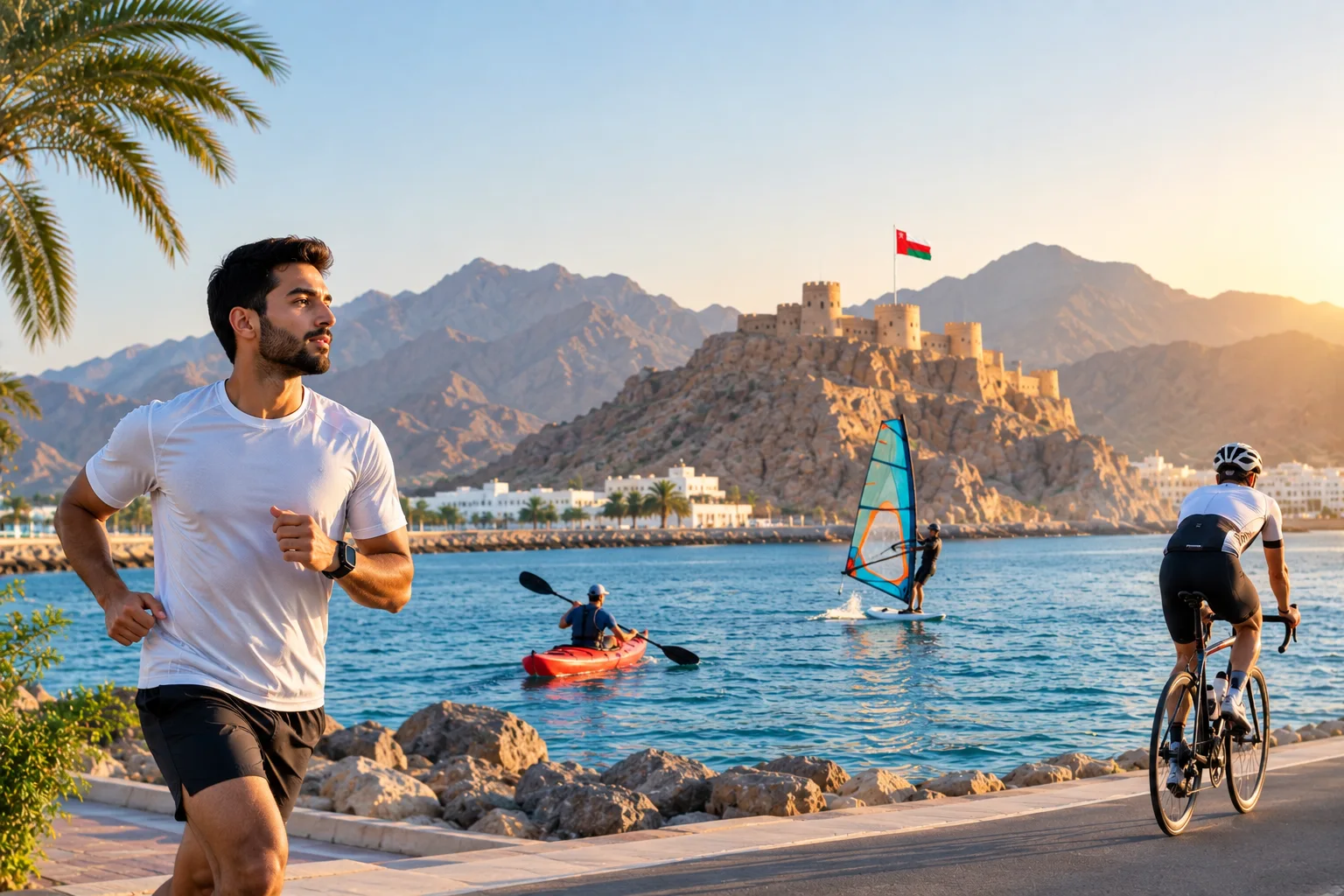
Sports play an important role in Omani society, combining organized competition, physical activity, community participation, and cultural heritage. For anyone researching popular sports in Oman, football is the clearest starting point: Oman’s Ministry of Culture, Sports and Youth describes football as the country’s most popular sport, while the Oman Football Association oversees 44 clubs across the Sultanate.
Beyond football, Oman has established federations and committees covering sports such as handball, basketball, volleyball, athletics, swimming, equestrian sports, camel racing, cycling, and other disciplines. Traditional activities and maritime sports also contribute to Oman’s distinctive sporting culture. This guide explores the major sports in Oman without treating them as a single fixed popularity ranking.
What Are the Most Popular Sports in Oman?
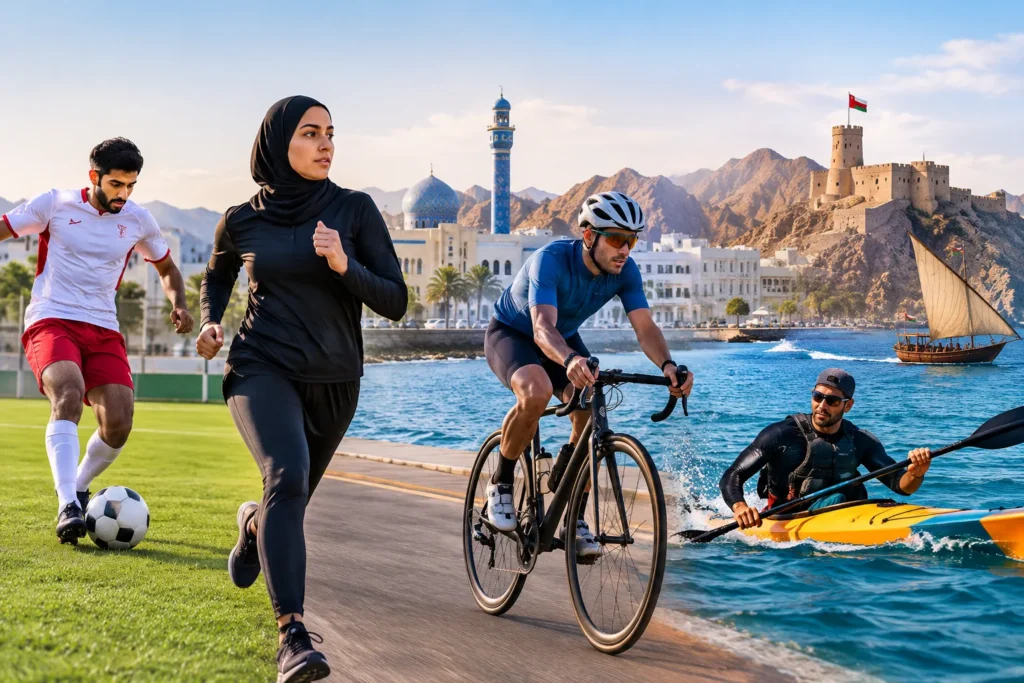
Football has the strongest documented position among sports in Oman. The Ministry of Culture, Sports and Youth identifies football as the country’s most popular sport, and the Oman Football Association operates a broad club structure covering different age groups and regions. However, Oman’s sports landscape is considerably broader than football.
National sports organizations cover team sports, individual disciplines, water sports, equestrian activities, and traditional competitions. This means “popular” can refer to different things: fan following, participation, cultural importance, organized competition, or international visibility. Looking at these categories provides a more accurate picture of the sports that shape modern Omani sporting life.
Why Is Football So Popular in Oman?
Football has a particularly strong position in Oman because it combines widespread club participation, national-team competition, and a long-established domestic structure.
The Ministry of Culture, Sports and Youth explicitly describes football as the most popular sport in Oman. The Oman Football Association currently states that 44 clubs participate under its structure, covering different age categories and regions of the country.
The sport also has a long organized history. The Oman Football Association was established in 1978 and joined FIFA and the Asian Football Confederation in 1980. Oman has also developed domestic competitions and multiple national teams, including senior, youth, beach soccer, and futsal teams.
This combination of clubs, competitions, national teams, and community participation helps explain why football occupies such a prominent place in Oman’s sports culture.
Which Other Team Sports Are Popular in Oman?
Football is not the only organized team sport with an established presence in Oman. Handball, basketball, volleyball, and hockey all have national sporting organizations, while other team and individual disciplines are also represented within the country’s sports system.
The Ministry of Culture, Sports and Youth lists dedicated federations for handball, basketball, volleyball, and hockey, alongside athletics, swimming, tennis, and several other sports.
These sports may not have the same documented popularity as football, but their existence within organized national structures shows that Oman has a diverse competitive sports environment.
For athletes and fitness enthusiasts, this diversity is important because team sports offer different physical demands. Basketball and volleyball emphasize repeated jumping and movement, handball combines running with throwing and contact, while hockey requires speed, coordination, and technical control.
Which Traditional Sports Are Important in Omani Culture?
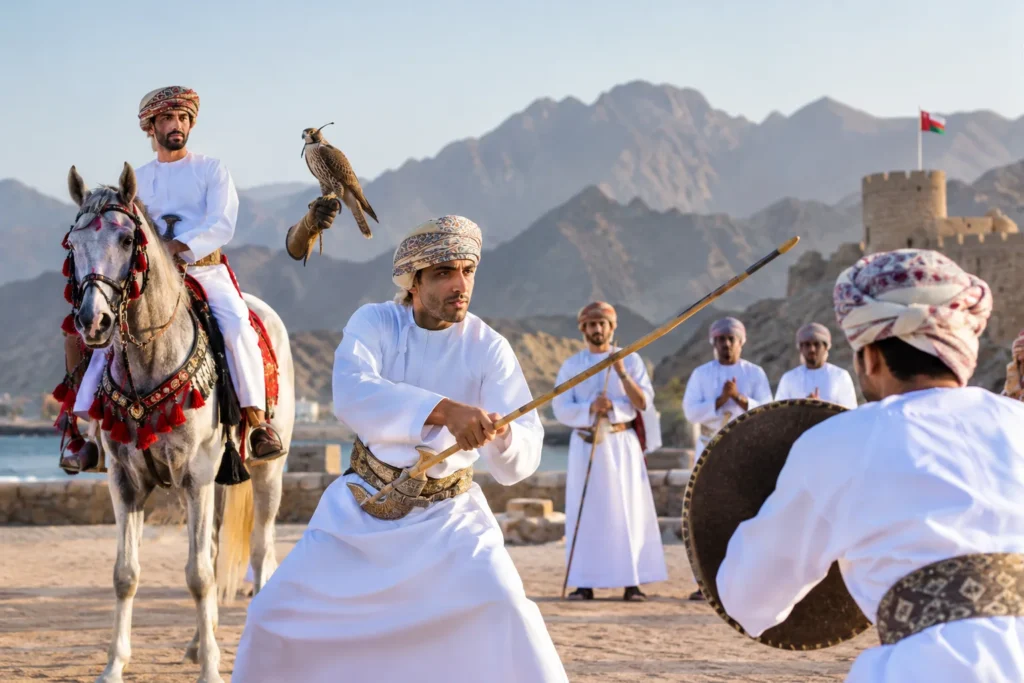
Traditional sports add an important cultural dimension to the sporting landscape. Camel racing, equestrian activities, traditional games, and maritime traditions connect physical competition with Oman’s history and cultural identity. The government continues to organize and support traditional sporting activities. In 2026, for example, the Ministry of Culture, Sports and Youth held a Traditional Games Season in Salalah featuring traditional Omani games and community participation. These activities should not necessarily be placed in a popularity ranking alongside football; their significance is better understood through cultural heritage, participation, and continuity between generations.
Why Is Camel Racing Important in Oman?
Camel racing has a distinctive position because it combines sport, heritage, animal breeding, and traditional culture.
Oman has a dedicated Oman Camel Racing Federation, demonstrating that camel racing is not simply an informal cultural activity but an organized sporting discipline. The Ministry of Culture, Sports and Youth lists camel racing among the country’s recognized sports federations.
Government events also demonstrate its continuing importance. The 2026 His Majesty the Sultan’s Camel Racing Cup included several days of competition and attracted camel owners to the Al Fulaij Racing Track. The official government description specifically connects the event with preserving camel breeds and cultural heritage.
For visitors, camel racing offers a different perspective on Omani sport: competition is closely connected to traditional life and cultural identity rather than only modern stadium-based athletics.
What Role Do Equestrian Sports Play in Oman?
Equestrian sports are another important part of Oman’s sporting and cultural landscape. The country has an Oman Equestrian Federation, and equestrian activities are represented within the official sports structure.
Horse-related sports can include disciplines such as endurance riding and other forms of organized equestrian competition. They also connect with Oman’s longstanding traditions of horsemanship.
The significance of equestrian sport therefore extends beyond physical competition. It combines athletic ability, animal care, endurance, technical skill, and cultural heritage.
For people interested in sports that combine fitness with outdoor environments, equestrian disciplines offer a very different training experience from conventional gym-based exercise or team sports.
Are Traditional Games Still Practiced in Oman?
Yes. Traditional games continue to receive organized attention.
In August 2026, the Ministry of Culture, Sports and Youth organized the Traditional Games Season in Al Dahariz Beach in Salalah. The event included traditional Omani games such as Al Yous, Al Sayyad, and Al Atruj, with six clubs participating across the competition. The ministry described the event as part of preserving and passing traditional sporting heritage to future generations.
This is significant because it shows that traditional sports are not only historical references. Some are being incorporated into contemporary events designed to encourage participation, competition, and cultural awareness.
Which Outdoor and Water Sports Are Popular in Oman?
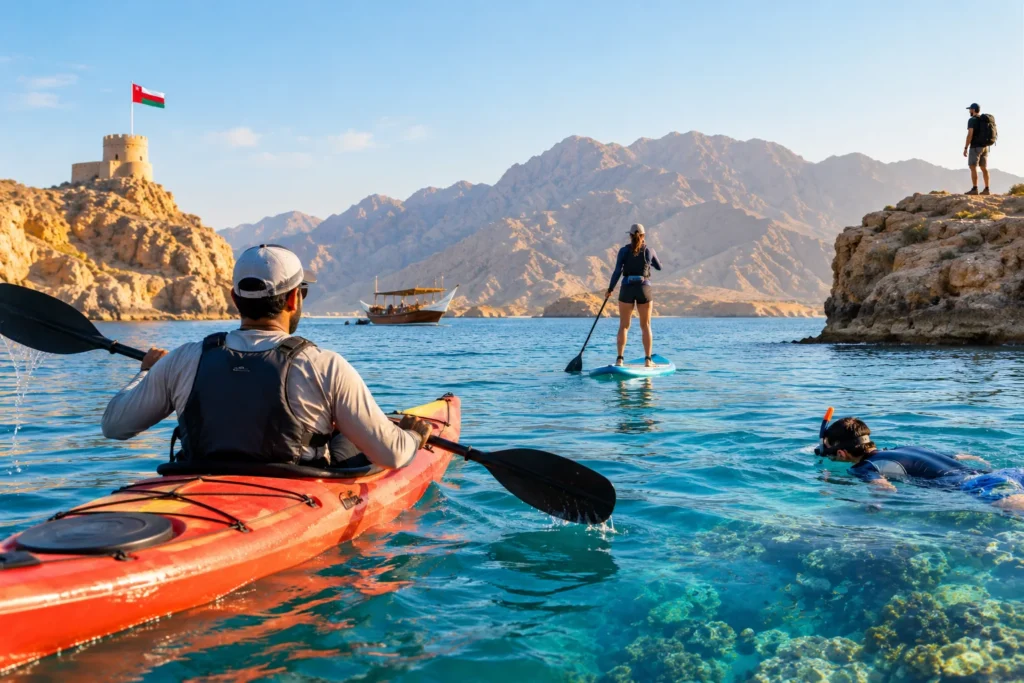
Oman’s geography creates opportunities for a wide range of outdoor and water-based sports. Its coastline supports sailing and other marine activities, while organized programs provide pathways for young people and competitive athletes. Sailing has received particular institutional support through Oman Sail, which was established in 2008 and runs youth, community, women’s, and high-performance programs. Outdoor sports therefore form an important part of Oman’s broader sporting environment, although participation and popularity can vary by location, season, and community.
Why Is Sailing Important in Oman?
Sailing has a particularly strong connection to Oman because of the country’s maritime history and extensive coastline.
Oman Sail was established in 2008 as a national initiative designed to revive Oman’s maritime heritage through sport. Its current programs include youth development, high-performance sailing, women’s sailing, community sailing, and other initiatives. Oman Sail reports that more than 50,000 Omani young people have been introduced to sailing through its programs.
Government sporting events also continue to support the discipline. The 2026 Oman Sailing Championship was held at Ras Al Hadd and was designed to develop sailors, identify Omani talent, and prepare athletes for regional and international competition.
Sailing therefore represents both a modern competitive sport and an expression of Oman’s maritime heritage.
Are Swimming and Other Water Sports Part of Oman’s Sports Culture?
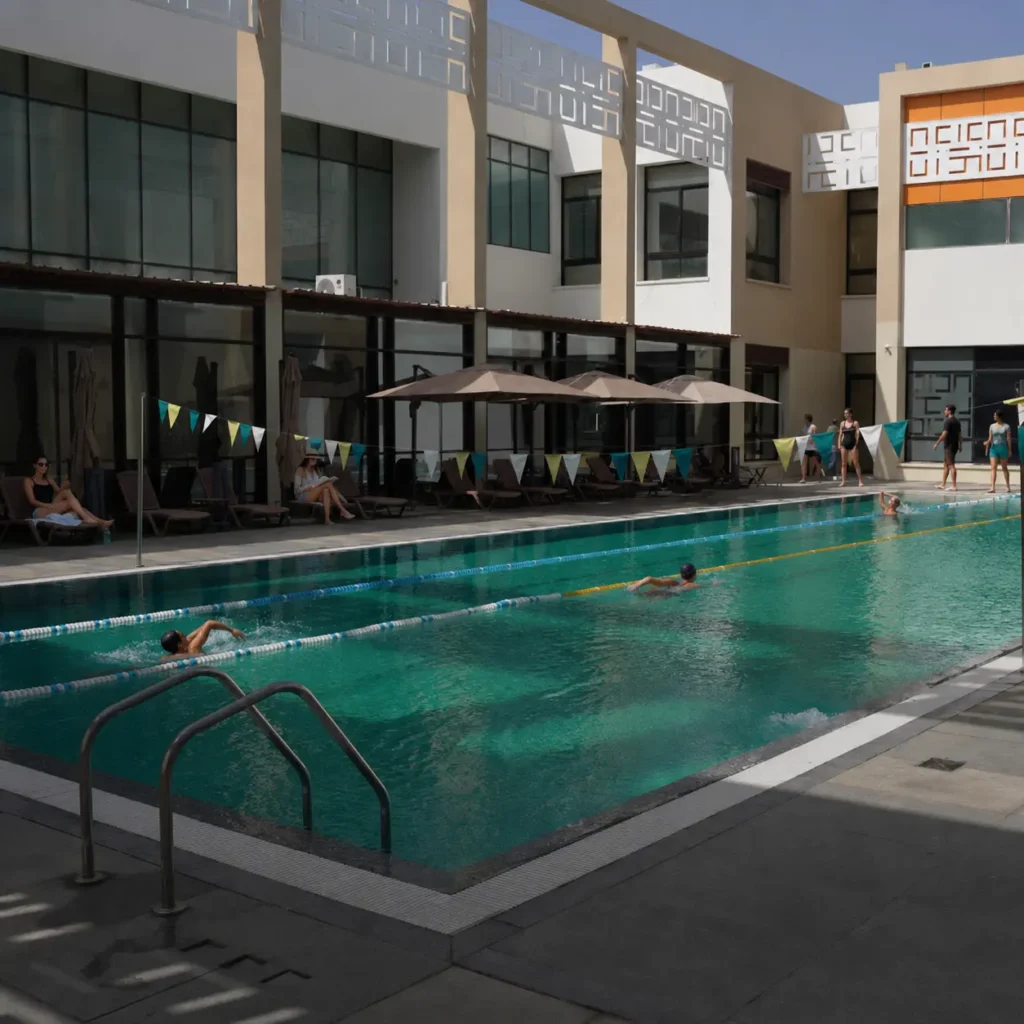
Swimming is formally represented within Oman’s sports system through a national federation, while the Ministry of Culture, Sports and Youth also lists water and maritime sports among organized sporting activities.
Oman’s coastline provides a natural environment for swimming and other water-based activities. However, it is important to distinguish recreational participation from competitive sport. Someone swimming at a beach for fitness is participating in a physical activity, while competitive swimming involves structured training, events, and formal sporting organizations.
This distinction is useful when discussing “popular sports” because popularity can be measured in different ways. A recreational activity may have many participants without having the same competitive visibility as football or a nationally organized sport.
Which Sports Have a Strong Competitive Structure in Oman?
Oman has a broad official sports structure extending well beyond its most visible sports. The Ministry of Culture, Sports and Youth lists national federations for football, handball, basketball, volleyball, swimming, tennis, hockey, athletics, camel racing, equestrian sports, shooting, golf, cycling, and table tennis. It also lists specialized committees covering bodybuilding, chess, bowling, fencing, weightlifting, powerlifting, esports, and other disciplines. This structure demonstrates that Oman’s sports ecosystem includes both traditional and modern disciplines.
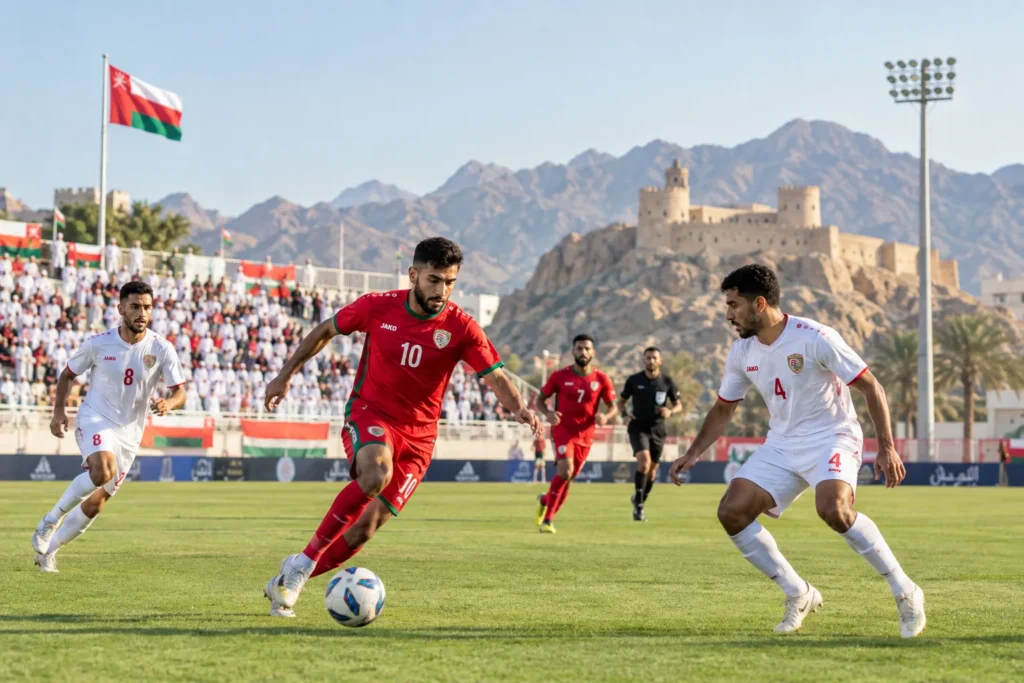
How Is Football Organized in Oman?
Football has one of the most developed sports structures in the country.
The Oman Football Association states that 44 clubs operate under its umbrella across different regions of the Sultanate. The association also manages multiple national teams, including senior, youth, beach soccer, and futsal teams.
Domestic competitions also have a long history. The Sultan’s Cup, for example, dates back to 1972 and has developed through several competition formats over the decades.
Internationally, Oman is a member of FIFA and the AFC, and FIFA records the national team’s participation in World Cup qualifying and other international competitions.
This combination of domestic clubs, national competitions, youth development, and international representation makes football structurally prominent in Oman.
Which Sports Have National Federations in Oman?
Oman has a broad network of national sports federations. Official Ministry listings include football, handball, basketball, volleyball, swimming, tennis, hockey, athletics, camel racing, equestrian sports, shooting, golf, cycling, and table tennis.
Additional sports are managed through specialized committees, including bodybuilding, chess, esports, bowling, fencing, weightlifting, powerlifting, and other disciplines.
This matters for athletes because a formal federation generally provides a pathway for organized competition, athlete development, coaching, events, and national representation.
It also shows why a simple “top five” list can be misleading. Oman has a much wider sporting ecosystem than the handful of sports most visible internationally.
What Sports Represent Oman Internationally?
Football and cricket are among the sports with clear international visibility, while sailing, athletics, equestrian sports, cycling, and other disciplines also provide international competitive opportunities.
Oman’s football structure is connected to FIFA and the AFC, while Oman Cricket is the official governing body for cricket and has developed the men’s national team for international competition. The ICC records Oman’s participation in major international cricket events and its progression through international cricket structures.
Sailing has another form of international presence through Oman Sail, which runs high-performance programs and international events.
International visibility, however, should not automatically be interpreted as domestic popularity. These are related but different measures.
How Is Sports Culture Changing in Oman?
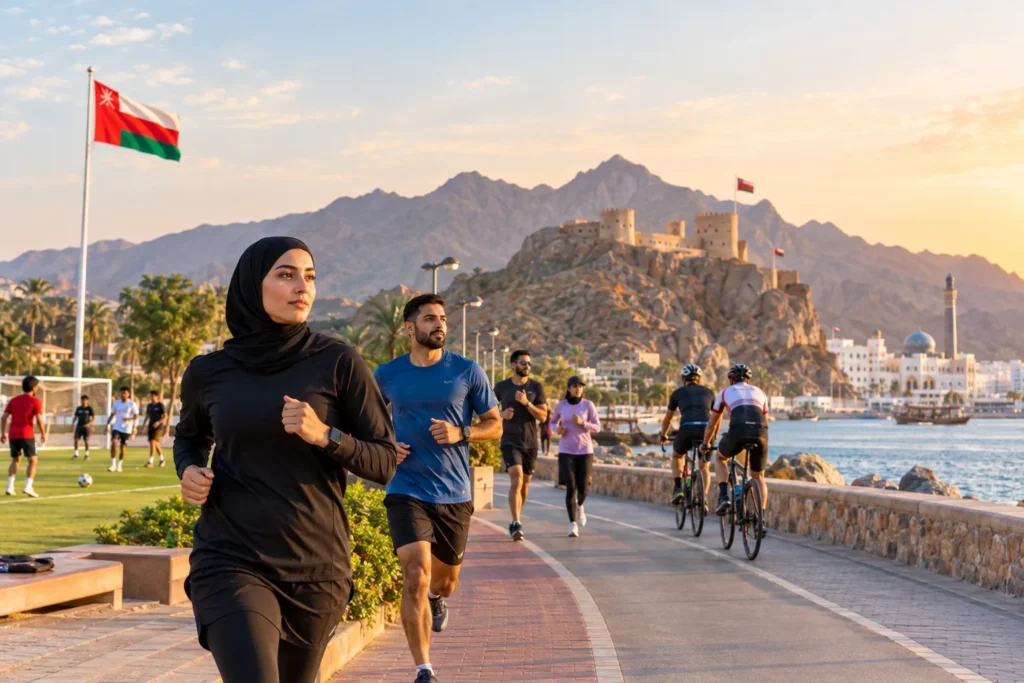
Oman’s sports culture combines established team sports, traditional activities, fitness initiatives, youth programs, and newer sporting disciplines. Government programs increasingly emphasize participation and healthy lifestyles alongside competitive achievement. For example, the Ministry’s 2026 “Summer of Sports” activities included open fitness sessions, football, team games, and recreational competitions aimed at different sections of the community. This suggests that the development of sports in Oman is not limited to elite competition. Community participation and youth engagement are also becoming important parts of the broader sports environment.
How Are Young People Getting Involved in Sports?
Youth participation is supported through sports clubs, organized competitions, community programs, and specialized development initiatives.
The Ministry of Culture, Sports and Youth describes its sports and youth programs as part of a broader effort to encourage participation and develop young people. Its 2026 community sports initiatives included fitness activities and football competitions designed for different age groups.
Sailing provides another example. Oman Sail operates youth and community programs designed to introduce young Omanis to the sport and develop future athletes.
These initiatives are important because a country’s sporting culture depends not only on professional teams but also on opportunities for young people to discover, practice, and continue participating in sport.
Which Sports Could Grow Further in Oman?
Growth can occur across several areas, including organized team sports, sailing and other water sports, endurance activities, cycling, esports, strength sports, and community fitness.
The official sports structure already includes a wide range of disciplines, from traditional sports such as camel racing and equestrian activities to newer areas such as esports.
Rather than predicting which sport will become the next major sport in Oman, it is more useful to look at the infrastructure already being developed: federations, youth programs, community competitions, sports facilities, and international events.
This broader perspective shows that Oman’s sporting future is likely to remain diverse, with traditional heritage and modern competitive sports developing alongside each other.
Popular Sports in Oman: Categories and Characteristics
| Sport | Category | Why It Matters |
|---|---|---|
| Football | Team sport | The country’s most popular sport and has a large club structure |
| Cricket | Team sport | Strong international presence and organized community participation |
| Handball | Team sport | Established national federation and competitive structure |
| Basketball | Team sport | Organized national and regional competition |
| Volleyball | Team sport | Established federation and competitive activity |
| Athletics | Individual sport | Formal national federation and international pathway |
| Camel racing | Traditional sport | Strong connection to Omani heritage |
| Equestrian sports | Traditional & competitive | Combines sport with horsemanship and endurance |
| Sailing | Water sport | Supported through youth, community, and high-performance programs |
| Swimming | Aquatic sport | Formal national federation and recreational potential |
Note: This table is a category-based overview, not an official popularity ranking. Football is explicitly identified as the most popular sport by Oman’s Ministry of Culture, Sports and Youth, but there is no single official national dataset that ranks every sport by participation or fan numbers.
How Can You Choose a Sport to Try in Oman?
If you are an athlete, resident, expatriate, or visitor interested in becoming more active in Oman, consider these factors:
- Choose your environment: Decide whether you prefer indoor, outdoor, coastal, or field-based activities.
- Consider the climate: Outdoor exercise should be planned around temperature, humidity, and sun exposure.
- Match the sport to your goal: Choose between fitness, competition, social participation, or cultural experience.
- Check accessibility: Look for local clubs, sports facilities, community programs, and organized sessions.
- Start at an appropriate level: Beginners should build fitness and technical skills progressively.
- Consider the season: Some outdoor and water activities may be more comfortable at particular times of year.
What Do Official Sports Organizations Say About Sports in Oman?
The Oman Football Association describes football as the country’s largest sports association, with 44 clubs participating under its structure. The Ministry of Culture, Sports and Youth goes further by explicitly identifying football as “the most popular” sport in Oman.
Oman Sail provides a different perspective on sports development. Its stated mission is to use sailing to develop confidence and transferable life skills while reconnecting younger generations with Oman’s maritime heritage. The organization reports that more than 50,000 Omani young people have been introduced to sailing through its programs.
Together, these examples show two sides of Omani sport: large-scale participation and competition in established sports, alongside targeted development of culturally significant and emerging disciplines.
Conclusion
The sports culture of Oman is broader than a simple list of popular games. Football clearly holds the strongest documented position, supported by a large national federation and extensive club structure. At the same time, cricket, handball, basketball, volleyball, athletics, swimming, equestrian sports, camel racing, sailing, and other disciplines contribute to the country’s competitive and recreational landscape.
Traditional sports also connect physical activity with Omani heritage, while youth and community programs are expanding opportunities for participation. For anyone interested in fitness and sport in Oman, 5dfitness can be a useful starting point for exploring how different activities fit into the country’s changing sports culture.
FAQ
Football is officially described by Oman’s Ministry of Culture, Sports and Youth as the most popular sport in the Sultanate.
Football has the clearest position as the most popular sport. Other established sports include cricket, handball, basketball, volleyball, athletics, swimming, equestrian sports, camel racing, and sailing.
Cricket has an established presence in Oman, including an official governing body and men’s national team competing internationally. Its development has also been supported by diverse community participation.
Traditional sporting activities include camel racing, equestrian activities, traditional games, and maritime traditions such as sailing and dhow-related activities.
Camel racing remains an organized traditional sport with a national federation and major events such as the His Majesty the Sultan’s Camel Racing Cup.
Sailing and swimming are among the organized aquatic sports in Oman. Sailing has particularly strong institutional support through Oman Sail’s youth, community, and high-performance programs.
Football, cricket, fitness activities, swimming, sailing, and other organized team and individual sports can be found in Muscat. The exact level of participation varies by community and activity.