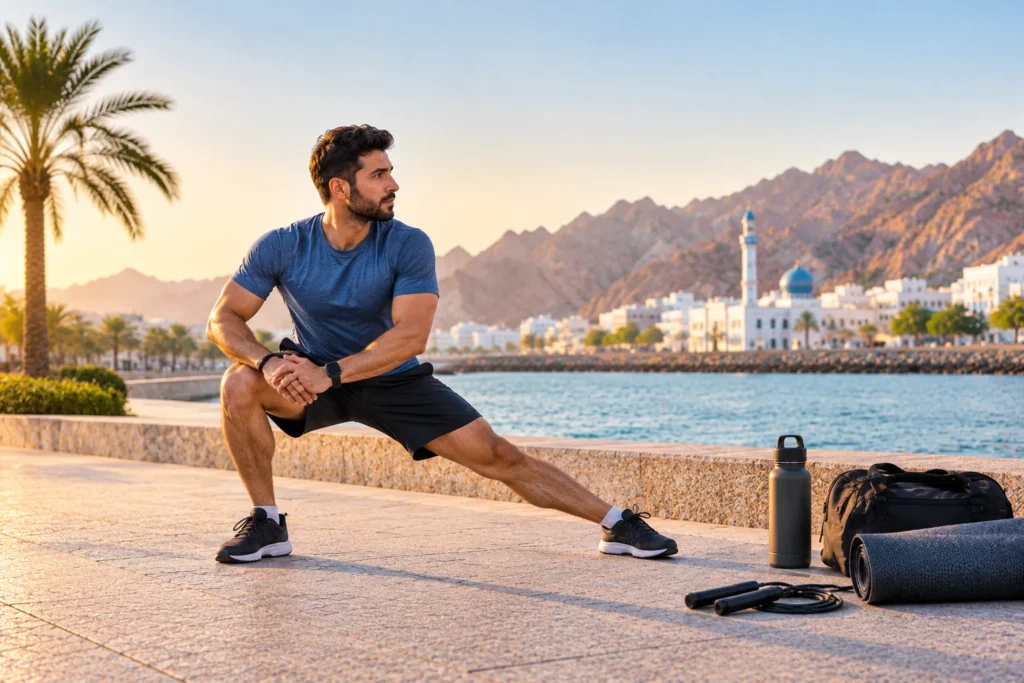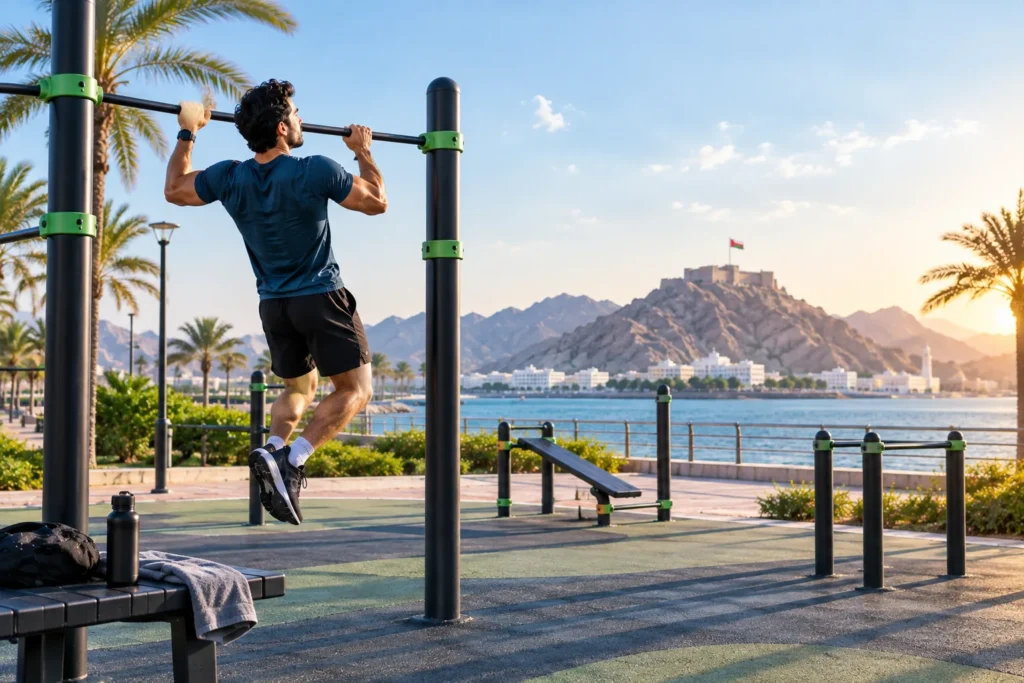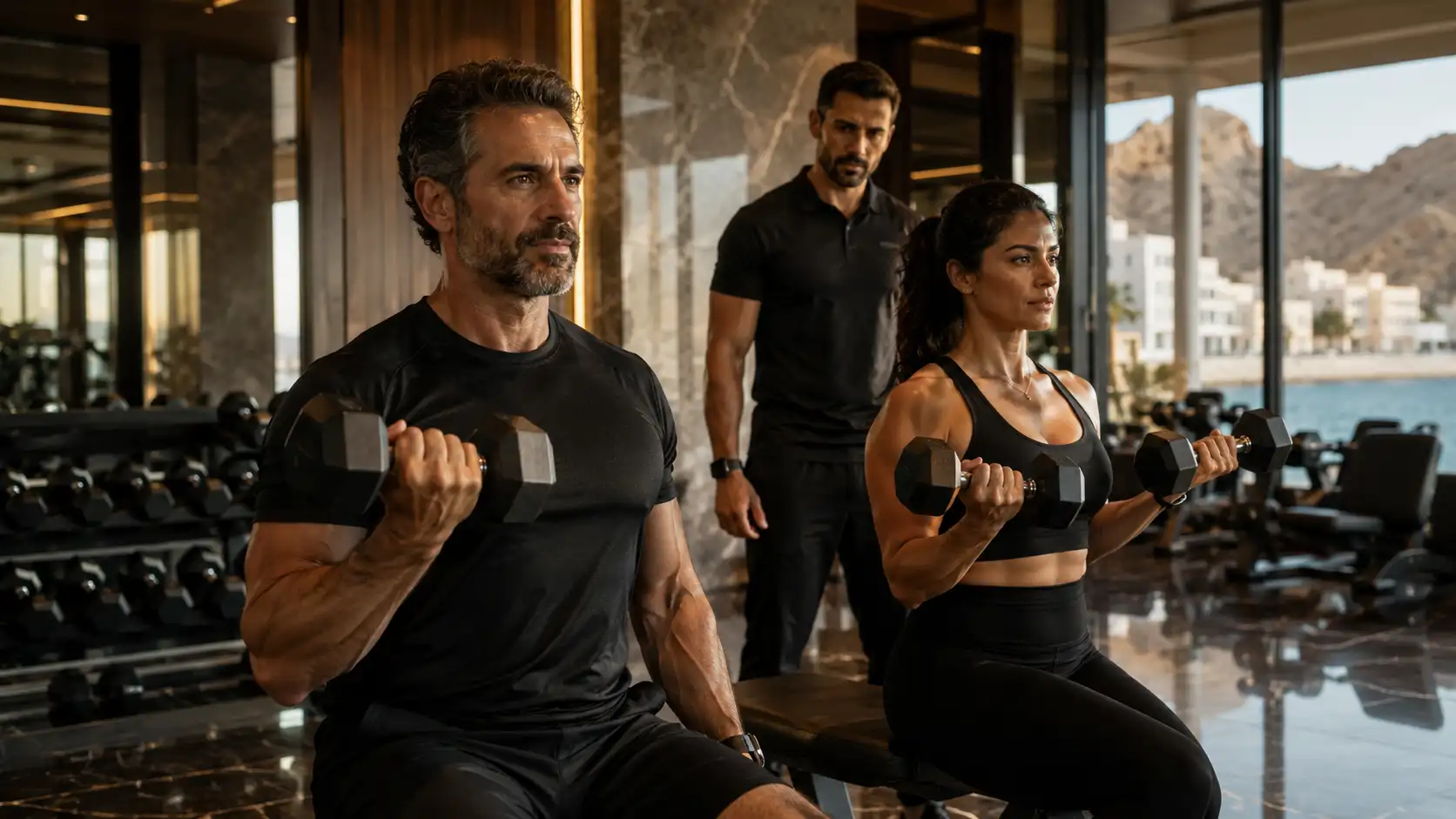
Most people do not fear aging itself. They fear losing energy, strength, confidence, independence and the ability to enjoy life fully. That is why Longevity Fitness in Oman is becoming more than a trend. It is a smarter way to train for the next decade of your life, not just the next mirror check.
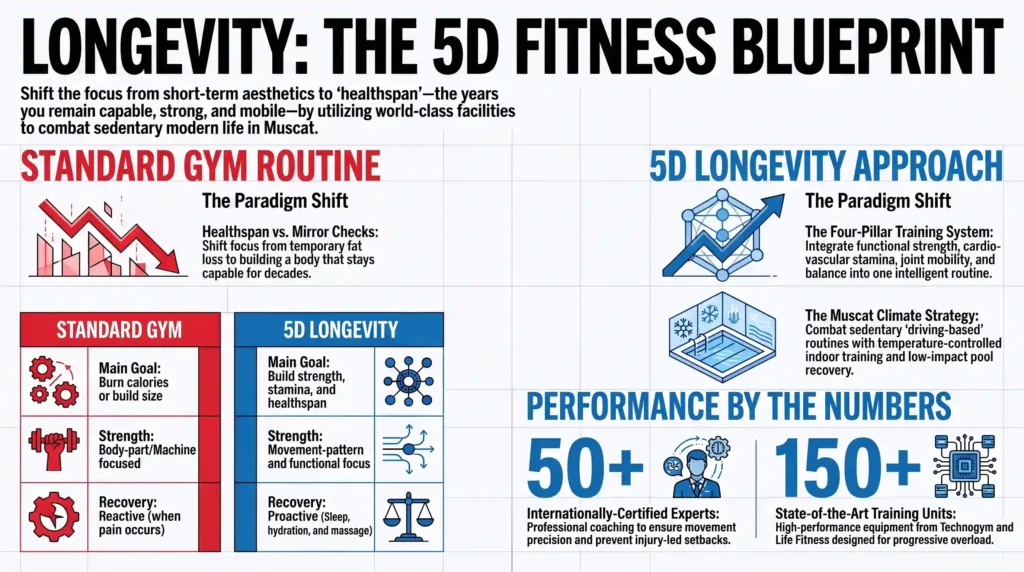
In Muscat, the challenge is specific. Long workdays, hot weather, driving-based routines, inconsistent sleep and low daily movement can quietly reduce fitness. Then stairs feel harder, joints feel stiffer and recovery takes longer. Longevity training changes that path by combining strength, cardio, mobility, balance and recovery into one sustainable system.
Listen
What Is Longevity Fitness in Oman and Why Does It Matter?
Longevity training is fitness designed around healthspan: the years you can move well, train safely, recover properly and stay capable in daily life.
How does longevity training support real healthspan?
Longevity Fitness in Oman focuses on what your body must keep doing well: lifting, walking, climbing stairs, rotating, balancing, breathing under effort and recovering after stress. A typical fat-loss plan may only chase calories. A bodybuilding plan may only chase size. A longevity plan asks a more useful question: will this training make your future body stronger, safer and more capable?
That question changes the program. Squats, rows, presses, carries, swimming, cycling and mobility drills are not selected randomly. Lower-body strength supports independence. Upper-body pulling helps posture. Core training improves spinal control. Cardio builds heart and lung capacity. Mobility keeps joints usable. Balance training protects confidence. This is why healthy aging fitness should not feel like a soft version of training. It should feel precise, progressive and intelligent.
- Train strength to protect muscle, joints and daily function.
- Train cardio to support heart health, stamina and recovery.
- Train mobility to keep movement smooth and pain-aware.
- Train balance to improve confidence and reduce avoidable risk.
“Physical activity is especially critical for older adults.”
American College of Sports Medicine
Why is Muscat a unique place for healthy aging fitness?
Muscat is a beautiful city, but modern life here does not automatically create enough movement. Many residents drive between work, home, shops and social commitments. Outdoor activity can be excellent during cooler months, but intense summer heat often pushes training indoors. That makes consistency a strategic decision, not something to leave to motivation.
Longevity Fitness in Oman must respect local life. Early morning sessions often work well for professionals. Indoor strength and cardio help people stay consistent during hotter months. Pool training can support conditioning with less joint stress. Padel and coached functional sessions add social energy and coordination. Recovery planning matters because heat, hydration and sleep quality can affect performance.
This is where a Muscat-based plan becomes more useful than generic advice. It should help you train year-round, manage fatigue, adjust intensity and stay active without burning out. For broader lifestyle context, read the 5D Fitness guide on healthy living in Muscat.
Why Is Strength Training Essential for Healthy Aging Fitness?
Strength is one of the strongest foundations of longevity because muscle supports metabolism, balance, posture, joint protection and physical independence.
How does muscle protect your future body?

After adulthood, people gradually lose muscle and power unless they train against resistance. This loss may feel subtle at first: weaker grip, slower walking, lower confidence on stairs, more back discomfort or longer recovery after simple activity. Strength training interrupts that decline by giving the body a reason to preserve and rebuild useful tissue.
Healthy aging fitness should train major movement patterns: squat, hinge, push, pull, carry, rotate and stabilize. Machines can help beginners learn safely. Dumbbells and cables develop control. Bodyweight movements improve coordination. Loaded carries train grip, posture and trunk stability. The point is not to lift recklessly. The point is to build strength that transfers into real life.
“The more muscle health you have, the better your trajectory of aging.”
Dr. Gabrielle Lyon, physician — Muscle-Centric Medicine
For anyone building Longevity Fitness in Oman, strength work should be coached, progressive and realistic. A useful starting point may include leg press, goblet squats, Romanian deadlifts, seated rows, cable rotations and farmer’s carries. The goal is measurable progress: better range, better posture, more reps, improved control and less fear around movement.
How Much Cardio Do You Need for Longevity Fitness in Oman?
Cardio is not only for burning calories. It trains the heart, lungs, blood vessels, mitochondria, mood and daily energy.
What cardio intensity supports aging without burnout?
For Longevity Fitness in Oman, cardio should be sustainable first. The base is usually moderate-intensity work where breathing is elevated but controlled. This may include incline walking, cycling, rowing, elliptical training, swimming or steady outdoor walks during cooler Muscat months. The goal is to build an engine that helps you feel energetic, not exhausted.
The World Health Organization recommends adults perform regular aerobic activity and muscle-strengthening exercise. In gym language, that means cardio should not replace resistance training. It should sit beside it. A smart program may use two to three moderate cardio sessions weekly, then add occasional higher-intensity intervals only when recovery, joints and baseline fitness are ready.
“Exercise is by far the most potent longevity ‘drug.’”
Peter Attia, MD — Men’s Health
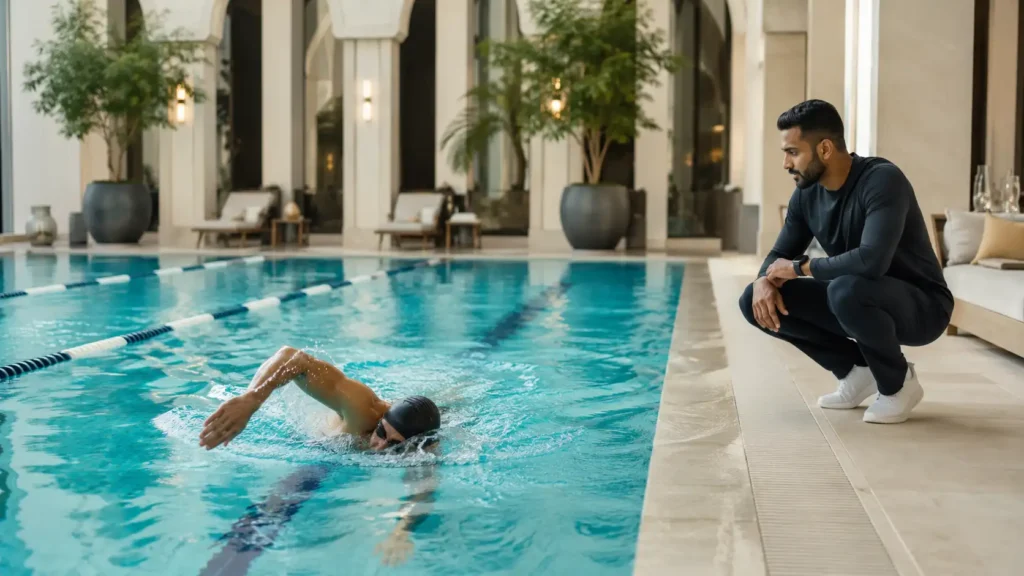
In Oman, indoor cardio is often the smarter option during hotter months. Swimming is especially valuable because it develops endurance with lower joint impact. The guide to swimming pool training in Muscat fits well for people who want conditioning without constant pounding on the knees, hips or lower back.
| Training Focus | Standard Gym Routine | Longevity Fitness Approach |
|---|---|---|
| Main Goal | Burn calories or build muscle | Build strength, stamina, mobility, balance and healthspan |
| Cardio | Often random or skipped | Planned for heart health, endurance and recovery |
| Strength | Often body-part focused | Movement-pattern based with progressive overload |
| Mobility | Usually an afterthought | Built into warm-ups, cooldowns and recovery |
| Recovery | Reactive when soreness appears | Proactive through sleep, hydration and load management |
What Weekly Plan Works Best for Longevity Training?
The best plan is not the hardest plan. It is the plan you can repeat, recover from and improve over months.
How should a balanced week look for active aging in Muscat?
A practical week for Longevity Fitness in Oman should combine resistance training, cardio, mobility, balance and recovery. For many adults, four to five active days per week works well, but the exact structure depends on training history, injuries, fitness level, medical status and schedule.
The rhythm matters. Strength work protects muscle and bone support. Cardio develops the engine. Mobility keeps movement smooth. Balance improves confidence. Sport-based training adds enjoyment, which is critical because people repeat activities they actually like. Padel, swimming and functional circuits can all support healthy aging fitness when load and recovery are managed properly.
- Two or three weekly strength sessions using full-body movement patterns.
- Two or three cardio sessions through walking, cycling, swimming or rowing.
- Short mobility work before and after sessions to protect range of motion.
- One enjoyable sport-based session such as padel, squash or coached conditioning.
Members who enjoy social training may benefit from padel as a smarter way to train. It combines movement, reaction speed, coordination and community, which makes long-term consistency easier.
How do recovery and sleep affect long-term results?
Recovery is where longevity training becomes intelligent. Muscles adapt after training, not during training. The nervous system needs downtime. Joints need sensible loading. Sleep supports tissue repair, appetite control, hormone regulation, focus and mood. Without recovery, even a well-designed plan can become another source of stress.
In Oman, recovery requires extra attention because heat, hydration, work pressure and late schedules can increase fatigue. A member who trains hard but sleeps poorly may feel stuck despite effort. They may experience persistent soreness, lower motivation, reduced strength and more frequent aches. In that situation, the answer is not always “push harder.” Sometimes the smarter answer is lower volume, pool recovery, mobility work or an extra rest day.
- Sleep quality and morning energy are declining.
- Soreness lasts longer than normal or affects technique.
- Motivation drops even when goals still matter.
- Performance decreases across several sessions.
For deeper support, read the guide on muscle recovery in Oman. Recovery is not weakness. It is the system that converts training effort into adaptation.
How Can Coaching Make Longevity Fitness Safer and More Effective?
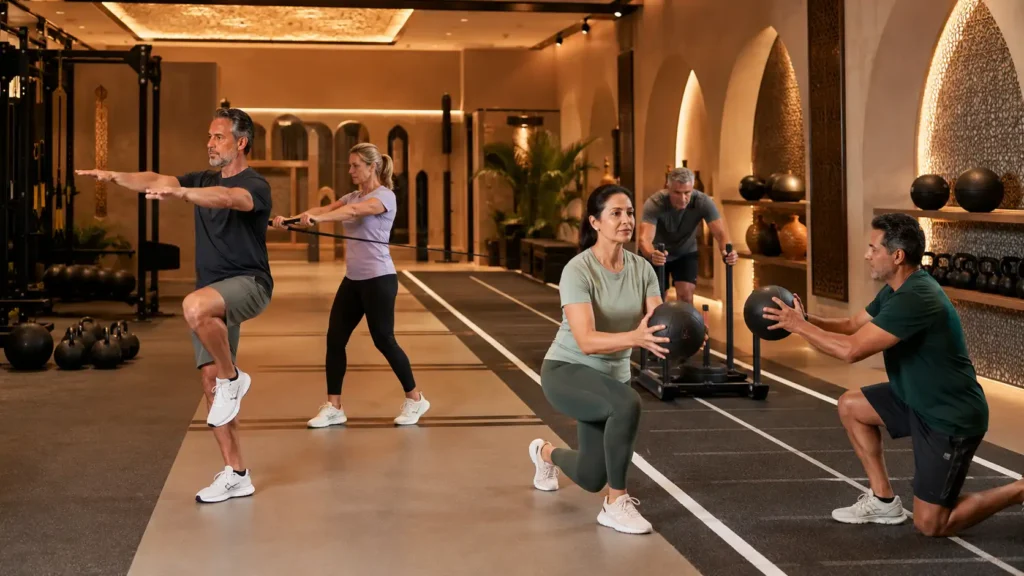
Information is everywhere. Execution is the problem. Coaching turns general advice into a plan that matches your body, your schedule and your actual limitations.
Why does personal coaching matter for healthy aging fitness?
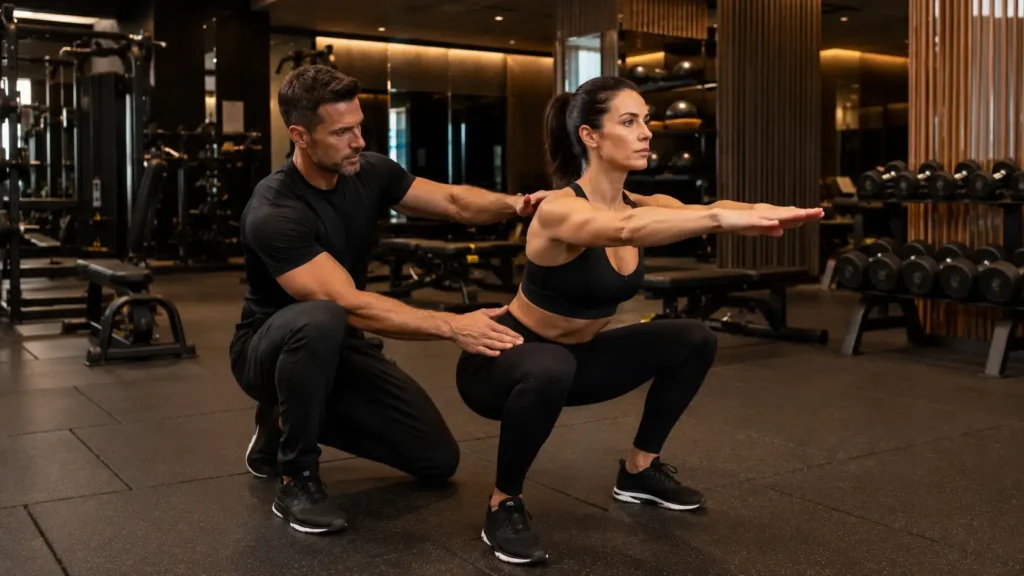
Healthy aging fitness requires precision. Technique matters more as training age, life stress and injury history accumulate. A coach can adjust range of motion, choose safer alternatives, progress load gradually and prevent the common mistake of doing too much too soon.
This is especially important for adults returning after years away from the gym. Many people remember what they used to do, but their current body needs a fresh baseline. Good coaching removes guesswork. It makes training feel challenging, structured and achievable. It also improves accountability because each session has a clear purpose rather than random machine-hopping.
At 5D Fitness, a longevity-focused approach should begin with assessment, movement quality, training history and lifestyle context. The message is not simply “train harder.” It is “train for the life you want to keep living.” That is more powerful for professionals, parents, older adults and anyone who wants strength that still matters ten years from now. For broader structure, the workout plan in Oman guide is a useful internal support article.
Conclusion
Longevity Fitness in Oman is not about chasing youth. It is about building capacity, protecting independence and feeling strong enough to enjoy the life you are working so hard to create. In Muscat, that means training intelligently through climate, schedule, recovery, hydration and motivation.
The winning formula is clear: strength training, cardio, mobility, balance, sleep, hydration and coaching. When these pieces work together, fitness becomes less about punishment and more about possibility. You stop training only for today’s workout and start training for future energy, confidence and freedom.
Train for more than the next session. Train for the strength, movement and confidence you want to keep for life. Book a longevity-focused fitness consultation at 5D Fitness in Muscat and start building your healthspan with expert coaching.
FAQ
Longevity Fitness in Oman is structured training that supports strength, cardio health, mobility, balance, recovery and long-term independence for adults in Muscat and across Oman.
No. Healthy aging fitness is useful from your 30s onward because muscle, mobility and cardiovascular capacity are easier to protect early than rebuild later.
Most adults do well with three to five weekly sessions combining strength, cardio, mobility and recovery. The best schedule depends on fitness level and lifestyle.
Yes. Strength training supports muscle, bone density, posture, balance, metabolism and confidence, making it one of the most important parts of longevity training.
Both matter. Strength protects muscle and function, while cardio supports heart, lung and metabolic health. A complete longevity plan combines both.
Yes. Beginners should start with assessment, basic movement patterns, moderate intensity, coach feedback and gradual progression before heavier or more complex training.
Incline walking, cycling, rowing and swimming are strong options. Swimming is especially useful in Muscat because it supports fitness with lower joint stress.
Mobility training helps joints move better, improves exercise technique, reduces stiffness and makes strength more useful in daily life, sport and long-term movement.
Recovery allows muscles, joints and the nervous system to adapt. Without sleep, hydration and load management, training can create fatigue instead of progress.
Start with a professional assessment at a gym that offers strength training, cardio, recovery support and coaching. A structured plan is safer than random workouts.