
Injury Prevention in Oman matters because the best workout plan is not the one that destroys you for three days. It is the one you can repeat, progress, and enjoy without constant pain. Many gym members in Muscat start with high motivation, then lose momentum because of shoulder irritation, knee pain, back tightness, poor recovery, or training that becomes too intense too quickly.
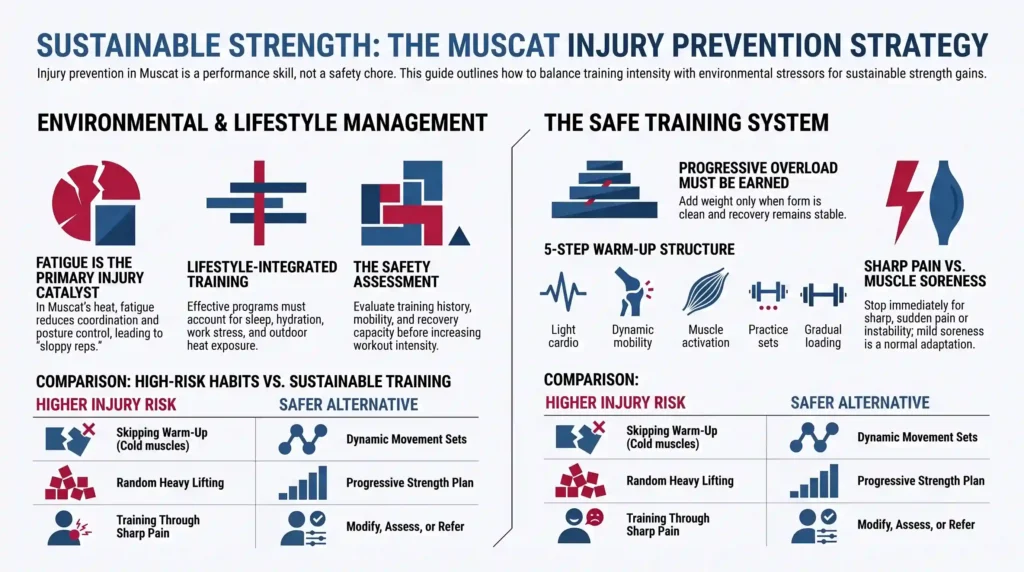
Safe training does not mean easy training. It means intelligent training. It means warming up with purpose, lifting with control, progressing gradually, respecting recovery, and knowing when your body is giving you a warning instead of a challenge. For people training in Oman’s heat, busy work routines, and high-energy gym culture, injury prevention becomes a performance skill, not a boring safety topic.
At 5D Fitness, the goal is simple: help members train with confidence, build real strength, and reduce avoidable setbacks through smarter coaching, better structure, and consistent habits.
Listen
What Does Injury Prevention in Oman Really Mean for Gym Members?
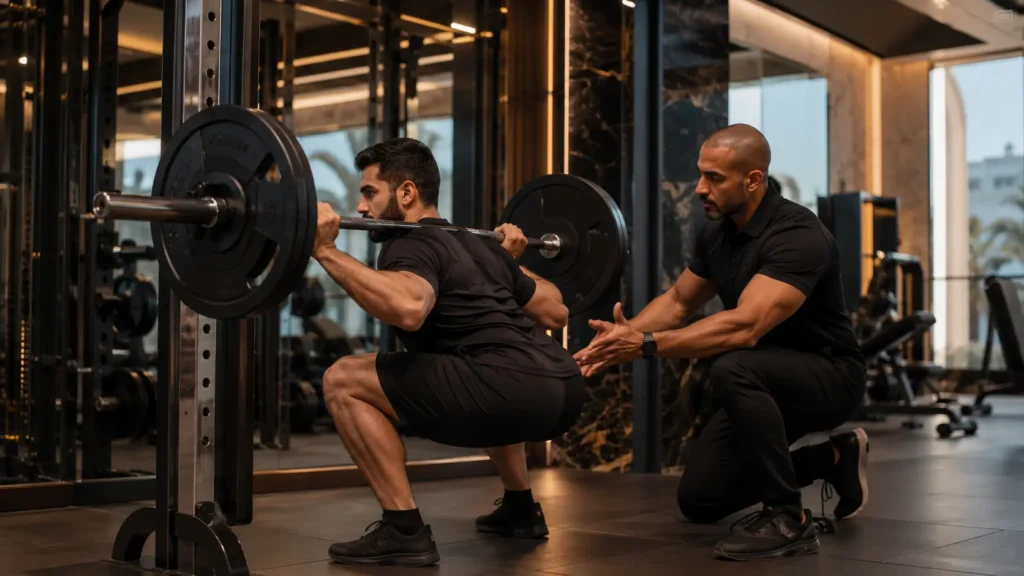
Injury prevention is not just about avoiding accidents. It is about creating a body that can handle training stress, recover from it, and return stronger.
Why does safe training start before the first heavy set?
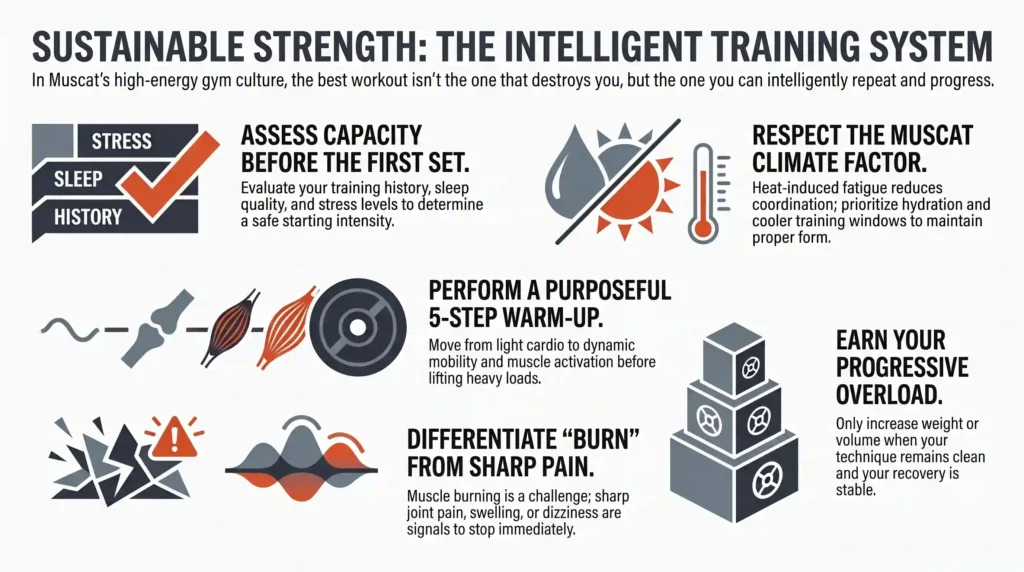
Safe training begins before you touch the barbell, treadmill, dumbbell, or resistance machine. It starts with knowing your current ability, not copying someone else’s routine. A beginner who copies an advanced lifter’s split may overload joints before muscles, tendons, and movement patterns are ready. An experienced athlete returning after a break may remember old performance levels, but the body still needs time to rebuild capacity.
Injury Prevention in Oman should consider lifestyle as much as exercise. Sleep, hydration, work stress, fasting periods, air-conditioned environments, long sitting hours, and outdoor heat can all affect how the body responds to training. Someone may feel strong mentally but still be under-recovered physically.
A safe first assessment should clarify:
- Training history, current injuries, and painful movements
- Weekly schedule, sleep quality, hydration, and stress level
- Strength, mobility, balance, posture, and coordination
- Main goal: fat loss, muscle gain, sport performance, or general fitness
- Suitable starting intensity and realistic progression speed
This is where a coach adds value. Good programming is not just a list of exercises. It is a decision-making system that adjusts training to the person in front of the coach.
How does Muscat’s climate affect injury risk?
Muscat’s environment changes the way people should think about training. Even if you train indoors, daily heat exposure can increase fluid loss and make hydration more important. Outdoor sessions, beach workouts, padel, squash, swimming, and conditioning drills can all feel different depending on temperature, humidity, time of day, and recovery status.
Heat does not directly “cause” every injury, but it can increase fatigue. Fatigue can reduce coordination, concentration, grip strength, posture control, and running mechanics. That is when sloppy reps happen. A tired athlete may land harder, round the back during deadlifts, rush through warm-ups, or ignore tightness that should have changed the plan.
For outdoor training, the safest windows in Muscat are usually early morning or cooler evening periods, especially outside the hottest months. For more context, read this related guide on outdoor workout in Muscat. Injury Prevention in Oman works best when climate, hydration, timing, and exercise selection are treated as part of the same system.
How Can Safe Training Improve Injury Prevention in Oman?
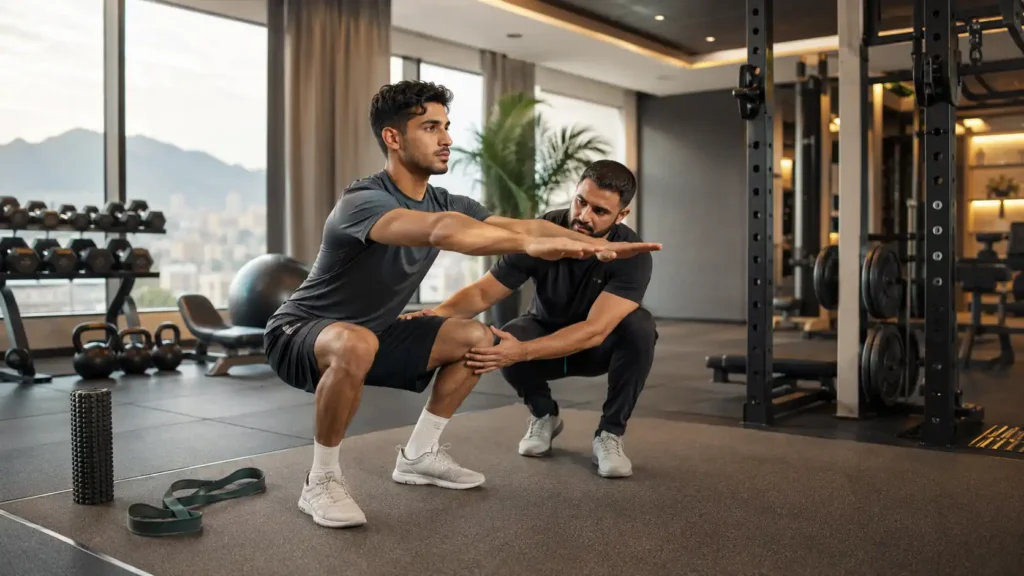
Safe training gives your body enough challenge to adapt without forcing it into breakdown. That balance is where real progress happens.
What should a coach check before increasing intensity?
A coach should not increase weight, speed, volume, or complexity just because the client survived the last workout. The better question is: did the client adapt well? If sleep was poor, soreness lasted too long, technique broke down, or motivation crashed, adding more intensity may be the wrong move.
“injury prevention shouldn’t be separate from your training program; it should be embedded into it.”
Mayo Clinic News Network
That advice fits gym training perfectly. Safe training should be built into the program through exercise selection, proper warm-ups, load management, rest days, mobility work, and technique coaching. A person training for fat loss may need lower-impact conditioning before high-volume jumping. A strength trainee may need more hip mobility before heavy squats. A beginner may need machine-based control before free-weight complexity.
This is why progressive overload must be earned. Add difficulty when form stays clean, recovery is stable, and performance is improving. That is how safe training supports long-term results instead of creating repeated stop-start cycles.
Which Training Mistakes Cause the Most Gym Injuries?
Most gym injuries are not mysterious. They often come from preventable mistakes repeated for weeks until the body finally complains.
What happens when you progress too fast?
Progressing too fast is one of the most common reasons Injury Prevention in Oman becomes relevant for motivated gym members. People often add too much weight, too many sets, extra cardio, and stricter dieting at the same time. At first, it feels disciplined. Then joints ache, sleep worsens, energy drops, and performance becomes inconsistent.
The body adapts through gradual exposure. Muscles may respond quickly, but tendons, ligaments, bones, and connective tissue often need longer. This is why someone can feel strong enough to lift more while still not being structurally prepared for that load. Sudden spikes in training volume are especially risky in running, HIIT, CrossFit-style conditioning, heavy leg days, and racquet sports.
The smarter approach is to increase one major variable at a time. If you add weight, keep total sets stable. If you add cardio, avoid adding extra leg volume in the same week. If you are dieting, be careful with high-intensity sessions because recovery resources are lower.
For people who already feel exhausted, this guide on overtraining symptoms in Oman is a strong internal support article.
Why does poor technique become worse under fatigue?
Technique is not only about looking correct. It controls where stress goes. A squat with poor knee tracking, a deadlift with a rounded back, a bench press with unstable shoulders, or a lunge with poor balance can shift load into joints and tissues that are not ready for it.
Fatigue makes this worse. Early in a workout, form may look acceptable. After several hard sets, the same person may rush tempo, lose core tension, shorten range of motion, or twist during reps. That is why safe training requires coaching cues, proper rest, and honest intensity management.
| Training Choice | Higher Injury Risk | Safer Alternative |
|---|---|---|
| Skipping warm-up | Cold muscles, poor coordination, rushed movement | Dynamic warm-up matched to the workout |
| Random heavy lifting | Load exceeds current capacity | Progressive strength plan |
| Training through sharp pain | Small issue may become serious | Stop, assess, modify, or refer |
| Too much HIIT | Fatigue, poor landing mechanics, overuse | Mix strength, cardio, mobility, and recovery |
| No rest days | Accumulated fatigue and weaker adaptation | Planned recovery and deload weeks |
For members focused on body composition, fat burning exercises in Oman can support safer conditioning choices without turning every workout into maximum punishment.
How Should You Warm Up and Recover for Injury Prevention in Oman?
A good warm-up prepares the body for the exact session ahead. Recovery helps the body absorb that session and return ready for the next one.
What does a smart warm-up look like?
A smart warm-up is not five random arm swings and a quick jog. It should raise body temperature, increase blood flow, activate key muscles, rehearse movement patterns, and prepare the nervous system. If you are training legs, your warm-up should include hips, glutes, ankles, knees, and core. If you are training upper body, it should include shoulders, upper back, wrists, and breathing mechanics.

Use this warm-up structure:
- 3–5 minutes of light cardio to raise temperature
- Dynamic mobility for the joints used in the workout
- Muscle activation such as glute bridges or band pulls
- Light practice sets of the main movement
- Gradual loading before working sets begin
This routine is simple, but it changes the quality of the session. Better preparation means better movement, more confidence, and fewer careless reps.
Why are cooldowns and recovery not optional?
Cooldowns help the body shift from high effort back toward rest. They are especially useful after intense conditioning, running, heavy lifting, padel, squash, or outdoor sessions in Oman. A cooldown does not need to be complicated. Slow walking, controlled breathing, light stretching, and hydration can help you leave the session feeling more stable.
“After activity, cooling down and stretching also will prevent injury.”
Kristina F. DeMatas
Recovery also includes what happens outside the gym. Sleep, protein intake, carbohydrates, hydration, and lighter movement all support adaptation. For a deeper recovery strategy, link readers to muscle recovery in Oman and post-workout recovery in Oman. Injury Prevention in Oman becomes easier when recovery is treated as part of training, not something you do only after pain appears.
When Should You Ask a Coach or Health Professional for Help?
Some soreness is normal. Sharp pain, recurring discomfort, and performance decline are not signs to ignore.

What warning signs should stop your workout?
Pain is information. It does not always mean disaster, but it should change your decision. A burning muscle during a hard set is different from sharp joint pain, nerve symptoms, dizziness, chest discomfort, or pain that changes your movement pattern. Training through warning signs can turn a manageable issue into a longer interruption.
Stop the workout and ask for help when you notice:
- Sharp, sudden, or worsening pain
- Swelling, instability, numbness, or tingling
- Dizziness, chest pain, unusual breathlessness, or confusion
- Pain that changes your technique or walking pattern
- Soreness that does not improve after several days
A coach can modify exercises, reduce load, adjust range of motion, or change the session focus. A medical professional should assess symptoms that are severe, persistent, neurological, or linked to a previous injury. Safe training is not about fear. It is about making the right decision early.
For lower-impact conditioning, a swimming pool in Muscat can be a useful option for people managing joint stress while staying active.
Ready to Train Safer in Muscat Without Losing Momentum?
Injury prevention should make training more powerful, not less exciting. When your body feels prepared, your confidence rises.
Why book a safety-focused training assessment now?

Injury Prevention in Oman is not only for injured people. It is for anyone who wants to train consistently, lift better, move better, and avoid the frustration of forced breaks. The strongest athletes are not the ones who ignore pain. They are the ones who manage stress, technique, recovery, and progression with discipline.
If you are returning to the gym, increasing intensity, starting weight loss, preparing for sport, or feeling repeated discomfort, this is the right time to assess your plan. A coach-led approach can identify weak links before they become painful. It can also help you choose the right mix of strength, cardio, mobility, and recovery for your body.
For smarter training support, explore AI Fitness Coaching in Oman and Fitness Motivation in Oman as related reading.
Book a training consultation at 5D Fitness in Muscat and build a safer, stronger, more sustainable workout plan designed around your body, your goals, and your long-term progress.
FAQ
Injury Prevention in Oman means training with proper warm-ups, safe technique, progressive loading, recovery, hydration, and coaching support to reduce avoidable gym injuries.
Start with basic movement patterns, moderate intensity, machine-supported exercises when needed, and coaching feedback. Safe training builds confidence before heavy loading.
Mild soreness is normal after new or challenging workouts. Sharp pain, swelling, or soreness lasting many days may signal poor recovery or excessive training load.
Use light cardio, dynamic mobility, activation drills, and practice sets. The warm-up should match the muscles and movements you will train.
Heat can increase fatigue and dehydration, which may reduce coordination and focus. Train during cooler times, hydrate well, and adjust intensity when needed.
Stop if pain is sharp, worsening, or changes your technique. Modify the exercise and ask a coach or health professional for guidance.
Most people need at least one to two recovery days weekly. The right number depends on intensity, sleep, stress, age, and training experience.
Stretching helps, but it is not enough alone. Injury prevention also needs strength, mobility, technique, recovery, hydration, and gradual progression.
Safe fat-loss training combines strength work, controlled cardio, recovery, and nutrition. Avoid excessive HIIT, crash dieting, and sudden increases in workout volume.