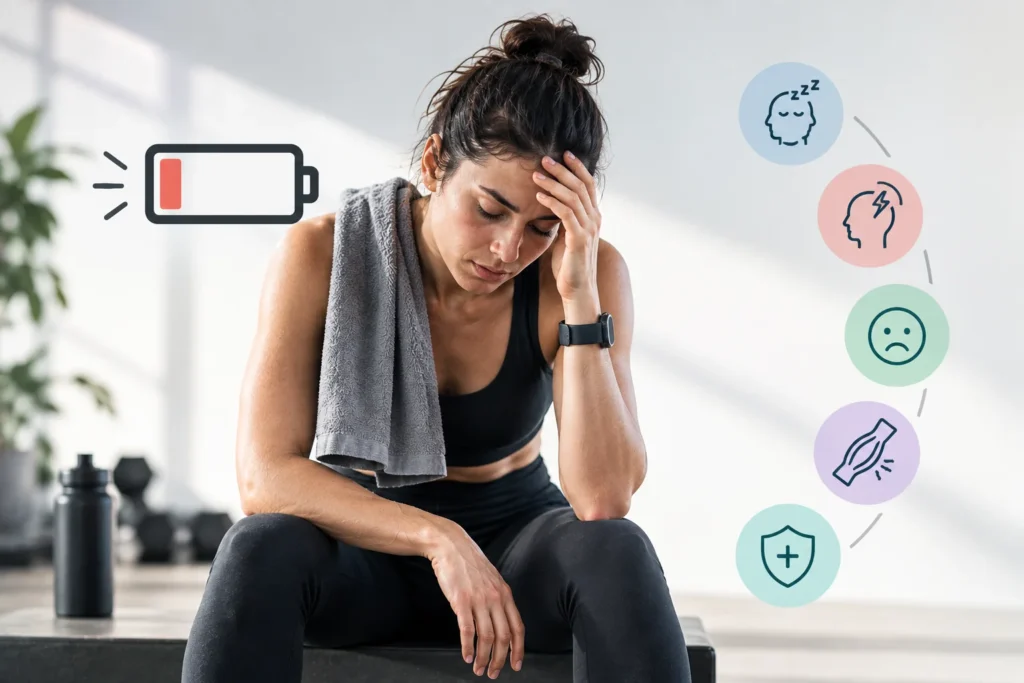
Post workout recovery in Oman is not just about resting after the gym. It is the bridge between the effort you put into training and the results you want to see in your body. Many people in Muscat focus on workouts, calories, or heavier weights, but they ignore the hours after training. That is often where progress slows down.
Oman’s heat, humidity in coastal areas, indoor air conditioning, busy work schedules, and evening training habits can all affect recovery. You may finish a strong session, then feel drained, tight, thirsty, or sore the next day. That does not always mean you trained badly. It may mean your recovery routine needs structure.
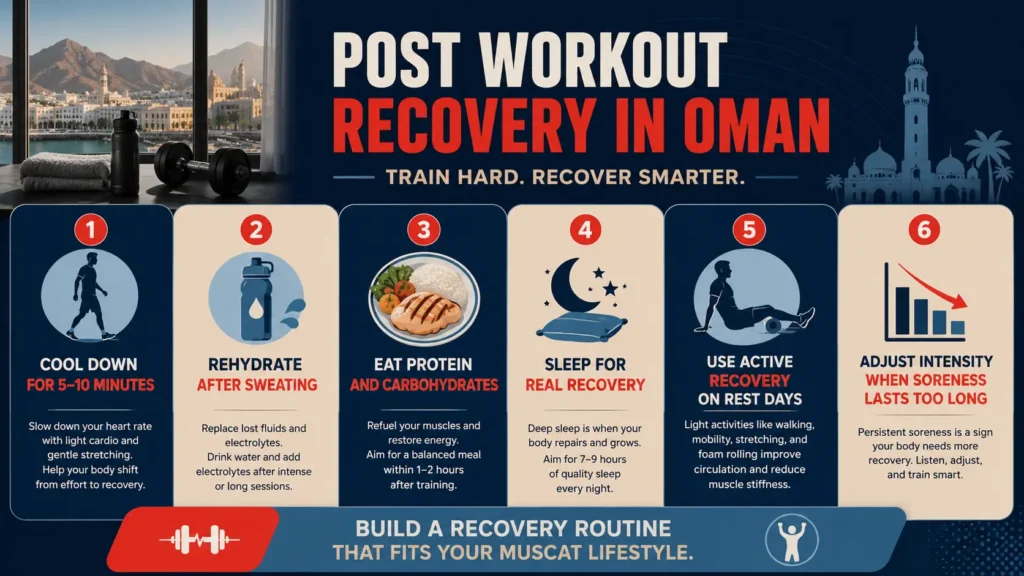
The goal is simple: train hard, recover smart, and return stronger. These gym recovery tips will help you understand what your body needs after exercise, how to recover in Muscat’s environment, and when professional recovery support can make your fitness journey feel easier and more sustainable.
Listen
Why Does Post Workout Recovery in Oman Matter So Much?
Recovery is where your body adapts. Training creates stress, but recovery helps your muscles repair, your nervous system calm down, and your energy return. In Oman, recovery also needs to account for heat, sweat loss, hydration, and long indoor days. When you treat recovery as part of training, your workouts become more productive.
What actually happens to your body after a hard workout?
After exercise, your body starts repairing the small amount of stress placed on muscles, joints, connective tissue, and energy systems. Strength training challenges muscle fibers. Cardio uses stored energy. HIIT can raise fatigue quickly. Even a good workout can leave your body needing fluids, nutrients, rest, and lower-intensity movement.
This is why post workout recovery in Oman should not be random. If you train in the evening after work, you may already feel dehydrated from the day. If you train in a cold indoor gym after walking in Muscat heat, your body may shift between temperature extremes. Recovery helps bring the system back to balance.
A strong recovery routine can support:
- Better training consistency
- Lower next-day fatigue
- Improved muscle repair
- Better movement quality
- Reduced risk of gym burnout
As the American College of Sports Medicine explains, “The key is taking a well-rounded approach to recovery through nutrition, hydration, sleep, and activity.”
American College of Sports Medicine.
Why do many gym members in Muscat feel sore for too long?
Soreness can happen when you try new exercises, increase volume, train legs after a break, or push intensity too quickly. Some soreness is normal. However, soreness that affects movement for several days may signal poor recovery, weak progression, or lack of sleep and hydration.
In Muscat, soreness can feel worse when daily habits work against recovery. Long sitting hours, low water intake, high caffeine, late-night screen time, and irregular meals can slow the way your body feels after training. Many people also train hard during weight-loss phases while eating too little. That combination can reduce energy and increase fatigue.
Post workout recovery in Oman should match your training level. A beginner does not need the same recovery plan as an advanced lifter. A person doing fat loss workouts may need different support from someone training for strength. The best routine respects your body, your schedule, and your goal.
What Should You Do Immediately After a Workout in Oman?
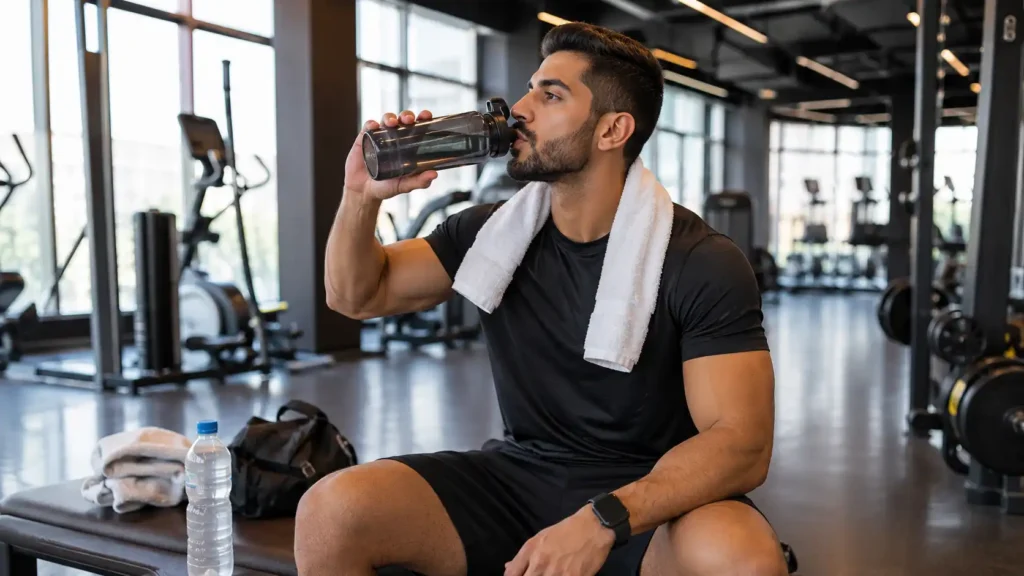
The first hour after training does not need to feel complicated. You do not need an extreme routine or expensive products. You need a simple sequence that helps your body cool down, rehydrate, refuel, and relax. These gym recovery tips work especially well for people training in Muscat’s indoor gyms.
Should you cool down after gym training?
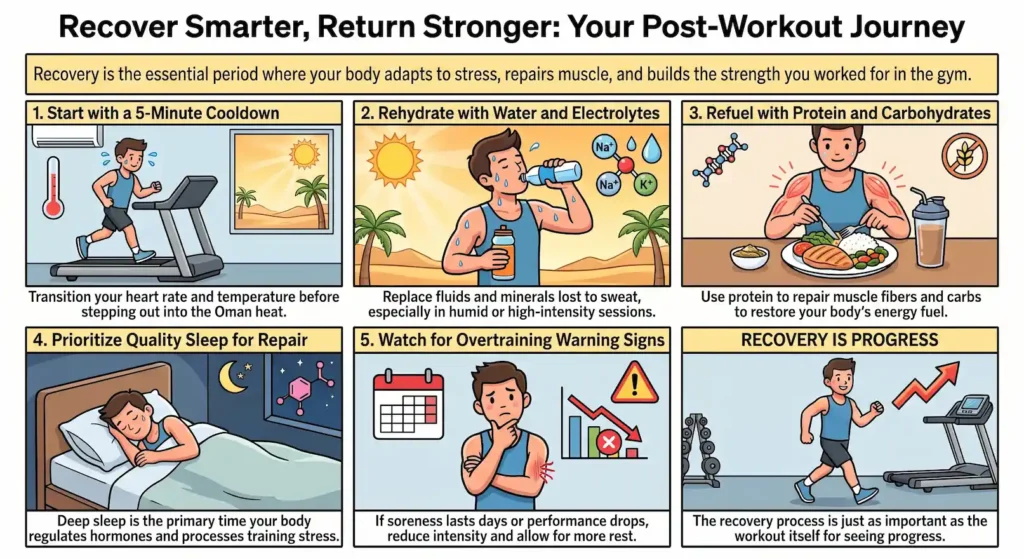
Yes. A cooldown helps your body shift from effort to recovery. After intense exercise, stopping suddenly can leave you feeling dizzy, stiff, or overly tired. A short cooldown gives your heart rate time to lower and helps you leave the gym feeling more controlled.
A good cooldown can include five to ten minutes of easy walking, cycling, or light mobility. If you trained legs, slow walking and gentle hip mobility can help. If you trained upper body, shoulder circles, breathing drills, and light stretching may feel better. The goal is not to burn more calories, The goal is to calm the body.
Warmups and cool-downs as doing activity “at a slower pace and lowered intensity.”
Mayo Clinic
For post workout recovery in Oman, a cooldown also helps you transition before stepping back into outdoor heat. Leaving a cold gym immediately after intense sweating can feel uncomfortable. Give your body a few minutes to settle first.
What are the best gym recovery tips for hydration in Oman?
Hydration is one of the most important parts of recovery in Oman. You can lose fluid through sweat even when training indoors. Heat, humidity, walking outside, and daily caffeine intake can also increase your need for fluids.
A practical post-workout hydration routine includes:
- Drink water after training, not only during training
- Add electrolytes after long, sweaty, or high-intensity sessions
- Check urine color as a simple hydration signal
- Avoid relying only on coffee or energy drinks
- Rehydrate gradually instead of drinking too much too fast
You do not need to overdrink. You need to replace what your body lost. For most moderate workouts, water and a balanced meal may be enough. For intense sessions, long cardio, outdoor training, or heavy sweating, electrolytes can support better recovery.
Post workout recovery in Oman should always include hydration planning because the climate makes fluid balance more important. If you often leave the gym with headaches, cramps, unusual fatigue, or strong thirst, hydration deserves more attention.
What Should You Eat for Post Workout Recovery in Oman?
Food is not just about calories. After training, nutrition helps restore energy, support muscle repair, and prepare your body for the next session. You do not need a perfect meal, but you do need enough protein, carbohydrates, fluids, and micronutrients across the day.
Do you really need protein right after your workout?
Protein supports muscle repair, but you do not need to panic about drinking a shake within minutes. Total daily protein matters most. However, eating a protein-rich meal after training is still practical, especially if you train after work or before dinner.
Good post-workout protein options in Oman include eggs, chicken, fish, lean meat, Greek yogurt, milk, tofu, lentils, beans, or a quality protein shake when food is not convenient. The best choice is the one you can repeat consistently.
“Nutrient timing and macronutrient ratio may enhance recovery and tissue repair.”
International Society of Sports Nutrition
For post workout recovery in Oman, protein becomes even more important if your goal is strength, muscle tone, fat loss, or better body composition. If you train hard but eat too little, your body may struggle to adapt. Recovery nutrition should feel supportive, not restrictive.
Should you eat carbohydrates after training?

Yes, especially after intense training, cardio, leg workouts, HIIT, swimming, squash, or long gym sessions. Carbohydrates help restore glycogen, which is your body’s stored training fuel. Many people trying to lose fat fear carbohydrates, but using them wisely can improve performance and reduce cravings later.
Post-workout carbohydrates can come from rice, potatoes, oats, fruit, whole-grain bread, dates, pasta, or balanced Omani meals. The goal is not to eat heavily after every short session. The goal is to match food to training demand.
A simple recovery plate can include:
- A protein source for muscle repair
- A carbohydrate source for energy restoration
- Vegetables or fruit for micronutrients
- Water or fluids for rehydration
- A small amount of healthy fats if it suits the meal
This approach supports gym recovery tips without making nutrition feel stressful. If your workout was light, keep the meal moderate. If it was intense, your body may need more fuel.
Recovery becomes even more important during fat-loss phases because low energy, poor sleep, and intense training can make consistency harder. If your main goal is body transformation, connect your recovery habits with a realistic weight loss plan and choose fat burning exercises that match your current fitness level.
How Does Sleep Affect Post Workout Recovery in Oman?
Sleep is one of the most powerful recovery tools, yet many gym members underestimate it. You can eat well and train hard, but poor sleep can still leave you sore, tired, unmotivated, and mentally foggy. In Oman, late dinners, night training, heat, and screen time can all affect sleep quality.
Why is sleep important for muscle recovery?
Sleep helps your body repair, regulate hormones, restore energy, and process training stress. If you sleep poorly, you may feel weaker in the gym, recover slower, and crave more high-calorie foods the next day. This does not mean one bad night ruins progress. It means sleep quality should be part of your recovery plan.
“Athletes need to make time for rest, recovery, and sleep.”
Sleep Foundation
For post workout recovery in Oman, sleep habits may need local adjustments. Many people train in the evening because daytime heat limits outdoor movement. Evening training can work well, but the session should not push your nervous system too close to bedtime. A calm post-workout routine helps.
Sleep is one of the most overlooked parts of post workout recovery in Oman. If your goal is strength, muscle tone, or better gym performance, your bedtime routine matters as much as your training plan. For a deeper guide, read our article on sleep and muscle growth in Oman.
Try to finish intense training early enough to eat, shower, hydrate, and relax before sleep. Keep the bedroom cool, limit late caffeine, and avoid heavy scrolling after training. Your body needs a signal that the workout is over.
Which Recovery Method Is Best After Different Workouts?
The best recovery method depends on the type of workout. A heavy leg day does not create the same fatigue as a light mobility session. A long cardio workout does not need the same recovery as an upper-body strength day. Smart recovery starts with matching the method to the stress.
Recovery also depends on the type of training you do. If you want to understand the bigger science behind muscle repair, hydration, soreness, and performance, read our guide to muscle recovery in Oman. If you often feel tired, sore, or mentally drained after several hard sessions, the article on overtraining symptoms in Oman can help you know when your body needs a smarter training plan.
How should you recover after strength, cardio, HIIT, and sports?
Strength training needs protein, sleep, and rest between similar muscle groups. Cardio needs hydration and energy replacement. HIIT needs nervous system recovery because intensity can create deeper fatigue. Sports like padel, squash, swimming, and football may need mobility, electrolytes, and soft tissue care.
| Workout Type | Main Recovery Need | Best Recovery Focus |
|---|---|---|
| Strength training | Muscle repair | Protein, sleep, rest days |
| HIIT | Nervous system recovery | Cooldown, hydration, lower stress |
| Cardio | Energy restoration | Carbohydrates, fluids, easy movement |
| Sports sessions | Joint and tissue recovery | Mobility, electrolytes, stretching |
| Beginner workouts | Adaptation | Gentle progression, sleep, hydration |
Post workout recovery in Oman becomes easier when you stop copying random routines and start matching recovery to training. If you feel tired after every session, the problem may not be effort. It may be that your recovery plan does not fit your training style.
Professional support can also help. A coach can adjust volume, intensity, and rest days. Recovery facilities can support relaxation, circulation, and muscle comfort after demanding sessions. That is where a complete fitness environment like 5D Fitness can help members connect training with recovery.
Your workout structure also affects how much recovery you need. For example, a Push Pull Legs routine in Oman naturally rotates muscle groups so one area can recover while another trains. If you prefer efficient sessions with fewer weekly workouts, a full body workout in Oman may be a better match, especially when recovery time is limited.
When Is Soreness Normal, and When Should You Adjust Your Plan?
Soreness is common, but it should not control your life. Fitness should make you stronger, not constantly exhausted. A smart recovery mindset helps you know when to continue, when to reduce intensity, and when to ask for guidance.
What signs show that your recovery routine is not enough?
Your body gives signals when recovery is falling behind. You may notice heavy legs, poor sleep, low motivation, weaker lifts, irritability, unusual cravings, or soreness that does not improve. These signs do not always mean injury. They may mean your training load has exceeded your recovery capacity.
Watch for these warning signs:
- You feel tired before the workout even starts
- Your performance drops for several sessions
- Soreness lasts longer than expected
- You struggle to sleep after intense training
- You feel mentally burned out by the gym
If these signs continue, reduce intensity for a few days. Add active recovery, improve meals, sleep more, and hydrate better. If pain feels sharp, one-sided, or worsens with movement, stop training that area and seek professional advice.
Post workout recovery in Oman should help you stay consistent for months, not just survive one hard workout. Progress comes from repeatable effort.
How can beginners build a simple recovery routine in Muscat?
Beginners should keep recovery simple. You do not need advanced biohacking, complicated supplements, or ice baths after every workout. Start with the basics and repeat them until they become automatic.
If you are new to training, recovery should start from your first week in the gym. Beginners often train too intensely too soon, which can lead to fatigue, poor form, or soreness that lasts longer than expected. Our beginner gym workout in Oman guide explains how to build a safer foundation with structured training, hydration, realistic goals, and better consistency.
After training, cool down for five minutes. Drink water. Eat a balanced meal within a reasonable time. Sleep enough. Avoid training the same muscles hard every day. Add light walking or stretching on rest days. Track how your body feels the next morning.
In Muscat, beginners should also respect heat and daily fatigue. If you work long hours, drive often, or train after sunset, your recovery routine should support your lifestyle. A realistic plan always beats an extreme one.
This is where guided programming helps. A good coach can teach you when to push and when to recover. At 5D Fitness, members can combine structured training with recovery-focused habits in a setting designed for long-term progress.
Your results do not come only from the workout. They come from how well you recover, rebuild, and return. If you want better strength, better energy, and a more sustainable fitness routine in Muscat, start treating recovery as part of your training. Book your next session, ask for recovery guidance, and build a routine that helps you feel stronger every week.
FAQ Section
Post workout recovery in Oman means helping your body recover after exercise while considering local factors like heat, sweat, hydration, indoor gyms, and Muscat lifestyle habits.
The best gym recovery tips include cooling down, drinking water, eating protein and carbohydrates, sleeping well, stretching gently, and taking rest days when needed.
Many people need 24 to 72 hours, depending on workout intensity, fitness level, sleep, nutrition, hydration, and training experience.
Gentle stretching can help you relax and improve movement quality. It should feel controlled, not painful or forced.
Mild soreness is normal after new or intense exercise. Severe pain, sharp pain, or soreness that lasts too long may need adjustment.
Water works for many workouts. After long, sweaty, or intense sessions, electrolytes may help replace minerals lost through sweat.
A balanced meal with protein, carbohydrates, and fluids works well. Examples include chicken and rice, eggs and toast, yogurt and fruit, or fish with potatoes.
Yes. Poor sleep can increase fatigue, reduce performance, and make soreness feel worse. Sleep should be part of every recovery plan.
Recovery facilities can support relaxation, muscle comfort, circulation, and consistency, especially after intense workouts or busy training weeks.
Reduce intensity when performance drops, soreness lasts too long, sleep gets worse, or fatigue affects daily life. Recovery is part of progress.