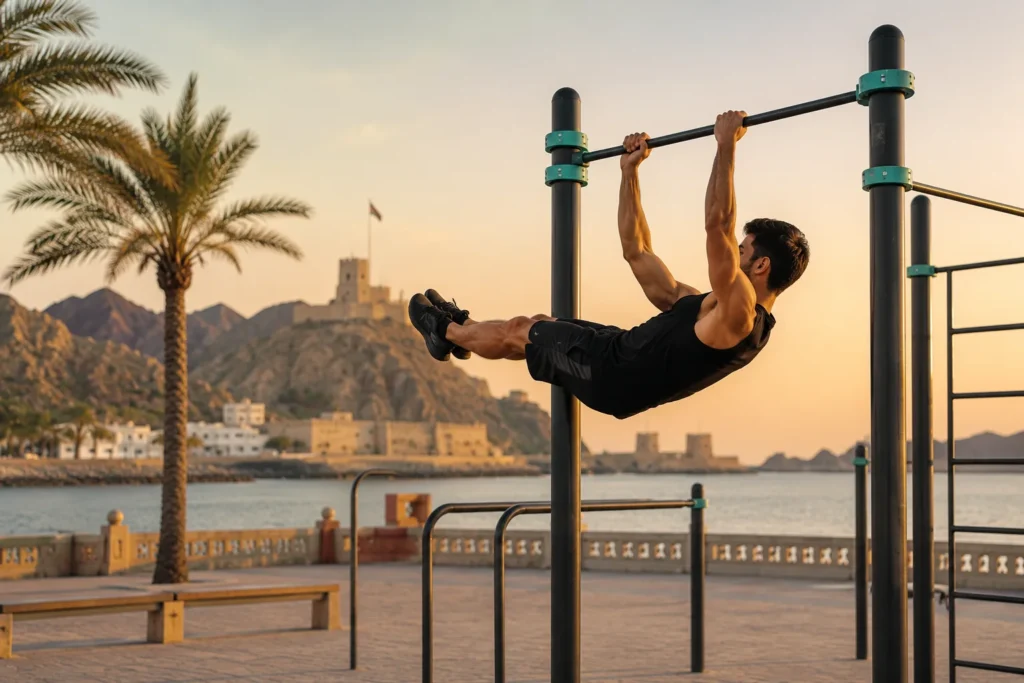
Calisthenics in Oman is becoming more popular because it feels simple, flexible, and powerful at the same time. You do not need to start with heavy machines or complicated equipment. Instead, you learn how to control your own body through movements like push-ups, squats, lunges, planks, dips, pull-ups, and mobility drills.
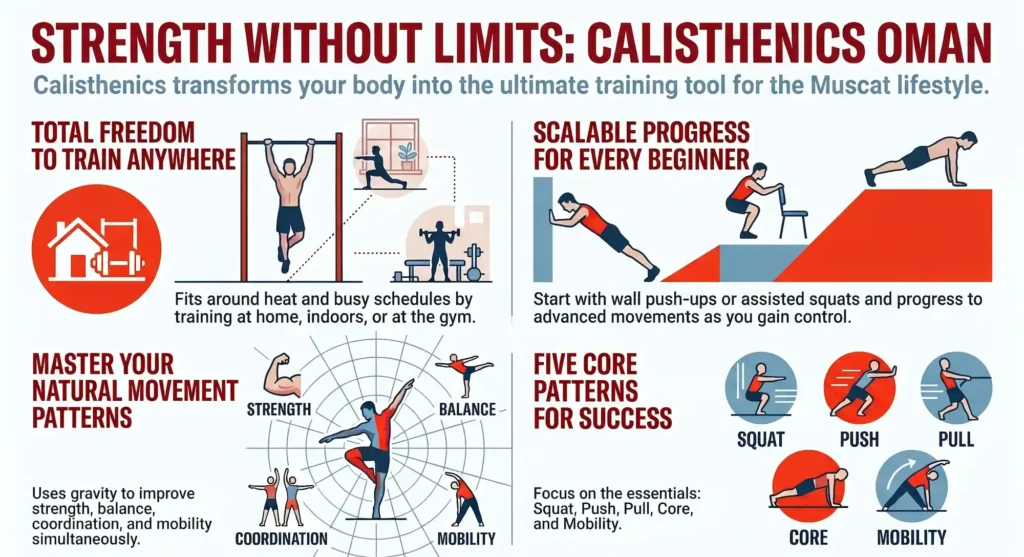
For many people in Muscat, fitness has to fit around work, family, heat, commuting, and changing schedules. That is why bodyweight training feels so practical. You can train indoors, at a gym, at home, or in a suitable outdoor space when the weather allows. More importantly, calisthenics teaches strength that feels useful in real life.
Also If you want to build a complete weekly routine, a structured Workout plan in Oman can help you combine calisthenics, strength work, mobility, and recovery.
But If your goal is to move better, feel stronger, improve your shape, or build confidence before joining advanced classes, calisthenics can be a smart starting point. At 5d fitness, the goal is not only to help people exercise, but to help them train with control, safety, and purpose.
Listen
What Is Calisthenics in Oman and Why Is It So Practical?
Calisthenics in Oman is a form of fitness training that uses your own body weight as resistance. Instead of depending only on machines, you train natural movement patterns that improve strength, balance, coordination, and flexibility.
How does bodyweight training actually work?
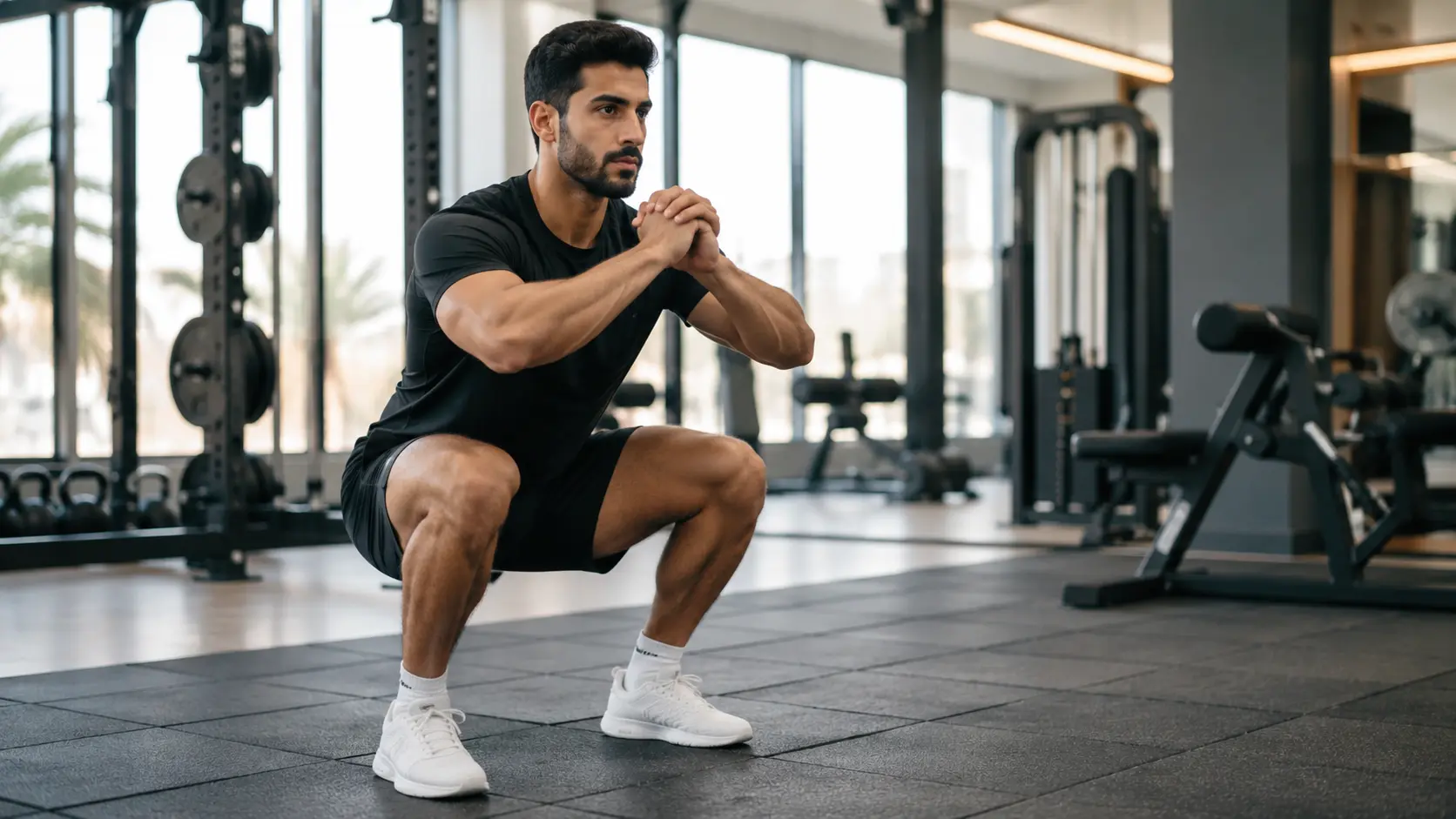
Bodyweight training works by challenging your muscles against gravity. When you perform a push-up, your chest, shoulders, triceps, core, and hips must work together. When you do a squat, your legs, glutes, core, ankles, and posture all contribute. This makes calisthenics more than a simple “no-equipment workout.” It is full-body movement training.
The real value comes from control. A beginner may start with wall push-ups, assisted squats, or incline planks. As strength improves, the same movement becomes harder through slower tempo, deeper range of motion, more repetitions, single-leg variations, or advanced positions.
This is why calisthenics in Oman suits many lifestyles. You can train in a gym, at home, or in a controlled indoor space during hot months. You can also use simple equipment such as pull-up bars, parallel bars, resistance bands, or suspension trainers when you are ready.
“Muscle-strengthening activities should be done involving major muscle groups on 2 or more days a week.”
World Health Organization
Why are people in Muscat choosing calisthenics?
People in Muscat often need fitness that feels realistic. Long workdays, family routines, warm weather, and evening commitments can make strict gym schedules difficult. Calisthenics gives people a flexible way to train without losing structure.
It is also appealing because progress feels personal. The first clean push-up, first controlled plank, first pull-up attempt, or first full squat can feel deeply motivating. These small wins build confidence and make training feel less intimidating.
Key reasons people choose calisthenics include:
- It works for beginners and advanced athletes.
- It can improve strength, mobility, and coordination together.
- It needs less equipment than traditional weight training.
- It supports home, gym, and indoor training routines.
- It helps people build confidence through visible skill progress.
For people who feel uncomfortable around heavy machines, bodyweight training can create a calmer entry point into fitness.
Is Calisthenics in Oman Good for Beginners?
Calisthenics in Oman can be excellent for beginners when the program starts at the right level. The biggest mistake is copying advanced social media movements too early. Real progress begins with simple, well-controlled basics.
What should beginners learn first in bodyweight training?
Beginners should first learn posture, breathing, joint position, core engagement, and controlled movement. A good beginner bodyweight training plan does not rush into handstands or muscle-ups. It builds the foundation first.
Start with movement patterns that teach the body how to move safely:
- Squat pattern: bodyweight squats, box squats, assisted squats
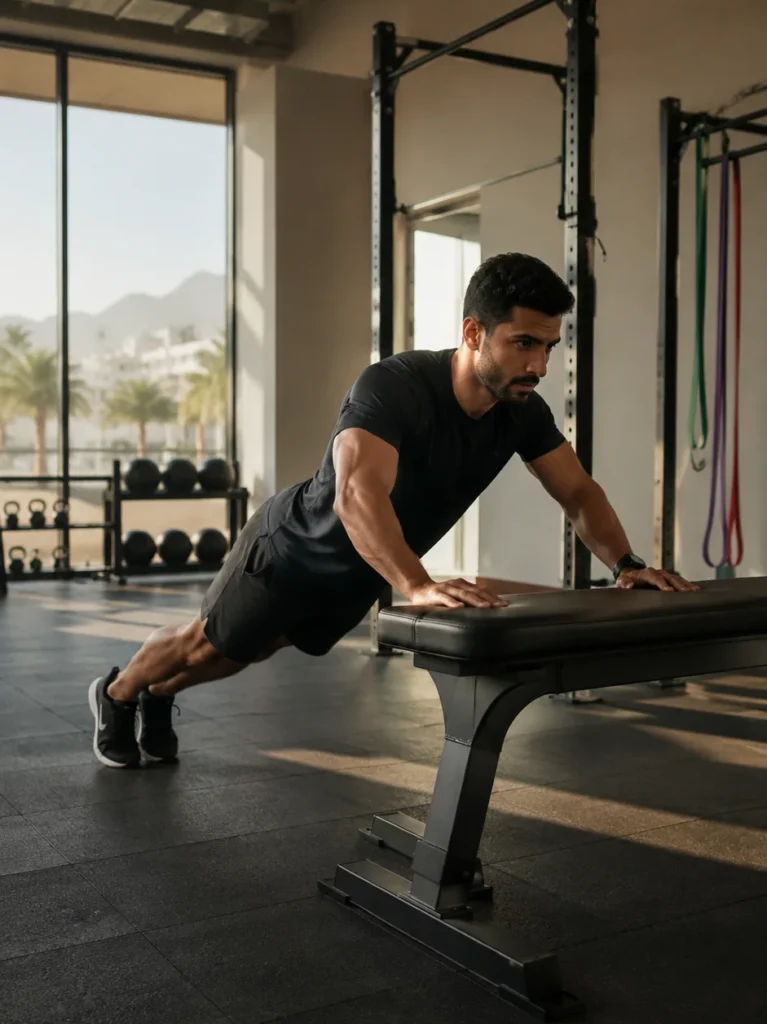
- Push pattern: wall push-ups, incline push-ups, knee push-ups
- Pull pattern: band rows, assisted pull-ups, inverted rows
- Core pattern: dead bugs, planks, side planks
- Mobility pattern: hip openers, shoulder circles, ankle mobility
These basics help reduce compensation. For example, if someone cannot control their core during a plank, they may arch the lower back during push-ups. If someone lacks ankle mobility, their squat may feel unstable. A coach can identify these small issues before they become frustrating.
“Adults also need 2 days of muscle-strengthening activity each week.”
Centers for Disease Control and Prevention
How often should a beginner train calisthenics?
Most beginners can start with two to three bodyweight training sessions per week. This gives the muscles, joints, and nervous system enough practice without overwhelming recovery. The sessions do not need to be extremely long. A focused 35 to 50-minute workout can be enough when it includes warm-up, technique, strength work, and cooldown.
A simple beginner week may look like this:
| Day | Focus | Example |
|---|---|---|
| Monday | Full-body strength | Squats, incline push-ups, rows, planks |
| Wednesday | Mobility and core | Hip mobility, shoulder control, dead bugs |
| Friday | Full-body progression | Lunges, push-up variation, assisted pull, side plank |
| Weekend | Optional light activity | Walking, swimming, stretching, recovery |
The key is consistency. Beginners should not chase soreness after every session. Good training should leave you feeling challenged, not destroyed. If your joints hurt, your form breaks down, or fatigue lasts for days, the plan may be too intense.
What Are the Main Benefits of Bodyweight Training in Oman?
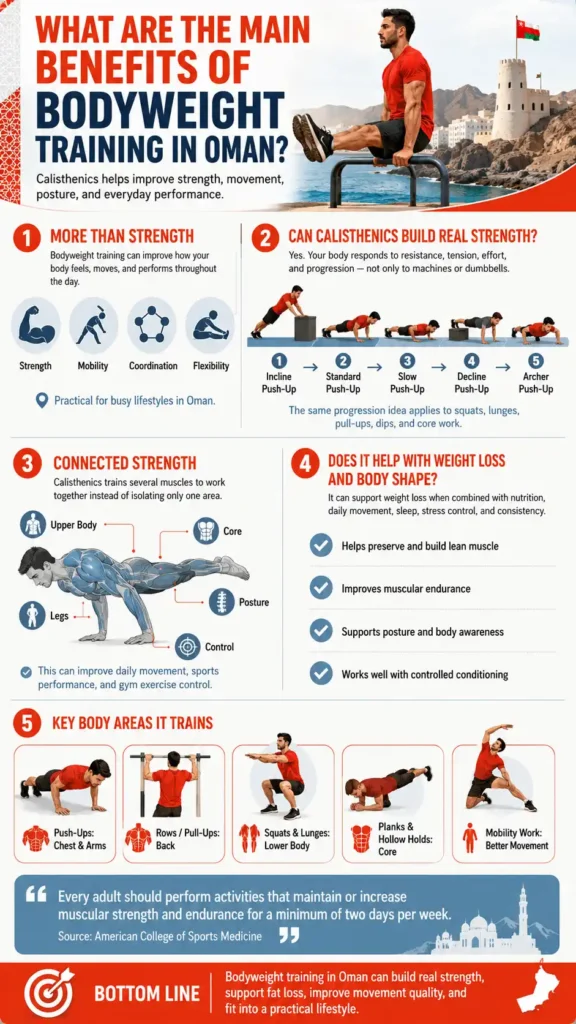
Bodyweight training offers more than strength. It can improve how your body feels, moves, and performs throughout the day. This matters in Oman because people may spend long hours sitting, driving, working indoors, or managing busy schedules.
Can calisthenics build real strength?
Yes, calisthenics can build real strength when exercises become progressively harder over time. Your body does not only respond to dumbbells or machines. It responds to resistance, tension, effort, and progression. Bodyweight training can deliver all of these.
A beginner may struggle with incline push-ups. Later, they may progress to standard push-ups, slow push-ups, decline push-ups, archer push-ups, and eventually more advanced variations. The same idea applies to squats, lunges, pull-ups, dips, and core exercises.
Strength also becomes more “connected.” Instead of isolating one muscle on a machine, calisthenics often asks several muscles to work together. This can improve control during daily life, sports, and other gym exercises.
Since most calisthenics movements train several muscles together, they work well inside a full body workout routine.
“Every adult should perform activities that maintain or increase muscular strength and endurance for a minimum of two days per week.”
American College of Sports Medicine
Does calisthenics help with weight loss and body shape?
Calisthenics can support weight loss when combined with good nutrition, enough daily movement, and consistent training. It helps preserve and build lean muscle, which is important during fat loss. It also improves muscular endurance, posture, and body awareness.
A calisthenics session may include strength moves, core drills, mobility work, and controlled conditioning. This combination can help people feel athletic without needing complicated equipment. However, bodyweight training is not magic. Fat loss still depends on energy balance, sleep, stress control, and long-term habits.
For body shape, calisthenics can be especially useful because it emphasizes the upper body, core, legs, and posture. Push-ups support the chest and arms. Rows and pull-ups support the back. Squats and lunges train the lower body. Planks and hollow holds strengthen the core.
Don’t Forget that however Calisthenics can support fat loss, but it works best when combined with a complete weight loss plan that includes nutrition, recovery, and consistent movement.
Calisthenics vs Weight Training: Which Is Better?
Both calisthenics and weight training can be effective. The better option depends on your goal, experience, injury history, and personal preference. Many people get the best results by combining both.
But for people who want to compare bodyweight resistance with free weights, this guide to strength training in Oman explains how structured resistance training supports muscle growth and fat loss.
How does bodyweight training compare with gym equipment?
Bodyweight training improves control, coordination, strength endurance, and mobility. Weight training allows more precise loading, which can help with muscle growth, maximum strength, and targeted progression. Neither method is “better” for everyone.
| Training Style | Best For | Main Strength | Limitation |
| Calisthenics | Beginners, mobility, control, functional strength | Uses natural movement and body control | Some pulling progressions need equipment |
| Weight Training | Muscle gain, strength targets, structured overload | Easy to adjust load precisely | Requires equipment and good technique |
| Mixed Training | Most long-term fitness goals | Combines control, strength, and variety | Needs smart programming |
For many people in Oman, mixed training works very well. You may use calisthenics for push-ups, pull-ups, planks, dips, and mobility. Then you may use weights for lower-body strength, progressive overload, or specific muscle-building goals.
When should you choose calisthenics first?
Choose calisthenics first if you want to improve basic strength, body control, confidence, and movement quality. It is also a strong option if you are returning after a break, starting fitness for the first time, or feeling unsure around heavy equipment.
Calisthenics can also help athletes because it improves relative strength. Relative strength means how strong you are compared with your body weight. This matters for sports, running, padel, squash, swimming, martial arts, and everyday movement.
You may benefit from starting with bodyweight training if:
- You want a simple but structured fitness routine.
- You prefer movement over machines.
- You want to train indoors during hot weather.
- You need beginner-friendly progressions.
- You want better mobility and posture.
- You want strength that feels practical outside the gym.
How Can You Progress Safely in Calisthenics in Oman?
Safe progress in calisthenics comes from patience, technique, recovery, and smart progression. Advanced skills look exciting, but the foundation matters more than the final move.
What is progressive overload in bodyweight training?
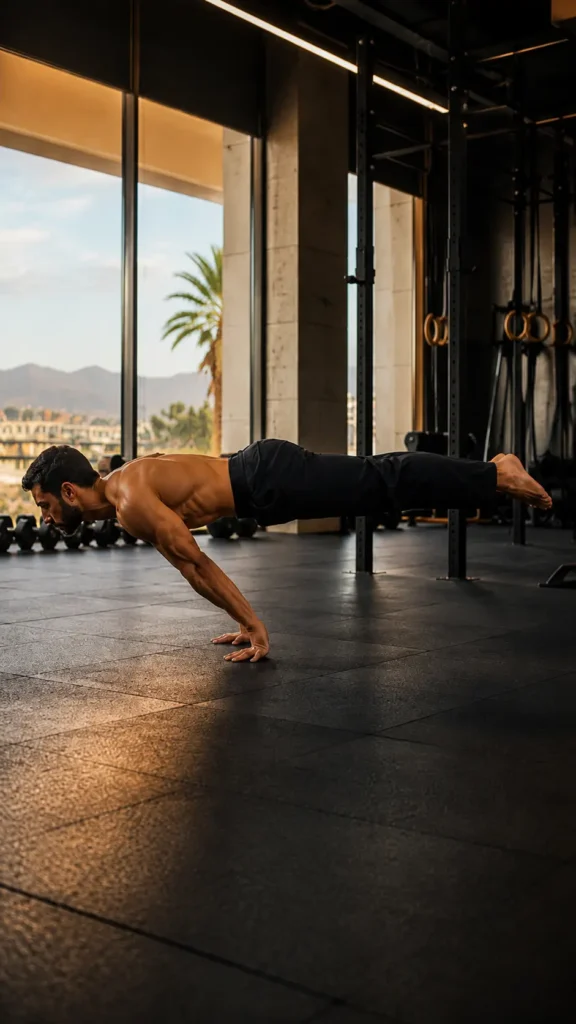
Progressive overload means making your workout gradually more challenging so your body continues adapting. In weight training, this often means adding more weight. In bodyweight training, progression can happen in many ways.
You can progress by increasing repetitions, slowing the tempo, improving range of motion, reducing rest time, adding pauses, changing body angle, or moving to a harder variation. For example, incline push-ups become standard push-ups. Standard push-ups become slow push-ups. Slow push-ups become decline push-ups or ring push-ups.
Good progression signs include:
- Your form stays clean under fatigue.
- You can control the lowering phase.
- Your breathing stays steady.
- You feel muscle effort without joint pain.
- You recover well before the next session.
If you skip progressions too quickly, your wrists, shoulders, elbows, knees, or lower back may take extra stress. This is why guided training can be valuable, especially for beginners.
Progress should feel challenging but sustainable. If fatigue, soreness, and motivation problems continue, review the warning signs of overtraining symptoms.
Why does coaching matter for calisthenics?
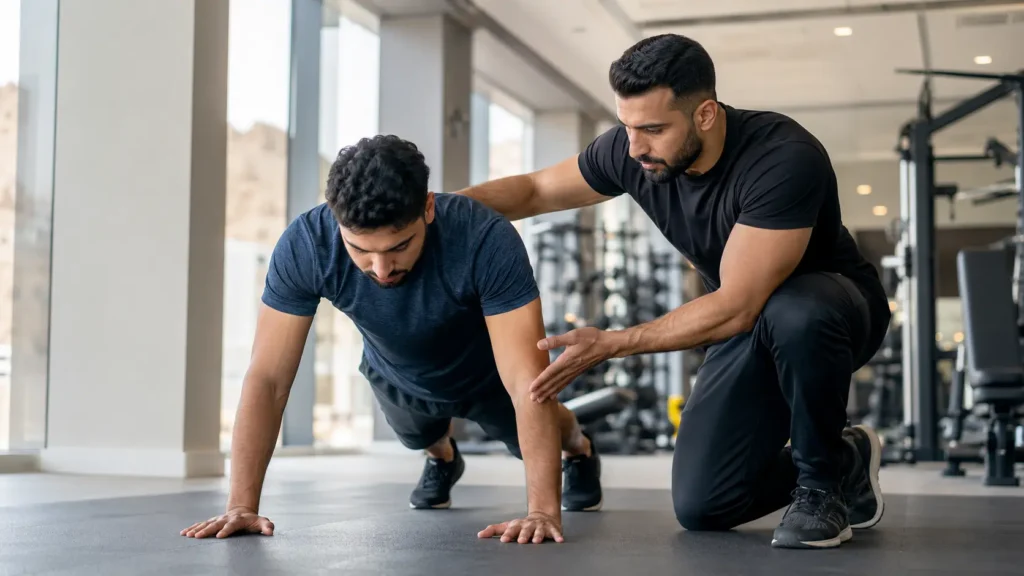
Coaching matters because calisthenics looks simple, but small technical details change everything. A push-up can train the chest and core well, or it can stress the shoulders and lower back if the body position is poor. A squat can improve strength and mobility, or it can feel uncomfortable if the knees, hips, and ankles do not move well together.
A coach can adjust the exercise level, correct form, choose safe progressions, and help you avoid copying advanced moves too soon. This is especially useful for people who have old injuries, weak core control, limited mobility, or inconsistent training history.
At 5d fitness, calisthenics can fit into a wider training journey. You may start with basic bodyweight exercises, then add resistance training, mobility work, conditioning, or sports performance sessions based on your goals.
How Can You Start Calisthenics in Muscat Today?
Starting calisthenics in Muscat does not require perfection. You need a clear plan, a safe space, and a realistic schedule. The best workout is not the hardest one. It is the one you can repeat with better form over time.
What should your first calisthenics workout include?
Your first calisthenics workout should include a warm-up, basic strength exercises, core training, mobility, and a calm cooldown. Keep the first session simple. The goal is to learn your current level, not prove everything in one day.
Also Beginners who want a safer starting point can also follow a beginner gym workout in Oman before progressing to harder bodyweight skills.
A beginner-friendly session can include:
Warm-up:
- Shoulder circles
- Hip circles
- Light squats
- Arm swings
- Easy walking or cycling
Main workout:
- Assisted squats
- Incline push-ups
- Band rows or assisted rows
- Glute bridges
- Planks
- Dead bugs
Cooldown:
- Gentle stretching
- Breathing control
- Shoulder and hip mobility
Train with control. Stop before your form collapses. If an exercise causes sharp pain, change the variation. If you feel only normal muscle effort, continue slowly and focus on quality.
Where can bodyweight training fit into your fitness routine?
Bodyweight training can stand alone or support another routine. If you already lift weights, calisthenics can improve control and mobility or If you play sports, it can support agility and core strength or If you are trying to lose weight, it can help you stay active without needing a complicated setup.
In Muscat, indoor bodyweight training can be especially helpful during hot weather. You can still stay consistent without depending on outdoor conditions. For people who prefer community and accountability, coached sessions can make the process easier and more motivating.
The strongest benefit is confidence. When you feel your body getting stronger, movement becomes less intimidating. You stand taller, You move with more control, You begin to trust your own strength.
Ready to start calisthenics in Oman with confidence? Book your session at 5d fitness and begin a smarter bodyweight training journey built around your level, your goals, and your lifestyle in Muscat.
FAQ Section
Calisthenics in Oman is bodyweight training that uses exercises like push-ups, squats, planks, dips, and pull-ups to build strength, mobility, balance, and control.
Yes. Beginners can start with easier variations such as wall push-ups, assisted squats, incline planks, and band-supported pulling exercises.
Yes. Bodyweight training can build muscle when exercises become progressively harder and the program includes enough volume, recovery, and consistency.
Not always. Calisthenics is excellent for body control and functional strength, while weight training is useful for precise loading. Many people benefit from both.
Most beginners can start with two to three sessions per week. Advanced trainees may train more often depending on recovery and goals.
Yes. Calisthenics can support weight loss when combined with nutrition, daily movement, sleep, and consistent training.
You can start without equipment. Later, pull-up bars, resistance bands, rings, and parallel bars can help you progress.
It depends on the person and the exercise. A coach can modify movements to reduce stress and improve control.
Yes. Many basic bodyweight exercises can be done at home, but a gym or coach can help with progression and technique.
You can start with a structured bodyweight training plan, a coach-led session, or a beginner-friendly gym program at 5d fitness in Muscat.