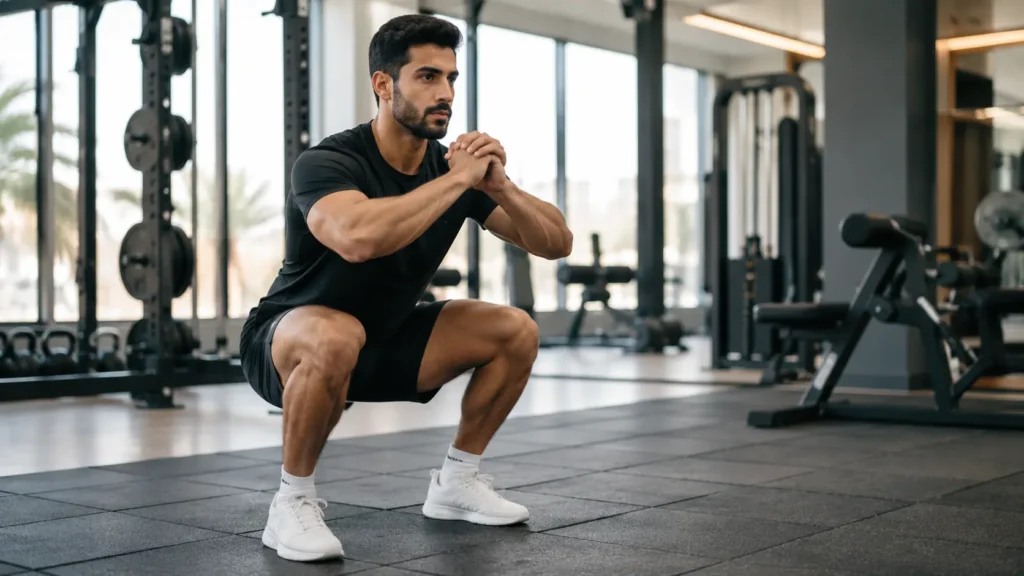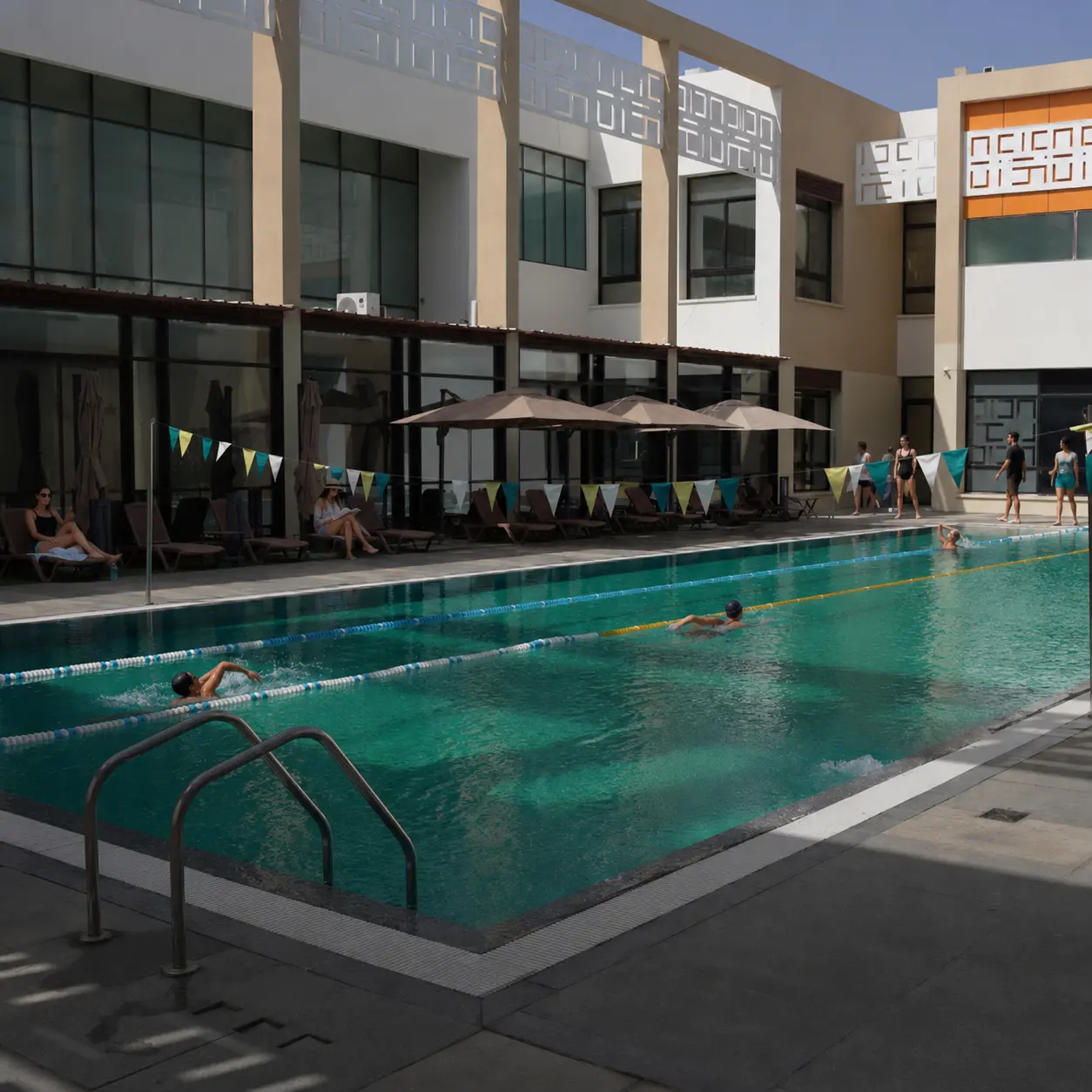
A swimming pool can be one of the most effective training environments for people who want better fitness, safer movement, weight loss support, and long-term exercise consistency. At 5d fitness, pool-based training can serve athletes, beginners, children, adults, and people who want structured activity without the heavy joint stress often associated with high-impact workouts. For residents searching for swimming classes in Al Hail, the main value is not only learning how to swim; it is learning how to move with control, breathe efficiently, build confidence, and use water as a powerful fitness tool.
Swimming has a unique advantage because it combines cardiovascular conditioning, muscular endurance, coordination, mobility, and mental focus in one activity. Unlike many land-based workouts, water reduces impact while still creating resistance. This makes swimming attractive for people who want to lose weight, improve stamina, return to exercise after a long break, or add variety to their weekly training routine.
The CDC notes that swimming can improve mood and that many people report enjoying water-based exercise more than exercising on land, which can help people exercise for longer periods. The World Health Organization also emphasizes that regular physical activity provides significant physical and mental health benefits, including support for cardiovascular health, diabetes prevention and management, reduced symptoms of depression and anxiety, and improved well-being.
For people in Oman, especially in areas like Muscat and Al Hail, indoor and supervised swimming can also be practical because it provides a controlled environment for consistent training regardless of outdoor heat, busy schedules, or fitness level.
Why Is a Swimming Pool an Effective Fitness Environment for People in Oman?
A swimming pool offers a rare combination of resistance, cardiovascular challenge, mobility support, and lower joint impact. This makes it useful for different types of clients: athletes who want conditioning, beginners who need a safe entry point, adults seeking weight loss, and people who want a structured alternative to repetitive gym cardio. Water naturally supports the body, which can make movement feel more accessible while still demanding effort from the muscles and lungs.
For Oman residents, consistency is one of the biggest fitness barriers. Hot weather, sedentary work routines, low daily movement, and irregular training habits can make long-term health goals difficult. Pool training helps solve part of this problem because it feels refreshing, varied, and less intimidating than many traditional workouts. A well-managed swimming pool also allows different training intensities, from beginner floating and breathing drills to lap swimming, interval training, resistance work, and recovery sessions.
How Does Swimming Support Full-Body Fitness Without Excessive Joint Stress?
Swimming supports full-body fitness because it requires the upper body, lower body, core, lungs, and nervous system to work together. Every stroke involves coordinated movement: the arms pull, the legs kick, the core stabilizes, and the breathing pattern controls rhythm. This makes swimming a complete training activity rather than a single-muscle exercise.
One of the biggest advantages of a swimming pool is the reduced impact compared with running, jumping, or high-intensity land workouts. Water supports part of the body’s weight, which can make exercise more comfortable for people with knee discomfort, excess body weight, low conditioning, or fear of injury. At the same time, water creates resistance from multiple directions. This means the body still works hard even when the joints experience less pounding.
A study on regular swimming exercise reported that swimming, as water-based exercise, reduces joint stress, increases physical strength, and reduces body fat. This is especially relevant for people who want to train consistently but struggle with soreness or discomfort from high-impact exercise.
Swimming also builds aerobic capacity. The heart and lungs must supply oxygen while the swimmer manages breathing rhythm in the water. Over time, this can improve endurance, breathing control, and training tolerance. For athletes, this makes swimming useful as cross-training. For beginners, it builds a foundation of fitness without requiring complex gym equipment.
The practical benefit is simple: swimming can help people train harder than they expect while feeling less impact on the body. That combination improves adherence, and adherence is the foundation of real fitness progress.
Why Can Swimming Help People Who Want Weight Loss in Oman?
Swimming can support weight loss because it increases energy expenditure, improves conditioning, and can help people stay active more consistently. Weight loss still depends on a calorie deficit, but exercise improves the process by increasing movement, supporting muscle function, improving mood, and making healthy routines easier to maintain.
For many people in Oman, weight loss becomes difficult because daily movement is often low. Long office hours, driving-based routines, heat, late meals, and inconsistent sleep can reduce total energy expenditure. A swimming pool gives people an enjoyable way to add structured movement without the discomfort some people feel during outdoor cardio or high-impact gym sessions.
Swimming also engages large muscle groups. Freestyle, breaststroke, backstroke, kicking drills, water walking, and interval laps all require continuous movement. Because the body works against water resistance, swimming can feel smooth while still challenging the muscles and cardiovascular system.
The CDC explains that physical activity helps people feel better, function better, and sleep better, and that adults who reduce sitting and do moderate-to-vigorous physical activity gain health benefits. These benefits matter for weight loss because sleep, energy, mood, and consistency often determine whether someone can maintain a fitness plan long enough to see results.
The best results come when swimming is paired with resistance training, nutrition structure, hydration, sleep, and coaching. Pool training is powerful, but it works best as part of a complete lifestyle system.
How Does Pool Training Improve Mental Confidence and Exercise Consistency?
A swimming pool can build confidence in a way that many fitness environments cannot. For some people, learning to swim is not only a physical skill; it is an emotional milestone. Adults who never learned to swim may feel fear, embarrassment, or hesitation around water. Children may need patience and structure. Beginners may feel unsure about breathing, floating, or putting their face in the water.
Structured swimming classes help remove that uncertainty. Instead of guessing, clients learn step by step: water comfort, breathing, floating, kicking, arm movement, stroke coordination, and safe pool behavior. This creates progress that people can feel quickly. The first successful float, the first controlled breath, or the first completed lap can become a strong motivational moment.
The American Red Cross describes swim programs as a way to help swimmers build confidence, develop safer habits around water, improve technique, and become stronger, safer swimmers. This is important because confidence improves participation. A person who feels safer in water is more likely to continue training, join group sessions, practice regularly, and use swimming as part of a healthy lifestyle.
Mental confidence also supports weight loss and athletic development. People often quit exercise because they feel judged, bored, or overwhelmed. Swimming can feel private, focused, and rhythmic. The water reduces noise, movement becomes smoother, and progress can be measured through distance, technique, stamina, or confidence rather than only body weight.
That makes pool training a strong option for people who want fitness that feels sustainable, not punishing.
What Should You Look for When Choosing Swimming Classes in Al Hail?
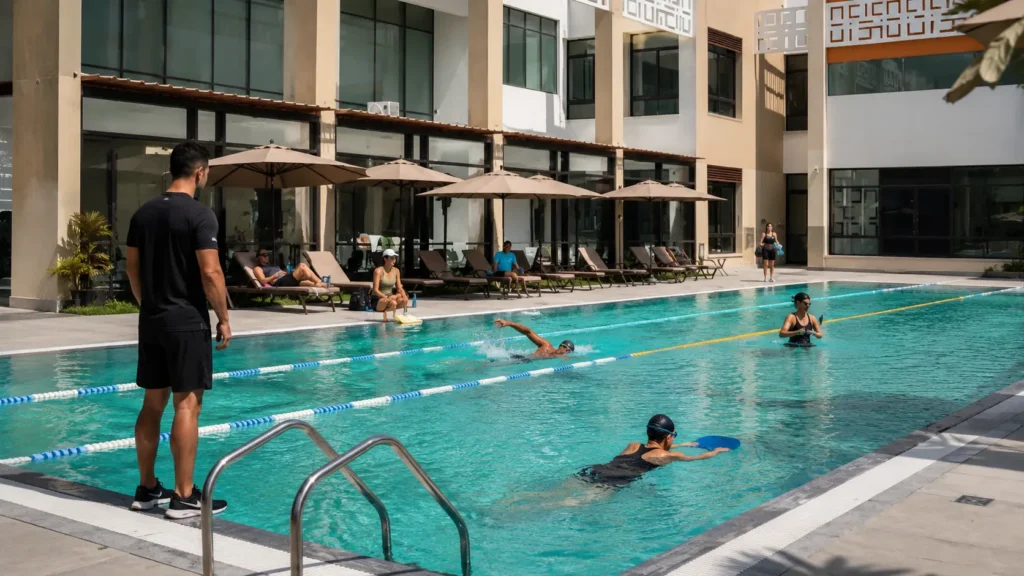
Choosing swimming classes in Al Hail should involve more than checking availability or price. A good swimming program should provide qualified instruction, clear progression, safety supervision, clean facilities, and training options for different goals. Beginners need patient coaching and water confidence. Athletes need structured intensity. People seeking weight loss need consistency and practical programming. Children need safety, trust, and age-appropriate teaching.
A professional swimming pool environment should also match the lifestyle of clients in Oman. Convenient location, suitable class timing, clean changing facilities, comfortable water conditions, and organized booking systems can all affect attendance. The best swimming classes are not random sessions; they follow a progression that helps clients improve week by week.
Why Is Professional Coaching Important for Swimming Beginners?
Professional coaching is important because swimming is a technical skill. Unlike walking, cycling, or basic gym movement, swimming requires breath control, body position, timing, and coordination inside an unfamiliar environment. Many beginners struggle not because they lack fitness, but because they do not understand how to relax and move efficiently in water.
A coach can identify the exact reason a swimmer is struggling. Some beginners lift their head too high, which causes the legs to sink. Others hold their breath, panic, or kick too aggressively. Some use too much effort and become tired quickly. Without feedback, these mistakes can become habits. With coaching, swimmers learn how to correct them early.
Professional instruction also improves safety. The American Red Cross emphasizes that water safety includes enrolling in swim classes and learning water competency. This is especially important for beginners, children, and adults who feel nervous around water. A swimming pool should be a controlled learning environment, not a place where clients are left to figure things out alone.
Coaching also builds confidence through progression. Instead of asking a beginner to swim full laps immediately, a good coach breaks skills into smaller steps: entering the water, standing safely, face immersion, blowing bubbles, floating, kicking with support, gliding, then stroke practice. This structure makes learning less stressful.
For commercial intent, this matters because people do not only pay for pool access. They pay for guidance, safety, correction, and results. Swimming classes in Al Hail should give clients a clear reason to keep coming back: measurable improvement.
How Should Swimming Classes Be Structured for Different Fitness Levels?
Swimming classes should be structured around ability, confidence, and goals. A complete program does not treat every client the same. A child who is learning water safety, an adult beginner, a weight-loss client, and an athlete preparing for conditioning all need different coaching priorities.
For beginners, the first goal is comfort. This includes water entry, balance, breathing, floating, and basic kicking. The coach should reduce fear and help the swimmer understand that calm breathing is the foundation of control. The session intensity should be low enough to build trust but structured enough to create progress.
For intermediate swimmers, the focus shifts toward stroke technique and endurance. They may practice freestyle breathing, breaststroke timing, backstroke alignment, turns, and lap consistency. At this stage, swimmers should also learn pacing. Many people start too fast and fatigue quickly. Better pacing helps them swim longer and improve aerobic fitness.
For advanced swimmers or athletes, the swimming pool becomes a performance environment. Training may include timed intervals, sprint sets, endurance blocks, kickboard drills, pull buoy work, and recovery swimming. These sessions can support cardiovascular development while reducing impact compared with extra running.
For weight-loss clients, the best structure often combines moderate continuous swimming with interval work. The goal is not exhaustion in every session. The goal is repeatable training that helps the person burn calories, improve stamina, and enjoy the process. A program that feels too difficult may reduce adherence.
This is why well-designed swimming classes in Al Hail should begin with assessment. The coach should understand the client’s current level, goal, fear level, schedule, and fitness background before prescribing intensity.
What Safety Standards Should a Swimming Pool Follow?
A professional swimming pool should prioritize safety at every level. Safety includes supervision, water cleanliness, clear pool rules, emergency readiness, appropriate class sizes, and coaches who understand water competency. When people search for a swimming pool in Oman, they may focus on appearance, but safety and instruction quality matter more for long-term trust.
The American Red Cross notes that water safety starts with safer behavior around the pool, beach, ocean, river, or other water environments, and highlights the importance of swim classes and water competency. This means a good swimming program should teach more than strokes. Clients should understand safe entry and exit, floating, controlled breathing, recognizing fatigue, respecting pool rules, and responding calmly in water.
For children, supervision must be active and constant. For adults, safety also matters because fear, fatigue, poor breathing, or overconfidence can create risk. Beginners should not be pushed into deep-water skills before they are ready. Advanced swimmers should also train with structure to avoid overexertion or poor technique under fatigue.
Cleanliness is another key standard. Pool water should be properly managed, changing areas should be hygienic, and equipment should be maintained. Clients should feel that the facility respects their health, comfort, and privacy.
In commercial terms, safety builds trust. Clients are more likely to book, return, and recommend a facility when they feel protected, respected, and guided.
How Can a Swimming Pool Support Weight Loss and Athletic Performance?
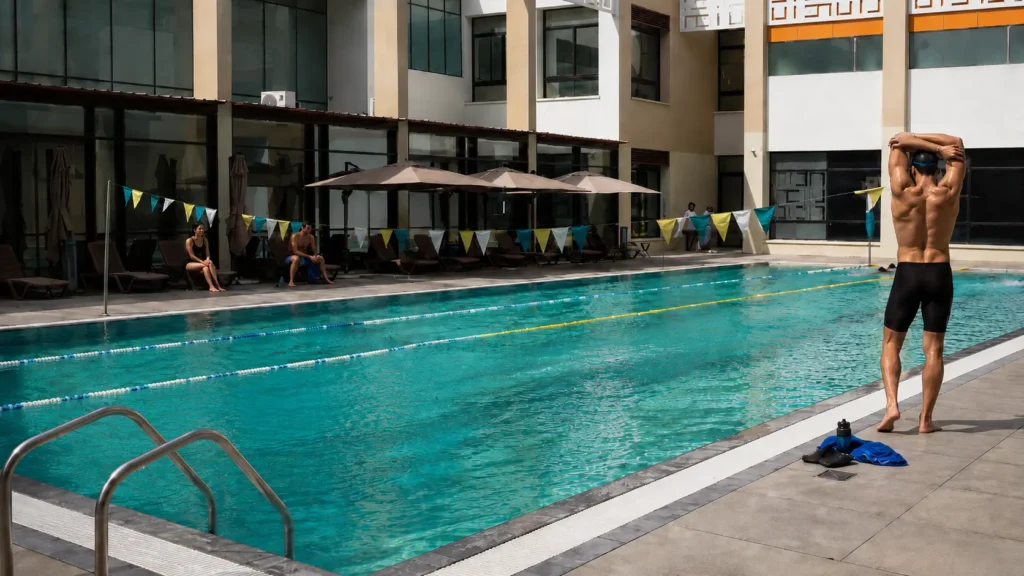
A swimming pool supports weight loss and athletic performance because it allows different training methods in one environment. A person can do low-intensity recovery swimming, moderate endurance laps, high-intensity intervals, kicking drills, mobility work, and water resistance exercises. This variety makes swimming useful for fat loss, conditioning, muscle endurance, and active recovery.
For people in Oman who want weight loss, swimming can be a refreshing way to increase weekly activity, and For athletes, it can support conditioning without adding excessive impact to the joints.Also for beginners, it provides a more forgiving entry point into structured fitness. The WHO recommends adults perform 150–300 minutes of moderate-intensity aerobic physical activity per week, or 75–150 minutes of vigorous-intensity activity, or an equivalent combination. Swimming can contribute directly to these weekly activity targets.
How Does Swimming Compare With Traditional Gym Cardio?
Swimming and traditional gym cardio can both improve fitness, but they challenge the body differently. Treadmills, bikes, stair climbers, and rowing machines are useful tools, yet swimming adds breath control, full-body coordination, and water resistance. This makes it a more skill-based and sensory training experience.
Running is weight-bearing, which can be beneficial for bone loading but may be difficult for people with joint discomfort, heavier body weight, or low conditioning. Cycling is lower impact but mostly lower-body dominant. Rowing uses more of the body but requires proper technique and may stress the lower back if performed incorrectly. Swimming spreads effort across the body while reducing impact.
Swimming also improves breathing discipline. In land cardio, people can breathe freely whenever they want. In swimming, breathing must follow rhythm and timing. This teaches control, relaxation, and efficiency under physical demand. For athletes, this can improve body awareness. For beginners, it can reduce panic and improve confidence.
Another advantage is temperature comfort. In Oman, outdoor activity can be difficult during hotter months. A swimming pool offers a practical alternative when outdoor running or sports feel uncomfortable. This can help clients stay consistent during periods when they might otherwise reduce activity.
How Can Pool Training Become Part of a Complete Fitness Plan?
Pool training works best when it becomes part of a complete fitness plan. Swimming improves cardiovascular fitness, muscular endurance, breathing control, mobility, and confidence, but a well-rounded program should also include strength training, nutrition, recovery, and lifestyle habits.
A person seeking weight loss may swim two or three times per week while also doing resistance training. The swimming sessions increase calorie expenditure and conditioning, while strength training supports muscle retention and body composition. Nutrition creates the calorie control needed for fat loss. Sleep and hydration support recovery.
An athlete may use swimming differently. Instead of using it as the main workout, swimming may support recovery, aerobic conditioning, or low-impact intervals. This can be useful during heavy training weeks when the athlete wants extra conditioning without more running or jumping.
A beginner may use swimming as the first step toward a more active lifestyle. Once confidence improves, they may add gym training, mobility work, or group fitness. The swimming pool becomes the gateway to broader fitness participation.
The CDC notes that physical activity has immediate and long-term benefits, including helping people feel better, function better, and sleep better. These benefits improve when training becomes consistent and balanced.
At 5d fitness, the value of swimming is strongest when it connects to a bigger goal: better health, stronger movement, confidence, weight management, and sustainable fitness habits.
Swimming Pool Training Options Table
| Goal | Best Pool Activity | Suitable Level | Recommended Frequency | Main Benefit |
|---|---|---|---|---|
| Learn to swim | Breathing, floating, kicking, basic strokes | Beginner | 1–2 classes weekly | Confidence and water safety |
| Weight loss support | Moderate laps, intervals, water walking | Beginner to intermediate | 2–3 sessions weekly | Calorie burn and consistency |
| Athletic conditioning | Timed laps, sprint intervals, kick sets | Intermediate to advanced | 1–3 sessions weekly | Cardiovascular performance |
| Recovery | Easy swimming, mobility in water | All levels | 1–2 sessions weekly | Lower-impact movement |
| Children’s swimming | Water comfort, safety skills, stroke basics | Child beginner | Weekly or twice weekly | Confidence and safety habits |
| Adult skill improvement | Stroke correction, pacing, endurance | Adult beginner/intermediate | 1–2 classes weekly | Technique and stamina |
Conclusion
A swimming pool can support fitness, weight loss, athletic conditioning, water confidence, and safer movement in one structured environment. For people in Oman, especially those searching for swimming classes in Al Hail, the best choice is not simply the nearest pool. The best choice is a professional setting that offers coaching, safety, clean facilities, progressive training, and a clear path from beginner confidence to long-term fitness.
Swimming is effective because it feels different from traditional workouts. It challenges the body while reducing impact, It builds stamina while improving breath control, It supports weight loss while offering variety. Most importantly, it helps people stay consistent because the training experience can feel refreshing, focused, and rewarding.
To start training with more confidence, book a swimming session or ask about swimming classes at 5d fitness. Whether your goal is learning to swim, improving fitness, supporting weight loss, or adding pool-based conditioning to your routine, a structured program can help you move better, feel stronger, and stay committed.
FAQ
Yes. Adults can learn to swim with patient, structured coaching. Good swimming classes start with water comfort, breathing, floating, and confidence before progressing to full strokes.
Swimming classes in Al Hail help beginners learn water confidence, breathing, floating, stroke technique, and safer pool habits. They also support fitness, weight loss, endurance, and full-body conditioning.
Yes. Swimming can support weight loss by increasing calorie expenditure and improving cardiovascular fitness. The best results happen when swimming is combined with nutrition control, strength training, hydration, and consistent weekly activity.
Most beginners can start with one to two sessions per week. People focused on weight loss or conditioning may benefit from two to three pool sessions weekly, depending on recovery and overall training volume.
Swimming may be more comfortable for beginners who want lower-impact exercise. Running is useful, but it can stress the joints more. Swimming reduces impact while still challenging the heart, lungs, and muscles.
Yes. Athletes can use swimming for conditioning, recovery, breath control, and low-impact cardiovascular training. It can support sports performance without adding excessive joint stress.
Yes. Children can benefit from swimming classes when the program is age-appropriate, supervised, and focused on water confidence, safety, and gradual skill development.
Bring proper swimwear, goggles, a towel, a water bottle, and a swim cap if needed. Beginners should also arrive with enough time to change and listen to coach instructions.
Progress depends on age, fear level, coordination, practice frequency, and coaching quality. Some beginners gain basic confidence within a few sessions, while stroke development may take several weeks or months.