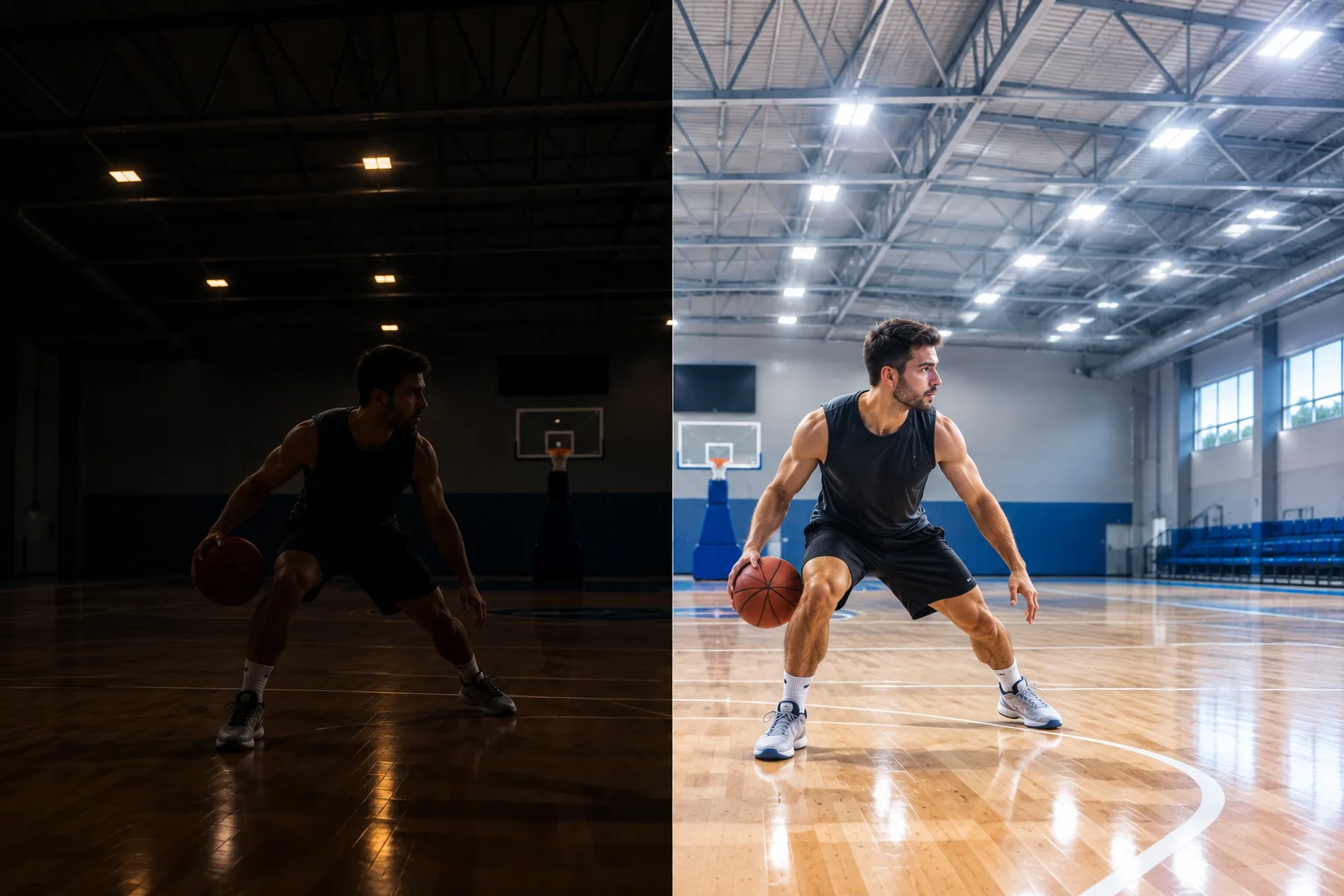
Sports facility lighting plays an essential role in visibility, athlete safety, performance, and the overall experience of using an indoor sports venue. Poor lighting can make it difficult to track a fast-moving ball, identify court markings, or judge distances accurately. In contrast, a well-designed lighting system provides suitable brightness, consistent illumination, and visual comfort.
For gym owners, sports facility managers, athletes, and fitness enthusiasts, understanding these factors helps create safer and more functional training environments. This guide explores the effects of lighting, key technical requirements, the benefits of LED technology, and practical steps for improving lighting in indoor sports facilities.
How Does Lighting Affect Athletic Performance in Indoor Sports Facilities?
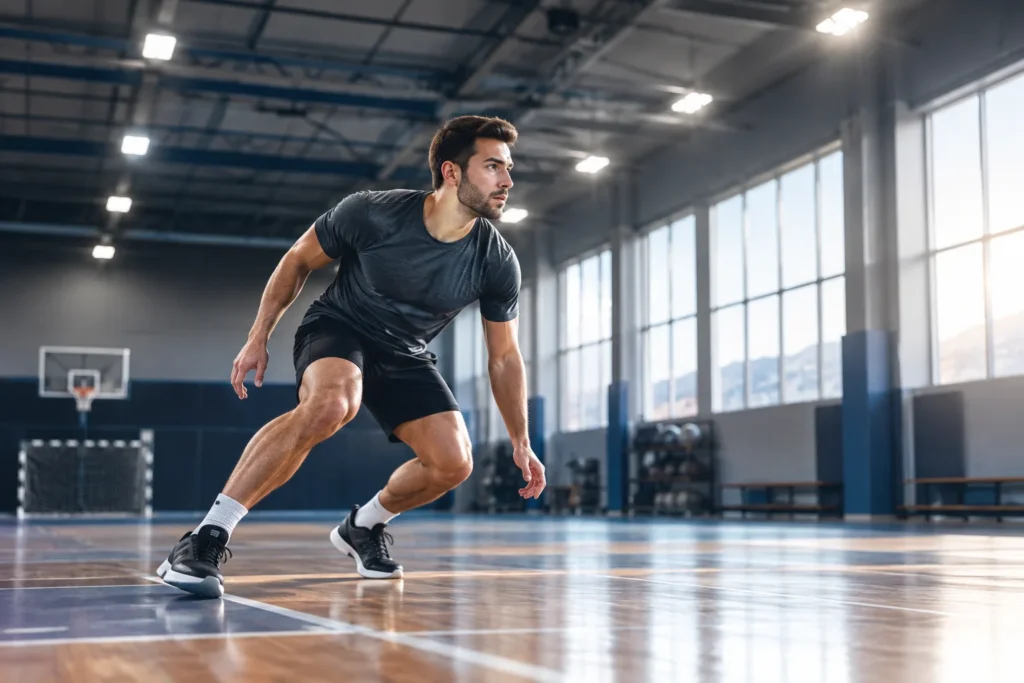
Lighting influences how athletes perceive their surroundings and respond to changing situations. In sports such as basketball, volleyball, badminton, and indoor football, players must follow moving objects, recognize teammates, and react quickly. Insufficient or poorly distributed light can make these tasks more difficult, while excessive brightness and glare can also interfere with vision. Good lighting design considers more than the number of lamps installed; it accounts for light distribution, contrast, viewing angles, and the specific demands of each sport. A suitable visual environment supports training quality and helps athletes perform tasks with greater confidence.
How Does Proper Lighting Improve Visibility During Sports?
Appropriate lighting helps athletes distinguish the ball, playing surface, court lines, teammates, and potential obstacles. This is particularly important in fast-paced sports, where players frequently shift their gaze between the floor and objects moving above their heads. If some areas of a court are significantly darker than others, visual adaptation becomes more difficult and certain details may be harder to identify.
Lighting should therefore be designed around the entire playing area rather than focused only on its centre. Designers consider horizontal illuminance on the playing surface and, where relevant, vertical illuminance to help athletes see objects and other players. The required levels depend on the sport and level of play. Recreational training, competitive matches, and televised events may require different lighting solutions.
Can Poor Lighting Affect Reaction Time and Ball Tracking?
Lighting does not automatically determine an athlete’s reaction time, but poor visual conditions can make it harder to identify information quickly. For example, a badminton player may struggle to track a shuttlecock against a bright background, while a basketball player may have difficulty following a high pass beneath a poorly positioned luminaire.
Flicker, glare, inconsistent brightness, and weak contrast can further complicate visual tasks. These problems are especially relevant in activities involving fast-moving balls or frequent changes in direction. Facility managers should assess lighting from the positions where athletes actually look, including upward viewing angles. Improvements should focus on reducing visual distractions and providing reliable illumination, rather than simply increasing brightness everywhere.
How Does Lighting Influence Safety in Indoor Sports Facilities?
A well-lit sports facility helps users see playing boundaries, equipment, entrances, steps, and changes in floor level. Poor illumination can conceal obstacles, while strong glare or deep shadows may distract athletes during movement. Lighting is only one component of sports safety, but it contributes to a clearer and more predictable environment. Designers should also consider spectators, staff, people with visual impairments, and users moving between areas with different lighting levels. Sport England’s accessible sports facilities guidance emphasizes avoiding excessive reflection, glare, deep shadows, and wide variations in lighting. These principles support a more comfortable and inclusive facility.
How Can Glare and Shadows Affect Athletes?
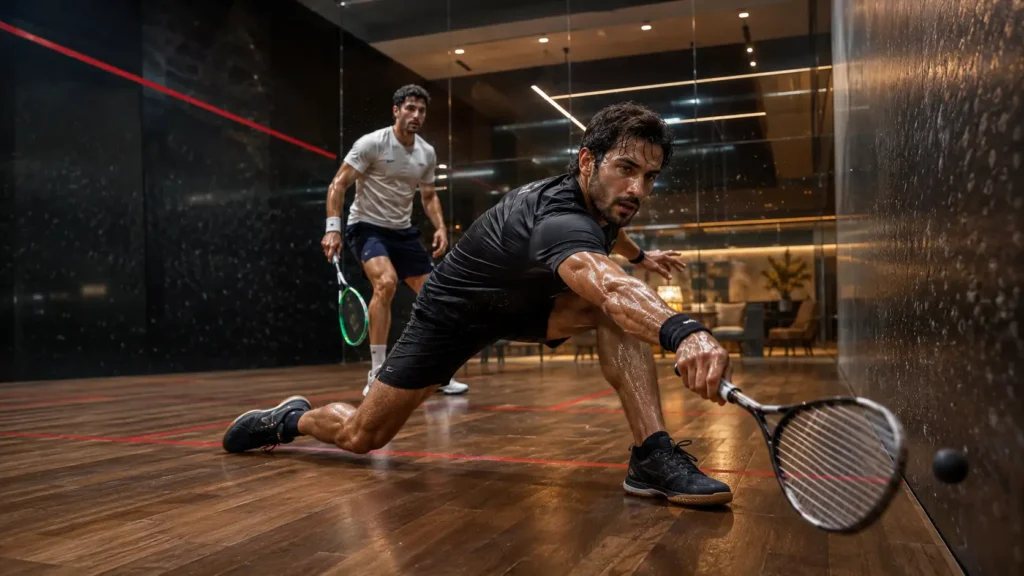
Glare occurs when a bright light source or reflection interferes with comfortable vision. In indoor sports, poorly positioned luminaires can enter an athlete’s field of view when looking upward to follow a ball. Reflections from polished floors, glass, or other shiny surfaces may create additional visual distractions.
Shadows can also reduce visibility around equipment, court boundaries, or other players. The solution is not necessarily to install more powerful lights. Instead, designers should consider fixture positioning, beam distribution, mounting height, surface reflectance, and the athlete’s normal viewing directions. Lighting should be evaluated from different points on the court, not only from the entrance or sidelines. Correcting glare and uneven illumination can improve visual comfort while avoiding unnecessary energy consumption.
Why Is Uniform Lighting Important Across the Playing Surface?
Uniformity describes how consistently light is distributed across an area. A court may have a high average illuminance but still contain dark corners or unusually bright patches. Such variations can make it harder for players to follow objects as they move across the space.
A professional lighting assessment measures illuminance at multiple points and evaluates how much the readings differ. Designers may adjust fixture spacing, optics, aiming, or the number of luminaires to improve distribution. They should also consider changes caused by ageing equipment, dirt, failed lamps, or alterations to the room. Consistent lighting is especially important in multipurpose halls, where different sports may use different sections of the same floor.
What Lighting Requirements Should Indoor Sports Facilities Meet?
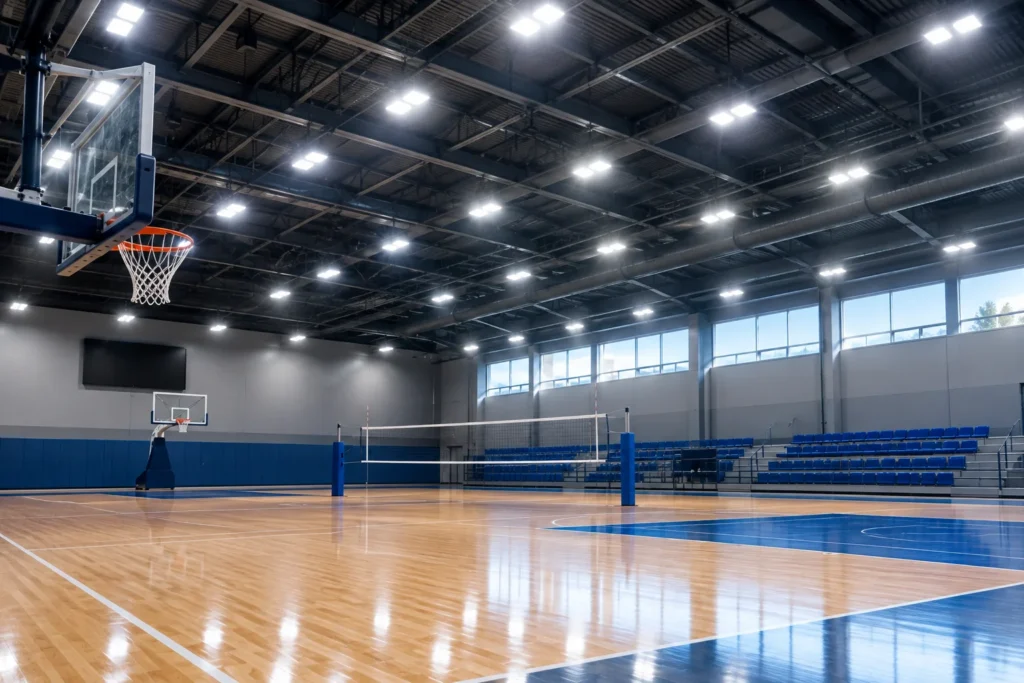
Lighting requirements depend on the activity, competition level, room dimensions, ceiling height, surface characteristics, and whether cameras will be used. Facility owners should not select equipment based solely on wattage or a manufacturer’s brightness claim. A lighting design should establish the target illuminance, acceptable uniformity, glare limits, colour characteristics, and maintenance needs for the intended use. The Illuminating Engineering Society publishes recommended practices for sports and recreational lighting, while Sport England provides guidance on artificial sports lighting. These resources help designers understand why requirements must be matched to the venue rather than applied identically to every indoor facility.
What Is Illuminance and How Is It Measured in Lux?
Illuminance measures the amount of light reaching a surface and is expressed in lux. One lux equals one lumen per square metre. In a sports hall, illuminance can be measured at defined points across the playing surface using a suitable light meter.
However, average lux alone does not describe the entire visual environment. A facility may meet an average target while still having poor uniformity or troublesome glare. Designers therefore assess multiple criteria together and consider whether light levels remain suitable over time. The appropriate target should come from the applicable standard or sport-specific guidance, taking account of the activity and competition level. A qualified lighting professional can establish measurement points and verify the installation against the design requirements.
How Do Lighting Requirements Differ Between Sports?
Different sports create different visual demands. Badminton and volleyball involve frequent upward viewing, while basketball requires players to follow the ball and other players across a large area. Indoor football requires clear visibility across a wider playing surface, and strength-training spaces need suitable illumination around weights, machines, and walkways.
The level of activity also matters. A community hall used for casual recreation may not require the same lighting specification as a venue hosting high-level competition or video broadcasting. The table below summarizes the main design considerations; it is not a substitute for sport-specific standards.
Key Lighting Considerations for Different Indoor Sports
| Facility or activity | Main lighting priority |
|---|---|
| Basketball courts | Clear ball tracking, uniform court illumination, glare control |
| Badminton courts | Visibility of fast-moving shuttlecocks and control of upward-view glare |
| Volleyball courts | Consistent illumination and comfortable overhead viewing |
| Indoor football halls | Uniform visibility across a large playing area |
| Gyms and weight rooms | Clear visibility around equipment, weights, and circulation routes |
| Multipurpose sports halls | Flexible lighting settings for different activities |
What Are the Benefits of LED Lighting in Indoor Sports Facilities?
LED technology can help sports facilities manage electricity use, maintenance, and operational flexibility. However, an LED product is not automatically suitable for every sports hall. Its performance depends on optical design, colour quality, glare control, durability, and compatibility with lighting controls. The Illuminating Engineering Society identifies energy conservation, equipment selection, controls, illuminance, uniformity, glare, and colour rendering as relevant areas of sports-lighting design. Its recommended practice also stresses the importance of considering operating costs alongside lighting performance. Facility managers should therefore evaluate the complete lighting system rather than compare products using wattage or purchase price alone.
Can LED Lighting Reduce Energy and Maintenance Costs?
LED systems can reduce electricity consumption when they replace less efficient lighting with appropriately designed equipment. Their long service life may also reduce the frequency of lamp replacement, although actual results depend on product quality, operating hours, installation conditions, and maintenance practices.
Before upgrading, facility managers should compare the existing system with the proposed installation. Useful information includes power demand, daily operating hours, electricity tariffs, expected maintenance, and the cost of installation. Lighting controls, such as dimming or separate switching zones, can further reduce unnecessary use when different areas require different light levels. Savings should be estimated using the facility’s actual operating data rather than assumed percentages. A lighting assessment can help establish whether the investment is financially worthwhile.
How Can You Improve Lighting in an Indoor Sports Facility?
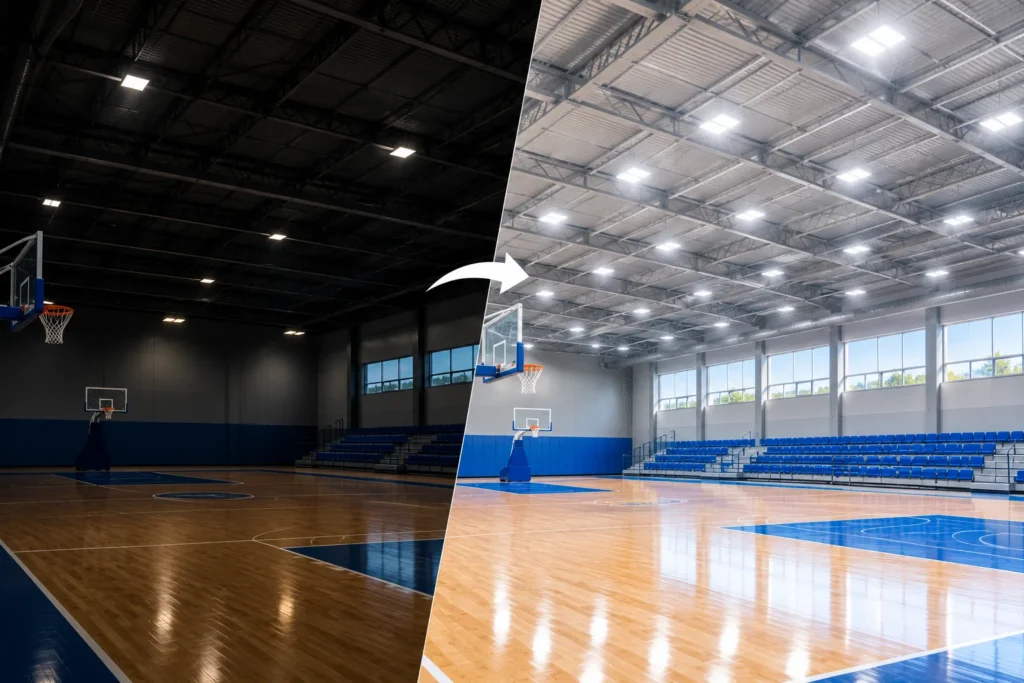
Improving sports facility lighting starts with identifying the actual problem. A hall may be too dim in certain areas, produce glare when athletes look upward, consume excessive electricity, or have fixtures that no longer deliver their original performance. Replacing every luminaire immediately may not be necessary. A structured assessment can help distinguish maintenance problems from design limitations and determine whether adjustments, targeted replacement, or a complete upgrade is appropriate. Facility managers should document the intended uses of the venue, consult relevant technical guidance, and involve a qualified lighting professional when measurements or electrical work are required.
How Can Facility Managers Identify Lighting Problems?
Use this practical assessment process:
- Inspect the playing area: Look for dark corners, inconsistent brightness, visible flicker, and distracting reflections.
- Observe different viewing angles: Check whether fixtures create glare when athletes look toward the ceiling or follow a high ball.
- Measure illuminance: Use a suitable light meter to record readings at multiple points and compare them with the applicable design criteria.
- Review equipment condition: Check for dirty covers, damaged fixtures, failed lamps, or changes that may affect light distribution.
- Compare energy use: Review electricity consumption and operating hours to identify opportunities for more efficient controls.
- Plan corrective action: Consult a lighting specialist if the problem involves design calculations, electrical systems, or sport-specific requirements.
Repeat assessments after significant repairs or upgrades. Measurements provide a more reliable basis for decisions than visual impressions alone.
How Should Facility Managers Maintain an Effective Lighting System?
Routine maintenance helps preserve the intended lighting quality. Dust on luminaires, ageing components, damaged diffusers, and failed lamps can reduce performance or create uneven illumination. Establish an inspection schedule based on the equipment manufacturer’s recommendations and how intensively the facility is used.
Keep records of faults, repairs, energy use, and any light measurements. These records help identify recurring issues and support future budgeting. After replacing fixtures or changing their position, verify that the playing surface still receives appropriate illumination. For a new installation or major upgrade, use a qualified professional to check compliance with applicable standards and local electrical requirements.
Conclusion
Effective sports facility lighting supports visibility, visual comfort, and safer use of indoor sports spaces. The best solution balances suitable illuminance, uniformity, glare control, sport-specific requirements, energy efficiency, and maintenance. Facility managers should measure actual conditions, compare them with relevant guidance, and choose equipment based on the venue’s needs rather than brightness claims alone. At 5dfitness, our goal is to help sports enthusiasts and facility managers make informed, practical decisions. Review your facility’s lighting today, identify the biggest visibility or efficiency issue, and take the next step toward a safer, better-designed sports environment.
FAQ
It helps athletes see the playing surface, follow moving objects, recognize boundaries, and use the space more comfortably.
The best system provides suitable illuminance, uniform distribution, controlled glare, and appropriate colour quality for the sports being played.
Yes, appropriately designed LED systems can provide efficient lighting and reduce maintenance needs. Product quality and optical performance still matter.
Lux measures illuminance, or the amount of light reaching a surface. Required levels vary by sport and level of play.
They can assess energy use, maintain fixtures, select efficient equipment, and use suitable controls to avoid unnecessary lighting.
Poor visibility, glare, shadows, and uneven illumination may make hazards or playing boundaries harder to see. Lighting should be assessed as part of the facility’s wider safety plan.