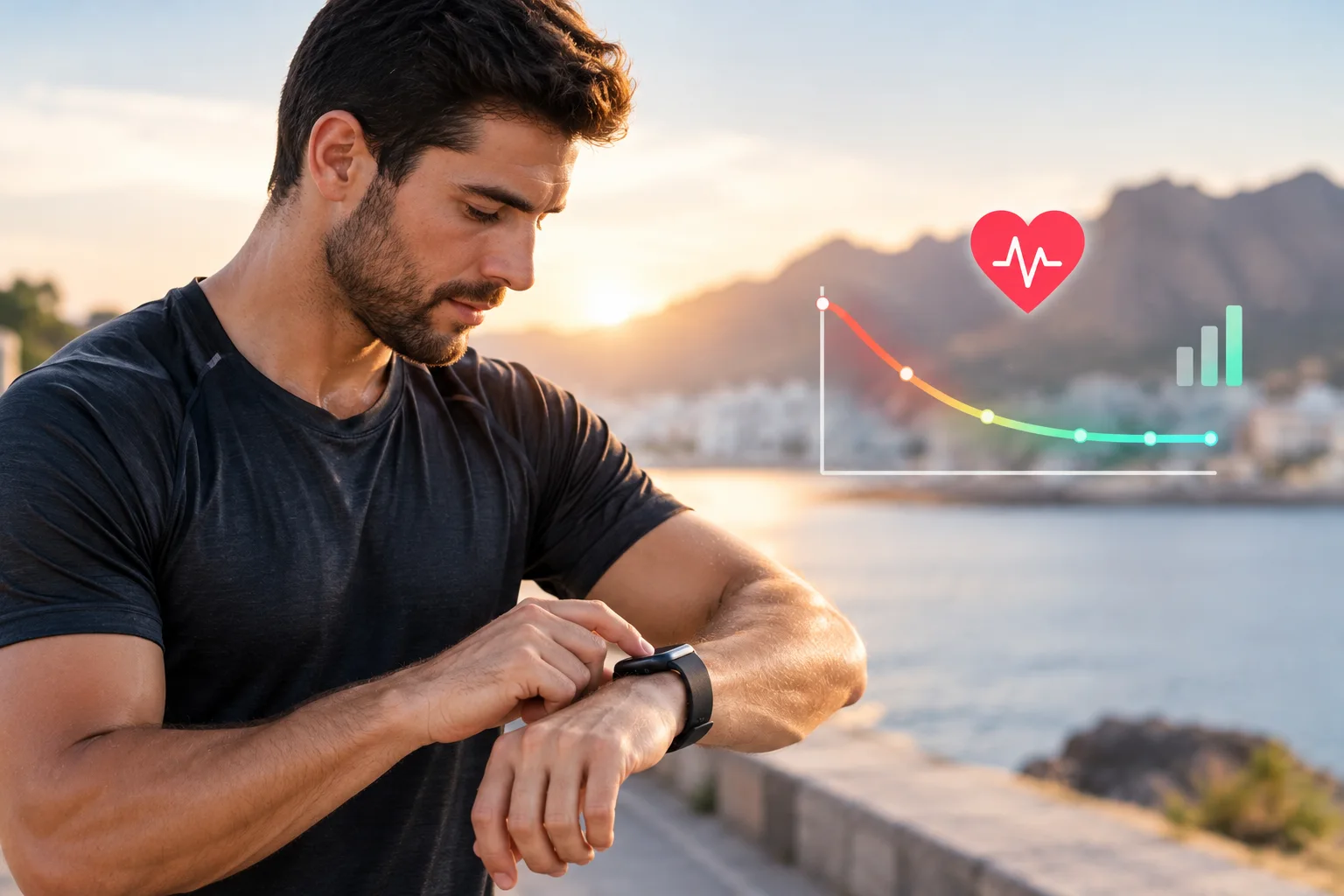
Heart rate recovery monitoring is a practical way to understand how your body responds after exercise and track changes in cardiovascular fitness over time. For athletes, bodybuilders, and fitness enthusiasts, monitoring post-workout heart rate can add useful context to training records and recovery decisions.
However, a single reading cannot determine whether you are fully recovered or ready for another intense session. By measuring heart rate consistently, considering factors such as exercise intensity and temperature, and comparing results with your personal baseline, you can make more informed training decisions. This guide explains how to measure, interpret, and use heart rate recovery data safely.
1. How Can You Use Heart Rate to Monitor Workout Recovery?
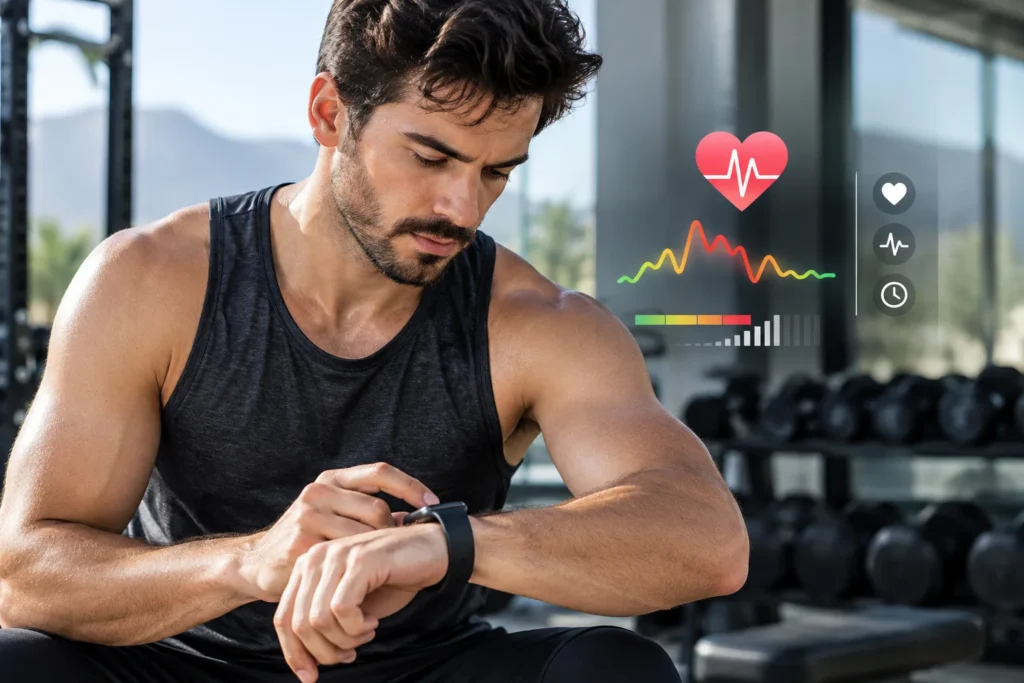
Heart rate recovery (HRR) measures how much your heart rate decreases after exercise stops or becomes less intense. It provides information about the body’s transition from exercise toward a resting state. For training purposes, HRR can help you observe patterns in cardiovascular responses, especially when measurements are collected under similar conditions. It should be considered alongside workout performance, perceived fatigue, sleep quality, and other recovery indicators. Rather than treating a single number as a score of overall fitness, look for consistent changes over several sessions. This approach makes heart rate recovery monitoring more useful for adjusting training while avoiding conclusions based on one unusual result.
What Is Heart Rate Recovery and Why Does It Matter?
Heart rate recovery is calculated by comparing your heart rate at the end of an exercise effort with your heart rate at a defined point during recovery. For example, if your heart rate is 170 beats per minute (bpm) at the end of a workout and falls to 140 bpm after one minute, your one-minute HRR is 30 bpm.
HRR reflects several physiological processes, including changes in autonomic nervous system activity after exercise. A faster decline can be associated with better cardiovascular conditioning in comparable circumstances, but it is not a complete measure of fitness. Exercise type, intensity, recovery posture, medication, age, and health status can affect results. HRR is therefore most useful as a repeated measurement rather than a stand-alone verdict on your fitness or readiness.
2. How Do You Measure Heart Rate Recovery After Exercise?
Accurate heart rate recovery monitoring depends on a consistent measurement routine. If you measure one day after an all-out interval session and another day after light cycling, the results may not be directly comparable. You should also use the same recovery interval and, where possible, the same approach to cooling down. A chest strap, smartwatch, or manual pulse check can provide useful information, although each method has limitations. The goal is not to obtain a perfect number after every workout; it is to collect enough comparable data to recognize meaningful personal trends.
How Do You Calculate One-Minute Heart Rate Recovery?
Use the following steps to calculate one-minute HRR:
- Complete a workout or exercise test with a clearly identifiable finishing effort.
- Record your heart rate at the end of that effort.
- Follow a consistent recovery procedure, such as standing still or walking slowly, depending on your chosen protocol.
- Record your heart rate exactly one minute later.
- Subtract the one-minute reading from the finishing heart rate.
Formula:
One-minute HRR = End-of-exercise heart rate − Heart rate after one minute
| Example measurement | Heart rate |
|---|---|
| Heart rate at exercise finish | 170 bpm |
| Heart rate after one minute | 140 bpm |
| One-minute heart rate recovery | 30 bpm |
In this example, HRR is 30 bpm. This result should not automatically be labelled good or poor without considering the exercise protocol and individual circumstances. Clinical exercise tests may use specific procedures and interpretation thresholds that differ from informal home measurements.
3. What Does Your Heart Rate Recovery Data Tell You About Fitness?
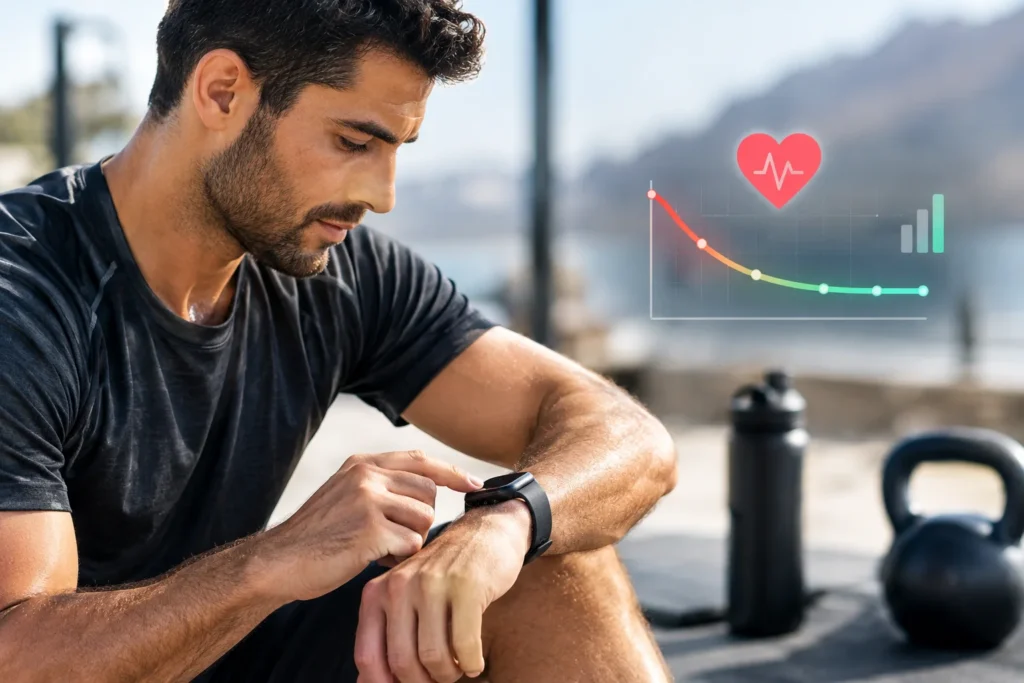
Heart rate recovery data can help you understand how your cardiovascular response changes across training sessions. If HRR becomes faster during comparable workouts over several weeks, that may be consistent with improved conditioning. If it becomes slower, it could reflect a harder session, accumulated fatigue, heat exposure, dehydration, poor sleep, or other influences. Neither pattern should be interpreted in isolation. Use your training log to compare HRR with exercise intensity, pace, power output, and perceived effort. This gives you a more complete picture than relying on heart rate alone and reduces the risk of making unnecessary changes to your programme.
What Is a Good Heart Rate Recovery After Exercise?
There is no single HRR value that applies to every athlete, exercise type, and measurement protocol. Clinical guidance may discuss specific one-minute thresholds, but these depend on how the exercise test and recovery period are conducted. A number obtained after a supervised treadmill test cannot always be compared fairly with one recorded after a weightlifting circuit or an outdoor run.
For everyday training, establish a baseline using similar workouts and the same measurement method. Compare several sessions rather than reacting to one reading. A persistent change may deserve attention, particularly if it appears alongside unusual breathlessness, dizziness, chest discomfort, palpitations, or a decline in performance. HRR can support fitness monitoring, but it cannot diagnose a heart condition or independently establish whether you are ready for hard training.
4. What Factors Can Affect Heart Rate Recovery After a Workout?
Your post-exercise heart rate is influenced by more than your fitness level. The type and intensity of exercise, environmental conditions, hydration, sleep, stress, and some medications can all affect the response. For example, an intense interval workout may produce a different recovery pattern from a moderate steady-state session. Training in hot or humid conditions can also place additional demands on the cardiovascular system. These variables are especially important when comparing outdoor workouts or sessions completed at different times of day. Recording the context alongside HRR readings helps you interpret changes more accurately instead of assuming every slower decline signals a problem.
How Do Sleep, Stress, Hydration, and Heat Affect HRR?
Poor sleep and psychological stress can influence the body’s physiological state, while dehydration and heat can increase cardiovascular strain during exercise. These factors may change your heart rate during a session and affect how it declines afterward. A slower reading following a hot outdoor workout, for example, may not mean your fitness has suddenly deteriorated.
Record relevant details in your training log, including sleep quality, perceived effort, weather conditions, hydration, and unusual stress. If you train outdoors in hot climates, reduce intensity when conditions make exercise more demanding and allow adequate cooling and fluid replacement. Do not use a single HRR reading to diagnose dehydration, overtraining, or illness. If unusual heart rate responses persist or occur with concerning symptoms, stop exercising and seek appropriate medical advice.
5. How Can You Use Heart Rate Recovery to Adjust Your Training?
Heart rate recovery is most useful when it becomes one part of a broader training-monitoring system. It can help you notice patterns, evaluate responses to comparable workouts, and decide when to review your training load. However, it should not automatically determine whether you train hard, train lightly, or rest. Combine HRR with subjective measures such as fatigue and soreness, objective measures such as performance, and basic recovery habits including sleep and nutrition. This balanced approach is more reliable than relying on a wearable’s readiness score or one post-workout number.
How Can You Build a Simple Heart Rate Recovery Tracking Routine?
- Choose a repeatable workout:
Use a familiar activity and a similar intensity when comparing results.
- Select one protocol:
Decide whether you will measure HRR after one minute or another fixed interval.
- Use the same recovery method:
Standing, sitting, and walking slowly can produce different readings.
- Record the context:
Note workout type, intensity, temperature, sleep, and how you feel.
- Review weekly trends:
Compare several sessions rather than reacting to one unusual measurement.
- Adjust cautiously:
If HRR changes alongside fatigue or declining performance, consider reducing training intensity and improving recovery.
If your heart rate repeatedly behaves differently from your usual pattern, investigate the context and monitor symptoms. Do not deliberately perform maximal exercise tests simply to obtain a recovery score, particularly if you have a medical condition or have been advised to limit exercise.
Conclusion
Heart rate recovery monitoring can add meaningful information to a fitness programme when measurements are consistent and interpreted in context. Track the decline in heart rate after comparable workouts, record the factors that may influence it, and review trends alongside performance, fatigue, and sleep. Avoid treating a universal threshold or wearable score as a complete assessment of fitness or recovery. For athletes and fitness enthusiasts, the best approach is to use HRR as one useful signal within a broader, evidence-informed training strategy.
At 5dfitness, build a smarter training routine by tracking your workouts, reviewing recovery patterns, and making gradual, evidence-informed adjustments. Consistency and context matter more than chasing a single number.
FAQ
No. HRR measures how much your heart rate decreases after exercise. Resting heart rate is measured when you are calm and at rest.
Many smartwatches estimate post-exercise HRR. Results depend on sensor performance, fit, movement, and the device’s measurement method, so compare trends cautiously.
Not necessarily. Workout intensity, heat, stress, sleep, and recovery conditions vary. Compare similar sessions and look for longer-term patterns.
No. HRR may contribute to training monitoring, but overtraining cannot be diagnosed from one metric. Consider persistent fatigue, performance changes, mood, sleep, and other signs.
Speak with a healthcare professional if you notice persistent or unexplained changes, particularly with dizziness, fainting, chest pain, unusual shortness of breath, or palpitations. Seek urgent care for severe or sudden symptoms.