
Training hard can feel empowering. It builds discipline, confidence, strength, and a sense of control over your body. But there is a point where effort stops producing progress and starts creating fatigue, frustration, and decline. That is where understanding Overtraining Symptoms in Oman becomes important, especially for gym members who train intensely while managing work stress, heat, sleep disruption, fasting periods, and busy family routines.
Overtraining is not simply “being tired after the gym.” It is a deeper imbalance between training stress and recovery. It can affect strength, endurance, mood, sleep, motivation, immunity, and injury risk. For people training in Muscat and across Oman, the risk can increase when high-intensity workouts are combined with dehydration, poor nutrition, limited sleep, and no structured rest days.
At 5d fitness, the goal is not to push every person harder every day. The smarter goal is sustainable progress: training that makes you stronger, leaner, fitter, and more confident without breaking your body down. This guide explains the warning signs, the difference between normal fatigue and gym burnout, and how to recover before a temporary problem becomes a long-term setback.
Listen
What Are Overtraining Symptoms in Oman and Why Do They Matter?
Overtraining symptoms in Oman matter because many active people mistake warning signs for weakness. They keep training harder even when their body is clearly asking for recovery. In reality, progress is not created during the workout alone. Training provides the stimulus, but recovery is where adaptation happens.
What does overtraining feel like in real life?
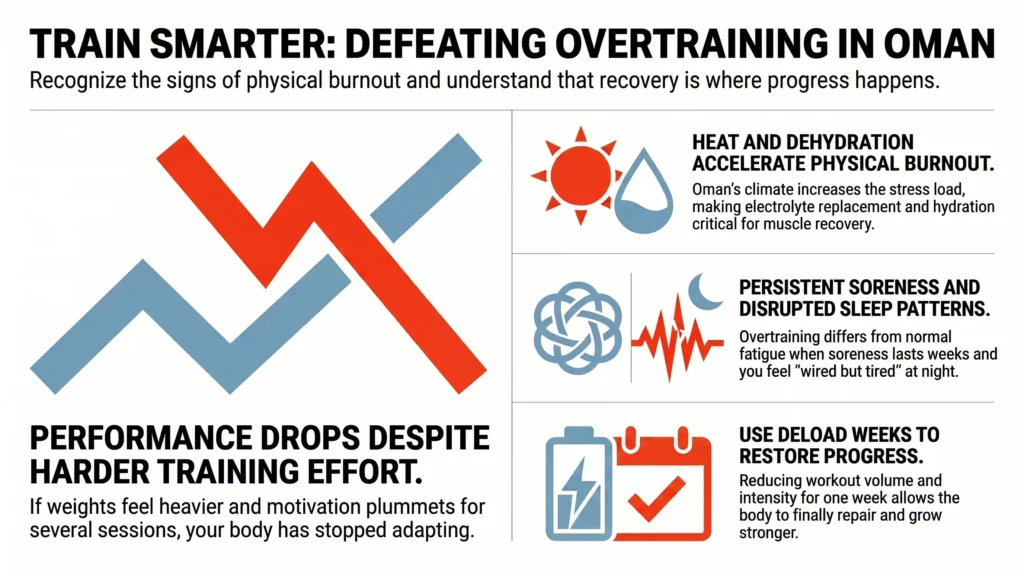
Overtraining often feels like your body is no longer responding to effort. You may still show up to the gym, but the same weights feel heavier, your warm-up feels exhausting, and your motivation drops before the workout even begins. A person who once felt excited to train may begin to feel anxious, irritated, or emotionally flat. This is where gym burnout becomes more than a mental issue. It often reflects a physical recovery problem as well.
Common overtraining symptoms include:
- Constant fatigue even after rest
- Declining strength, endurance, or speed
- Poor sleep or waking up tired
- Longer muscle soreness than usual
- Increased irritability or low mood
- More frequent minor injuries or illness
The ECSS and ACSM consensus statement explains that successful training must include overload, but it must also avoid the combination of “excessive overload plus inadequate recovery.
Meeusen et al
Why is overtraining different from normal post-workout fatigue?
Normal fatigue improves with food, hydration, sleep, and one or two easier days. Overtraining symptoms last longer and often come with performance decline. After a productive workout, you may feel sore but still feel mentally positive. With overtraining, the fatigue feels deeper. You may feel heavy, unmotivated, restless at night, and weaker despite consistent effort.
This difference is important for people training in Muscat because many gym members push through fatigue during demanding work weeks or hot weather. A hard session after poor sleep, skipped meals, and dehydration can create more stress than benefit. When this pattern repeats, the body may stop adapting. Instead of building strength, the person begins accumulating exhaustion.
The key signal is performance. If your workouts are getting worse for more than a few sessions and you feel emotionally drained, it is time to adjust the plan rather than blame your discipline.
How Can You Tell the Difference Between Gym Burnout and Overtraining?
Gym burnout and overtraining are connected, but they are not exactly the same. Gym burnout is often emotional and motivational. Overtraining includes physical, psychological, and performance-related symptoms caused by poor recovery. Many people experience both at the same time.
What are the emotional signs of gym burnout?
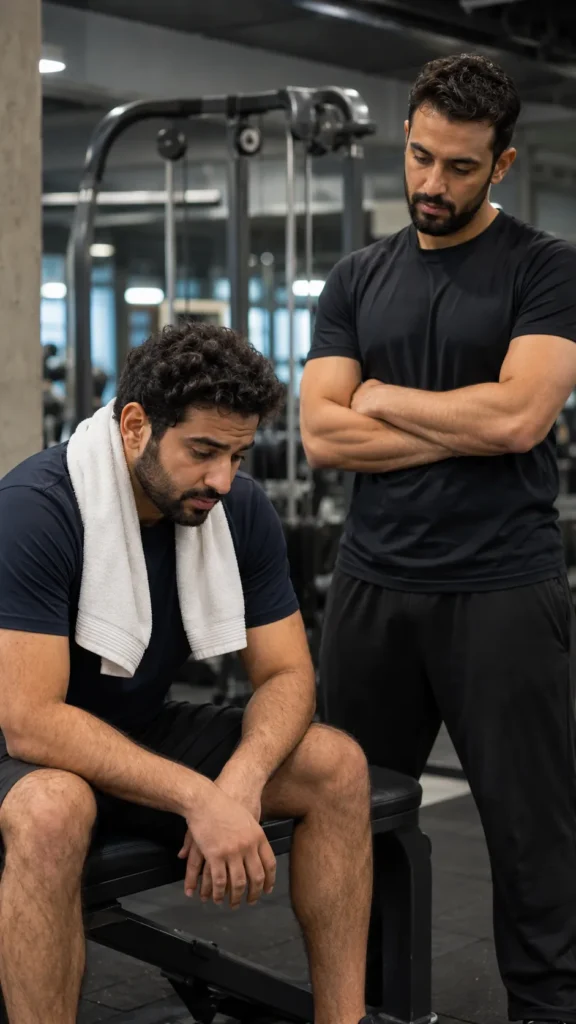
Gym burnout often starts quietly. You may still care about your fitness goal, but the process begins to feel heavy. The gym becomes another pressure instead of a positive routine. You might feel guilty when you rest, frustrated when results slow down, or bored with repetitive workouts. This is common among people who train aggressively for weight loss, body transformation, or sports performance.
Emotional signs may include lack of excitement, irritability, comparison with others, fear of losing progress, and feeling mentally tired before training. In Oman, many people also balance work, family duties, social events, and long commutes. When life stress is high, the same workout plan may become too demanding even if it worked before.
NASM describes overtraining syndrome as a condition where a fitness client or athlete experiences fatigue, declining performance, and burnout.
National Academy of Sports Medicine — NASM
When does burnout become a physical recovery problem?
Burnout becomes a bigger concern when motivation loss is combined with physical decline. If you dislike training for a few days but your performance is stable, you may simply need variety. If you feel mentally exhausted and your strength, endurance, coordination, sleep, and mood are all getting worse, your body may be under-recovered.
This is why a coach should not only ask, “Did you train?” A good coach should also ask, “How did you sleep? How is your appetite? How does your body feel? Are your numbers improving or dropping?” These questions reveal whether the issue is discipline, programming, recovery, or lifestyle stress.
| Sign | Normal Tiredness | Gym Burnout | Possible Overtraining |
|---|---|---|---|
| Duration | 1–2 days | Several days or weeks | Weeks or longer |
| Performance | Usually stable | May feel inconsistent | Clearly declining |
| Mood | Slightly tired | Low motivation | Irritability, anxiety, low mood |
| Sleep | Usually normal | May feel restless | Often disrupted |
| Soreness | Improves with rest | May feel heavier | Persistent or recurring |
| Solution | Rest and hydration | Variety and reduced pressure | Structured recovery plan |
Why Do Overtraining Symptoms Happen More Easily in Oman?
Overtraining can happen anywhere, but the lifestyle and climate in Oman can make recovery more challenging. Heat, dehydration, long workdays, air conditioning, late nights, and inconsistent meals can all affect how well the body adapts to training.
How do heat and dehydration affect workout recovery?
Training in Oman often means dealing with hot weather for much of the year. Even if you train indoors, the body may still be affected by dehydration from daily heat exposure, sweating, and low fluid intake. When hydration is poor, workouts can feel harder, heart rate may rise faster, and recovery may slow down.
Dehydration does not only affect endurance. It can also affect focus, muscle function, perceived effort, and post-workout fatigue. A person may think they are losing fitness, when in reality they are under-hydrated and under-recovered. This matters for people who train after work, during weight-loss phases, or around fasting schedules.
A practical recovery approach should include:
- Drinking water consistently across the day
- Replacing electrolytes when sweating heavily
- Avoiding very intense training after poor sleep
- Scheduling hard sessions when energy is highest
- Eating enough protein and carbohydrates after training
Why do busy Muscat routines increase the risk of under-recovery?
Many gym members in Muscat train around demanding schedules. They may wake up early, work long hours, sit in traffic, attend family commitments, and train late at night. When sleep becomes short and meals become rushed, recovery quality drops. The workout itself may be only one part of the stress load.
Overtraining is not caused by exercise alone. It is often caused by total stress being higher than total recovery. Work pressure, poor sleep, low calories, emotional stress, illness, and dehydration all count. If someone keeps adding more cardio, more lifting, more classes, and fewer rest days, the body eventually reaches a limit.
Expert quote: ACSM notes that effective conditioning requires balance between intense training sessions and rest or recovery, and that too much overload or too little recovery can lead to physiological and psychological symptoms that limit performance.
What Are the Most Common Physical Signs of Overtraining?
Physical symptoms are often the easiest to notice, but many people ignore them until they become painful. The body usually sends early warning signs before a major injury happens. Listening early can protect long-term progress.
If your workouts feel harder but your results are slowing down, do not ignore the signal. A structured fitness assessment can help you understand whether you need more intensity, better recovery, or a completely different plan.
Why does performance drop even when you train harder?

A clear sign of overtraining is declining performance despite consistent effort. You may lift less weight, run slower, lose stamina, struggle with exercises that used to feel manageable, or need more time between sets. This can be confusing because many people assume more training should always create better results.
In reality, strength and fitness improve when the body adapts after stress. If stress keeps coming without enough recovery, adaptation is interrupted. The nervous system, muscles, hormones, and immune system may all be affected. This can make the body feel flat and unresponsive.
Performance decline is especially important because it is measurable. If your numbers are dropping for several sessions, do not ignore them. A smart deload week, better sleep, improved nutrition, or a change in program may restore progress faster than forcing another intense session.
Why do muscles stay sore for too long?
Muscle soreness is normal after a new or challenging workout. But soreness that stays for many days, returns constantly, or affects your movement may suggest that recovery is not keeping up. This is especially true when soreness is paired with joint pain, poor sleep, and low motivation.
Persistent soreness can happen when training volume is too high, exercise technique is poor, nutrition is inadequate, or rest days are missing. It can also happen when someone changes too many variables at once, such as adding heavier weights, extra cardio, and a calorie deficit in the same week.
A safer approach is progressive overload. Increase difficulty gradually, monitor recovery, and avoid turning every workout into a maximum-effort test. Fitness should challenge the body, not punish it.
What Mental and Lifestyle Symptoms Should You Watch For?
Overtraining is not only physical. It can affect your mind, emotions, and daily life. Many people notice mental signs before they accept that the body is under stress.
Can overtraining affect sleep and mood?
Yes. Overtraining can affect sleep quality, mood, and emotional control. Some people feel tired all day but wired at night. Others wake up frequently or feel unrefreshed even after enough hours in bed. Mood changes may include irritability, anxiety, low motivation, or feeling unusually negative about training.
This does not mean every bad mood is overtraining. But when mood changes appear with declining performance, heavy muscles, appetite changes, and poor recovery, the pattern matters. A person who once enjoyed training may begin to dread workouts. This is often when gym burnout becomes visible.
Cleveland Clinic lists fatigue, depression, and loss of motivation to train among possible overtraining syndrome symptoms.
Cleveland Clinic
How can appetite, immunity, and daily energy change?
Overtraining can also affect appetite, immune resilience, and daily energy. Some people feel hungrier than usual because the body is asking for more fuel. Others lose appetite because stress is high. Frequent colds, headaches, or feeling run-down may also appear when recovery is poor.
Daily energy is one of the most useful signals. If you are always tired outside the gym, struggling to focus at work, and feeling emotionally drained, your training plan may need adjustment. Fitness should improve life, not make every other part of life harder.
This is especially important for weight-loss clients. A calorie deficit plus intense training plus poor sleep can quickly become too much. The goal is not only to burn calories. The goal is to build a body and routine you can sustain.
How Should You Recover From Overtraining Symptoms Without Losing Progress?

Recovery does not mean failure. Recovery is part of serious training. The fastest way back to progress is often to reduce stress, restore energy, and rebuild consistency with a smarter plan.
Should you stop training completely?
Not always. Mild symptoms may improve with a few easier days, reduced volume, better hydration, and improved sleep. More serious symptoms may require a longer break and medical guidance, especially if there is chest pain, dizziness, persistent illness, hormonal concerns, or severe fatigue.
For many gym members, the best first step is a deload week. This means reducing intensity, volume, or both. You can still move, stretch, walk, swim, or do light technique work. The goal is to maintain the habit while allowing the body to recover.
A recovery-focused week may include:
- Lighter weights and fewer sets
- Low-intensity cardio instead of HIIT
- More mobility and stretching
- Extra sleep and hydration
- Balanced meals with enough protein and carbohydrates
- No testing of maximum lifts
How can coaching help prevent the same problem from happening again?
A coach can help separate effort from excess. Many motivated people do not need more discipline; they need better structure. A personalized program can manage training load, rest days, exercise selection, progression, nutrition habits, and recovery tracking.
At 5d fitness, a well-designed plan can help members in Oman train with purpose instead of guessing. This is especially valuable for people who have hit a plateau, feel burned out, or keep restarting after fatigue and injury. The right plan does not make training easy. It makes training effective.
A coach may adjust your program by adding rest days, changing workout intensity, rotating muscle groups, improving technique, or balancing strength and cardio. These changes can help you keep progressing without burning out.
When Should You Get Professional Help for Overtraining Symptoms?
Some fatigue is normal. But certain symptoms should not be ignored. If the body keeps sending warning signals, professional support can prevent a small issue from becoming a long-term problem.
When is it time to speak with a coach or health professional?

You should seek guidance if symptoms continue for more than a couple of weeks, performance keeps declining, sleep remains poor, or pain does not improve with rest. You should also get medical advice if you experience dizziness, chest discomfort, unusual heart symptoms, repeated illness, severe mood changes, or unexplained weight changes.
A coach can help with programming, but medical professionals are important when symptoms may involve health conditions, hormonal issues, anemia, infection, or nutritional deficiencies. Overtraining can look similar to other problems, so guessing is not always safe.
Clinical reviews describe overtraining syndrome as difficult to diagnose because symptoms can overlap with other medical conditions and often require careful evaluation.
Kreher & Schwartz
How can you return to training safely?
Returning safely means rebuilding gradually. Do not jump back into your hardest routine the moment you feel better. Start with moderate sessions, track energy, and increase volume slowly. Your body should feel more capable each week, not more drained.
A simple return-to-training approach is to begin with three to four controlled sessions per week, keep intensity moderate, and include at least one full rest day. Monitor sleep, mood, soreness, appetite, and performance. If symptoms return, reduce intensity again.
The aim is not to train less forever. The aim is to earn the right to train harder again by restoring recovery first.
If you are experiencing Overtraining Symptoms in Oman, now is the time to train smarter, not harder. Book a personalized fitness consultation at 5d fitness and get a plan designed around your body, your recovery, your lifestyle, and your long-term goals in Muscat.
FAQ Section
The first signs often include unusual fatigue, reduced performance, poor motivation, longer soreness, and sleep disruption. If these symptoms continue despite rest, your workout plan may need adjustment.
No. Gym burnout is often emotional and motivational, while overtraining includes physical and performance-related symptoms. However, both can happen together.
Yes. Beginners can overtrain if they do too much too soon, skip rest days, copy advanced routines, or combine intense workouts with poor sleep and low food intake.
Mild fatigue may improve in days. More serious overtraining can take weeks or longer. Recovery depends on training load, sleep, nutrition, stress, and symptom severity.
If tiredness is mild, choose a lighter workout. If fatigue is persistent and performance is dropping, take rest or do a deload week.
It can make weight loss harder by increasing fatigue, cravings, poor sleep, and inconsistent training. Sustainable fat loss requires recovery as well as exercise.
It may contribute to muscle loss if combined with inadequate calories, low protein, poor sleep, and excessive training stress.
The best schedule depends on your goal and fitness level, but most people need a mix of hard days, moderate days, rest days, and progressive overload.
Yes. Heat and dehydration can increase fatigue and make recovery harder, especially when fluid and electrolyte intake are low.
Ask for help if fatigue, pain, poor sleep, mood changes, or performance decline continue for more than one to two weeks despite rest.