
The pursuit of physical excellence requires more than just effort; it demands a precise, scientifically backed strategy tailored to one’s environment. In the Sultanate, where the lifestyle and climate present unique challenges and opportunities, establishing a comprehensive Workout Plan in Oman is the first step toward a transformative health journey. At 5d fitness, we recognize that fitness is not a one-size-fits-all endeavor but a multifaceted discipline that integrates strength, endurance, and mental resilience. Whether you are a resident of Muscat looking to shed weight or an athlete striving for peak performance, understanding the nuances of localized training is vital. This article delves deep into the mechanics of effective exercise programming, ensuring that every minute spent in the gym translates into measurable progress and long-term vitality.
Listen
How Can You Design the Perfect Workout Plan in Oman for Your Fitness Level?
Designing a professional training program requires an assessment of your current physiological baseline and your ultimate objectives. A localized plan must account for the high temperatures of the Gulf, which influence cardiovascular strain and hydration needs. A well-structured approach begins with defining whether the goal is hypertrophy, fat loss, or functional mobility, then layering these goals over a realistic weekly schedule that prevents burnout.
What are the primary factors in building a sustainable routine?
The concept of sustainability is crucial for success in the world of fitness. Instead of mimicking the heavy training volume used by athletes, focus on creating a regimen that suits you based on your body’s requirements such as metabolic rate, rate of recovery, and time schedule. Strike a balance between intensity and recovery, using deloading periods in order to prevent exhaustion and remain motivated.
How do you adjust your physical exercise for the Omani climate and heat?

Training in Oman’s extreme summer heat and humidity significantly affects physical performance, primarily due to increased heart rate and a phenomenon known as cardiac drift. To optimize workouts in hot climates, prioritize thermoregulation by scheduling high-intensity training in the early morning or late evening, or use air-conditioned environments.
Proper hydration is essential for performance and safety. In addition to water, maintaining electrolyte balance—especially sodium, potassium, and magnesium—is critical for muscle function, nerve signaling, and preventing cramps during intense exercise in heat.
For newcomers, a 7–14 day heat acclimatization period is crucial. Gradually increase workout intensity and duration to allow the body to adapt safely. Ignoring climate-specific training strategies can reduce performance and increase the risk of heat-related illnesses, making heat adaptation a key factor in any effective fitness plan in Oman.
Why Is a Structured Gym Routine Essential for Long-Term Success?
A structured gym routine in Oman gives you a clear framework to track progress and apply progressive overload effectively. Without a plan, many gym-goers fall into random training habits that produce inconsistent results. When you follow a structured approach, you deliberately target different muscle groups, build balanced strength, and reduce the risk of overuse injuries by allowing proper recovery between sessions.
“Structure in training is the bridge between goals and accomplishment. Without a roadmap, the body simply adapts to the status quo rather than pushing toward new heights of performance.”
Dr. Elena Rossi, Sports Physiologist
How does consistency impact metabolic health and fat loss?
Consistency drives metabolic adaptation. Following a structured routine helps your body use fuel more efficiently, including glucose and stored fat. Regular resistance training builds lean muscle, which raises your basal metabolic rate (BMR), allowing you to burn more calories even at rest. In contrast, inconsistent training limits metabolic flexibility—the ability to switch between burning carbs and fat.
For those in Oman aiming to lose weight, consistency also improves hormonal balance, especially insulin sensitivity. Better insulin sensitivity helps your body use nutrients for muscle repair instead of fat storage. Over time, this creates a compounding effect, where each workout builds on the last, leading to visible and internal transformation.
What are the psychological benefits of following a set schedule?
The psychological impact of a structured routine is often undervalued. Following a set schedule reduces “decision fatigue.” When you know exactly what exercises, sets, and reps you are performing before you even step into the gym, you conserve mental energy for the physical effort itself. This sense of order fosters a “growth mindset,” where the completion of each session is viewed as a small victory, building self-efficacy and confidence.
In a fast-paced professional environment like Muscat, the gym often serves as a sanctuary for mental clarity. A structured routine provides a sense of control and predictability, which significantly reduces cortisol levels (the stress hormone).
High cortisol is a known inhibitor of fat loss and muscle gain; therefore, the mental peace provided by a clear plan actually supports your physical goals. Furthermore, the discipline required to stick to a routine overflows into other areas of life, enhancing productivity and emotional regulation.
What Should a Beginner Workout Include to Ensure Safety and Consistency in Oman?
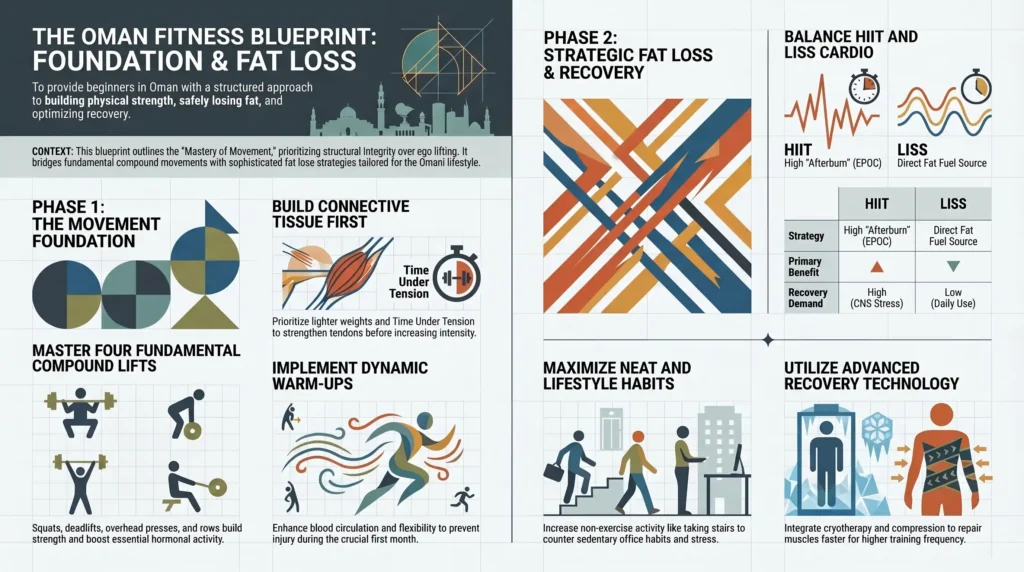
For those just starting, a beginner workout should focus on the “Mastery of Movement.” Jumping into advanced splits or high-impact plyometrics too early is a recipe for injury. The goal of the initial phase is to build a solid foundation of structural integrity, improving joint stability and learning the correct biomechanics of fundamental lifts.
Which compound movements are best for those starting their journey?
Complex movements involve several joint actions and muscle groups, and they work incredibly well for beginners. Movements such as squats, deadlifts, overhead presses, and rows enhance strength capabilities and promote powerful hormonal activity.
Squats train the lower body and enhance core stabilization, whereas deadlifts strengthen the posterior part of the body. Overhead presses develop the upper body and shoulders, and rows improve hunched backs caused by sedentary lifestyles at work.
These movements are critical for people new to weight training in Oman because they also generate higher levels of growth hormone and testosterone production, which accelerates the training process.
How can those on a new workout plan avoid common injuries during their first month in Oman?
The first month is crucial for preventing injuries. Most injuries occur due to ego lifting, which refers to lifting weights that are too heavy when the tendons and ligaments are not yet accustomed. Connective tissue takes more time than muscles to build up strength, so it is best to concentrate on lighter weights and TUT.
It is imperative to do an appropriate dynamic warm-up to enhance blood circulation and flexibility. It is equally vital to have an awareness of biofeedback, which includes differentiating between DOMS and sharp pain that causes damage to your body.
Restful sleep and nutrition are key factors for promoting muscle recovery. It is wise to be patient rather than seeking quick gains in weightlifting.
How Can Weight Loss Strategies Be Integrated into Your Local Routine?
Weight loss is a common objective for many individuals seeking a workout plan in Oman. However, weight loss should not be equated with muscle loss. A sophisticated routine integrates metabolic conditioning with resistance training to ensure that the weight lost is primarily body fat, resulting in a toned and healthy appearance rather than a “skinny-fat” physique.
How does high-intensity training compare to steady-state cardio for fat burning in a workout plan in Oman?
High-Intensity Interval Training (HIIT) and Low-Intensity Steady State (LISS) cardio both have their place in an Omani fitness plan. HIIT is incredibly time-efficient and creates an “afterburn effect” known as Excess Post-exercise Oxygen Consumption (EPOC), where the body continues to burn calories at an elevated rate for hours after the session. This is ideal for busy professionals in Muscat. However, HIIT is demanding on the central nervous system and requires longer recovery. LISS, such as a brisk walk on the beach or a long treadmill session, is much easier to recover from and can be done almost daily. LISS is particularly effective for utilizing fat as a primary fuel source during the activity itself. For optimal weight loss, a combination is often best: one or two HIIT sessions per week to boost metabolism, supplemented by daily LISS to increase total daily energy expenditure (TDEE) without overtraining.
How Does Advanced Recovery Technology Enhance Your Workout Plan in Oman?
The final piece of a world-class gym routine in Oman isn’t found in the weight room, but in the recovery suite. Advanced recovery protocols—ranging from cryotherapy to localized compression—ensure that your muscles repair faster, allowing for higher frequency and intensity in your training. At 5d fitness, we integrate these technologies to bridge the gap between hard training and visible results. Without professional recovery, even the best beginner workout can lead to stagnation; however, with the right tools, you can maintain peak performance year-round.
What Role Does Nutrition Play in Sustaining Your Fitness Journey in Oman?
Nutrition is the fuel that powers your Workout Plan in Oman. Without the correct balance of macronutrients (protein, carbohydrates, and fats) and micronutrients (vitamins and minerals), the body cannot repair itself or perform at its peak. In a region with a rich culinary heritage, the challenge lies in balancing traditional flavors with modern nutritional requirements.
“You cannot out-train a poor diet. Nutrition is the foundation upon which all physical progress is built; it is the difference between a body that survives and a body that thrives.”
Marcus Vane, Elite Strength Coach.
How can traditional Omani cuisine fit into a professional diet plan?

Omani cuisine offers many healthy options that, when portion-controlled, are excellent for fitness enthusiasts. Lean proteins like fresh fish from the Arabian Sea, grilled chicken (mishkak), and lentils are staples that support muscle repair. The key is the preparation and the accompaniments. Swapping large portions of white rice for more vegetables or whole grains can significantly reduce the caloric density of a meal while increasing fiber. Traditional spices like turmeric, ginger, and garlic are not only flavorful but also have anti-inflammatory properties that aid recovery. Dates, a staple in the region, are an excellent source of natural energy and potassium, making them a perfect pre-workout snack. By making conscious choices—such as opting for grilled over fried and being mindful of heavy sauces—you can enjoy the local culture while staying strictly on track with your fitness goals.
Why is hydration critical for those following a beginner workout in the Gulf?
In the heat of Oman, hydration is more than just drinking water; it is a performance-enhancing strategy. Even a 2% drop in body water weight can lead to a significant decline in physical and cognitive performance. For athletes, this means reduced strength, slower reaction times, and increased perceived exertion. A professional approach involves “pre-hydration,” drinking consistently throughout the day, and “re-hydration” based on sweat loss. Weighing yourself before and after a workout can help determine exactly how much fluid was lost. Moreover, as mentioned earlier, electrolytes are essential. Drinking plain water in large quantities can actually dilute the sodium levels in your blood (hyponatremia), which is dangerous. Incorporating electrolyte-rich drinks or adding a pinch of sea salt to water during intense sessions ensures that your cells remain hydrated and your muscles can continue to fire efficiently.
| Day | Workout Type | Focus Area | Duration |
| Monday | Resistance Training | Upper Body (Push/Pull) | 60 Mins |
| Tuesday | LISS Cardio | Active Recovery / Fat Burn | 45 Mins |
| Wednesday | Resistance Training | Lower Body (Squat/Hinge) | 60 Mins |
| Thursday | HIIT / Mobility | Cardiovascular Health | 30 Mins |
| Friday | Resistance Training | Full Body Functional | 60 Mins |
| Saturday | Outdoor Activity | Hiking / Swimming (Low Intensity) | 90 Mins |
| Sunday | Rest | Complete Recovery | – |
Conclusion
Developing a high-performance Workout Plan in Oman is a commitment to your future self. By understanding the science of movement, the necessity of structure, and the nuances of Omani nutrition and climate, you position yourself for success. Fitness is a journey of a thousand small decisions, and each one brings you closer to the health and physique you deserve. 5d Fitness is dedicated to providing the expertise and environment necessary for these transformations.
Ready to stop guessing and start growing? Whether you need a customized gym routine Oman or a guided beginner workout, our expert coaches are here to help you navigate your journey. Join 5d fitness today and take the first step toward a stronger, healthier version of yourself!
Frequently Asked Questions (FAQ)
Early morning is usually best to avoid the peak heat and humidity, though evening is also effective if using an indoor facility.
Starting with 3 days of resistance training per week is ideal for allowing adequate recovery and building a habit.
Yes, weight loss is primarily driven by a caloric deficit, but a gym routine helps preserve muscle and shape the body.
A light carbohydrate-rich snack like dates or a banana 30-60 minutes before training provides quick energy.
Aim for 500-750ml per hour, adjusted based on your sweat rate and the intensity of the session.
No, focus on whole foods first. Supplements like protein powder or creatine are optional “extras.”
Consistency usually yields visible changes in 4-6 weeks, with significant transformations occurring at the 12-week mark.
There is no “spot reduction.” A combination of full-body strength training and a caloric deficit is the only way to lose fat.
For muscle preservation and strength, it is generally better to perform weights first and cardio afterward.
Don’t panic. Consistency is about the long term. Just resume your scheduled plan the following day.